Small-MOQ Metal Promo Orders: 2026 Cost and Lead-Time Map
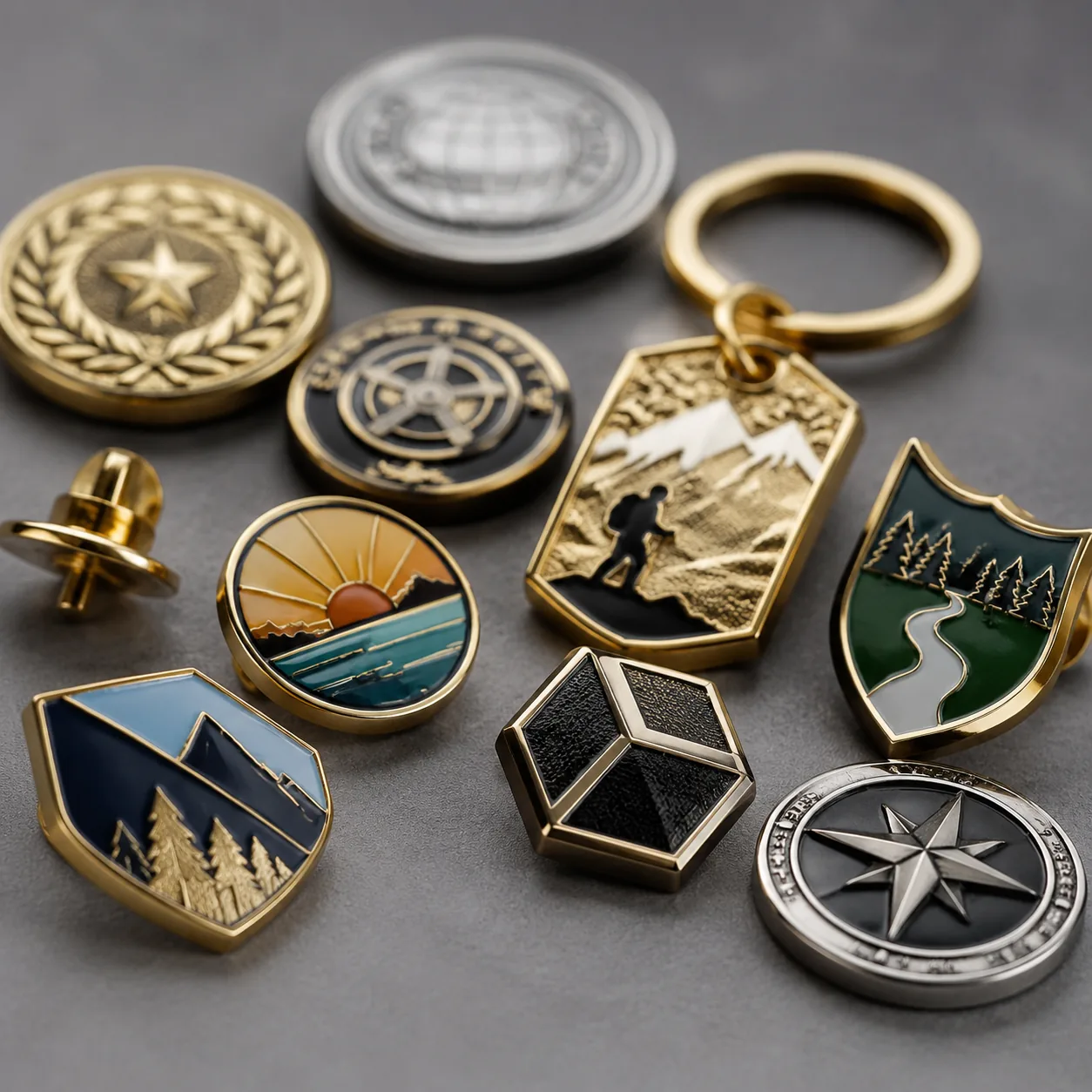
Why Small Metal Orders Cost More per Piece
A 100-piece metal promo order looks minor to a buyer, but it still uses the same production path as a 5,000-piece run: artwork conversion, mold drawing, CNC or EDM tooling, trial stamping or casting, plating setup, enamel filling, curing, polishing, attachment assembly, packing, and inspection. The factory cannot shrink those fixed steps just because the order is for a launch test, employee gift, sponsor pack, retail drop, or event table.
The 2026 cost risk is usually not excessive factory margin. It is fixed cost spread across too few units, plus extra days caused by unresolved decisions. If size, thickness, Pantone colors, plating, attachment, packaging, inspection level, and required ship date are not locked before tooling, each missing detail creates another proof, sample, or packing approval loop. A clean small order can ship 18 to 30 calendar days after artwork approval. A vague one can pass 40 to 55 days before export.
Realistic export MOQs start at 50 to 100 pieces for simple enamel pins, 100 pieces for most metal keychains and magnets, and 100 to 300 pieces for challenge coins depending on diameter, thickness, edge detail, and relief depth. Below those levels, the order behaves like sample-shop work: fewer finish choices, higher unit prices, limited packaging options, and little room for plating or enamel rework.
The strongest buyer lever is a complete technical specification, not a late price squeeze. Lock the drawing before asking for a final quote. That keeps the mold stable, makes supplier comparisons cleaner, and prevents a cheap quote from becoming expensive after tooling has started.
2026 FOB Price Benchmarks by MOQ
Small-MOQ pricing has four main cost buckets: tooling, base product cost, finishing or decoration, and packing plus handling. Tooling creates the largest distortion. A simple 25 to 35 mm pin mold is commonly USD 45 to USD 120. A 45 mm coin die, 3D mold, spinner keychain mold, or multi-level badge mold is usually USD 140 to USD 360 depending on relief depth, edge texture, cut-outs, and engraving time.
The ranges below are typical 2026 FOB Yiwu, Dongguan, Zhongshan, or Ningbo benchmarks for export-grade custom metal promotional products. They assume commercial decorative quality, not jewelry-grade polishing, certified child-use compliance, or luxury retail packaging. Enamel count, plating thickness, attachment grade, restricted-substance testing, and inspection requirements can move prices outside these ranges.
| Item and production spec | 50 pcs | 100 pcs | 300 pcs | 500 pcs | Production days after approval |
|---|---|---|---|---|---|
| Soft enamel pin, 25-35 mm, iron or zinc alloy, 1.2-1.6 mm, up to 4 colors | USD 2.20-4.60 each plus USD 45-120 tooling | USD 1.25-2.60 each plus tooling | USD 0.72-1.35 each plus tooling | USD 0.58-1.10 each plus tooling | 12-18 days |
| Hard enamel pin, 25-35 mm, brass or zinc alloy, 1.4-1.8 mm, polished flat face | USD 3.20-6.30 each plus USD 70-160 tooling | USD 1.85-3.50 each plus tooling | USD 1.08-1.95 each plus tooling | USD 0.90-1.65 each plus tooling | 16-24 days |
| Metal keychain, 40-55 mm charm, 2.0-3.0 mm, split ring and connector | USD 3.20-7.20 each plus USD 80-200 tooling | USD 1.95-4.10 each plus tooling | USD 1.15-2.40 each plus tooling | USD 0.95-1.95 each plus tooling | 15-24 days |
| Challenge coin, 45 mm, 3.0 mm, soft enamel, antique plating, standard edge | Paid sample run only in most cases | USD 4.80-9.50 each plus USD 140-360 tooling | USD 2.70-5.10 each plus tooling | USD 2.20-4.20 each plus tooling | 20-30 days |
| Metal fridge magnet, 45-60 mm, enamel front, ferrite magnet back | USD 3.40-7.20 each plus USD 80-200 tooling | USD 2.10-4.40 each plus tooling | USD 1.25-2.50 each plus tooling | USD 1.05-2.10 each plus tooling | 16-25 days |
Ask whether tooling is charged separately or hidden inside the unit price. Separate tooling is easier to audit and usually lowers reorder pricing if the mold remains usable. Amortized tooling can make the first quote look simpler, but it hides the fixed-cost curve and makes supplier comparisons unreliable.
Tooling, Artwork, and Sample Controls
Tooling covers more than a mold fee. It includes production artwork conversion, mold drawing, CNC or EDM die work, trial stamping or casting, mold-face polishing, and internal checks against the approved proof. For a simple enamel pin, allow 2 to 4 working days for artwork conversion and mold drawing, then 3 to 6 working days for tooling. A 3D coin, spinner keychain, cut-out badge, or multi-level relief design can take 6 to 10 working days before the first sample is ready.
Artwork quality directly affects cost and schedule. Clean vector files should show metal lines, enamel zones, cut-outs, attachment position, Pantone Solid Coated colors, and engraved text. Minimum raised-metal line width should normally be 0.18 to 0.25 mm. Recessed enamel channels should be at least 0.30 mm wide for reliable filling. Text below 1.2 mm height, hairline borders, gradients, overlapping colors, and low-resolution PNG artwork often require redrawing, adding USD 20 to USD 80 and 1 to 3 working days.
Physical pre-production samples are worth paying for when the order has strict brand colors, retail packaging, 3D relief, transparent enamel, glitter, glow powder, moving parts, magnetic attachments, or nickel-free plating. A pin or keychain sample normally costs USD 30 to USD 120 plus courier and adds 5 to 9 calendar days. For repeat orders using the same mold, metal, plating, and color standard, photo or video approval can be enough if the factory keeps a signed golden sample or approved production reference.
Specs That Change Cost and Timing
Small buyers often overspecify because they want a premium feel. Some upgrades are justified; others add cost without improving the item. Brass gives sharper stamped edges than iron and is useful for high-polish hard enamel or jewelry-style pins, but at 300 pieces it can add USD 0.15 to USD 0.45 per piece compared with iron or zinc alloy. Zinc alloy is practical for thicker keychains, magnets, and 3D forms because it casts cleanly and holds dimensional detail.
Thickness should match use. Pins under 35 mm normally work at 1.2 to 1.6 mm unless the design is long, narrow, or uses a magnetic back. Keychains should usually be 2.0 to 3.0 mm so the ring hole does not deform. Challenge coins start at 3.0 mm; a 45 mm coin at 3.5 to 4.0 mm feels better in hand but increases metal weight, die pressure, polishing time, and freight. A 300-piece batch of 45 mm by 3 mm coins can exceed 20 kg packed, so courier freight may become a major landed-cost line.
Plating affects both price and schedule. Standard nickel, gold-tone, black nickel, antique brass, and antique bronze are usually fastest. Nickel-free plating, dual plating, rainbow plating, matte finishes, and heavy clear lacquer can add 2 to 5 days and USD 0.05 to USD 0.30 per piece depending on surface area and quantity. For standard decorative plating, specify 3 to 5 microns. For keychains that rub against keys, ask for 5 to 8 microns on exposed areas or a basic wear check such as 300 dry-rub cycles on high-contact edges.
Write tolerances into the purchase order. For stamped or cast promo metal items, practical dimensional tolerance is usually plus or minus 0.2 mm on small pins and plus or minus 0.3 mm on larger coins or keychains, unless the design has a functional fit. Enamel color should be judged against the approved Pantone under D65 light. A small shift from printed paper is normal because enamel depth, metal borders, and gloss change how color reads.
MOQ Tiers and Real Price Breaks
The first meaningful price break is usually from 50 to 100 pieces because setup labor is spread over twice as many units. The second is from 100 to 300 pieces, where the job starts to behave like a normal production batch and material loss matters less. Moving from 300 to 500 pieces still helps, but the percentage drop is smaller unless plating racks, die-casting cavities, or packaging setup can be optimized.
A simple cost comparison shows the trade-off. If a 30 mm soft enamel pin costs USD 1.90 each at 100 pieces plus USD 80 tooling, the first order totals USD 270 before packing and freight. If the same pin costs USD 1.05 each at 300 pieces plus the same tooling, the order totals USD 395. The 300-piece order requires USD 125 more cash upfront but lowers product-only cost from USD 2.70 to USD 1.32 per piece.
Do not increase quantity only to chase a lower unit price when the design, event date, or market demand is unproven. A 100-piece pilot is sensible for a new retail design, first sponsor gift, or first order with a new supplier. A 300 to 500-piece run makes sense when the logo is fixed, the mold will be reused, and packaging and distribution are confirmed.
- Use 50 pieces for paid samples, VIP gifts, board approval, or design validation.
- Use 100 pieces for event pilots, club merchandise, department gifts, or first-time supplier checks.
- Use 300 pieces when the mold will be reused, colors are locked, and reorder probability is high.
- Use 500 pieces when unit cost matters more than inventory risk and the schedule allows normal production.
- Avoid 1,000 pieces on a first order unless the physical sample, attachment, packaging, finish, and inspection criteria have already been approved.
Lead-Time Map by Decision Point
A supplier may say production takes 15 days, and that may be true after all details are approved. The buyer's real calendar starts earlier: RFQ clarification, artwork adjustment, proof approval, sample decision, deposit, production, QC, packing, export pickup, and delivery. For small-MOQ metal orders, plan 25 to 45 days door to door by air express. Sea freight or consolidated freight can push total timing to 45 to 75 days and is rarely worth it for small urgent orders.
A clean soft enamel pin order may run as follows: 1 to 2 days for quote and specification confirmation, 1 to 3 days for artwork proofing, 3 to 6 days for mold production, 5 to 9 days if a physical sample is required, 10 to 18 days for mass production, 1 to 2 days for AQL inspection and packing, and 3 to 7 days for courier delivery to many international destinations. Hard enamel typically adds 3 to 6 production days because of repeated filling, baking, and polishing. Challenge coins, 3D relief, epoxy doming, dual plating, and custom retail packaging also add time.
Rush production is possible only when the design is simple and capacity is open. It usually means standard plating, photo approval instead of physical sample approval, OPP bag or plain backing card packing, and courier freight. Enamel curing, plating adhesion, and final inspection still need time. Skipping those controls is how small orders become late, inconsistent, or unusable.
Quality, Packing, Freight, and Payment Controls
Small batches still need a written quality level. One visible defect in a 100-piece order is noticed quickly. For standard promotional metal items, many buyers use AQL 2.5 for major defects and AQL 4.0 for minor defects. For retail, licensed merchandise, or brand-critical gifts, AQL 1.5 major and 2.5 minor is more appropriate, but stricter sorting may add labor cost and 1 to 2 days.
Major defects include wrong plating color, missing enamel, loose pin posts, broken split rings, weak magnet bonding, incorrect logo, deep front-face scratches, sharp burrs, and wrong packaging. Minor defects include tiny plating specks, small enamel dots, slight polishing waves, and small color variation within the approved tolerance. For magnets and keychains, include function checks: split rings should close fully after opening, and ferrite magnets should hold the agreed test weight on a clean vertical steel plate.
Packing can distort small-order economics. A plain polybag may cost USD 0.02 to USD 0.05 per piece. An OPP bag with warning text may cost USD 0.04 to USD 0.08. A printed backing card can cost USD 0.08 to USD 0.25 depending on paper weight, size, hole type, and print sides. A small gift box may cost USD 0.35 to USD 1.20. On a 100-piece order, moving from polybags to custom boxes can add more cost than switching from soft enamel to hard enamel.
| Cost line | Typical small-order range | What to confirm before payment |
|---|---|---|
| Tooling | USD 45-360 depending on size, process, and relief | Mold ownership, storage period, reorder charge, mold revision cost |
| Physical sample | USD 30-120 plus courier | Approval basis, allowed changes, sample lead time, whether sample cost is refundable |
| Backing card | USD 0.08-0.25 each | Card size, paper gsm, print sides, hang hole, barcode, warning text |
| Gift box | USD 0.35-1.20 each | Box dimensions, insert type, logo print, carton protection |
| Courier freight | Often USD 35-180 for small pin orders; higher for coins | Gross weight, carton count, Incoterm, fuel surcharge, destination charges |
| QC sorting | Usually included at standard level; higher for strict retail levels | AQL level, defect definitions, inspection photos, count sheet |
RFQ Checklist for a Clean Quote
Before sending an RFQ, decide whether the order is a pilot, confirmed event order, or reorder candidate. A pilot should protect speed and learning. A confirmed event order should protect the latest acceptable ship date and defect control. A reorder candidate should protect mold ownership, color standards, and repeatable inspection criteria.
Send one spec sheet with the details that affect cost: item type, size in mm, thickness, base metal, process, plating color and micron target, enamel type, Pantone colors, attachment, packaging, quantity tiers, required ship date, destination country, and inspection level. A complete pin RFQ would read: 30 mm soft enamel pin, 1.5 mm iron, black nickel plating 3 to 5 microns, 5 Pantone Solid Coated colors, rubber clutch, individual OPP bag, quote 100/300/500 pieces, AQL 2.5 major and 4.0 minor, ship within 28 days, delivery to Germany.
If a quote is much cheaper than the benchmarks above, ask what is excluded. It may omit tooling, sample cost, packing, plating thickness, backing card printing, inspection, export handling, or freight. If the quote is higher, ask which specification is driving the cost and whether a controlled change would help: fewer enamel colors, soft enamel instead of hard enamel, standard nickel instead of dual plating, 300 pieces instead of 100, or backing cards instead of gift boxes.
- Approve vector artwork and Pantone references before requesting a final price.
- Ask for 100, 300, and 500-piece pricing in one quote so the fixed-cost curve is visible.
- Confirm whether tooling is paid separately, who owns it, and how long it will be stored.
- State the latest acceptable ship date, not only the event date.
- Choose one packaging format before sampling, because packaging changes can delay final packing by several days.
- Define AQL level, major defects, minor defects, and required inspection photos before paying the deposit.
- Ask for gross weight, carton count, and Incoterm so FOB, courier, and landed-cost quotes can be compared correctly.
Have a project? Send your artwork and target quantity and we’ll reply with a detailed quotation within 12 working hours.
Ready to get this made?
Send your sketch, target quantity and ship-date. Detailed quotation in 12 hours.



