Small-MOQ Custom Promo Orders: Buyer Questions for 2026
1. When Does a Small MOQ Actually Make Sense?
Small-MOQ buyers typically face a hard constraint: 100–300 pieces for a pilot launch, VIP event, retail test, creator drop, internal milestone, or regional campaign. The unit price is not the only risk. The larger risk is paying full tooling, rushing artwork, and discovering the item cannot be reordered consistently because the first order was treated as a one-off sample run.
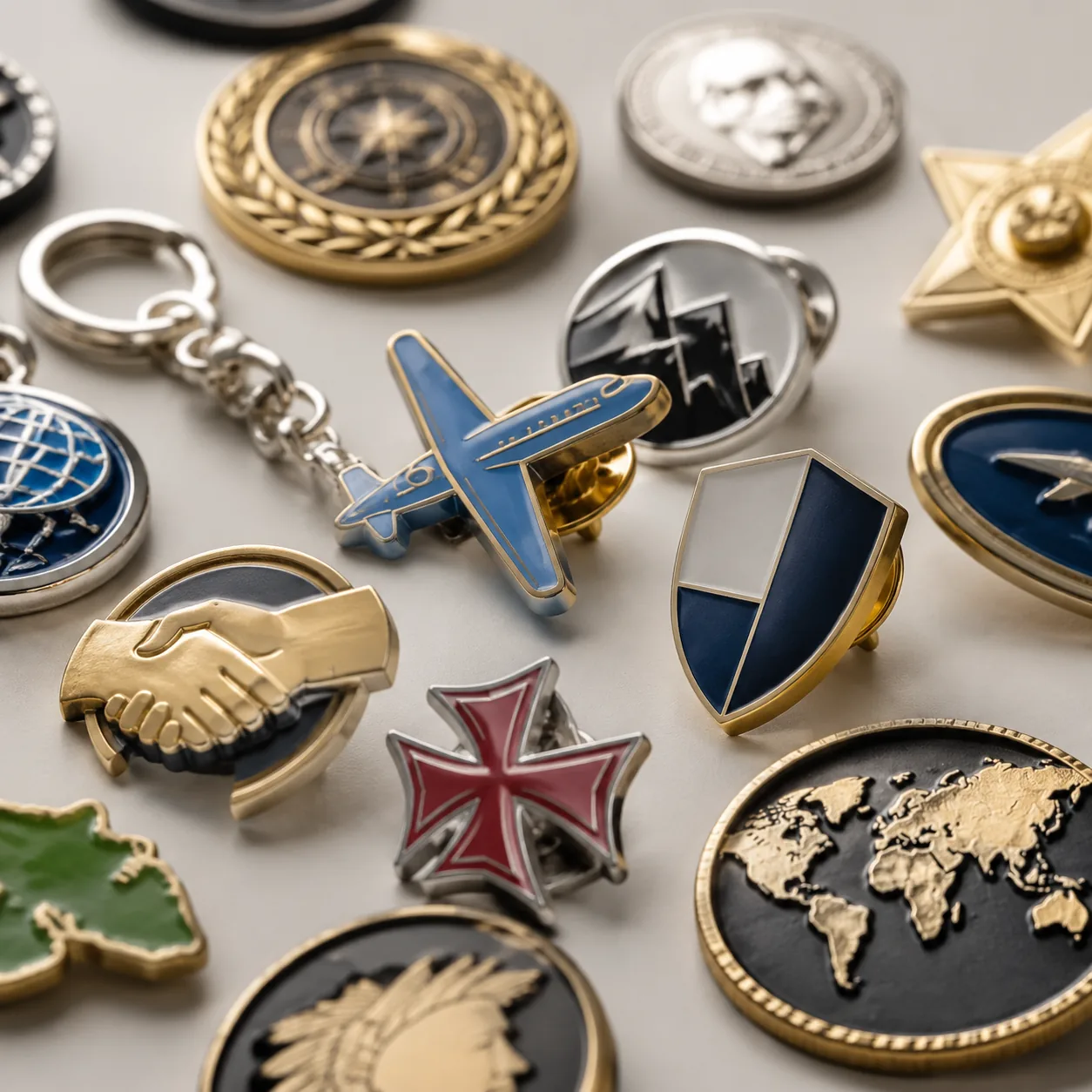
For metal pins, brooches, keychains, fridge magnets, challenge coins, woven patches, PVC patches, and lanyards, a small MOQ is workable when the design is simple, the process is stable, and the buyer accepts a realistic unit cost. It is a poor choice when the item needs multiple custom molds, individual serial numbers, complex retail packaging, or strict shelf-presentation requirements. In 2026, a practical small order is 100–300 pieces for metal products, 50–200 pieces for simple acrylic keychains, 100–300 pieces for patches, and 300–500 pieces for woven lanyards, depending on the printing method.
| Item type | Practical small MOQ | Typical FOB range at small MOQ (USD) | When small MOQ becomes inefficient |
|---|---|---|---|
| Soft enamel pin, zinc alloy or iron | 100–300 pcs | 0.85–2.80 each plus mold | More than 6 enamel colors, many cutouts, or strict plating color matching |
| Hard enamel pin | 100–300 pcs | 1.20–3.60 each plus mold | Raised metal lines below 0.18 mm or large polished surfaces |
| Die-struck challenge coin | 100–200 pcs | 2.80–8.50 each plus mold | Diameter above 50 mm, dual plating, edge numbering, or 3D relief |
| PVC patch or keychain | 100–300 pcs | 1.10–4.20 each plus mold | More than 4 PVC levels or raised text below 0.5 mm stroke width |
| Woven lanyard | 300–500 pcs | 0.75–1.80 each | Pantone-critical logos, more than 2 hardware variants, or mixed lengths |
2. What to Ask Before Paying for Tooling
Tooling is where small-MOQ orders often become expensive. A die-cast or die-struck mold for a pin, coin, or metal keychain commonly costs USD 45–180 for simple shapes and USD 120–350 for larger or 3D designs. PVC molds run USD 80–260 depending on size and number of levels. Woven patches and lanyards normally avoid metal mold fees but carry setup charges of USD 20–80 for screens, loom setup, or digital preparation.
Before paying, ask whether the mold is for stamping, casting, etching, injection, or weaving setup; reuse rules differ. A stamping die often supports several reorders if the design is unchanged and the factory stores it properly. A casting mold may wear faster on fine detail. A screen setup for lanyards may not be stored long-term. At ZheCraft, we label customer tooling by project code, size, process, and revision, because a 25 mm pin mold cannot safely become a 28 mm pin just by asking production to scale it.
- Confirm the mold charge separately from the unit price, not hidden inside a vague all-in quote.
- Ask whether tooling ownership means exclusive use, physical return, or factory storage for reorders.
- Lock the final production size in millimeters before the mold is cut; allow only ±0.2 mm on small metal badges under 40 mm.
- Ask the expected mold life: simple pin dies may support 5,000–10,000 strikes, while fine 3D or cast molds should be reviewed after each reorder.
- Request the mold revision code on the proforma invoice and artwork approval sheet.
3. Can You Skip a Pre-Production Sample to Save Time?
You can skip a physical pre-production sample only when the design risk is low and the buyer accepts controlled uncertainty. A simple one-color soft enamel pin with black nickel plating, no cutouts, standard butterfly clutch, and 25 mm size is a reasonable candidate for direct production after digital proof approval. A hard enamel brooch with gold plating, translucent color, magnetic backing, curved outline, and retail card is not.
For small-MOQ orders, the sample cost can feel disproportionate, but it prevents expensive mistakes. A metal sample normally takes 7–12 days after artwork approval; PVC samples take 6–10 days; woven patch samples take 5–9 days; printed lanyard samples take 4–8 days. If the event date is fixed, a digital proof plus first-article photo approval may be a middle option, but the buyer must define what is approved in the photo: front, back, side thickness, attachment, Pantone comparison, and packing.
| Risk level | Typical product example | Recommended approval route | Extra calendar days |
|---|---|---|---|
| Low | 25 mm soft enamel pin, 4 colors, standard clutch | Digital proof plus first-article photos | 1–2 days |
| Medium | Metal keychain with enamel and custom ring | Physical sample before mass production | 7–12 days |
| High | Challenge coin with 3D relief, antique plating, edge text | Physical sample plus corrected sample if needed | 10–20 days |
| High | Retail-ready mixed set with pin, patch, lanyard, and backing card | Full set sample packed as shipped | 12–18 days |
4. Which Specs Matter Most at 100–300 Pieces?
Small quantity does not make specifications less important. It makes them more visible, because one defective carton may represent 20% of the order. The buyer should not try to specify every factory variable, but should lock the few dimensions and performance points that affect use, brand appearance, and returns.
For pins and badges, lock size tolerance at ±0.2 mm for items under 40 mm and ±0.3 mm for larger pieces. Enamel color should reference coated Pantone values, with visual tolerance under D65 light where possible; buyers must understand that enamel, PVC, embroidery thread, and sublimation inks will not reflect light the same way. For plating, ask for a practical finish thickness target: nickel or imitation gold flash plating is often 0.05–0.10 microns for economical promotional use, while more durable decorative plating may be specified at 0.10–0.30 microns depending on budget, base metal, and finish.
- Size: final width and height in millimeters, with tolerance stated on the approval artwork.
- Thickness: 1.2–1.5 mm for many pins, 2.0–3.0 mm for keychains, 3.0–4.0 mm for challenge coins.
- Attachment: clutch, safety pin, magnet, split ring, lobster clasp, swivel hook, or lanyard clip with material specified.
- Color: Pantone coated reference and allowed visual deviation, especially for brand colors.
- Surface: polished, matte, antique, epoxy dome, sandblast, glitter, glow, transparent enamel, or printed detail.
- Packing: OPP bag, backing card, belly band, velvet pouch, gift box, or bulk carton with exact pieces per inner bag.
5. What Price Range Is Realistic, and What Makes It Jump?
A small-MOQ quote must be read as two parts: setup cost and repeatable unit cost. A 100-piece pin order may look expensive because the mold, plating tank setup, enamel mixing, drying, polishing, and inspection are spread across very few pieces. If the same mold is reordered at 500 or 1,000 pieces, the unit cost usually falls sharply even when metal and labor costs stay the same.
The common price jumps come from design choices that add handling steps. Dual plating, epoxy dome, glitter enamel, transparent enamel, individual numbering, laser engraving, custom backing cards, and mixed attachments all add line items. For example, epoxy on pins or keychains may add USD 0.08–0.25 per piece; laser numbering may add USD 0.05–0.18 per piece; a printed backing card may add USD 0.08–0.35 depending on paper weight, size, and MOQ.
| Cost driver | Small-MOQ impact | Practical buyer decision |
|---|---|---|
| Custom mold | High fixed cost spread over few pieces | Use one shared shape for several colorways only if the metal outline is identical |
| Extra enamel colors | Adds filling time and rejection risk | Keep to 4–6 colors for first production run |
| Dual plating | Adds masking or separate finish steps | Use only when the contrast is part of the design value |
| Retail packaging | Can cost as much as the item at 100 pcs | Approve packing dieline early and avoid oversized boxes |
| Rush production | Overtime, priority plating, and air freight | Reserve for event-critical orders with final artwork already approved |
6. How to Control Quality Without Over-Inspecting
For small-MOQ custom promotional goods, inspection should focus on defects the end user will notice immediately. A full laboratory-style test plan is excessive for a 150-piece internal event order, but no inspection at all is a bad trade. A practical standard is general inspection level II with AQL 2.5 for major defects and AQL 4.0 for minor defects, adjusted when the order is tiny and the buyer wants 100% visual screening.
Major defects include wrong plating color, wrong attachment, missing enamel, sharp burrs, loose pin posts, weak magnets, incorrect QR codes, incorrect spelling, and packing mismatch. Minor defects include tiny polishing marks, slight enamel surface waves, minor thread fuzz on patches, or small color variation within the approved tolerance. For buyer-critical products such as child-facing items, wearable brooches, or retail merchandise, ZheCraft recommends adding pull testing, sharp point review, and carton drop checks rather than relying only on visual inspection.
- Ask for production photos under neutral lighting before shipment, including front, back, attachment, packing, and carton labels.
- For pin posts, request a pull check target of ≥3 kg for standard solder joints; weak solder should be rejected, not repaired with glue.
- For magnets, specify the intended use surface and minimum holding force (e.g., ≥200 g for a fridge magnet on 0.5 mm steel sheet).
- For lanyards, inspect length tolerance, usually ±10 mm for a common 900 mm finished length, and check clip orientation.
- For patches, check border width, backing type, loose threads, and whether the finished edge follows the approved shape.
7. How to Prevent a Small Test Order from Blocking Reorders
Many buyers treat the first small order as a trial, then later ask for 1,000 or 5,000 pieces with the same appearance. That works only if the first order was documented like a production master. The reorder risk is highest when the first supplier used a vague proof, changed enamel colors during production, or packed items in an undocumented way.
The buyer should keep a reorder file containing the final vector artwork, Pantone references, mold number, approved sample photos, size, thickness, plating finish, attachment, packaging, carton quantity, and inspection notes. If the first batch is acceptable, keep two physical golden samples: one with the buyer and one with the factory. In our Yiwu production workflow, this is especially useful for multi-item campaigns where the pin, keychain, patch, and lanyard must repeat the same logo color even though each material behaves differently.
| Reorder item to lock | Acceptable detail | Weak detail that causes drift |
|---|---|---|
| Artwork version | AI, PDF, or CDR file with revision date | Screenshot from chat app |
| Color | Pantone 186 C red enamel, approved sample dated May 2026 | Brand red |
| Metal finish | Polished nickel, no antique wash, target 0.10 micron decorative plating | Silver finish |
| Attachment | 8 mm butterfly clutch, brass tone or nickel tone stated | Standard back |
| Packing | 1 pc per OPP bag, 100 pcs inner carton, 500 pcs export carton | Normal packing |
8. What to Do Next Before Sending the RFQ
Before asking factories for price, decide whether your small order is a disposable event item, a retail test, or the first run of a repeat program. Those three cases should not use the same specification. For a disposable event item, reduce complexity and protect the delivery date; for retail, spend more time on packaging and appearance; for a repeat program, document tooling and color control from the beginning.
Send a compact RFQ with quantity tiers instead of one quantity. Ask for 100, 300, 500, and 1,000 pieces where relevant, because the price curve will show whether your design is economically sensible. Include the required delivery date, destination country, incoterm preference, artwork file, size, thickness, material preference, finish, attachment, packing, sample requirement, and quality standard.
- Choose one hero item for the first small-MOQ run rather than launching five untested items at once.
- Keep first-run metal pins or keychains under 40 mm unless the design truly needs more area.
- Use standard attachments and standard OPP packing when the order is for event giveaway use.
- Pay for a physical sample when the item has 3D relief, retail packaging, magnets, safety concerns, or multiple materials.
- Request tiered pricing and separate tooling so you can see the true reorder cost.
- Keep the approved sample and final spec sheet together before authorizing mass production.
Have a project? Send your artwork and target quantity and we’ll reply with a detailed quotation within 12 working hours.
Ready to get this made?
Send your sketch, target quantity and ship-date. Detailed quotation in 12 hours.



