Small-MOQ Custom Pins in 2026: The Decision Framework
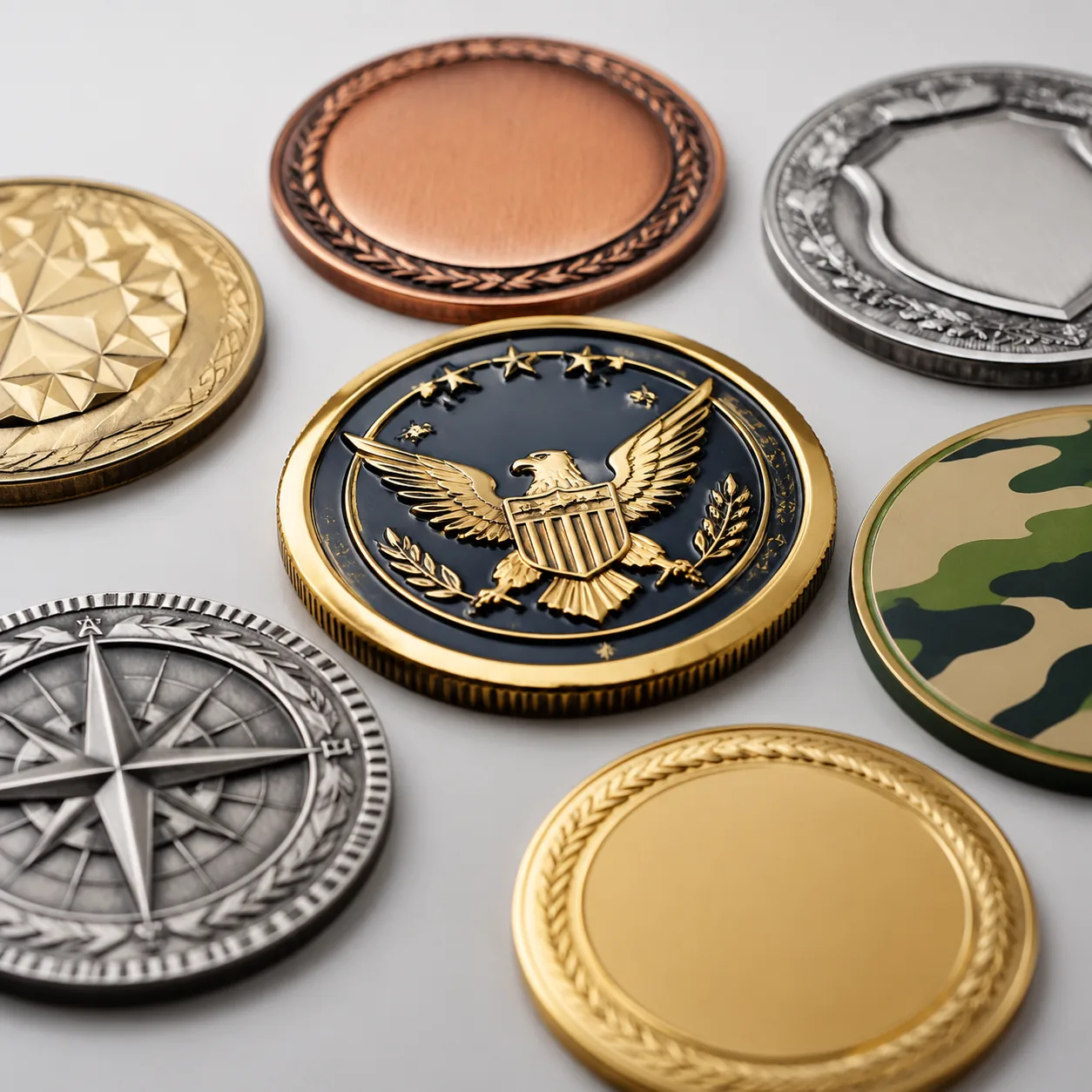
Decide first whether a custom pin is economically justified
The biggest low-volume error is not overpaying by USD 0.10 per piece. It is choosing a product with fixed setup cost that the quantity cannot absorb. A custom metal pin still requires artwork cleanup, engineering review, die making, stamping or casting setup, plating preparation, enamel filling, polishing, post welding, inspection, and packing whether the order is 100 pieces or 10,000. On a 50-piece run, those fixed steps dominate the unit cost.
For most China-based suppliers in 2026, stamped iron soft enamel becomes commercially sensible at about 100 to 300 pieces per design. At 100 pieces, a standard 25 mm to 32 mm pin in stamped iron, 1.2 mm to 1.5 mm thick, one post, butterfly clutch, and one plating finish typically lands around USD 1.05 to 1.85 FOB China. At 300 pieces, the same specification more often falls to USD 0.75 to 1.30 FOB. At 500 pieces, straightforward 2D work usually reaches USD 0.52 to 0.92 FOB. Simple tooling is commonly USD 45 to 85 per design; larger sizes, cutouts, deeper relief, or irregular profiles push die cost toward USD 90 to 160.
Below 100 pieces, the economics usually deteriorate unless the design is very simple, the factory is combining your run with similar work, or the buyer accepts a higher unit cost for branding reasons. If the target landed cost needs to stay below about USD 1.00 including backing card and polybag, if the artwork relies on gradients or photo detail, or if there is no time for at least one proof review, a metal pin is often the wrong format. Printed acrylic charms, woven patches, sublimated badges, and digitally printed emblems usually have lower setup cost and shorter total cycle time at the same quantity.
Choose a construction that fits small-quantity production
For a first order, event test, or merchandise pilot, the safest construction is usually stamped iron soft enamel with 2D relief, one standard plating finish, one attachment type, and no moving components. Iron remains cost-efficient because it stamps cleanly, supports routine promotional detail, and usually carries lower tooling cost than brass. Standard thickness is 1.2 mm to 1.5 mm. On stamped pieces, outer-profile tolerance is commonly held to plus or minus 0.15 mm after forming and plating, while thickness tolerance is often plus or minus 0.10 mm.
More complex builds are fully manufacturable, but they carry higher risk at 100 to 200 pieces. Hard enamel style polishing, brass die-struck construction, zinc alloy casting, transparent enamels, glitter, glow pigment, epoxy domes, dual plating, danglers, sliders, and spinners all add process steps. Each step creates another failure mode: uneven fill height, polishing waves, loose hinges, plating mismatch between components, epoxy dust points, or sorting mistakes in final pack-out. On a 100-piece order, 5 to 6 rejects are not statistical noise; they are 5 to 6 percent of the program.
Collector launches may justify that risk. Promotional campaigns, distributor samples, university events, conference giveaways, and test retail programs usually benefit more from repeatability than from feature count. One size, one plating, one card, one clutch, and one bag specification typically produce a better commercial outcome than a more ambitious design that arrives late or shows visible variation.
| Construction choice | Typical MOQ comfort zone | Lead-time risk | FOB unit range at small MOQ | Best fit |
|---|---|---|---|---|
| Stamped iron soft enamel, 25-32 mm, 1.2-1.5 mm thick | 100-500 pcs | Low | USD 1.05-1.85 at 100 pcs; USD 0.75-1.30 at 300 pcs | Events, test merch, distributor samples |
| Brass die-struck, no enamel, 25-32 mm, 1.5-2.0 mm thick | 100-300 pcs | Low to medium | USD 1.35-2.25 at 100 pcs | Corporate identity pins, service awards |
| Hard enamel style, polished flat face | 100-300 pcs | Medium | USD 1.45-2.55 at 100 pcs | Retail pins needing a cleaner face finish |
| Zinc alloy cast, thicker or irregular profile | 100-200 pcs | Medium to high | USD 1.70-3.30 at 100 pcs | Mascots, sculpted shapes, chunky outlines |
| Special effects: moving parts, dual plating, glow, transparent colors | 200 pcs and up preferred | High | USD 2.20-4.80+ | Collector launches, not budget-sensitive rush orders |
Engineer the artwork to actual process limits
Most avoidable defects start in the artwork stage. Pins are small metal parts, not flat digital illustrations. For 25 mm to 32 mm pins, raised metal lines should generally be at least 0.30 mm wide, and 0.40 mm is safer for key borders, facial details, or brand marks. Text below roughly 1.2 mm cap height becomes unreliable; 1.5 mm is safer if legibility matters. Enamel cells narrower than about 0.60 mm are more likely to show underfill, bleed, or distorted corners, especially on faster low-volume runs. If the design includes internal cutouts, keep bridges robust enough to survive polishing and plating without visual distortion.
Attachment layout must match actual use. One post is common for 25 mm lapel pins worn on shirts or lanyards. Once the pin reaches 32 mm to 38 mm, or will be used on backpacks, denim, or heavier fabric, two posts reduce rotation and improve stability. Post placement tolerance is often held within 1.0 mm of the approved position. For butterfly clutches, buyers should expect secure engagement without excessive looseness. If theft resistance or repeated wear matters, quote rubber clutches, deluxe clutches, or locking backs separately; these typically add about USD 0.06 to 0.35 per piece depending on style and source.
Plating should be specified realistically. Decorative promotional finishes are usually thin top layers, commonly around 0.03 to 0.08 microns for gold-tone, nickel-tone, or black nickel over base coats such as copper or nickel. That is suitable for event use, gifting, and display, but not equivalent to jewelry-grade wear resistance. Black dyed finishes and exposed high points will show abrasion sooner when they rub against zippers, keys, or bag hardware. If daily wear is expected, bright nickel or imitation gold typically hides edge wear better than black nickel or antique finishes.
Spend on visible value, not hidden complexity
At low MOQ, every added process must justify itself. Buyers often overspend on hidden complexity and underspend on what recipients actually notice. The upgrades with the highest perceived value are usually cleaner linework, readable graphics at one meter, correct post placement, a balanced size, and professional packaging. A clear 30 mm pin on a well-designed card often feels more premium than a crowded 32 mm design with six enamel colors, glitter, and a slogan too small to read.
Packaging is usually the most efficient premium upgrade. A 350 gsm to 400 gsm printed backing card with matte or gloss finish, euro slot, and clear OPP bag typically adds about USD 0.08 to 0.20 per set at low MOQ. If the card includes QR codes, event dates, variable copy, multilingual text, or heavier ink coverage, the cost more often runs USD 0.12 to 0.28 depending on print method and whether cards are packed by SKU. For retail, a custom card often improves sell-through more than adding one more enamel color because it explains the design story and makes the item shelf-ready.
Epoxy domes are another decision point. They can reduce the visual impact of fine scratches and add gloss, especially over printed or offset areas, but they also introduce defects such as trapped dust, edge overflow, soft cure, and long-term yellowing if low-grade resin is used. On economy promotional work, epoxy usually adds about USD 0.10 to 0.22 per piece at small quantities. For standard stamped soft enamel, it is often unnecessary unless the buyer wants a smoother hand feel or extra surface gloss.
Control cost by simplifying SKUs and pack-out
Small MOQ becomes expensive when one order is quietly split into several micro-orders. Three colorways at 100 pieces each do not behave like one 300-piece order if they require separate card copy, separate labels, separate carton marks, or separate sorting. If the outer outline changes, even slightly, a second die may be required, and much of the volume advantage disappears. If only enamel colors change while the metal outline, size, thickness, plating, and card size stay constant, factories can usually control cost much better.
The safest low-volume strategy is to standardize everything except the single variable being tested. Keep the outer profile, thickness, post layout, clutch, plating, and card size unchanged. If the commercial question is market preference, change only the enamel colorway or the card message. That reduces machine resets, labor hours in sorting, and the chance of mixed packing.
Inspection planning also matters more at 100 pieces than many buyers expect. A common acceptance basis for promotional metal items is AQL 2.5 for major defects, AQL 4.0 for minor defects, and zero tolerance for critical defects. That framework is useful, but buyers should remember what it means operationally: on a 100-piece order, even 2 mispacked units or 3 visibly flawed front faces can disrupt an event kit, distributor sample set, or reseller allocation.
- Use one die when the outer profile is unchanged
- Keep one plating finish across the order
- Limit attachment type to one standard clutch unless function requires otherwise
- Use one backing card size and one bag type to simplify pack-out
- If multiple SKUs are unavoidable, require packed-by-design inner bags and carton marks
- Get overrun and underrun policy in writing, especially below 300 pcs
Source from a supplier built for low-volume execution
A factory that performs well on 10,000-piece repeat orders is not automatically good at 100-piece mixed-SKU work. Low-volume jobs put more pressure on artwork review, engineering feedback, version control, and packing accuracy than on pure line capacity. The right supplier for small MOQ is the one that flags manufacturability issues early, writes specifications clearly, and keeps approvals disciplined from artwork through final packing.
A usable quote should state the complete manufacturing assumption set: finished size in millimeters, thickness, base metal, construction method, number of enamel colors, plating finish, attachment type, backing card specification, polybag method, tooling charge, sample cost or waiver, production lead time after approval, and inspection basis. If the quote is based only on an image with no written specification summary, downstream variance risk is high. Low-volume orders are especially vulnerable because they are often inserted into spare capacity unless the brief is tightly defined.
The best suppliers also push back with specifics. They should tell you when a 38 mm design needs two posts, when a 0.25 mm border will plate unevenly, when a recessed area is too shallow to hold enamel cleanly, or when black nickel will show edge wear faster than bright nickel. That kind of resistance usually signals process discipline rather than poor service. As a practical filter, ask for photos of recent 100 to 300 piece projects with similar size, plating, and pack-out. A supplier that can execute small runs cleanly should be able to show that history.
Write measurable quality standards before tooling starts
Small-MOQ pin orders usually fail because expectations were vague, not because the factory could not physically make the part. The most common issues are enamel underfill or overflow, plating pits on the front face, color variation, dust under epoxy, post placement drift, rough weld cleanup on the back, and mixed packing between versions. Most of these can be reduced by defining acceptance criteria before tooling and reconfirming them before mass production.
A practical QC standard for promotional-grade pins should include outer dimension tolerance of plus or minus 0.15 mm, thickness tolerance of plus or minus 0.10 mm, post placement within 1.0 mm of approved position, smooth clutch fit, no sharp burrs on edges or weld points, and color checked against an approved reference under a defined light source such as D65. If Pantone matching matters, specify whether the reference applies to enamel only, backing card print only, or both. Exact visual identity between enamel and printed paper is rarely realistic because the substrates reflect light differently and use different pigment systems.
Major defects should be written in plain terms. For most programs, detached posts, broken clutches, missing enamel, wrong design mix, unreadable text, large front-face plating pits, or scratches visible at normal handling distance belong in the major category. Critical defects should include functional safety issues such as sharp exposed burrs or detached metal parts. Minor defects may include small polish marks on the back, slight tone shift in a non-critical recess, or cosmetic variation hidden by the card. If the defect standard is not agreed before production, the dispute usually starts when the goods are already packed and the freight deadline is close.
Build the schedule backward from the in-hand date
The schedule error on small-MOQ pin programs is focusing on ship date instead of in-hand date. Most lost time accumulates before production starts: artwork cleanup, internal approvals, backing card edits, incomplete shipping instructions, or delayed deposit confirmation. Each delay may cost only one day, but on a three-week calendar those days convert a manageable project into a rush order.
A realistic 2026 timeline for a new custom pin is usually 1 to 3 working days for quotation and design-for-manufacture feedback, 2 to 4 working days for revised digital artwork approval, 5 to 7 calendar days for a pre-production sample if a physical sample is required, and 10 to 15 calendar days for mass production after final approval. Add 2 to 4 days for final packing and export handoff. Air freight commonly adds 3 to 7 days depending on route, uplift availability, and customs clearance. For small promotional orders, ocean freight is rarely economical unless it is consolidated with other cargo already moving on the same schedule.
If the deadline is tight, simplify the build instead of trying to compress every stage. Standard stamped soft enamel with one plating and no assemblies is easier to schedule than zinc alloy casting with moving parts or dual finishes. Buyers should also assume at least one correction cycle, even if it is only digital artwork, because low-count orders still pass through most of the same approval gates as larger ones. Before paying tooling, use a simple go or no-go test: at least 100 pieces per design, artwork built to process limits, realistic budget for die plus FOB unit cost, 18 to 28 calendar days to goods-ready for a new design, promotional-grade quality expectations, and a written quote covering specs, lead time, AQL basis, and pack-out controls. A one-page RFQ brief with those points will prevent more cost and delay than negotiating another USD 0.05 off the unit price.
Have a project? Send your artwork and target quantity and we’ll reply with a detailed quotation within 12 working hours.
Ready to get this made?
Send your sketch, target quantity and ship-date. Detailed quotation in 12 hours.



