Small-MOQ Custom Pins in 2026: A Spec-First Buying Framework
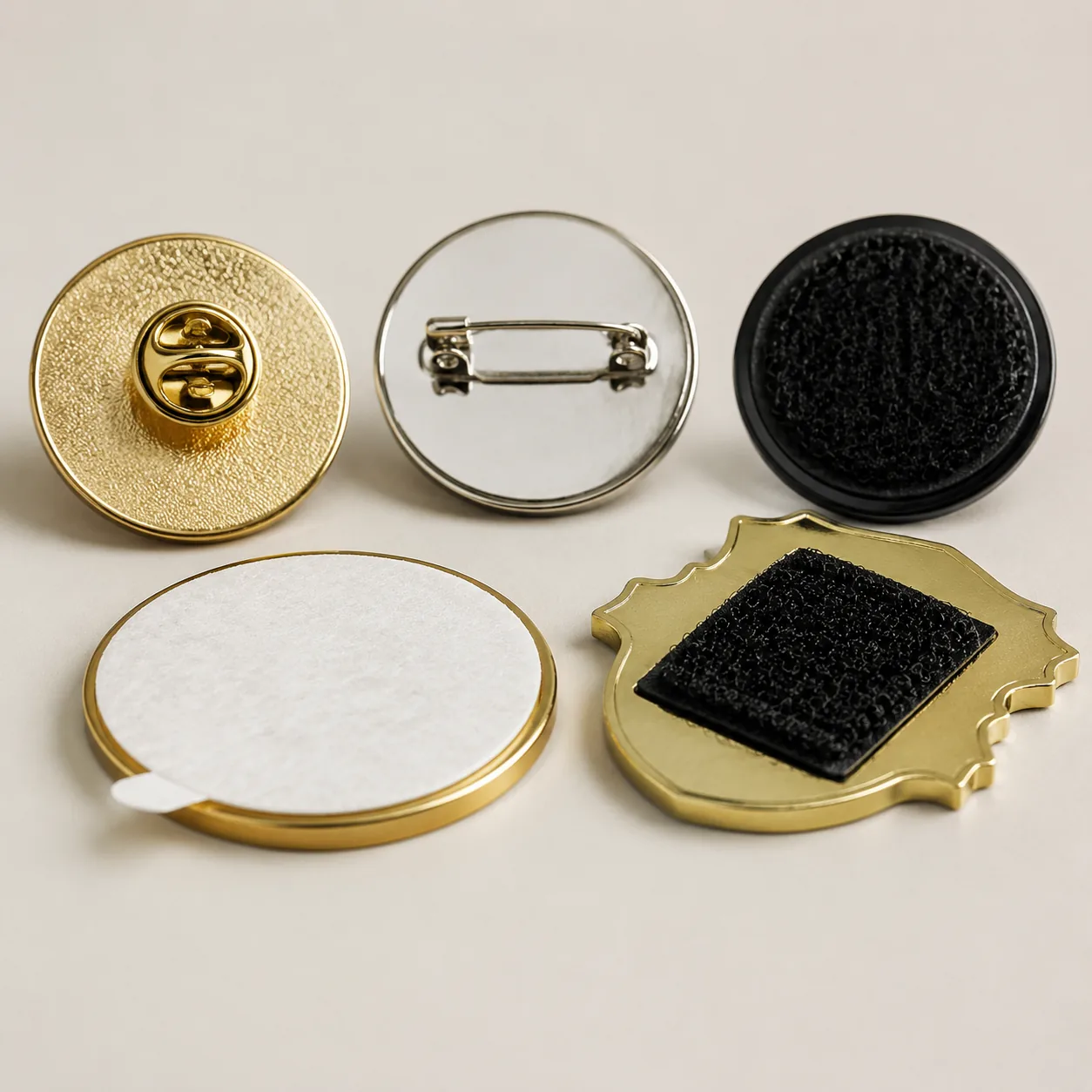
Decide first: one-off event pin or repeatable SKU?
Most 100-300 piece pin orders fail at specification, not at metalworking. Buyers approve diameter and artwork, then leave key variables open: minimum line width, plating finish, post position, backing type, card insertion method, count tolerance, and cosmetic standard. At this order size, fixed charges such as die or mold tooling, proof preparation, plating setup, and hand packing often account for 25-45% of landed ex-factory value. That means a small run is not inherently low risk; one preventable revision or rework cycle can erase the savings from choosing the lowest quote.
The first commercial question is not soft enamel versus hard enamel. It is whether the pin must reorder within the next 6-12 months with a close visual match, or whether it only needs to perform for one launch, one trade show, one nonprofit campaign, or one employee award cycle. If repeatability matters, favor processes with tighter dimensional control, fewer manual touch points, and standard finishes that can be matched again. Paying an extra USD 0.12-0.30 per piece on the first run is usually cheaper than trying to match a second run that drifts in plating tone, enamel gloss, fill height, or back-post placement.
A workable repeat SKU at 100 pieces is often simple: 32 mm stamped iron, 1.2-1.5 mm body thickness, soft enamel, 2 PMS colors, bright nickel plating, one centered butterfly clutch, and bulk pack or single OPP bag. A more elaborate 32 mm pin with zinc alloy casting, open cutouts, dual plating, glitter fill, printed backer card, barcode label, and individual bagging can still be made at 100 pieces, but each added step increases setup, handling, and reject risk. For a reorderable item, simplify the structure first and add premium elements only where they support a clear retail price premium or brand requirement.
Match the process to geometry, finish, and wear
The cheapest quoted process is often not the lowest total-cost process. On small orders, the most economical build is usually the one that moves through proofing, tooling, production, and inspection with the fewest exceptions. Process choice should be based on measurable design limits: minimum raised line width, minimum recessed fill area, minimum bridge width around cutouts, smallest readable text, acceptable edge definition after plating, and whether the face must polish flat or can retain recessed texture.
Stamped iron or brass is the standard choice for clean 2D logos with clear metal outlines. As a practical 2026 rule, keep raised metal lines at 0.30-0.35 mm minimum, recessed enamel cells at 0.50 mm minimum, unsupported bridges around cutouts at 0.80-1.00 mm minimum, and final uppercase sans-serif text at roughly 4 pt at production scale. If the pin will be imitation hard enamel, widen very narrow cells further because polishing can visually reduce the color area by around 0.05-0.10 mm at edges. Brass generally holds finer die detail and cleaner polished edges than iron, but at a higher unit cost.
Zinc alloy casting is better when the design has irregular outlines, deep relief, thicker sections, large internal cutouts, or soft 3D sculpting that would distort in stamping. Expect mold tooling to cost more than a simple die, but the process offers better geometric freedom and more stable fill in complex cavities. For gradients, skin tones, fine shadows, or photo-like illustration, offset or UV printing with epoxy is normally the cleaner first-pass option. The trade-off is wear: an epoxy dome around 0.4-0.6 mm thick looks good on receipt, but printed faces scratch faster than enamel if the pins are packed loosely, thrown into bins, or worn on bags and jackets.
| Build option | Best for | Typical MOQ | Tooling range | Unit FOB at 100 pcs | Lead time after art approval |
|---|---|---|---|---|---|
| Stamped iron soft enamel | Simple 2D logos, clean borders, lowest entry cost | 100 pcs | USD 45-80 | USD 0.75-1.35 | 10-14 days |
| Stamped brass imitation hard enamel | Premium flat face, finer detail, smoother polish | 100 pcs | USD 60-110 | USD 1.10-1.95 | 12-18 days |
| Zinc alloy cast soft enamel | Cutouts, irregular shapes, thicker body, 3D relief | 100 pcs | USD 80-160 | USD 1.25-2.30 | 12-20 days |
| Offset or UV print with epoxy | Gradients, illustrated characters, tonal transitions | 100 pcs | USD 40-70 | USD 0.80-1.55 | 8-12 days |
| Die-struck metal, no color | Seals, antique finishes, corporate insignia | 100 pcs | USD 0-60 | USD 0.70-1.20 | 8-12 days |
A common sourcing mistake is forcing illustrated art into enamel because enamel is assumed to be more durable. If the design depends on halftones, facial shading, or tiny tonal transitions, printing with epoxy usually produces the cleaner result at 100-300 pieces. If the design depends on crisp metal borders, tactile depth, and better scuff resistance over time, soft enamel or imitation hard enamel is the safer specification even if it costs USD 0.15-0.40 more per unit.
Price the real cost drivers, not just color count
Below 300 pieces, the largest FOB swings usually come from tooling amortization, finish complexity, and packaging labor rather than standard color count. For a typical 30-35 mm pin, moving from 1 enamel color to 4 opaque PMS-matched colors often adds only about USD 0.05-0.15 per piece at 100-300 units. By contrast, carding, labeling, bagging, and upgraded backs can add more than the body metal upgrade from iron to brass.
Typical 2026 FOB adders are concrete enough to budget. A custom printed backer card in 300-400 gsm C1S or C2S stock usually adds USD 0.06-0.18 each. Individual OPP bagging adds about USD 0.02-0.05. Barcode labels add USD 0.03-0.08 depending on size and application method. Card insertion plus bagging usually adds USD 0.07-0.15 per set. A black rubber clutch is often USD 0.05-0.10 more than a standard butterfly clutch, while a locking metal back can add USD 0.18-0.35. On a 100-piece order, those labor steps can outweigh the difference between a basic stamped build and a more premium metal body.
Special finishes also affect both price and reject risk. Bright gold, bright nickel, black nickel, antique silver, and antique bronze are usually the most stable finishes for small runs. Dual plating, rainbow plating, dyed black metal, translucent fill over texture, glow enamel, glitter, spinners, danglers, and chain attachments typically add USD 0.12-0.60 per piece and create more opportunities for masking error, plating mismatch, loose assembly, or finish contamination. For event merchandise rather than retail resale, simplifying to one plating color, one post, and basic packing usually saves more than shrinking the pin diameter by 3-5 mm.
MOQ tiering also matters. A 100-piece order may price at USD 1.10 each FOB, while the same build at 200 pieces drops to USD 0.78-0.90 because tooling and setup are spread over more units. For buyers who expect a second order soon, asking for 100 units packed now and 100 units bulk-held for later shipment can be commercially smarter than two separate 100-piece production runs, provided the supplier can confirm storage terms and plating stability.
Write measurable tolerances before tooling starts
Small custom pin orders run smoothly when the buyer states which characteristics are critical and which can vary within normal process limits. Without written limits, every enamel sink, plating shade shift, slight burr, or back-post offset becomes a subjective dispute. A usable specification should separate dimensional tolerance, cosmetic acceptance, attachment placement, and functional checks such as clutch fit, post straightness, and edge safety.
For most small-MOQ pin projects, workable tolerances are straightforward. Finished size can be held to ±0.20 mm for stamped parts and ±0.30 mm for cast parts. Body thickness can usually be specified at ±0.10-0.15 mm. Post location should be controlled within ±0.50 mm from an agreed datum, such as top edge centerline. Front-face plating should be complete, with no exposed base metal visible under normal inspection. Soft enamel should be substantially filled with no empty cells; slight corner sink, hand-polish marks, or minor fill-height variation are commercially normal unless a fully flat face is specified. For printed epoxy pins, epoxy thickness variation of about ±0.10 mm and slight dome-height difference at edges are normal if the print remains sealed and readable.
Cosmetic criteria should be tied to a real inspection condition. A practical standard is front-face inspection at 30 cm under 600-1000 lux neutral white light. Under that condition, no obvious scratches, pits, plating voids, color contamination, or print smears should be visible on the display side. If plating tone matters, approve it against an actual sample or a controlled production photo plus written finish callout; phone screenshots are not dependable metal standards. Also state whether backside ejector marks, light backside scratches, and non-display plating spots are acceptable, because many factories treat the reverse side as non-cosmetic unless told otherwise.
For acceptance sampling, AQL 2.5 major / 4.0 minor is common for retail sale, museum gift shops, and ecommerce merchandise. AQL 4.0 major / 6.5 minor is often commercially acceptable for giveaways, internal events, campaign distributions, or conference swag. Count tolerance should also be stated explicitly. Many factories quote with a shipment variance of ±5% unless exact count is required, and exact counting can add sorting labor or overrun charges.
- Approve one signed proof or one physical reference sample covering plating tone, enamel appearance, and post position.
- Specify exact size, thickness, and post location in mm rather than terms such as 'standard', 'centered', or 'similar to sample'.
- State minimum line width, minimum fill-cell size, bridge width around cutouts, and any logo zones that cannot be simplified.
- Define front-face cosmetic acceptance separately from backside acceptance, function defects, and packaging defects.
- Confirm AQL level, shipment count tolerance, and whether pre-shipment photos or carton-level count reports are required.
Treat lead time as a gated workflow
Quoted lead time for 100-300 pins is only useful when the internal steps are visible. The real timeline includes artwork cleanup, proof issuance, buyer approval, tooling, optional pre-production sample, production queue, plating queue, color filling or printing, attachment assembly, inspection, and export packing. On a nominal 10-14 day order, a one-day delay in proof approval can consume 10-20% of the factory production window.
For standard stamped or printed pins, practical production time after final art approval is usually 8-14 calendar days without a physical sample and 12-20 days with one sample round. Cast zinc alloy builds, multiple posts, moving parts, or retail-ready card-and-bag assembly often extend the range to 14-22 days. During peak seasons, especially August through November, plating lines and hand-packing cells can add 2-5 extra days even when metal forming is already complete.
If speed matters, remove variables in order. First, approve from a detailed vector proof unless a physical pre-production sample is genuinely required. Second, stay with standard finishes such as bright gold, bright nickel, or black nickel. Third, avoid mixed SKUs, split backer card versions, or multiple barcode versions within one lot. Fourth, use bulk, OPP bag, or simple card-and-bag packing. Rush orders are usually won by reducing complexity before tooling, not by compressing every department after late approvals.
A realistic planning example is a 100-piece stamped soft enamel pin for a trade show opening on Day 24. Day 1-2: art cleanup and proof. Day 3: buyer approval. Day 4-5: die making. Day 6-10: stamping, plating, and enamel fill. Day 11-12: clutch assembly and inspection. Day 13: export packing. That leaves a slim buffer for courier collection or freight handoff. Add a physical sample round, dual plating, or custom card insertion, and the schedule can easily slip by 3-6 days.
Packaging often determines the true MOQ
Many buyers think they are ordering 100 pins, but operationally they are ordering 100 completed retail kits. Once backer cards, euro slots, suffocation warnings, barcode labels, folded inserts, foam pads, or gift boxes are added, the packaging line can become more restrictive than the pin line. Packaging material MOQs may also exceed the pin MOQ, especially for rigid boxes, custom trays, and die-cut inserts.
A simple custom backer card is usually the most efficient retail format below 300 sets. In 300-400 gsm coated board with 4-color process printing on one or both sides, it is typically workable from 100 pieces if the card size stays near standard formats such as 55 x 90 mm or 70 x 100 mm. The typical FOB adder is USD 0.06-0.18 each depending on stock grade, lamination, and insertion labor. If a euro slot, barcode box, legal text, and country-of-origin statement are required, finalize the card layout before tooling so the post spacing supports the card cleanly and does not tear the board.
Rigid gift boxes, velvet cases, magnetic closures, EVA inserts, flocked trays, and custom die-cut foam are usually inefficient below 300-500 sets unless the buyer accepts digital print, stock inserts, and significantly higher per-set assembly cost. Small-run setup charges, spoilage, and low packing-line speed can make a 100-piece order disproportionately expensive. If sustainability is a sales requirement, FSC-certified uncoated cards are a workable option, but they typically show lower color saturation, more edge wear, and less moisture resistance than gloss-coated stock.
For most small batches, invest first in the visible pin face, secure attachment, and consistent plating. Premium secondary packaging should be added only when it supports a measurable retail uplift, gift presentation standard, or compliance requirement in the destination market.
Send an RFQ package suppliers can quote and execute consistently
Strong small-MOQ buyers do not send concept art and ask for a target price. They send a controlled RFQ package that minimizes interpretation and makes supplier quotes comparable. For custom pins, that package should include vector artwork, finished size in mm, target thickness, process, plating finish, Pantone references or an acceptable color-match rule, attachment type and quantity, packaging method, required ship date, destination country, inspection level, and count tolerance.
If some details are still open, ask each supplier for only two executable options: the lowest-risk version and one premium alternative. That keeps quote tables comparable and reduces proofing noise. A strong RFQ example is: 32 mm stamped iron soft enamel; 1.5 mm thickness; bright nickel plating; 2 PMS colors; one butterfly clutch centered 8 mm from top edge; individual OPP bag; export carton mark only; AQL 2.5/4.0; exact count 100 pcs; ship no later than 18 calendar days after art approval. With that level of detail, a supplier can flag real issues such as sub-0.30 mm lines, weak bridges around cutouts, unstable text, or card MOQ conflicts before tooling is charged.
When comparing suppliers, do not rank them on headline unit price alone. Compare tooling, unit FOB, quoted production days, expected yield, plating options, attachment strength, packaging labor content, and inspection standard. Ask whether the die or mold is stored for reorder use, whether a repeat order can reuse the original Pantone and plating reference, and whether the supplier keeps digital proof history. On 100-300 piece custom pin orders, the best buy is rarely the absolute cheapest quote. It is the specification set that can be approved quickly, produced with predictable yield, inspected against measurable criteria, and reordered later without visible surprises.
Have a project? Send your artwork and target quantity and we’ll reply with a detailed quotation within 12 working hours.
Ready to get this made?
Send your sketch, target quantity and ship-date. Detailed quotation in 12 hours.



