Small-MOQ Custom Pin Spec Sheet: What to Lock Before PO
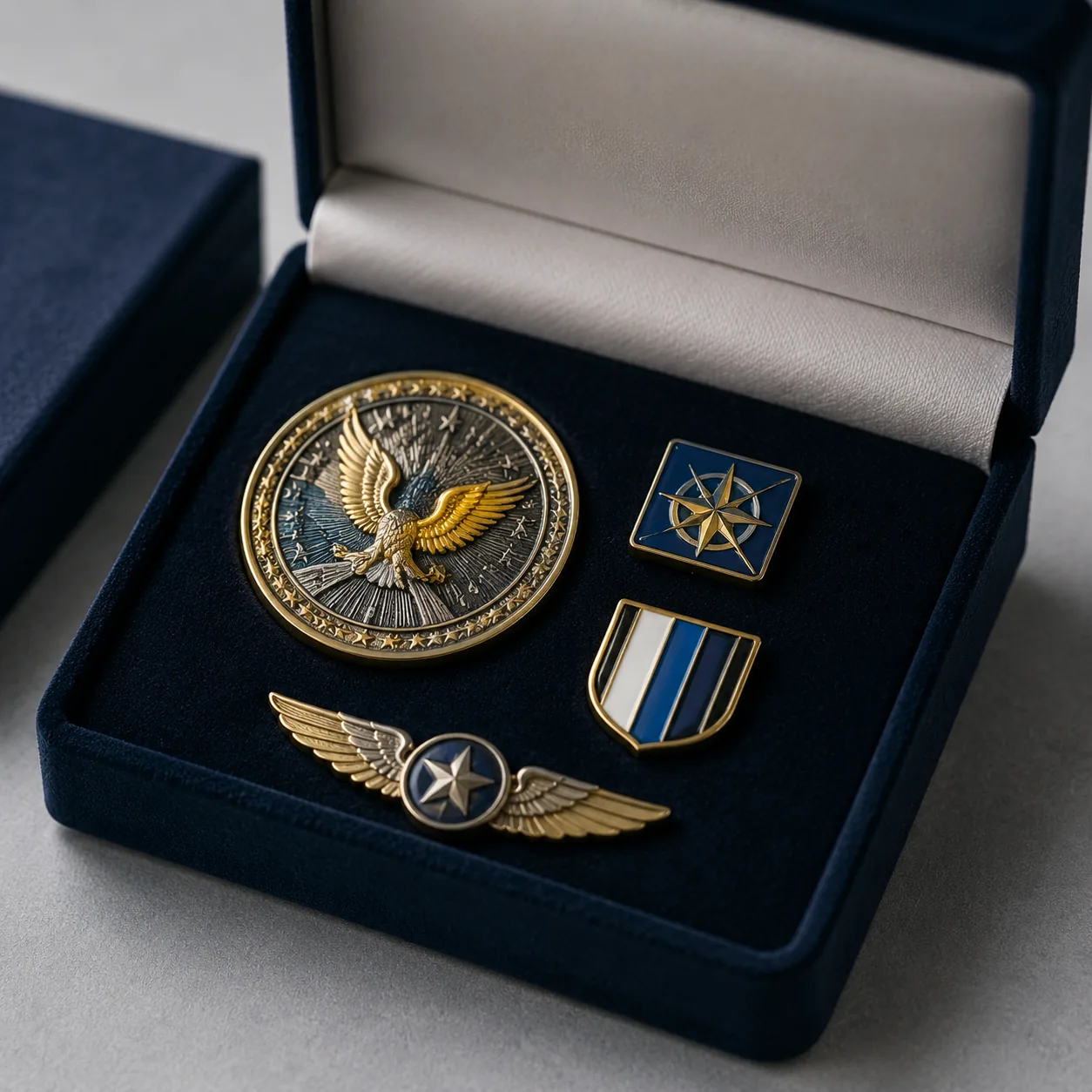
Why small-MOQ pin orders break at the spec stage
Most 100 to 300 piece custom pin orders do not go wrong because the front artwork is weak. They go wrong because the approved quote still leaves production choices open: base metal, thickness, plating, post layout, clutch type, packaging, inspection level, or even whether the supplier is quoting stamped or cast construction. At low volume, those choices matter more because die cost, plating setup, hand enamel fill, polishing, sorting, and packing labor are spread across fewer units.
On a 100-piece order, a late change from 1.0 mm stamped iron to 1.5 mm brass, or from bulk polybag packing to retail card-and-sleeve packing, can move total FOB cost by 10% to 30%. A post-layout correction after mold approval can add 3 to 6 working days. A tooling remake for size or cutout changes can add 5 to 9 calendar days plus another sample cycle. Small buyers usually do not have the schedule or budget buffer that larger programs have.
The fix is not a longer brief. It is a shorter, more numeric one. State 32 mm wide, not medium size; 1.2 mm stamped iron, not standard metal; bright nickel over copper and nickel underplate, not silver look; 2 posts at 22 mm spacing, not regular backing; AQL 2.5 major / 4.0 minor, not good quality. A compact lock sheet reduces supplier assumptions, makes three quotes comparable, and gives purchasing a clean reorder record tied to tooling number, approved artwork, and final pack-out.
1) Lock construction, metal, size, and thickness together
A spec that says 1.25 inch soft enamel pin is incomplete. Build method, finished size, and base-metal thickness determine weight, edge sharpness, perceived value, post strength, and how much detail the factory can actually hold after plating and polishing. A 32 mm stamped iron soft enamel pin at 1.2 mm thickness behaves very differently from a 32 mm cast zinc alloy pin at 2.0 mm thickness, even if the front artwork is identical.
For most small-MOQ runs, stamped iron is the cost baseline for flat designs with clear metal outlines. Typical stamped thicknesses are 1.0 mm, 1.2 mm, and 1.5 mm. Realistic finished-size tolerance is usually +/-0.15 mm, and thickness tolerance is typically +/-0.10 mm after plating. Brass is usually selected when the buyer wants a cleaner die-struck edge or a premium hard-enamel-style build; at 100 pieces, brass often adds USD 0.05 to 0.18 per piece versus iron at the same size and thickness.
Cast zinc alloy is the better choice when the geometry requires it: deep relief, irregular silhouettes, large cutouts, thicker bridges, or a stepped 3D profile. Typical cast thickness starts around 1.8 mm and often runs 2.0 to 2.5 mm. Size tolerance is usually looser at +/-0.20 mm, and fine lines below roughly 0.30 to 0.35 mm rarely stay as crisp as a stamped part after plating. Zinc is not automatically more premium; it is more suitable when shape complexity outweighs the need for razor-sharp lines.
| Spec line | Stamped soft enamel | Cast soft enamel | Hard enamel style |
|---|---|---|---|
| Practical MOQ band | 100 to 1,000 pcs | 100 to 1,000 pcs | 100 to 1,000 pcs |
| Common thickness | 1.0 to 1.5 mm | 1.8 to 2.5 mm | 1.2 to 1.5 mm |
| Typical size tolerance | +/-0.15 mm | +/-0.20 mm | +/-0.15 mm |
| Typical thickness tolerance | +/-0.10 mm | +/-0.15 mm | +/-0.10 mm |
| Typical tooling FOB | USD 45 to 90 | USD 70 to 140 | USD 50 to 95 |
| Typical FOB unit at 100 pcs, 32 mm | USD 0.65 to 1.10 | USD 0.90 to 1.45 | USD 0.85 to 1.35 |
| Typical FOB unit at 300 pcs, 32 mm | USD 0.42 to 0.78 | USD 0.62 to 1.05 | USD 0.58 to 0.95 |
| Best use case | Flat art, crisp outlines, lowest cost | 3D feel, irregular shape, deeper relief | Flush polished face, premium retail look |
| Main risk if unspecified | Thin feel, weak posts, or wrong metal | Rounded detail and longer polishing | Polishing closes narrow gaps |
2) Specify plating, enamel, and face finish in measurable terms
Finish creates more variation than many first-time buyers expect. If the RFQ says gold tone or black finish, one supplier may quote imitation gold over nickel, another may quote brass-tone plating, and a third may quote antique brass with wipe. Those are not interchangeable in color, wear, or cost. Use the process name directly: bright gold, bright nickel, matte silver, black nickel, dyed black, antique brass, or antique copper. If the back must match the front, write front and back same finish.
For decorative lapel pins, top plating is usually specified for appearance rather than fine-jewelry wear. A common decorative gold-tone topcoat is about 0.03 to 0.08 microns over copper and nickel underlayers. That is normal for promotional hardware. If corrosion resistance during storage matters more than a heavier-looking plate, individual polybag packing plus a clear protective lacquer usually delivers better value than paying extra for thicker cosmetic top plating on a low-unit retail accessory.
Color count alone is not the main cost driver. Tiny isolated fills are. Four standard Pantone-matched enamel areas in normal cells are routine. Ten micro fills around small text, stars, cutouts, or thin borders increase hand-fill time, raise reject rates, and often add 1 to 3 production days. State Pantone Solid Coated references for all critical colors and expect normal visual variance between proof, mixed enamel, cured enamel, and printed packaging. For commercial review, many suppliers inspect under D65 or equivalent neutral daylight conditions.
Define the face profile as well. Soft enamel means recessed color below raised metal. Hard-enamel-style means a flush polished face, usually smoother and slightly heavier in hand. Epoxy can improve gloss and scratch resistance, but it also rounds fine details and can trap dust if handling is poor. On a 25 to 35 mm pin, a full-face epoxy dome commonly adds USD 0.05 to 0.12 per piece at 100 pieces and about 1 extra production day. If epoxy is required, state full-face or partial dome explicitly.
3) Treat the back side as an engineering drawing
Attachment should never be left as standard. A 35 mm wide pin with one centered post often rotates on fabric, scuffs the backing card, and feels unstable in hand. As a working rule, one post is acceptable for many designs under 25 mm. Above 28 mm width, two posts are usually safer. For long horizontal shapes above 40 mm, two posts with maximum practical spacing are usually necessary to control rotation and reduce card damage in packing.
Standard pin posts are commonly 0.8 to 1.0 mm diameter with 8 to 10 mm length for butterfly clutch use. Butterfly clutches are typically the base option and may add no premium. Rubber clutches reduce scratching and improve comfort in retail packs. Deluxe or locking clutches are better for staff badges, clubs, and resale, but at small MOQ they commonly add USD 0.12 to 0.35 per set and increase hand-packing time. If the customer wants a premium feel, specify the clutch finish too; a bright nickel front with a plain brass clutch often looks mismatched when unpacked.
Back-view orientation must appear on the approved proof. If the front has text, a face, asymmetry, or a directional logo, mark the top edge and show exact post locations with center-to-center spacing in mm. This avoids a common failure: the front artwork is correct, but the post layout conflicts with backing-card slots, barcode sleeves, magnet plates, or a retail window. If magnets are used, specify magnet grade, plate size, and intended fabric thickness. For a light decorative badge, N35 or N42 magnets are common, but hold depends on magnet area, backing plate area, and garment thickness.
- Specify post count, post diameter, post length, and center-to-center spacing in mm.
- Use 1 post for many pins under 25 mm; use 2 posts for most pins above 28 mm.
- Name the clutch type and finish: butterfly, rubber, deluxe, or locking.
- Approve a back-view proof showing top edge, post layout, and card-slot alignment.
- If using magnets, state magnet grade, backing-plate size, and intended fabric thickness.
4) Convert artwork into manufacturing limits before approval
Artwork becomes expensive when visual intent is not translated into production minimums. For a stamped soft enamel pin, a safe starting point is minimum raised metal line width of 0.25 to 0.30 mm, minimum recessed enamel cell width of 0.35 to 0.40 mm, and minimum readable text height of about 1.2 to 1.5 mm depending on font weight and whether the text is positive or reverse. Those numbers should be checked before the supplier releases the production proof, not after sampling.
Cutouts need their own thresholds. A bridge under about 0.6 mm can bend, polish through, or plate unevenly. Outer borders under about 0.5 mm often look weak and are easier to deform in transit. Post-to-edge clearance matters as well; keep at least 3 mm between post center and delicate face detail where possible so welding or fixing the post does not telegraph distortion to the front. On hard-enamel-style builds, narrow gaps can visually close after polishing, so borderline artwork should be widened before approval.
If the design includes micro text, thin outlines, dense texture, or a seal-style logo, make an explicit decision early: enlarge the pin, simplify the art, or switch the process. Moving from 25 mm to 32 mm often costs less than forcing unreadable artwork into a small format and paying later in rejects, rework, or poor sell-through. For screen-printed details over enamel, specify whether the print is on recessed enamel, on a polished face, or under epoxy; each option has different durability and registration risk.
Ask the supplier to redline any risky detail on the proof. A useful proof states border increased from 0.20 mm to 0.30 mm, text raised from 0.9 mm to 1.3 mm, enamel cell widened to 0.4 mm, or cutout bridge widened to 0.7 mm. That gives the buyer something commercial to approve. A note saying production adjustment may apply does not.
| Artwork feature | Safer production minimum | What happens below minimum |
|---|---|---|
| Metal line width | 0.25 to 0.30 mm | Lines soften or fill after plating |
| Enamel cell width | 0.35 to 0.40 mm | Color flooding, pinholes, incomplete fill |
| Readable text height | 1.2 to 1.5 mm | Text closes up or loses legibility |
| Cutout bridge width | 0.6 mm or more | Bridge bends, cracks, or plates unevenly |
| Outer border width | 0.5 mm or more | Edge looks weak and deforms easier |
| Post-to-edge clearance | 3 mm or more if possible | Back attachment distorts front detail |
5) Set sampling, lead time, and AQL before the PO is issued
Not every small order needs the same control level. A physical pre-production sample is usually worth the extra time and freight when the pin includes a spinner, slider, dangler, hinge, transparent or glitter enamel, glow fill, offset print, magnets, mixed plating, or retail-sensitive packaging. For a repeat build using existing tooling and unchanged construction, a digital proof plus final production photos may be enough if the original spec sheet is complete.
Typical 2026 lead times for small-MOQ custom pins are 1 to 3 working days for digital proofing, 5 to 8 working days for a physical pre-production sample if required, and 10 to 16 calendar days for mass production after final approval. A new mold, antique finish with hand wipe, multiple attachments, or retail set packing can push total production to 18 to 21 calendar days. Air shipment commonly adds 3 to 7 days door-to-door depending on lane, customs, and final-mile handoff. For a 100 to 300 piece order, ocean LCL is usually false economy.
Inspection language should be measurable. A common commercial standard for promotional pins is AQL 2.5 for major defects and 4.0 for minor defects, inspected under neutral light at about 40 to 50 cm viewing distance. Major defects usually include wrong plating, missing enamel, wrong color family on a critical Pantone, wrong attachment, obvious front scratches, bent pin posts, or incorrect orientation. Minor defects may include slight enamel waviness, small back-side marks, faint polishing haze on the reverse, or light color drift within approved tolerance.
If the order is resale merchandise or an executive gift, buyers may tighten to AQL 1.5 major / 2.5 minor, but they should expect more sorting labor, more scrap, and possibly a requested overrun allowance of up to +5% during production to protect deliverable quantity. If exact event count matters, specify whether underrun is unacceptable and whether overruns above +3% require written approval.
| Control item | Practical small-MOQ spec | When to tighten it |
|---|---|---|
| Proof approval | 1 to 2 digital proof rounds included | Licensed branding or dense artwork |
| Physical sample | Optional, 1 pc | New finish, moving part, or launch-critical item |
| Production lead time | 10 to 16 days after approval | In-hand deadline under 4 weeks |
| Inspection standard | AQL 2.5 major / 4.0 minor | Resale program or executive gifting |
| Overrun / underrun | 0% to +3% commonly acceptable | Exact kitting or fixed attendee counts |
| Reorder record | Tooling number, approved proof, final spec sheet | Any program likely to repeat in 6 to 12 months |
6) Packaging can move the landed cost more than the pin
At 100 pieces, packaging is not a minor accessory line. Basic individual polybag packing is often the lowest-risk default because it limits rubbing, slows oxidation from handling, and keeps counting simple. Once the item is sold at retail or used for gifting, however, packaging cost can match or exceed the pin cost.
A simple printed backing card commonly adds about USD 0.08 to 0.20 per set at small MOQ depending on size, paper weight, coating, and slotting. A clear OPP bag or sleeve usually adds USD 0.02 to 0.06. Barcode labels, euro slots, tamper seals, hang tabs, or matched front-and-back card printing add more labor. Rigid gift boxes, velvet boxes, or acrylic display cases can add USD 0.40 to 1.20 per set at 100 pieces, which is often higher than the FOB cost of the pin itself. That may be correct for premium gifting, but it should be quoted as a deliberate packaging program, not treated as a small add-on.
Pack-out method belongs in the PO. Bulk pack may be 50 pieces per inner bag and 500 pieces per export carton. Retail-packed pins may require exact counts by SKU, barcode-facing orientation, desiccant in master cartons, and carton marks by item code. For mixed-SKU runs, request a carton pack-out list showing SKU, quantity per inner, quantity per master, gross weight, and carton size. That simple document prevents short-count disputes and receiving errors.
7) Use a one-page lock sheet before asking for final quotes
Before requesting final pricing, issue a one-page lock sheet attached to the production artwork. At minimum, include process, base metal, finished size in mm, thickness, plating finish, Pantone references, enamel type, epoxy yes or no, post count and spacing, clutch type, backing-card specification, individual packing method, inspection standard, target ship date, and acceptable overrun range. If any line is still open, mark it as an option and request separate pricing rather than letting assumptions hide inside one quote.
A practical 100-piece example looks like this: stamped iron soft enamel; 32 mm widest dimension; 1.2 mm thickness; bright nickel plating over copper and nickel underlayers; Pantone 186 C, Black C, and White; no epoxy; 2 posts, 0.9 mm diameter, 22 mm center spacing; black rubber clutches; 350 gsm matte backing card, 55 x 90 mm, one-slot mount; individual OPP bag; AQL 2.5/4.0; production lead time 12 to 15 days after approval; ship by 15 September; overrun 0% to +3%. That gives three factories a genuinely comparable basis to quote.
For most 100 to 300 piece orders, this discipline saves more money than trying to negotiate another USD 0.03 off unit price. It also improves reorder control. Ask the supplier to return the approved lock sheet with tooling number, final unit weight, carton pack details, approved deviations, and actual sample lead time recorded on it. That document becomes the baseline for the next PO and often determines whether a reorder is a 2-day quoting exercise or a preventable restart.
Have a project? Send your artwork and target quantity and we’ll reply with a detailed quotation within 12 working hours.
Ready to get this made?
Send your sketch, target quantity and ship-date. Detailed quotation in 12 hours.



