Small-MOQ Custom Pin Spec Sheet for 2026 Orders
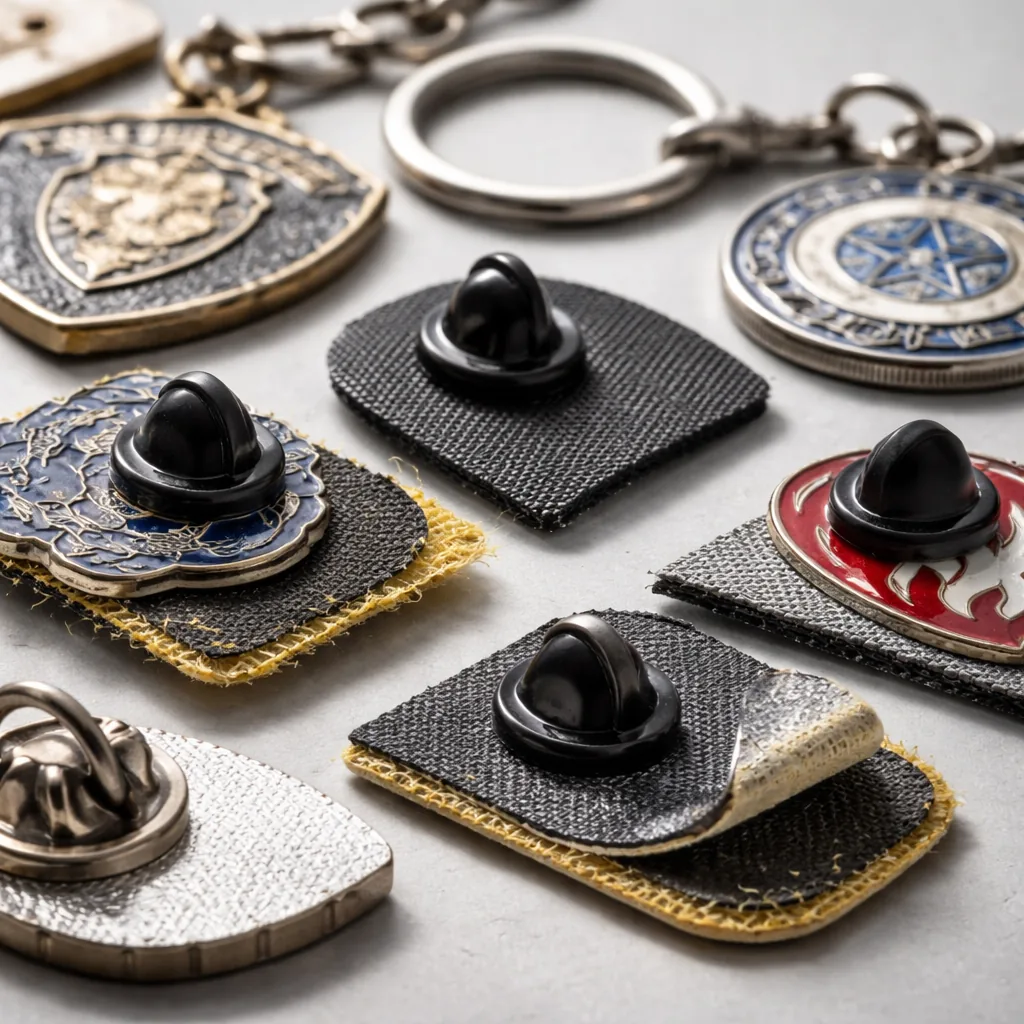
Start with the four spec lines that move small-order pin cost fastest
For 50 to 300 custom enamel pins, the biggest quote swings usually come from four missing lines: finished size, base construction, plating finish, and packaging format. At small MOQ, fixed costs such as die or mold setup, plating rack loading, hand color fill, polishing, counting, and packing are spread over fewer units, so a minor spec change can move unit cost by 15% to 40%. A 32 mm x 28 mm stamped iron soft enamel pin with one post and bulk pack can sit around USD 0.68 to 0.98 FOB at 100 pieces, while a 38 mm die-cast zinc alloy pin with epoxy, two posts, and printed backing card can reach USD 1.55 to 2.65 FOB before sample or tooling charges.
Write size in millimeters using the longest dimension first, then the second dimension for irregular shapes, such as 32 mm x 28 mm. Put target thickness and tolerance on the same line. For most flat artwork at small MOQ, stamped iron at 1.2 mm to 1.5 mm thickness is still the lowest-cost build. Zinc alloy is the better technical choice for open cutouts, curved outlines, pierced sections, and 2.0 mm to 3.0 mm bodies, but below 100 pieces it usually carries higher mold, grinding, and polishing cost. Photo-etched brass is a useful middle option for flatter, text-heavy, jewelry-style designs where 0.20 mm to 0.25 mm line definition matters more than relief depth.
- Write exact metric size, such as 32 mm x 28 mm, not 'about 1.25 inch.'
- State the base process explicitly: stamped iron, die-cast zinc alloy, or photo-etched brass.
- Specify thickness and tolerance, for example 1.5 mm ±0.15 mm for stamped iron or 2.5 mm ±0.20 mm for zinc alloy.
- Define packaging in the RFQ: bulk, individual OPP bag, or backing card plus bag.
Match the build method to MOQ, artwork detail, and target FOB price
For 50 to 100 pieces, the cheapest-looking drawing is not always the cheapest finished pin. Stamped iron soft enamel usually gives the best FOB cost for promotional, event, and brand pins because die charges stay moderate and the process handles raised-metal borders and standard fills efficiently. In 2026 buying, a 25 mm to 35 mm stamped iron soft enamel pin at 100 pieces commonly prices at USD 0.62 to 1.08 FOB each, with a one-time die charge around USD 45 to 85. At 50 pieces, the same body often rises to USD 0.88 to 1.45 FOB because setup and labor are diluted less effectively. At 200 to 300 pieces, that range often drops to roughly USD 0.54 to 0.92 FOB if the artwork and plating stay simple.
Imitation hard enamel is usually the next step up when the buyer wants a flatter, smoother face and cleaner edge transitions. At 100 pieces and 25 mm to 35 mm, a stamped iron imitation hard enamel pin usually lands around USD 0.82 to 1.38 FOB, with die cost similar to soft enamel but tighter cosmetic expectations and slightly slower polishing. Photo-etched brass works well at 0.8 mm to 1.0 mm thickness when the design includes narrow lines, small text, or a badge-like look with less relief. Die-cast zinc alloy fits 3D topography, interior cutouts, and thicker profiles; at 35 mm to 45 mm and 100 pieces, it commonly runs USD 1.15 to 2.30 FOB each plus a mold charge of roughly USD 90 to 160. If the art is flat and enclosed, zinc is usually unnecessary cost at small MOQ.
| Build type | Best MOQ band | Typical thickness | Useful technical limit | 2026 small-MOQ FOB range |
|---|---|---|---|---|
| Stamped iron soft enamel | 50-500 pcs | 1.2-1.5 mm | Raised metal lines preferably ≥0.25 mm; color cells ≥0.40 mm | USD 0.62-1.08 at 100 pcs, 25-35 mm |
| Stamped iron imitation hard enamel | 100-500 pcs | 1.2-1.5 mm | Best on flatter faces with closed areas and cleaner polish | USD 0.82-1.38 at 100 pcs, 25-35 mm |
| Photo-etched brass | 100-500 pcs | 0.8-1.0 mm | Fine line work down to about 0.20-0.25 mm | USD 0.76-1.28 at 100 pcs, 25-35 mm |
| Die-cast zinc alloy | 100-300 pcs | 2.0-3.0 mm | Handles cutouts, contours, and 3D relief | USD 1.15-2.30 at 100 pcs, 35-45 mm |
Lock dimensions, line widths, and hardware before engineering defaults take over
Small orders are where factory defaults create the most avoidable rework. If you do not define border width, minimum metal line width, attachment count, and post position, engineering will choose a standard solution that is manufacturable but may not preserve the artwork. For soft enamel, a minimum raised metal line width of 0.25 mm is workable, while 0.30 mm is safer for dense graphics with multiple enclosed cells. Open color spaces narrower than 0.40 mm tend to fill inconsistently, and negative gaps below 0.20 mm may close after plating and polish buildup. For photo-etching, 0.20 mm lines are possible, but 0.25 mm remains a safer commercial target for repeatability over a full lot.
Attachment hardware needs the same level of specificity. One post is usually acceptable up to 25 mm if the pin is light and worn on stable fabric. For pins 30 mm and larger, or for shapes taller than they are wide, two posts are recommended if anti-rotation matters on shirts, bags, caps, or lanyards. Standard post diameter is usually 0.9 mm to 1.1 mm, with post placement tolerance of ±1.0 mm from approved centerlines. If the pin must align tightly to a backing card, matched set, or branded presentation board, specify ±0.5 mm and expect some yield premium. Butterfly clutches remain the default low-cost option, while rubber clutches are often preferred for youth items, travel merch, and premium apparel because they scratch less in transit.
Write edge quality as an inspection rule, not as a vague expectation. A commercially realistic standard is no sharp burr detectable in normal finger handling, side flash not exceeding 0.10 mm, no die crack visible from 30 cm under 5000 K to 6500 K light, and no major denting on front edges. Hand-polished side edges improve feel and shelf appearance, especially on thicker zinc pins, but can add about USD 0.05 to 0.12 per piece at 100-piece quantities. A concrete spec line reads better than a subjective note: 'Edges smooth to touch, no burrs, side flash max 0.10 mm, post weld secure after hand pull.'
Specify plating and color for decorative production, not lab-grade uniformity
Plating on decorative pins is cosmetic rather than engineering-grade, and small runs rarely justify lot sorting by shade. For bright gold, bright nickel, black nickel, or antique finishes on custom pins, decorative plating thickness is commonly about 0.03 to 0.08 microns. That is normal for appearance and handling, but it should not be treated as a corrosion-resistant coating for outdoor hardware or jewelry with skin-contact claims. If the pins will be sold as premium collectibles or exposed to humid retail environments, ask for a clear protective lacquer on the plated face and note that small tone shift between lots is still commercially normal.
Color should be specified by Pantone reference plus viewing condition. 'Pantone 186 C, visual match under D50 light, minor lot shift acceptable' is far more useful than 'red.' Soft enamel sits recessed below the raised metal by roughly 0.05 mm to 0.12 mm, while imitation hard enamel is polished much closer to flat, so color-to-metal transitions look cleaner. The most variable finishes at low MOQ are pale pastels, transparent fills, glow pigments, and glitter because pigment loading and base-metal show-through change the visual result. If launch color is critical, require a pre-production approval photo under daylight-balanced light with a white card in frame, or buy a physical sample. A physical sample usually adds 5 to 8 calendar days plus courier cost, but that is still cheaper than remaking a retail batch.
Specify epoxy dome only when it solves a real need. On 25 mm to 35 mm pins, epoxy usually adds about USD 0.06 to 0.14 per piece; on larger zinc alloy items it can add USD 0.10 to 0.22. It improves scratch resistance and adds gloss, but it also reduces exposed-metal feel, rounds over fine detail visually, and can deepen dark colors. In hot retail environments or bulk-packed transit, epoxy can show micro-scratches and dust sooner than buyers expect, so it is not automatically the premium option.
Treat packaging as a separate cost line with measurable pack-out specs
On a 50 to 300 piece order, packaging can shift from minor accessory to major cost driver very quickly. An individual OPP polybag usually adds USD 0.02 to 0.04 per piece. A printed backing card plus bag typically adds USD 0.10 to 0.25 per piece depending on card size, paper weight, print coverage, barcode labels, and insertion labor. If retail packaging is added after the pin body has already been quoted or produced, the supplier may need to re-sort, re-count, punch cards, and re-carton the lot, which often wipes out any apparent savings from quoting body-only first.
Write the backing card spec as clearly as the pin spec. A common retail-ready format is 90 mm x 55 mm, 300 to 350 gsm coated card, 4C front print, one pin mounted through pre-punched holes, then packed into a clear OPP bag of about 100 microns total thickness. Heavier 40 mm to 45 mm zinc pins often need two puncture points and a stabilizing slit so the card does not lean or tear in transit. If the goods will be mixed with other SKUs at a forwarder or warehouse, define export-carton limits as well, such as maximum 8 kg to 10 kg gross weight per carton, inner-bag quantity per SKU, carton dimensions, and carton mark format for receiving.
- Use bulk pack only for giveaways, internal events, or later local kitting.
- Use individual polybags when abrasion protection matters more than presentation.
- Use printed backing cards when shelf display, branding, or barcode tracking matters.
- Confirm card size, GSM, bag type, carton weight limit, and SKU labeling before final approval.
Set QC rules that fit a 100-piece custom order
A 100-piece custom pin order still needs inspection standards, but they should focus on critical, functional, and clearly visible cosmetic defects rather than mass-retail overkill. AQL 2.5 for major defects and AQL 4.0 for minor defects is a practical starting point for custom promotional hardware. Reserve zero tolerance for sharp points, wrong artwork, wrong plating, missing posts, loose welds, detached clutches, plating peel, or shipment quantity short against the approved packing list. For small lots, many buyers also set a simple count rule: no over-short shipment without prior approval, and overrun capped at +3% if the order is custom-packed.
Define what counts as acceptable face variation. Tiny dust points, slight enamel waviness, or faint polishing marks not visible at 30 cm are normally acceptable on hand-finished pins. Missing enamel fill, exposed base metal inside a color cell, obvious underfill below the border line, major color contamination, plating blister, or visibly crooked post placement are not acceptable. For butterfly or rubber clutches, require secure fit with no loose weld after a hand-pull check. If using magnetic backs, specify a simple functional test such as no detachment after three attachment cycles and one controlled drop from 80 cm onto corrugated carton over concrete.
For approval control, one consolidated digital proof plus one in-line production photo check before final packing is usually the best-value process on small runs. Physical pre-production samples make sense when the construction is new, the plating is unusual, the card assembly is custom, or several stakeholders need sign-off. For repeat orders from existing tooling, require the factory to reference the last approved proof, plating code, packaging spec, hardware layout, and carton mark so the job does not drift between lots.
Build the schedule around tooling, approvals, and packing bottlenecks
The headline lead time on a small custom pin order is rarely the real schedule driver. In 2026, a straightforward stamped iron soft enamel order typically needs 2 to 4 working days for artwork proofing and die preparation, then 7 to 10 production days after final approval, plus 1 to 2 days for bulk packing. Add epoxy, custom cards, or special back hardware and the tail gets longer. Soft enamel with epoxy and backing card often needs 9 to 13 production days plus 2 to 4 packing days. Zinc alloy with cutouts or 3D surfaces commonly needs 10 to 15 production days because casting cleanup, polishing, and yield balancing are slower than flat stamping jobs.
Physical samples usually add 5 to 10 calendar days including sample production, finishing, photo confirmation, and courier dispatch. Existing tooling can shorten the timeline only if the specification truly stays unchanged. A plating switch from bright nickel to black nickel, a change from one post to two posts, or a move from bulk to carded pack all require revised work instructions and sometimes new jigs, card punches, or assembly checks. In practice, buyer approval delay is often the biggest cause of missed ship windows on 50 to 300 piece orders, so internal comments should be consolidated before they go back to the factory.
| Order type | Approval method | Typical production days | Packing days | Main risk points |
|---|---|---|---|---|
| 100 pcs stamped iron soft enamel, bulk | Digital proof only | 7-10 days | 1-2 days | Pantone interpretation, post placement |
| 100 pcs soft enamel with epoxy and card | Digital proof only | 9-13 days | 2-4 days | Epoxy consistency, card insertion accuracy |
| 100 pcs zinc alloy with cutouts | Digital proof only | 10-15 days | 1-3 days | Polishing variation, edge cleanup |
| 100 pcs any build with physical sample | Physical sample first | Sample 5-10 days plus mass 7-12 days | 1-4 days | Approval lag, duplicated stakeholder comments |
Send a one-page RFQ that fixes both technical and commercial lines
The most reliable way to source small-MOQ pins is to send one page that gives the supplier enough information to quote, tool, produce, and inspect without guessing. Include size, material and process, thickness, plating, Pantone colors, post count and placement, clutch type, backing type, packaging format, quantity breaks, target ship date, and destination terms such as FOB Shenzhen or FOB Ningbo. Ask for cost as separate lines: unit FOB price, tooling charge, sample charge, packaging charge, and any card setup or barcode labeling charge. If everything is bundled into one vague line item, supplier comparisons become unreliable and later change charges are harder to challenge.
A practical 2026 RFQ flow is straightforward. Quote at least two construction options if budget matters, usually stamped iron soft enamel and imitation hard enamel. Request breaks at 50, 100, 200, and 300 pieces so you can see where setup cost starts to dilute. If the design is larger than 35 mm or includes cutouts, add a zinc-alloy option for comparison instead of assuming it is required. Approve one consolidated artwork proof internally before replying. Decide early whether a physical sample is necessary or whether in-line production photos are enough. That sequence removes most avoidable delay, requoting, and interpretation error on small custom orders.
- List quantity breaks in one RFQ: 50, 100, 200, and 300 pcs.
- Ask for FOB unit price, tooling, sample, packaging, and card setup as separate lines.
- Confirm measurable tolerances before approval: size, thickness, post placement, and plating appearance.
- Freeze the approved spec for reorders so later lots do not drift.
- Lock backing card details before mass production if the item will be sold retail.
Have a project? Send your artwork and target quantity and we’ll reply with a detailed quotation within 12 working hours.
Ready to get this made?
Send your sketch, target quantity and ship-date. Detailed quotation in 12 hours.



