Should You Consolidate Pins, Patches and Lanyards in One PO?
Judge consolidation by process fit, not by quote simplicity
A single PO for enamel pins, woven or embroidered patches, polyester lanyards, and a matching keychain can reduce admin work: one supplier contact, one approval trail, fewer invoices, fewer carton labels, and one freight booking. Those benefits are real, but they are not the first decision point. The first question is whether the items can move through sampling, bulk production, inspection, and packing on a compatible schedule. In mixed promotional orders, the slowest or least stable process usually controls the ship date.
That is why the decision should start from manufacturing route and control points, not from how neat one quote sheet looks. A 32 mm soft enamel iron pin at 1.2 mm thickness, a 75 mm woven patch with merrow border, and a 20 x 900 mm sublimated polyester lanyard do not run on the same process logic. Metal goods need die tooling, stamping or casting, plating, fill, baking, polishing, and cosmetic inspection. Patches depend on loom or embroidery setup, stitch or weave density, edge finishing, backing lamination, and cut accuracy. Lanyards depend on webbing quality, print registration, heat transfer consistency, sewing, and hardware attachment strength. One item may be released from digital art approval; another may need a strike sample, wash test, or plating approval before bulk can start.
The practical buyer question is straightforward: can this supplier manage all of those SKUs as one controlled project, with visibility into where each process sits and who owns final QC? If yes, a mixed PO can reduce handoffs and freight friction. If no, one PO does not remove complexity. It only postpones when the complexity becomes visible, usually at the ex-factory date.
When one mixed PO is actually a good fit
Consolidation works best when the order is event-driven, artwork is already frozen, and each SKU sits in a moderate quantity band with standard construction. In practice, that usually means 300 to 3,000 pcs per design, standard export packing, no unusual substance or child-safety requirement, and no retail-grade cosmetic standard that is materially tighter than the rest of the set.
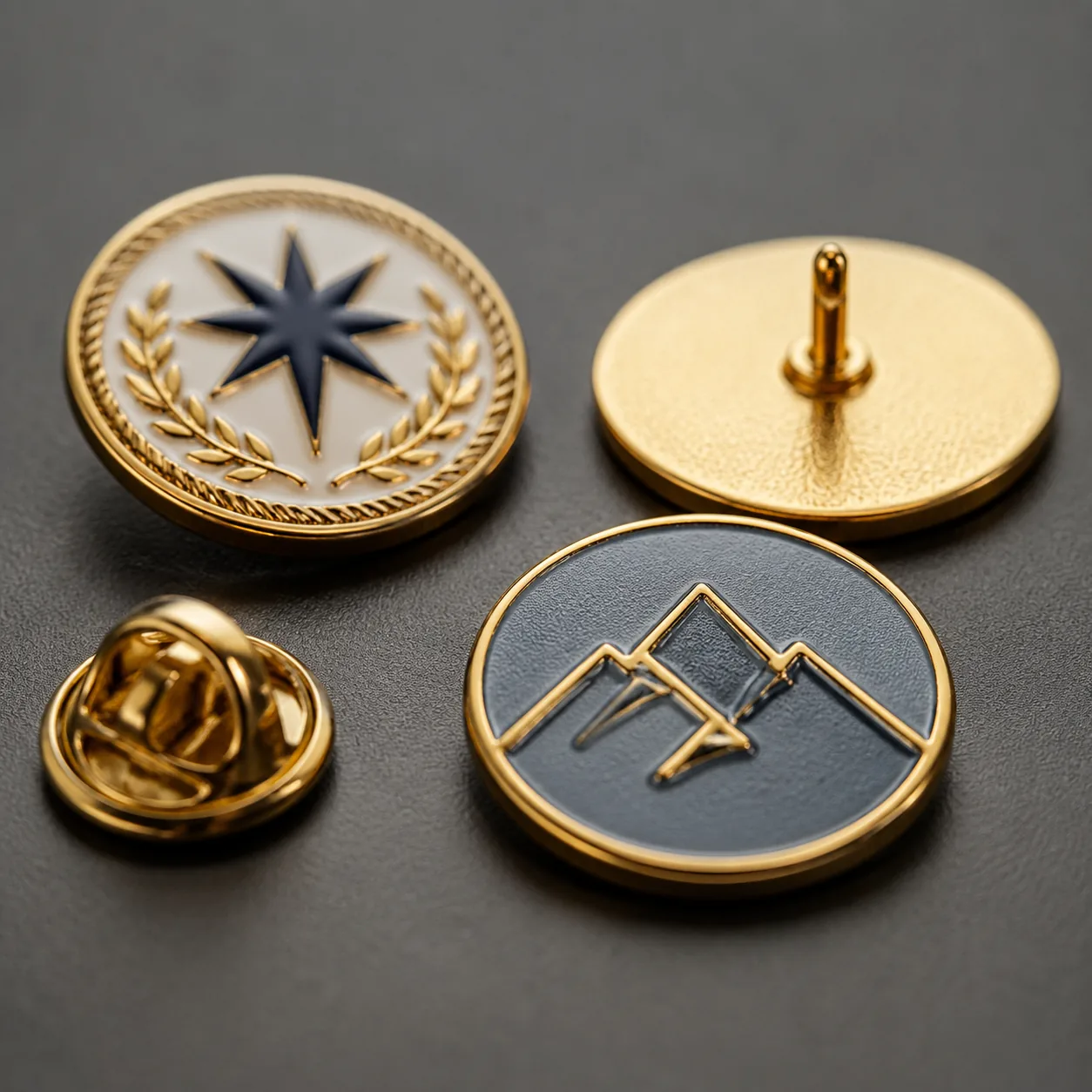
A typical good-fit bundle looks like this: a 30 to 35 mm soft enamel iron pin with butterfly clutch, 1.2 to 1.5 mm base thickness, sandblast back, and standard nickel plating; a 70 to 80 mm woven patch with merrow border or heat-cut edge and iron-on or sew-on backing; and a 20 mm x 900 mm sublimated lanyard in 0.8 to 1.0 mm polyester webbing with swivel hook and optional breakaway. After final art approval, realistic bulk lead times are commonly 10 to 14 calendar days for sublimated lanyards, 12 to 16 days for woven patches, 14 to 18 days for embroidered patches, and 12 to 18 days for standard soft enamel pins. Those windows are close enough that one booking can be planned without forcing excessive finished-goods storage or rehandling.
The order is also a better fit for consolidation when the buyer accepts normal cross-material variation. A shared Pantone reference is still useful, but enamel, woven thread, embroidery thread, and sublimation ink will not read identically under D65 light because gloss, texture, absorbency, and base-color influence differ. If the acceptance standard is visual consistency within normal process limits rather than exact instrument match across all materials, one supplier has more room to run the project efficiently.
The last requirement is real process control. Many traders can quote mixed bundles. Fewer can say, clearly, which steps are in-house and which are subcontracted: die striking, die casting, plating, enamel fill, weaving, embroidery, lanyard printing, sewing, and final kitting. Consolidation is strongest when the supplier can show one coordinated production plan and one final QC gate before packing. Without that, you have one commercial contact but not one controlled manufacturing system.
When to split the PO before one SKU distorts the whole schedule
Split the order when one product carries a different quality risk, sampling requirement, or compliance burden. A hard enamel zinc alloy pin with polished edges, no epoxy, and 0.8 to 1.0 micron nickel plating has a much tighter cosmetic standard than a basic giveaway lanyard. If that pin requires a strike sample, plating approval, and stricter scratch inspection, tying it to the same shipment gate as standard textile items often creates finished-goods delay without improving quality on the easier lines.
MOQ economics are another common reason to separate. Custom pins may start at 100 pcs per design, woven patches at 100 to 200 pcs, embroidered patches at 100 pcs, and sublimated lanyards at 100 pcs, but the price-break curve is different. Pins often show meaningful unit-cost drops at 300, 500, and 1,000 pcs because tooling and setup are absorbed across more pieces. Lanyards usually improve only modestly between 100 and 500 pcs because transfer print and sewing setup are already efficient. Woven patches often become more competitive above 1,000 pcs when loom utilization improves. If procurement forces every SKU into one volume strategy, the order may look simpler while losing money at the line-item level.
End use is a third trigger to split. A school or youth-program lanyard may need a breakaway, azo-free dye confirmation, CPSIA or REACH declaration depending on market, and a tensile check on the attachment. An outdoor uniform patch may need better edge stability, colorfastness to washing, and adhesive performance after 5 to 10 wash cycles. A conference giveaway pin may need none of that. Once requirements diverge, shared PO wording often collapses into vague language such as 'good quality' or 'match approved artwork.' That is where avoidable disputes start.
Split the order as well when shipment timing is unequal. If staff lanyards must land 10 days before an event for distribution and the commemorative pin can follow later, do not let both sit behind one final approval gate. In most cases, one extra invoice and one extra booking cost less than an emergency air shipment or a missed launch date.
The specification points that make or break a mixed order
Most consolidated POs succeed or fail on four specification groups: visual standard, dimensional tolerance, packing sequence, and inspection rule. If any of those are vague, the buyer and supplier end up arguing over symptoms rather than causes.
Visual standard needs more than a Pantone note. For pins, specify base material, finish, line-width minimum, whether epoxy is applied, attachment type, and what counts as a cosmetic defect. A practical control for standard soft enamel is minimum raised metal line width of 0.20 to 0.25 mm, no visible enamel overflow onto raised metal, no exposed base metal on the front face, and no visible dents or scratches at 30 cm under normal office lighting. For woven patches, specify border type, backing type, cut method, and whether slight shade shift from thread direction is acceptable. For lanyards, specify webbing thickness, print method, logo orientation, backside treatment, hardware finish, and whether color is judged against digital artwork, a fabric swatch, or an approved physical sample.
Dimensional tolerances should be numeric. Practical working figures for standard promo goods are: pin thickness tolerance plus or minus 0.10 mm, overall pin size plus or minus 0.50 mm, pin-post position plus or minus 1.0 mm, woven or embroidered patch size plus or minus 1.5 mm, lanyard width plus or minus 0.5 mm, finished lanyard length plus or minus 5 mm, and keychain overall size plus or minus 1.0 mm. If plating matters, state the range directly. Economy flash nickel for basic promotional use is often around 0.03 to 0.05 micron. Better wear performance and more consistent coverage usually starts around 0.5 micron, while premium gift-grade nickel is often specified at 0.8 to 1.0 micron.
Packing sequence matters more than many buyers expect. Mixed orders regularly fail at the end because kitting starts before every SKU has passed final QC. The safer method is SKU-level packing first: count and pack each line separately, label clearly by SKU and revision, and allow set assembly only after all lines are approved. That reduces unpack-repack labor, assortment mistakes, count errors, and surface damage on plated parts.
Inspection rules must also be explicit by category. For standard event-grade promo goods, a common baseline is ANSI/ASQ Z1.4 single sampling, general inspection level II, with AQL 2.5 for major defects and AQL 4.0 for minor defects. For premium pins, retail carded assortments, or high-visibility gifting, many buyers tighten to AQL 1.5 major and AQL 2.5 minor. The important point is not only the number. It is the defect definition. A front-face plating scratch on a polished pin is not judged the same way as a minor thread-direction variation on a woven patch.
| Decision Point | Good Fit for One PO | Better as Separate POs |
|---|---|---|
| Lead time after approval | All SKUs fall within roughly 10 to 18 calendar days | One SKU can ship in 7 to 10 days while another needs 20 to 28 days |
| MOQ economics | All lines are workable at 300 to 1,000 pcs per design | One line only becomes competitive above 2,000 pcs or has a very different price-break curve |
| Sampling method | Digital approval or one physical sample per process family is enough | One SKU needs a strike sample, wash test, pull test, or plating approval that gates bulk |
| Color expectation | Buyer accepts normal variation across enamel, thread, and polyester | Buyer requires tight cross-material visual matching under D65 against one physical master |
| Packing plan | Separate SKU packing, then late-stage kitting after final QC | Pre-kitting is required before all lines are complete |
| Quality level | All items are event-grade with similar cosmetic expectations | One SKU is premium gift-grade or retail-ready while others are standard giveaways |
Real savings versus savings that are usually overstated
The savings from consolidation are usually administrative and logistical, not dramatic unit-cost gains. One supplier can reduce artwork handoff, PO issuance, invoice matching, carton-mark coordination, export documents, and booking effort. On a modest mixed order, those savings are often in the range of USD 75 to 250 in handling and documentation, plus lower local trucking duplication and better carton utilization. If the shipment moves by air or by LCL, combining cartons can also reduce minimum-charge inefficiency.
What is often overstated is the manufacturing advantage. A supplier strong in metal goods may still outsource woven patches or lanyards. That can add 2 to 5 calendar days and reduces direct control over thread density, edge quality, print registration, or sewing consistency. In those cases, the mixed quote is commercially convenient but not operationally stronger. A specialized patch factory can beat a mixed supplier by 8 to 20 percent on certain woven, embroidered, or laser-cut constructions. A dedicated metal factory may hold better plating consistency, cleaner fill lines, and lower cosmetic reject rates on pins or keychains.
FOB price ranges are useful only as a screening tool. At 500 pcs per design, typical FOB China ranges for common 2026 promotional constructions are often: 30 mm soft enamel iron pin with butterfly clutch at USD 0.38 to 0.78 plus USD 45 to 85 tooling; 75 mm woven patch with merrow border at USD 0.22 to 0.52; 20 x 900 mm sublimated lanyard with standard swivel hook at USD 0.32 to 0.72; and 50 mm zinc alloy die-cast keychain at USD 0.85 to 1.65 plus tooling where new molds are needed. At 100 pcs, prices are commonly 20 to 45 percent higher depending on setup and tooling. At 1,000 pcs, standard items often drop another 8 to 18 percent. Premium plating, individual barcode labels, retail cards, custom hardware, or complex kitting will move those numbers materially.
The more reliable comparison method is to force every quote into the same structure: unit price by SKU, tooling, sample charge, packaging assumption, MOQ tier, and lead time in calendar days after approval. That exposes whether the claimed one-PO advantage comes from real process efficiency or from averaging different products into one blended offer.
Procurement checks to lock before you place the order
- Confirm which processes are in-house and which are outsourced: die striking or casting, plating, enamel fill, weaving, embroidery, lanyard printing, sewing, and kitting.
- Lock MOQ tiers by SKU and by design before comparing quotes. The most useful checkpoints are 100, 300, 500, 1,000, and 3,000 pcs.
- Specify material grade directly: iron or zinc alloy for pins and keychains; woven, embroidered, twill, PVC, or felt base for patches; polyester webbing type and thickness for lanyards.
- State plating requirement in microns where relevant, especially for nickel, black nickel, imitation gold, or antique finishes.
- Write numeric tolerances for size, thickness, post position, cut edge, and finished strap length instead of using generic quality language.
- Require one combined approval sheet covering artwork revision, dimensions, Pantone references, hardware, packing method, carton marks, and barcode details for every SKU.
- Set the inspection plan up front, including sampling standard, AQL levels, and defect definitions by product type.
- Require SKU-level packing first and allow final kitting only after all items pass inspection.
- Define whether partial shipment is allowed if one SKU is delayed, and who absorbs storage, relabeling, or split-shipment cost.
- Confirm carton specification before production starts, including master-carton size, inner-pack counts, and net-weight limit. A practical working limit is 12 to 15 kg net per export carton for easier handling and lower damage risk.
How to sample mixed-item orders without wasting a week
Do not use the same sampling method for every SKU. Sample according to process risk. A pin with recessed text below 0.25 mm stroke width, a spinner keychain, hard enamel fill, or a patch with a custom laser-cut silhouette deserves a physical pre-production sample. A straightforward sublimated lanyard with standard 20 mm webbing, standard hook, and no unusual sewing can often move from digital artwork approval plus a print strike-off or webbing photo confirmation.
A practical sequence is: first, freeze dimensions, materials, Pantone references, hardware, and packing notes across all SKUs in one approval sheet. Second, approve digital artwork for the full set. Third, request one physical control sample per process family: one metal sample, one textile sample, and one packaging mock-up if backing cards, header cards, or kitting are involved. That approach commonly saves 3 to 7 calendar days compared with asking for a finished physical sample for every line item.
Where brand consistency matters, every approval should carry the same revision code and date. Mixed orders fail more often than they should because the patch line receives revision B while the lanyard line runs revision A. The combined approval document is not paperwork for its own sake. It is the main control point that keeps different process families aligned.
The failure modes buyers see most often on consolidated POs
The most common failure is not one bad product. It is one PO carrying mismatched acceptance criteria. Buyers may reject tiny pits, front scratches, or enamel contamination on polished pins while accepting minor thread-direction shift on woven patches. If the PO does not separate those standards, the supplier may apply one generic cosmetic rule across everything and the dispute appears only at final inspection.
Packing errors are the next major problem. In mixed orders, the repeat failures are wrong count per polybag, backing cards switched between designs, inner packs built to the wrong assortment, and master cartons marked only with the main PO instead of SKU code and revision. Those sound minor until fulfillment starts. For event kits or retail assortments, even a 1 to 2 percent kitting error rate can erase any sourcing savings because downstream resorting and relabeling costs multiply quickly.
The third issue is color disappointment across materials. Pantone matching on enamel, woven thread, embroidery thread, and sublimated polyester is inherently different because gloss, texture, absorbency, and base-color influence differ. If tight visual alignment matters, define the reference clearly and approve against a physical standard under known lighting, typically D65. If normal process variation is acceptable, state that explicitly. Unrealistic color expectations turn many otherwise usable mixed orders into avoidable rejection fights.
There is also a schedule risk buyers often underestimate: finished goods waiting for one delayed line. Lanyards may be complete and packed while pins are being replated after scratch findings or patches are being remade for border inconsistency. If all items are tied to one ex-factory date with no partial-ship option, the whole project waits for the hardest SKU. That is the core operational risk of over-consolidation.
A practical decision path for the next order
Start by putting each planned SKU into three columns: process family, approval risk, and required ship date. If two or more items match across all three, they are reasonable candidates for one PO. If one item differs sharply on sample method, production duration, cosmetic standard, or end-use compliance, separate it early.
Then issue the RFQ only after the baseline specification is frozen. That means dimensions, material grade, finish, backing or attachment, packaging format, carton marks, inspection standard, and whether partial shipment is allowed. Require every supplier to quote lead time by SKU in calendar days after approval, not just one total number. That single request usually reveals whether the consolidation plan is operationally real or only commercially convenient.
For most China-sourced promotional programs, the safest model is selective consolidation rather than maximum consolidation. Keep compatible items together when that reduces handoffs, documentation, and freight friction. Split the one SKU that can distort schedule, MOQ economics, or quality control for the rest. In practice, that protects launch timing better than forcing all items into one PO, and launch timing is usually the costliest thing to lose.
Have a project? Send your artwork and target quantity and we’ll reply with a detailed quotation within 12 working hours.
Ready to get this made?
Send your sketch, target quantity and ship-date. Detailed quotation in 12 hours.



