Rush vs Standard Custom Pin Orders: Real 2026 Cost Math
The real cost error is missing the approval cutoff, not the rush surcharge itself
Most blown margins on custom pin programs start in pre-production. Buyers negotiate unit price aggressively, then lose 2 to 5 business days to proof revisions, internal sign-off on plating or backing cards, or late changes to post position and attachment count. By the time artwork is finally released, the factory is no longer quoting a routine production slot. It is quoting schedule compression: priority tooling, interrupted line sequencing, overtime, and a faster export handoff.
For 2026, a realistic standard timeline for mainstream custom pins from China is usually 12 to 19 calendar days after final artwork approval, not after first inquiry. A common 30 mm die-struck soft enamel iron pin with 4 to 6 fill colors, nickel or imitation gold finish, one post, butterfly clutch, and bulk packing typically needs 8 to 11 production days, plus 2 to 3 days for QC, counting, and carton prep. Imitation hard enamel usually runs 11 to 15 production days because color filling, baking, stone polishing, and flush-surface finishing are slower and more inspection-heavy. Zinc alloy pins with cutouts, 3D relief, spinner parts, or dangler assembly often require 12 to 16 production days because casting, deburring, polishing, plating, and final assembly add more manual touchpoints.
The practical sourcing question is not whether the factory can make the design. It is the last final-approval date that still preserves standard production and lower-cost freight. Once the in-hand window drops below roughly 21 days, the buying decision changes: schedule certainty and freight mode usually matter more than saving another USD 0.03 per piece on the FOB quote.
What actually creates a rush premium on pin orders
Rush pricing is usually tied to real operating cost. Standard jobs are efficient because factories batch similar finishes, combine plating lots, run enamel colors in sequence, and inspect multiple orders under the same workflow. A rush order breaks that rhythm. The die shop may move a tool ahead of queue, plating may run in a smaller-than-efficient batch, line operators may work overtime, and QC and packing teams may be reassigned to protect a ship date.
For a straightforward 30 mm soft enamel iron pin in 2026, standard FOB pricing at 500 pieces is commonly around USD 0.40 to 0.60 each, plus a one-time mold charge of about USD 45 to 90 depending on outline complexity, internal cutouts, and whether there are piercings. A real rush schedule often adds USD 0.08 to 0.18 per piece. On low-MOQ orders, some suppliers also add a flat expedite fee of USD 30 to 80 because schedule disruption is high relative to revenue. On a 100-piece order, that can push the effective rush premium to roughly 18 to 35 percent before freight.
The hidden cost under tight deadlines is often pack-out, not the metal badge itself. A fifth enamel color may add only USD 0.01 to 0.03 per unit. By contrast, individual polybagging, barcoded backing cards, sequential numbering, mixed-SKU assorting, or rigid gift boxes can add USD 0.08 to 0.28 per unit and 1 to 3 extra handling days. If the delivery window is tight, simplifying packaging usually protects both schedule and gross margin faster than redesigning the pin face.
| Order scenario | MOQ | Typical lead time after final approval | Typical 2026 FOB unit price | Typical rush premium |
|---|---|---|---|---|
| 30 mm soft enamel iron pin, standard plating, bulk packed | 100 pcs | 9 to 12 production days + 2 days QC/packing | USD 0.82 to 1.15 | USD 0.12 to 0.25 each, often plus USD 30 to 60 expedite fee |
| 30 mm soft enamel iron pin, standard plating, bulk packed | 500 pcs | 8 to 11 production days + 2 to 3 days QC/packing | USD 0.40 to 0.60 | USD 0.08 to 0.18 each |
| 35 mm zinc alloy pin with cutout and epoxy dome | 500 pcs | 10 to 14 production days + 2 to 3 days QC/packing | USD 0.75 to 1.08 | USD 0.12 to 0.24 each |
| 30 mm imitation hard enamel brass pin | 300 pcs | 11 to 15 production days + 2 days QC/packing | USD 0.70 to 1.02 | USD 0.10 to 0.20 each |
| Pin with backing card, barcode label, and individual bagging | 500 pcs | Base pin lead time + 1 to 3 extra days for pack-out | Add USD 0.10 to 0.24 | Rush impact often exceeds base-pin rush cost because packing is labor-intensive |
MOQ tiers change total economics more than most buyers expect
MOQ tiers matter because custom pins include fixed process cost that does not scale down cleanly: die setup, plating setup, color preparation, machine changeover, sample confirmation, and inspection records. When volume falls from 500 pieces to 100 pieces, those fixed inputs are spread over far fewer units. The order behaves less like efficient production and more like a controlled short-run lot.
In 2026, the most useful breakpoints remain 100, 300, 500, and 1,000 pieces. At 100 pieces, a simple soft enamel pin can cost 70 to 110 percent more per unit than at 500 pieces because setup dominates. At 300 pieces, pricing starts to normalize. At 500 pieces, many 25 to 35 mm stamped-iron designs reach the best balance between unit cost, manageable inventory, and standard-line scheduling. At 1,000 pieces, straightforward builds often gain another 8 to 18 percent reduction versus 500 pieces, especially with one plating finish, no individual bagging, and bulk carton packing.
This is why buyers should request price-by-tier and lead-time-by-tier together. A 500-piece standard order often costs less in total than a 200-piece rushed order once expedite charges, express freight, and domestic repacking are included. Buyers trying to stay conservative with a low MOQ frequently end up with the highest cost per usable unit when the calendar gets tight.
A practical rule: if realistic demand is above about 350 to 400 units and the artwork is stable, treat 500 pieces as the baseline quote. The carrying cost of an extra 100 to 150 pins is often lower than the combined penalty of low-volume conversion cost, rush handling, and emergency air movement.
Where schedules really fail: pre-production drift and spec changes
The longest delay in a custom pin project is often not stamping, enamel fill, or plating. It is pre-production drift. Factories can usually cut a die in 2 to 4 days and move a simple order quickly once the specification is frozen. The schedule breaks when a buyer changes backing card dimensions after proof approval, switches from nickel to black nickel after purchase order release, adds a second post for stability, or requests an epoxy dome after the sample photo stage.
A realistic 2026 path looks like this: 1 business day for quotation, 1 to 2 days for artwork proofing, 1 to 3 days for buyer approval, 2 to 4 days for tooling, 6 to 10 days for simple production or 9 to 14 days for more complex production, then 1 to 2 days for final inspection and packing. If approval is split between marketing, procurement, licensing, and regional sales, internal delay commonly adds 3 to 7 days before the factory even starts tooling. That delay alone is enough to convert a standard job into a rush job.
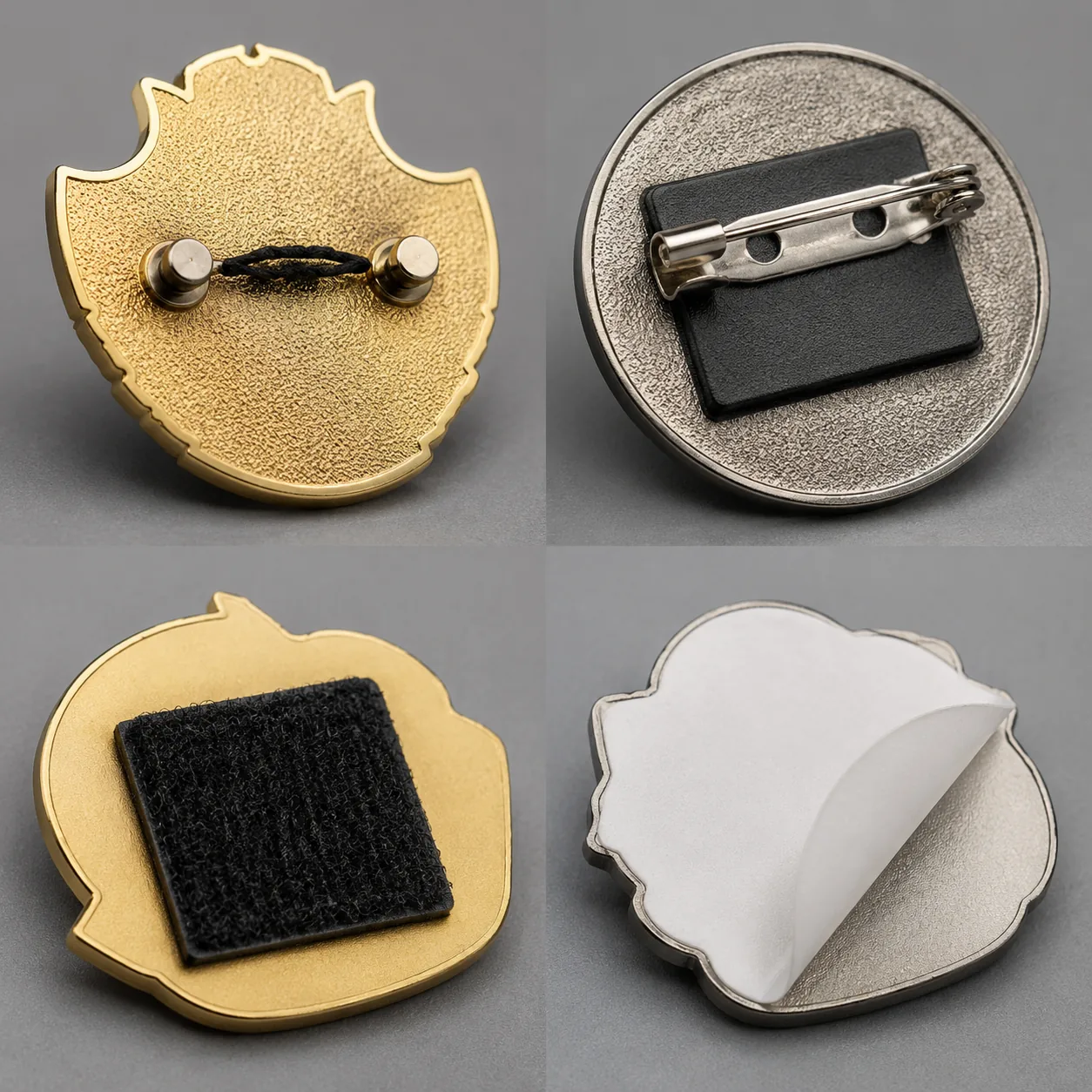
The safest control point is a single approval round that locks five items at once: finished size in millimeters, base material and thickness, plating finish, attachment type and position, and packaging method. If those five variables stay fixed, suppliers can usually protect the production slot. If two or more remain provisional, any promised lead time should be treated as conditional rather than guaranteed.
Specifications that move fast versus specifications that slow the line
The fastest standard lane is still the classic promotional build: 25 to 35 mm soft enamel on stamped iron, 1.2 to 1.5 mm thickness, one standard finish, one post with butterfly clutch, and bulk packing. These jobs use familiar tooling, straightforward fill sequencing, and simple final inspection criteria. Many factories inspect them to ANSI/ASQ Z1.4 or an equivalent internal plan, commonly at AQL 2.5 for major defects and AQL 4.0 for minor cosmetic defects unless the purchase order specifies something tighter such as AQL 1.5 major and AQL 2.5 minor.
Typical dimensional tolerance for stamped pins is around plus or minus 0.15 mm to 0.25 mm on overall size, depending on shape complexity and whether internal cutouts are present. Thickness tolerance is often plus or minus 0.10 mm. Decorative electroplating on promotional pins is usually thin, about 0.03 to 0.08 microns for nickel, black nickel, imitation gold, or imitation silver appearance finishes. That is normal for giveaway, souvenir, and uniform applications, but it should not be mistaken for heavy engineering-grade wear plating.
The slower lane includes zinc alloy casting for openwork or sculpted forms, imitation hard enamel with polished flush surfaces, dual-post constructions, magnetic backs, spinner or dangler assemblies, and retail-ready packaging. Added features such as dual plating, sandblasted recesses, glitter fill, glow enamel, laser numbering, or mixed-SKU sorting can each add either curing time, manual handling, or extra inspection points. A pin can move from a routine 10-day build to a 14-day build without changing size at all if the specification adds enough secondary operations.
- Fastest standard build: 25 to 35 mm soft enamel iron pin, 1.2 to 1.5 mm thick, single finish, one butterfly clutch, bulk packed
- Moderate schedule risk: zinc alloy cutout pin with epoxy dome, black nickel finish, backing card, and barcode label
- High schedule risk: imitation hard enamel, spinner or dangler assembly, magnetic back, gift box, or mixed-SKU sorting
- Typical decorative plating thickness: about 0.03 to 0.08 microns for nickel, black nickel, and imitation gold appearance finishes
- Common stamped-pin size tolerance: about plus or minus 0.15 mm to 0.25 mm; typical thickness tolerance: plus or minus 0.10 mm
- Common visual sampling plan: AQL 2.5 major and AQL 4.0 minor unless a stricter standard is written into the PO
Freight mode can erase every factory-side saving
On urgent custom pin orders, freight mode often changes landed cost more than the factory rush surcharge does. Once the order is tied to an event, launch, or campaign date, sea freight usually stops being realistic. The choice becomes express courier versus standard air cargo or consolidated air. Courier is simple and fast for shipments under roughly 20 to 30 kg chargeable weight, but the per-kilogram cost is high. Standard or consolidated air can be cheaper on larger shipments, but it adds terminal handling, booking cutoffs, customs coordination, and more handoffs.
For 2026 budgeting, a small export shipment in the 10 to 25 kg range can easily show a USD 180 to 450 spread between express courier and consolidated air, depending on lane, fuel surcharge, and destination clearance fees. For example, 1,000 bulk-packed 30 mm pins may weigh only about 12 to 18 kg gross with cartons, while 1,000 retail-boxed pins can move past 25 kg quickly because packaging volume drives chargeable weight. That freight delta is often larger than the savings from negotiating USD 0.03 to 0.05 off the FOB unit price.
The useful rule is to backward-plan from the in-hand date, not from ex-factory completion. If production finishes with fewer than 10 days left before the goods are needed, some form of air movement is the safer assumption unless inventory is already domestic. Removing approval delay early preserves freight options later, which is often the difference between an acceptable landed margin and a project that breaks even at best.
How to compare a 7-day quote with a 15-day quote accurately
Lead-time promises are only comparable when the stages mean the same thing. One supplier may be quoting production days only after tooling is complete. Another may include tooling, fill, final inspection, and dispatch to forwarder. One may assume weekdays only and bulk packing. Another may include weekends, backing cards, and a final approval photo before sealing cartons. Without a stage definition, the shorter quote may actually carry more schedule risk.
The cleanest comparison method is to split the project into five stages: proofing, buyer approval, tooling, mass production, and packing plus dispatch. Then confirm what starts the clock, what pauses it, and whether weekends and public holidays count. If a factory offers a 7-day schedule, ask whether plating is in-house or outsourced, whether the slot is guaranteed or best-effort, and whether any rework time is included if the first pre-production image reveals a color mismatch, a post-position issue, or a backing-card error.
For an apples-to-apples quote, buyers should also verify whether pricing assumes one design per PO, one shipping mark per carton, one packaging method, and no assorting by SKU. A low FOB quote with an undefined timeline can become the expensive option once rework probability, freight escalation, and schedule uncertainty are priced honestly.
What to do when the delivery date is fixed
A simple triage model helps. Safe means 30 or more days until the in-hand date. Tight means 21 to 29 days. Critical means 20 days or less. This classification forces a realistic sourcing approach and stops teams from treating a compressed custom order like a routine replenishment.
If the project is safe, request standard and expedited quotes at 300, 500, and 1,000 pieces and compare total landed cost, not FOB alone. If the project is tight, simplify the build before negotiating unit price: keep standard plating, one attachment, and bulk packing where possible. If the project is critical, ask for three answers in the same email: the last guaranteed artwork approval cutoff, the fastest specification the factory can commit to without exceptions, and the recommended freight mode with transit days and cutoff date.
- Lock size, thickness, plating, attachment, and packaging in one approval cycle
- Request quotes at 100, 300, 500, and 1,000 pieces, with lead time for each tier
- Ask for stage-by-stage days: proofing, approval, tooling, production, packing, and dispatch
- Separate rush production charges from freight charges so the real premium is visible
- Use standard components when possible: single finish, butterfly clutch, and bulk packing
- Approve artwork that shows post position, attachment count, backing details, and packaging, not front art alone
- Treat any overseas order with less than a 21-day in-hand window as a schedule-risk project, not a normal replenishment buy
Have a project? Send your artwork and target quantity and we’ll reply with a detailed quotation within 12 working hours.
Ready to get this made?
Send your sketch, target quantity and ship-date. Detailed quotation in 12 hours.



