Rush Orders in 2026: Pins vs Patches vs Lanyards vs Keychains
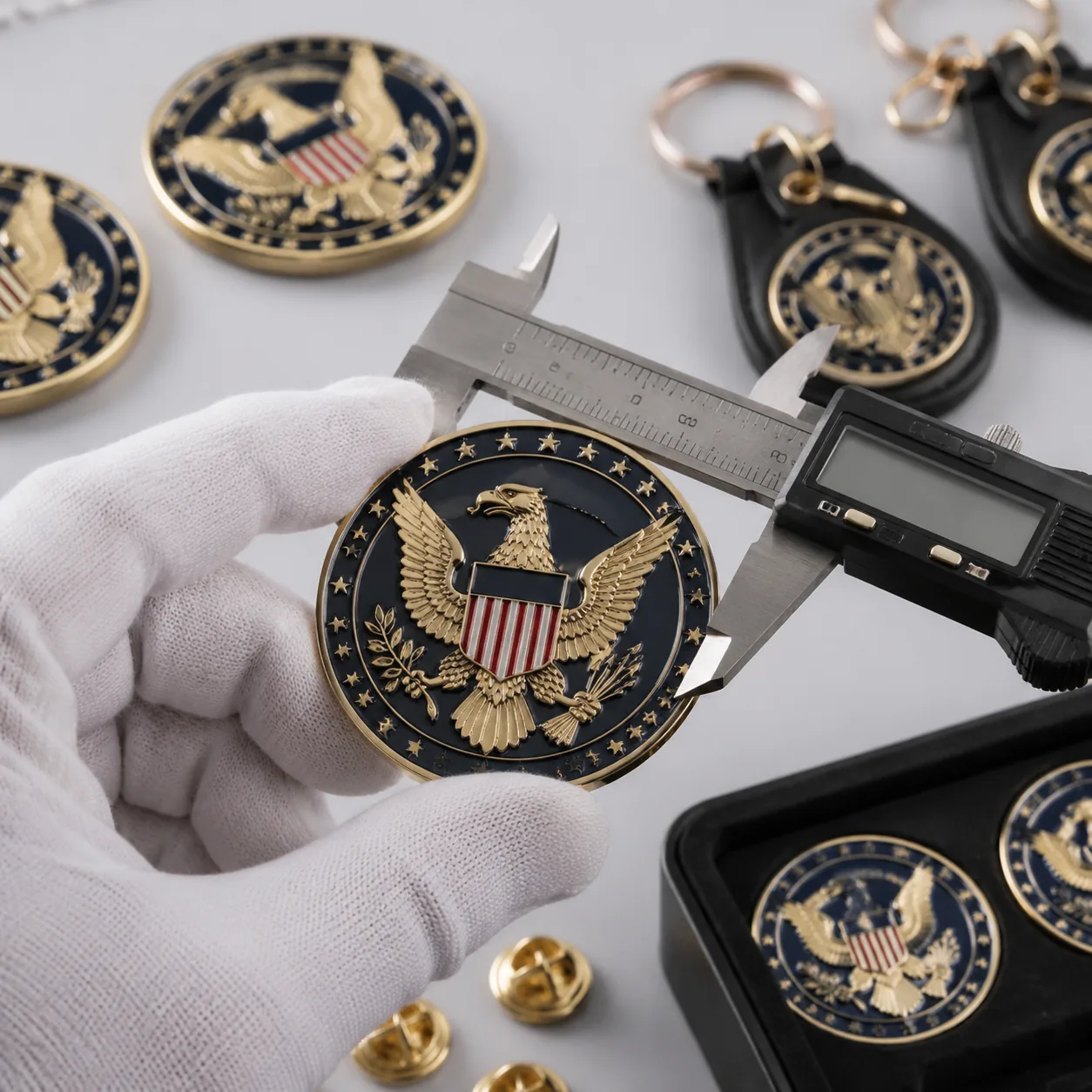
When the date is fixed, product architecture matters more than air freight
Most rush programs do not fail in transit. They fail upstream because the chosen item needs more process steps, approvals and manual handling than the schedule can absorb. A 30 mm soft enamel pin with 4 Pantone fills, 1.2 mm iron base, bright nickel plating, 2 posts and a backing card moves through mold engraving, die striking, trimming, polishing, plating, enamel filling, oven curing, post soldering, inspection and packing. A standard polyester lanyard or simple woven patch has far fewer touchpoints, so the calendar risk is lower before shipping even begins.
For 2026 trade shows, campus recruiting, distributor launches and association events, the practical question is not only which item looks best or has the lowest unit price. It is which item can be approved, produced, inspected, packed and shipped with the fewest failure points inside the factory days you actually have. In rush situations, that often shifts the winner from metal products to flatter textile products that run faster and tolerate fewer approval loops.
The analysis below assumes commercially realistic rush specifications, not feature-heavy custom builds. Timing still depends on whether artwork is vector-ready, whether PO and proof are approved the same day, whether quantity is 100 or 10,000 units, and whether packing stays simple. Holiday congestion, plating queues, missing Pantone references, assortment by SKU, barcode labeling and carton mark revisions can each add 1-3 factory days even when the base product is straightforward.
Head-to-head: realistic rush specs, MOQs and FOB ranges
| Product | Rush-safe specification | MOQ tiers | Tooling/setup | Production lead time | Proof/sample | FOB unit range |
|---|---|---|---|---|---|---|
| Soft enamel pin | 30 mm, iron, 1.2 mm thick, 4 Pantone fills, bright nickel/black dye, 1 post under 28 mm or 2 posts at 30 mm+, butterfly clutch, no epoxy | 100 pcs MOQ; 300 pcs common quote tier; 1,000 pcs stable rush tier | USD 45-85 mold on iron; add USD 15-30 for backstamp changes; no new mold on unchanged reorder | 7-9 days at 100-500 pcs; 8-10 days at 1,000 pcs; 10-12 days at 3,000+ pcs | Digital proof required; pre-production sample usually waived on true rush | USD 0.38-0.88 at 300 pcs; USD 0.31-0.66 at 1,000 pcs; USD 0.26-0.55 at 3,000 pcs |
| Woven patch | 70 mm max width, 50D/75D yarn, up to 6 colors, merrow border or laser cut, plain back or heat seal | 100 pcs MOQ; 200-300 pcs standard; 5,000 pcs still manageable in rush tier | Usually no hard tooling; setup commonly included; laser-cut surcharge may add USD 10-25 per design | 4-6 days at 100-1,000 pcs; 5-7 days at 2,000-5,000 pcs; 7-9 days at 5,000+ pcs | Digital layout usually sufficient; photo sample useful for first-time border/backing combinations | USD 0.22-0.62 at 300 pcs; USD 0.16-0.40 at 1,000 pcs; USD 0.12-0.32 at 3,000 pcs |
| Polyester lanyard | 20 x 900 mm finished loop, heat-transfer sublimation on polyester webbing, standard swivel hook, optional safety break | 100 pcs MOQ; 300 pcs standard; 3,000 pcs often still in fastest tier | No tooling; setup included unless many hardware variants are mixed | 3-4 days at 100-1,000 pcs; 4-5 days at 3,000 pcs; 5-7 days at 5,000+ pcs | Artwork layout approval only; no physical sample on rush | USD 0.30-0.78 at 300 pcs; USD 0.24-0.56 at 1,000 pcs; USD 0.21-0.48 at 3,000 pcs |
| Die-cast keychain | 50 mm, zinc alloy, 2D relief, one-sided, split ring with 25 mm chain, no epoxy, no moving parts | 100 pcs MOQ; 300 pcs more realistic; 1,000 pcs stable pricing tier | USD 70-130 mold fee; cutouts, deep relief or multi-level tooling can push to USD 150+ | 9-12 days at 100-500 pcs; 10-13 days at 1,000 pcs; 12-15 days at 3,000+ pcs | Digital proof required; pre-production sample recommended unless repeat order | USD 0.72-1.75 at 300 pcs; USD 0.58-1.28 at 1,000 pcs; USD 0.48-1.10 at 3,000 pcs |
If speed alone decides the buy, standard sublimated lanyards are usually the safest option. They avoid mold engraving, metal plating, enamel curing and most hand polishing. Woven patches are nearly as strong under pressure because they typically do not need metal tooling and their finishing sequence is predictable once border type and backing are locked.
Pins sit in the middle. They can move quickly when size stays around 25-30 mm, color count stays moderate, plating is standard and packing is limited to polybagging or a simple card. Keychains are usually the slowest because buyers tend to increase size, use heavier zinc alloy, specify longer chains or premium rings, and expect a retail-grade finish that requires more deburring, polishing and inspection than a basic giveaway item.
Approval friction is the real rush killer
Rush jobs rarely collapse because a machine stops. They collapse because approvals loop too many times. On pins, common blockers are metal lines below about 0.20-0.25 mm, negative spaces too narrow to hold after striking, backstamp text below roughly 1.2-1.5 mm cap height, and tiny isolated enamel cells where color spread changes the appearance. On a compressed schedule, one revision cycle can easily cost a full day once supplier response time, time zone lag and internal brand review are included.
Lanyards usually have the lowest approval friction because the art is flat, full-length and easy for brand teams to evaluate. The mistakes are operational rather than technical: no bleed for sublimation, wrong repeat spacing, missing callout for breakaway placement, no confirmation of 15 mm versus 20 mm versus 25 mm width, or unclear hardware selection between swivel hook, bulldog clip and lobster claw. None is hard to solve, but each can stop cutting or sewing until confirmed.
Patches are easier than pins but still have limits. Fine serif text, reversed white copy under about 3.0 mm character height, gradients expected to look photographic, and logos with more than 6-8 tiny color transitions usually need simplification. Keychains slow down quickly when too many features are combined: 3D relief, soft enamel, spinner parts, cutout openers, custom cards and retail polybags all add setup points and inspection risk.
A practical rush rule is simple: if the design needs explanation, it is already too complex for the shortest lead-time tier. The safest rush orders are the ones the factory can convert from vector art to production proof in one pass without debating line weight, border style, hardware code, packing method or carton marks.
QC, tolerances and plating specs you can actually hold on rush
| Product | Main schedule risk | Main quality risk | Typical tolerance | Recommended AQL | Rush-safe use case |
|---|---|---|---|---|---|
| Soft enamel pin | Artwork revision, mold queue, plating slot availability | Underfill/overfill, enamel spill, plating pits, post misalignment, color deviation | Size +/-0.30 mm, thickness +/-0.10 mm, post position +/-0.50 mm | Critical 0, Major 2.5, Minor 4.0 | VIP badges, collector-style event pins, branded giveaways below 5,000 pcs |
| Woven patch | Border selection, backing confirmation, art simplification | Edge fray, small-text loss, yarn shade shift, uneven laser cut | Size +/-1.0 mm, border variation +/-1.0 mm, backing offset +/-1.5 mm | Critical 0, Major 2.5, Minor 4.0 | Uniform patches, merch inserts, event add-ons with simple logos |
| Polyester lanyard | Accessory confirmation, sewing queue, packing changes | Print blur on low-grade webbing, skewed sewing, wrong hook, weak breakaway assembly | Width +/-1.0 mm, finished loop length +/-5 mm, print repeat position +/-3 mm | Critical 0, Major 2.5, Minor 4.0 | Registration, exhibitor badges, campus events, high-volume sponsor distribution |
| Die-cast keychain | Tooling approval, polishing time, hardware assembly, plating inspection | Sharp edges, plating pits, incomplete fill, chain pull failure, burrs | Size +/-0.40 mm, thickness +/-0.15 mm, hardware length +/-2 mm | Critical 0, Major 2.5, Minor 4.0 | Souvenir-style merch, paid merchandise, sponsor gifts with higher perceived value |
These tolerances are commercially realistic for promotional-product mass production and should be written into the PO before production starts. If acceptable variation is not defined up front, inspection disputes start at the worst moment: after goods are finished and the ex-factory date is already close.
For plated metal items, decorative nickel-tone, gold-tone or black nickel finishes are commonly in the 0.03-0.08 micron range, with flash copper underlayers used where needed for adhesion and appearance. Antique finishes can show slightly more tonal variation because the darkening step is intentionally less uniform. If appearance retention matters for humid storage or longer distribution windows, add a clear anti-tarnish topcoat; it usually adds modest cost and about 0.5-1.0 production day.
AQL should stay commercially workable on a rush job. Tightening inspection after accepting a compressed lead time creates a contradiction the factory cannot solve without delay. For these four categories, Critical 0 with Major 2.5 and Minor 4.0 is a practical balance if critical defects are clearly defined in advance: wrong copy, missing hardware, unsafe breakaway failure, exposed sharp edges, or plating flake severe enough to reveal base metal.
Cost versus speed: which product absorbs rush pressure best
Rush cost is often hidden inside unit pricing rather than shown as a separate surcharge. The supplier may be paying overtime, inserting your order ahead of others, buying smaller material lots or assigning extra manual sorting to protect yield. The products that absorb that pressure best are still the ones with fewer handcraft steps and lower rework risk. In practice, that usually means standard lanyards first, then straightforward woven patches.
Pins can still work under deadline, but only when the specification stays disciplined. A 30 mm iron soft enamel pin with 4 fills, standard bright plating and a butterfly clutch is one manufacturing problem. A 45 mm zinc alloy pin with cutouts, glitter enamel, screen print, black nickel, 2 posts and card insertion is a very different one. It is not just a higher quote; it is a materially higher schedule-risk build.
Keychains often look acceptable in the initial RFQ and then become expensive under rush conditions because deburring, polishing, hardware assembly and retail packing labor stack up quickly. That extra spend may still be justified for paid merch, corporate gifting or souvenir resale. But if the event goal is booth traffic, registration flow or broad sponsor visibility, lanyards and patches usually deliver more usable units per dollar and per factory day.
At 300 pcs in 2026 buying conditions, the lowest-risk rush tier is usually a sublimated lanyard at roughly USD 0.30-0.78 FOB. Woven patches often follow at USD 0.22-0.62 FOB if the design is clean and backing is simple. Pins become attractive when perceived value matters, but mold cost and plating steps make them less forgiving. Keychains justify higher FOB mainly when the event outcome depends on a gift-like feel rather than pure distribution volume.
What to avoid when you only have two to three weeks
- Do not choose pins if the artwork relies on gradients, photographic detail, lines below 0.20-0.25 mm, or more than 6-8 tiny isolated color cells.
- Do not choose die-cast keychains if you need spinner parts, bottle-opener cutouts, LED components, hinges, multi-piece assembly or rigid gift boxes.
- Do not choose woven patches if the logo depends on legal copy, metallic effects, exact Pantone matching in tiny details, or reversed text under about 3.0 mm high.
- Do not choose lanyards if the item must function as collectible merchandise, executive gifting or a premium retail add-on.
- Do not add barcode stickers, tissue wrap, kitting, carton assortments by SKU, insert cards or store labeling unless they are essential to the event objective.
- Do not release a rush PO until attachment type, backing, hardware code, individual packing, carton marks, inspection standard, ex-factory date and shipping term are confirmed in writing.
This is where many buyers lose time trying to preserve every feature from the original concept. Under deadline pressure, simplification is usually worth more than negotiation. Removing one process step such as custom carding, iron-on backing, buckle hardware or secondary assembly often saves more real calendar time than pushing for a slightly lower unit price.
The practical winner changes at 7, 14 and 21 days
Inside 7 factory days, lanyards are usually the most realistic choice, especially 15 mm or 20 mm polyester with sublimation print, standard swivel hook and bulk packing of 10 or 50 pieces per bag. A woven patch can also fit if the design is clean, the border finish is obvious and no special backing is required. Most new pin and keychain projects at this timing only succeed when the artwork has already been production-proven and the supplier can run from approved digital art without a physical sample.
Inside 14 factory days, the field opens up. Standard soft enamel pins become commercially realistic at 100-1,000 pcs if the art is clean, plating is standard and packing stays at polybag or simple card level. Woven patches and lanyards remain lower risk, but pins now become viable for sponsor sets, employee events, membership badges and trade-show giveaways where a metal item materially improves perceived value.
Inside 21 factory days, all four categories are workable for standard builds, including zinc alloy keychains, assuming same-day approvals and no major holiday disruption. At that point, the decision can shift from schedule survival to product fit. If the event genuinely needs a higher-value souvenir or paid-merch look, 21 days usually gives metal categories enough room to be executed correctly instead of being forced into avoidable defect cycles.
The important distinction is factory days versus in-hands days. A 10-day production promise does not mean a 10-day total program. Add 1-2 days for proofing, 0.5-1 day for final approval lag, 3-7 days for air transit depending on destination, and customs clearance time that varies by importer setup and country. Many buyers think they have a production problem when they actually have a planning math problem.
How to structure the RFQ so the factory can hit the date
Experienced buyers do not just ask for a rush lead time; they remove uncertainty before the factory starts. That means one production-size vector file, Pantone references where needed, final dimensions in millimeters, attachment or hardware callouts, packing method, ship-to country, target ex-factory date and a clear statement on whether a pre-production sample is required or formally waived. The cleaner the RFQ, the fewer non-value-adding emails are needed before capacity can be booked.
A strong rush RFQ is specific enough for production planning. Example: 30 mm soft enamel iron pin, 1.2 mm thickness, bright gold plating, 4 Pantone colors, 2 butterfly clutches, individual polybag, AQL Major 2.5 Minor 4.0, FOB Shenzhen, ex-factory by March 12. The same discipline applies to lanyards, patches and keychains. Precise specifications shorten both quoting time and scheduling time because the planner can assess material, line availability and risk without reopening basic questions.
A practical tactic is to request two versions in parallel: a rush-safe version and an ideal version. Compare a 20 mm sublimated lanyard with standard hook against a 25 mm version with buckle release and badge holder, or compare a plain woven patch against one with iron-on backing and custom carding. In many cases the simplified version wins because it protects the event date, while the ideal version becomes the reorder spec after the event.
For cross-category comparisons, align the basis: use the same quantity tiers such as 300, 1,000 and 3,000 pcs, the same individual packing assumption, the same FOB term and the same target ex-factory date. That exposes which product truly scales cleanly under time pressure instead of hiding the answer behind mismatched assumptions.
What to do next
Work backward from the in-hands date, not the ship date. Subtract customs clearance, air transit, proofing, approval time and at least one buffer day for correction. The factory days remaining will usually tell you which product family is genuinely realistic before you send any RFQs.
Then issue one comparison RFQ across pins, patches, lanyards and keychains using the same event objective, quantity tiers and packing assumption. Ask each supplier for standard lead time, rush lead time, MOQ, tooling charge, FOB price, carton count estimate, carton gross weight and the exact simplifications required to hit your deadline. That turns a vague rush request into a decision matrix procurement, marketing and operations can review quickly.
If the date is immovable, choose the product with the fewest production touchpoints that still achieves the event goal. If the item must feel premium, allow more days and simplify the design instead of forcing a complex metal build into an unrealistic calendar. That is usually the difference between a smooth 2026 delivery and an expensive rush order that still lands late or commercially unusable.
Have a project? Send your artwork and target quantity and we’ll reply with a detailed quotation within 12 working hours.
Ready to get this made?
Send your sketch, target quantity and ship-date. Detailed quotation in 12 hours.



