Rush Event Orders in 2026: Pins vs Patches vs Lanyards
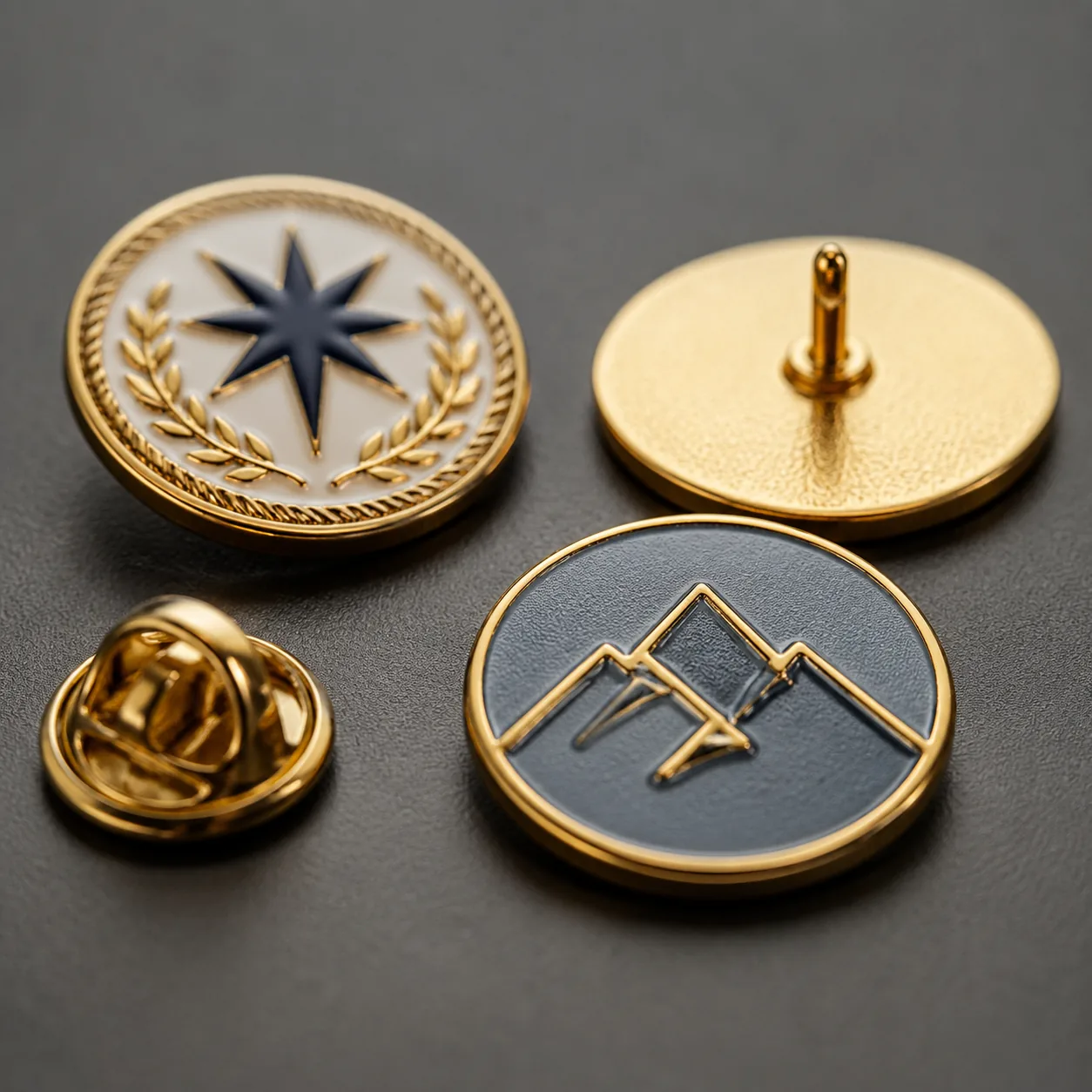
When the date is fixed, choose the process with the fewest failure points
For a rush event order, the real question is not which item looks best in a mockup. It is which production route can survive proofing, setup, in-line QC, packing, and freight without slipping. Pins, patches, and lanyards can all be expedited in 2026, but they fail in different places. If your event opens in 18 to 25 calendar days, product choice matters more than the rush surcharge because the schedule is usually lost in approval loops, accessory shortages, or late-stage rework.
The safest rush item is usually the one with the fewest manual touch points per unit. Sublimation lanyards are typically fastest because they avoid die cutting, plating, enamel fill, and curing. Woven patches are the most stable middle option because loom setup is predictable and defect modes are easier to control. Soft enamel pins remain the highest-risk rush item because they add tooling, stamping or casting, plating, color fill, baking, post attachment, and more visual inspection.
That gap is structural, not just vendor-specific. A standard sublimation lanyard can move into production within 12 to 24 hours after final artwork approval. A woven patch usually needs 0.5 to 1 day for digitizing or loom file setup, then 2 to 4 production days plus border and backing finishing. A pin commonly needs 1 to 2 days for die or mold making, about 1 day for stamping or die-casting, 1 to 3 days in plating queue, 1 to 2 days for fill and bake, and another 1 to 2 days for assembly and final inspection. Once you add freight cut-off, even a "small" proof delay can cost the event.
This is why late switching is expensive. Buyers often begin with a premium pin, spend 3 to 5 days revising artwork and packaging, then pivot to a lanyard when the timeline collapses. Switching can still save the date, but only before tooling is cut, PPS is approved, or custom packaging components are booked. After that point, recovery usually means overtime, air freight, or a split shipment.
Head-to-head: speed, MOQ, tolerance, and price
| Spec area | Soft enamel pin | Woven patch | Sublimation lanyard |
|---|---|---|---|
| Typical rush MOQ | 100-200 pcs | 100-200 pcs | 100-300 pcs |
| Standard MOQ | 100 pcs | 100 pcs | 100 pcs |
| Rush lead time after final proof approval | 8-12 days | 5-8 days | 3-5 days |
| Normal lead time after approval | 12-18 days | 7-12 days | 5-8 days |
| Typical total cycle including proofs and packing | 14-24 days | 9-16 days | 6-12 days |
| Proof timeline | 2-4 days digital; 4-6 days physical sample | 1-3 days digital; 3-5 days physical sample | Same day to 2 days digital; 2-4 days physical sample |
| Tooling required | Yes, stamped die or die-cast mold | No metal mold; loom/program setup | No mold |
| Common safe rush size | 30-40 mm | 60-75 mm | 20 x 900 mm or 25 x 900 mm |
| Typical tolerance | Size ±0.5 mm; thickness ±0.15 mm | Finished size ±2 mm | Width/length ±2-3 mm |
| Artwork risk threshold | Lines under 0.3 mm and text under 2.0 mm high are high risk | Text under 2.0-2.5 mm high is risky | Low if vector or 300 dpi+ raster; seam placement still matters |
| Typical FOB unit price at 300 pcs | USD 0.70-1.55 | USD 0.50-1.15 | USD 0.38-0.88 |
| Typical FOB unit price at 1,000 pcs | USD 0.42-0.95 | USD 0.28-0.68 | USD 0.24-0.52 |
| Main bottleneck | Tooling, plating queue, enamel fill, hand assembly | Loom setup, border finish, backing conversion | Accessory stock, sewing, final assembly |
| Best rush use case | VIP badge, sponsor gift, collector item | Uniform patch, club merch, retail add-on | Badge carry, access control, mass giveaway |
| Worst rush use case | Complex art with premium packaging under 3 weeks | Tiny crest with dense text or photo detail | Luxury commemorative piece |
In pure calendar terms, sublimation lanyards usually win because the factory is managing printed polyester plus stock hardware rather than a multi-stage metal route. Woven patches are often underestimated; they are slower than lanyards but often more schedule-stable than pins, especially when the design stays within 3 to 6 thread colors and readable text is at least 2.5 mm tall. Pins are the least forgiving, particularly when buyers add dual plating, cutouts, glitter, glow enamel, hinged or spinner parts, custom backer cards, or individual gift boxes.
Approval speed is the first deadline, not factory output
Rush orders are often lost before production starts. A supplier can quote a 5-day production window, but if the buyer spends 4 days revising proofs, changing dimensions, or reconsidering accessories, the nominal lead time becomes irrelevant. The fastest factories still stop when specs are unclear.
Pins require the most technical review. For a rushed 30 mm soft enamel pin, practical minimums are typically 0.3 mm metal lines, 0.5 mm enamel gaps, 1.2 to 1.5 mm thickness, and about 8 to 10 mm from the edge to the post center depending on shape. Text below 2.0 mm height often closes up after plating and fill. Fine screen details below roughly 0.15 mm line width are risky unless the supplier confirms process capability. If the art has many narrow channels or isolated color islands, redraw time can exceed die-making time.
Woven patches are easier to approve because there are fewer variables. The buyer mainly needs to lock size, border type, backing, and minimum readable text. For rush work, a 65 to 75 mm patch with 3 to 5 colors and a heat-cut or laser-cut edge is safer than a 40 mm crest with dense lettering. Because finished-size tolerance is commonly ±2 mm, any fit-critical use on a sleeve, cap panel, chest placement, or pocket flap should be specified up front with placement margin.
Sublimation lanyards are usually quickest to approve. The main checkpoints are logo scale, print side, seam position, breakaway location, hardware layout, and whether one or both sides must match. They are especially strong when the art includes gradients, photo elements, QR codes, or many sponsor logos that would fail in enamel cells or woven thread. Exact Pantone matching should not be assumed on a 3-day rush unless the supplier confirms a calibrated polyester print workflow and an accepted Delta E tolerance, often Delta E 2.0 to 3.0 for premium work and 3.0 to 5.0 for standard event production.
Where rush schedules actually break by product type
Pins fail for predictable reasons. A realistic rushed route is 1 to 2 days for mold cutting, around 1 day for stamping or casting, 1 to 3 days waiting for plating capacity, 1 to 2 days for enamel fill and bake, then 1 to 2 days for polishing, post soldering, clutch fitting, inspection, and packing. Add 8 to 12 fill colors, offset print, epoxy dome, two posts, barcode backer-card insertion, or gift-box packing, and every step becomes a queue risk.
Pins also carry the highest rework risk. Common defects include underfilled enamel, plating pits, color contamination between narrow cells, bent posts, weak solder joints, and scratches during bulk handling. For a date-critical order, the safest spec is single plating, 4 or fewer enamel colors, one standard butterfly clutch or rubber clutch, and bulk pack or simple OPP bagging. That gives the factory the best chance to rework rejects without missing export pack-out.
Patches fail less dramatically, but edge and backing choices still matter. Iron-on backing, pressure-sensitive adhesive, hook-and-loop sets, merrow borders on irregular shapes, or individual retail bagging can each add 1 to 2 days, especially if components are not pre-stocked. Tiny woven text is another frequent issue. As a practical rule, do not expect 1 mm letters to stay readable after weaving and edge finishing. If a seal-style logo has an outer text ring, simplifying that ring usually preserves recognition better than forcing all characters into the file.
Lanyards usually fail because of accessories, not print speed. Standard lobster clips, bulldog clips, split rings, and breakaways are routine. But detachable buckles, phone tabs, badge reels, bottle holders, eco-webbing, safety buckles in special colors, or exact hardware matching can become the longest step because stock has to be checked before assembly. Under time pressure, standard nickel or black hardware is safer, and a single attachment point is faster than a multi-accessory build. If the lanyard must meet a breakaway pull requirement, ask the supplier to confirm the test method and target force rather than assuming all breakaways behave the same.
Fastest safe spec for each item
| Product | Fastest safe spec for rush orders | Avoid if deadline is under 21 days |
|---|---|---|
| Soft enamel pin | 30 mm, iron or zinc alloy, 1.2-1.5 mm thick, 1 post, 4 or fewer colors, single gold/nickel/black nickel plating, bulk pack or OPP bag | Dual plating, glitter or glow, cutouts with fine text, spinner or slider parts, velvet box, barcode retail carding |
| Woven patch | 70 mm width, 3-5 colors, heat-cut border, plain sew-on or iron-on backing, bulk pack | Merrow border on irregular shape, metallic thread, hook-and-loop if not pre-stocked, dense crest art, retail header card |
| Sublimation lanyard | 20 x 900 mm polyester, full-color both sides, standard lobster clip, optional breakaway, OPP bag | Custom dyed base before print, non-standard webbing, detachable buckle plus phone tab plus reel, exact hardware color match |
These are not the most premium specifications; they are the least fragile ones. They reduce setup time, use familiar line settings, and simplify in-line QC. Inspection also moves faster because there are fewer variables per unit.
For final inspection, many event-merchandise orders use AQL 2.5 for major defects and 4.0 for minor defects. That is a workable rush baseline. If shortages are unacceptable, specify carton count verification, random pull checks on lanyard hardware, pin-post security checks, and overrun planning before production starts. A practical allowance is 2 to 3 percent overrun for lanyards, 3 to 5 percent for patches, and up to 5 percent for pins when manual handling and rework are high.
What rush really costs in 2026
Rush pricing is not just a surcharge line. It changes the economics in three ways: lower line efficiency, higher defect exposure, and more expensive freight options. In 2026 sourcing terms, a standard 30 mm soft enamel pin that might price around USD 0.58 to 0.88 FOB at 1,000 pcs on a normal schedule can move to about USD 0.72 to 1.05 on a true rush. At 300 pcs, a realistic range is USD 0.70 to 1.55 FOB depending on plating, color count, attachment, and packaging. Tooling, if not waived, often adds about USD 50 to 120 for a standard die-struck or soft enamel pin size.
Woven patches and lanyards usually hold price better because their workflows scale with fewer labor-intensive finishing steps. A 70 mm woven patch at 1,000 pcs may run roughly USD 0.28 to 0.48 FOB on a normal schedule and USD 0.35 to 0.60 on rush. At 300 pcs, USD 0.50 to 1.15 is more realistic depending on backing, border, and packing method. A 20 mm sublimation lanyard with a standard lobster hook may move from about USD 0.24 to 0.40 FOB normally to USD 0.30 to 0.52 on rush at 1,000 pcs, with 300-pc orders more often landing around USD 0.38 to 0.88.
Freight is often the biggest swing factor. Missing vessel cut-off or line-haul consolidation can push the shipment from deferred air or ocean into express air, which can erase any unit-price savings. In practice, a USD 0.08 per-piece FOB saving means little if the goods arrive after exhibitor move-in, badge pick-up, or sponsor handoff. Strong buyers compare total landed risk, not just ex-factory cost.
One reliable strategy is split ordering. For example, a 2,000-piece lanyard order can cover event operations while a smaller 300-piece pin run serves VIP kits or sponsor gifts. That structure carries less schedule risk than forcing a premium item to serve every function.
Best choice by event scenario
- Choose soft enamel pins when the item is collectible, resale-driven, or part of sponsor recognition, and you still have at least 24 to 30 calendar days including proofing, production, inspection, and freight.
- Choose woven patches when you need tactile merch that ships flat, works on uniforms, bags, or jackets, and carries less timing risk than metal production.
- Choose sublimation lanyards when the item is operational: attendee badges, staff IDs, exhibitor access, media credentials, or high-volume giveaways where in-hands date matters more than perceived luxury.
- Choose lanyards over patches or pins when artwork includes gradients, QR codes, photos, or many small sponsor logos that must stay legible under rush conditions.
- Pair a rush lanyard order with a smaller pin or patch run if you need one guaranteed functional item and one higher-perceived-value item.
- Check venue labor and use conditions first: lanyards work immediately at registration, pins require user attachment, and patches need a compatible surface or separate application plan.
There is no universal winner because the event goal matters. For access control, check-in speed, and large attendee counts, lanyards win. For perceived value and collectability, pins still lead. For a middle ground of tactile appeal, low cube weight, and flexible use across apparel and merch bundles, woven patches often offer the best balance of speed and character.
What to send your supplier today if the clock is already running
Rush orders move fastest when the first email removes ambiguity. Send final vector artwork in AI, EPS, or editable PDF; quantity by SKU; exact finished dimensions; hardware or backing choice; packaging method; carton mark requirements; delivery address; required in-hands date; and whether partial shipment is acceptable. Also state whether a digital proof is enough or whether a physical pre-production sample is mandatory. If a physical sample is required, add roughly 2 to 6 days depending on product type and courier lane.
For pins, include plating color, thickness, post count, clutch type, backing card size, and any critical line-width concerns. For patches, specify border finish, backing type, placement surface, and whether edge-fray resistance matters. For lanyards, specify width, finished loop length, print sides, breakaway location, attachment layout, and whether PMS approximation is acceptable. If these details are missing, the supplier has to pause for clarification, and that pause is where rush schedules usually fail.
Use this checklist to compress approval time without increasing manufacturing risk:
- Lock one manufacturable spec within 24 hours of quoting.
- Approve one proof path instead of asking for multiple design variants.
- Confirm accessory stock before final artwork sign-off.
- Reserve 3 to 5 buffer days for inspection and freight variance.
- Decide before production whether partial shipment is acceptable.
- Choose standard packaging unless retail presentation is essential.
- Ask for AQL level, overrun allowance, and carton-count method in writing.
The fastest buyer is rarely the one requesting ten quote variations. It is the one who selects one realistic configuration, approves quickly, and protects a few buffer days for QC and freight variability. Under a fixed event deadline, speed comes from reducing variables, not from asking every production step to move faster.
Have a project? Send your artwork and target quantity and we’ll reply with a detailed quotation within 12 working hours.
Ready to get this made?
Send your sketch, target quantity and ship-date. Detailed quotation in 12 hours.



