Rush Custom Promo Orders for 2026 Trade Shows: A Buyer Workflow
Back-plan from booth handout time, not from PO date
Rush promo orders fail when teams count forward from PO release instead of backward from the exact moment stock must be in booth staff hands. For trade shows, the true deadline is usually the earliest of four cutoffs: advance warehouse receiving, exhibitor-appointed contractor check-in, hotel loading-dock acceptance, or direct-to-venue delivery window. You have to subtract customs clearance, local transfer, marshalling yard delays, drayage, carton labeling, and any kitting or repacking before discussing factory lead time. Freight that arrives in the destination city on Monday but misses a Friday advance-warehouse cutoff is operationally late.
For straightforward custom metal pins, 2D challenge coins, single-body keychains, and polyester sublimation lanyards, a compressed but realistic timeline is often 1 business day for RFQ clarification and artwork freeze, 2 to 3 days for die line and pre-production sample, 6 to 8 days for bulk production, 1 day for final packing and export handoff, and 3 to 6 days for courier or priority air transit. In calendar terms, many simple programs can move from approved art to venue receipt in about 14 to 22 days if the destination country, customs entry, and venue receiving are uncomplicated. Add 3 to 7 calendar days for deep 3D relief, dual plating, glitter or glow enamel, epoxy doming, sequential numbering, moving parts, magnetic sets, or custom rigid boxes.
A safer buyer buffer is 5 to 7 calendar days before handout date for any international event shipment and at least 2 to 3 days for domestic delivery. If 10,000 giveaways are needed for a Tuesday opening, the working in-hand date should usually be the prior Thursday or Friday, not Monday morning. Suppliers can only commit accurately when the buyer provides the exact in-hand date, full consignee details, venue postcode, receiving rules, and whether split shipment by SKU or quantity is allowed.
| Order stage | Typical lead time | Main rush risk | Best buyer action |
|---|---|---|---|
| RFQ, spec confirmation, artwork freeze | 1 business day | Missing size, plating, attachment, packaging, or ship-to detail | Send one spec sheet with quantity tiers, in-hand date, full destination, and artwork in the first email |
| Tooling and pre-production sample | 2-3 days | Outline or dimension changes after die release | Approve vector art, final dimensions, and hardware layout before tooling starts |
| Bulk production | 6-8 days | Mid-run changes to colors, copy, or packaging | Lock sample, carton spec, and overrun tolerance before mass production |
| Packing and export handoff | 1 day | Missed pickup cutoff or incomplete shipping marks | Approve labels, consignee format, and carton count before production finishes |
| International transit and venue receiving | 3-6 days | Customs hold, missed advance-warehouse window, or local transfer delay | Keep a 5-7 day buffer and confirm receiving hours in writing |
Build a same-day RFQ with quoteable specs and quantity tiers
Rush RFQs should answer engineering, costing, and logistics questions before the supplier has to ask for clarification. The goal is to let the factory price tooling, process route, hardware, packaging, and freight in one pass. Same-day quotation is realistic when the buyer submits final dimensions, quantity breaks, artwork format, compliance notes, and destination together. Most delay is not capacity; it is clarification across time zones.
For pins and badges, specify finished size in millimeters, base metal, thickness, process, color count, plating, backing type and quantity, and packaging. A quote-ready pin line is: '38 mm W x 32 mm H, stamped iron, 1.5 mm thickness, soft enamel, 5 PMS refs, bright nickel, 2 butterfly clutches, individual polybag, qty 300 / 500 / 1,000 / 3,000.' For challenge coins, add front and back artwork, edge style, relief depth, epoxy yes or no, and numbering range. For keychains, specify body size, ring diameter, chain length, connector style, both-side decoration, and whether the body is one-piece or assembled. For lanyards, specify width, finished lay-flat length, material, print method, hook, buckle, breakaway, and bagging.
MOQ tiers matter because die cost, setup, and labor are amortized over quantity. Common breakpoints are 100, 300, 500, 1,000, and 3,000 units. In 2026 buying conditions, a 300-piece soft enamel pin run is often 18 to 30 percent higher per unit than a 1,000-piece run using the same die. For 20 mm sublimation lanyards, the price drop from 300 to 500 pieces can be modest, while 1,000 pieces usually yields a clearer cost improvement because printing, cutting, and sewing runs become more efficient. If you have several regional events, ask for one artwork priced at multiple tiers and, separately, a multi-SKU quotation using common hardware and packaging.
- Request both `EXW` and `FOB` pricing so you can compare supplier-arranged freight against your own courier or forwarder account.
- State inspection terms up front, such as `AQL 2.5 major / 4.0 minor`, if a third-party inspection may be used.
- Declare compliance needs early: nickel-release sensitivity, low-lead substrate, `REACH`-sensitive packaging, or child-use restrictions.
- Provide artwork as vector files such as `AI`, `EPS`, or press-ready `PDF` to avoid redraw delay and line-weight errors.
- Ask for two schedules in the quote: standard feasible lead time and fastest low-risk lead time.
- State what is flexible, such as packaging, attachment, or edge style, so the supplier can remove 1 to 4 days if required.
The strongest RFQs separate fixed requirements from tradeable ones. If the event date is immovable but packaging can be simplified, say so. Suppliers can often recover 2 to 4 days by switching from custom boxes to polybags, from special-order attachments to stocked hardware, or from mixed-SKU gift packing to flat bulk pack with carton labels.
Specify rush-safe construction and realistic 2026 FOB targets
Under schedule pressure, the best specification is usually the one with the fewest hand operations, subcontract steps, and subjective cosmetic checks. Rush-safe builds are not low grade; they are process-stable. For pins, stamped iron soft enamel at 1.2 to 1.5 mm thickness is typically faster and more forgiving than imitation hard enamel with flush polishing. For keychains, single-body zinc alloy or stamped steel builds move faster than spinner, hinge, slider, or bottle-opener assemblies. For coins, 2D relief with a standard edge is more schedule-safe than deep 3D sculpting, dual finish, cutouts, or serialized numbering.
Concrete numbers help buyers make those trade-offs. A standard 38 mm soft enamel pin in stamped iron, 1.5 mm thick, bright nickel, two butterfly clutches, individual polybag, commonly lands around USD 0.52 to 0.92 FOB at 500 to 1,000 pieces in 2026, plus a one-time die charge of roughly USD 45 to 85. A 45 mm challenge coin in iron or zinc alloy, 3.0 mm thick, 2D both sides, standard edge, antique bronze or bright nickel, typically quotes around USD 1.35 to 2.45 FOB at 300 to 1,000 pieces, with tooling often USD 70 to 130. A simple metal keychain in the 45 to 55 mm range usually prices around USD 0.80 to 1.65 FOB at 500 to 1,000 pieces depending on casting weight, plating, and assembly count.
Lanyards follow the same logic. A 15 mm or 20 mm polyester sublimation lanyard with lobster hook, buckle, and breakaway is one of the most rush-friendly full-color items because it avoids yarn dyeing and loom setup. Typical 2026 FOB pricing is about USD 0.58 to 1.05 each at 500 to 1,000 pieces, with MOQ commonly 100 to 300 pieces. A woven jacquard lanyard with dyed yarn, tighter color matching, and mixed attachments usually takes longer and often carries MOQ of 500 pieces or more.
| Product | Rush-friendly build | Higher-risk rush build | Typical 2026 FOB |
|---|---|---|---|
| Enamel pin | 30-40 mm, stamped iron, 1.2-1.5 mm, soft enamel, stock clutch | Imitation hard enamel with flush polish, glitter, glow, or epoxy dome | USD 0.52-0.92 at 500-1,000 pcs |
| Challenge coin | 45-50 mm, 2D relief, 3.0 mm thick, standard flat or rope edge | Deep 3D sculpt, dual plating, cutout center, numbering | USD 1.35-2.45 at 300-1,000 pcs |
| Keychain | Single-body zinc alloy or stamped steel, fixed ring | Spinner, hinge, slider, bottle opener, or multi-part assembly | USD 0.80-1.65 at 500-1,000 pcs |
| Lanyard | 15 or 20 mm sublimation polyester with stock hook | Woven jacquard with dyed yarn and custom accessory set | USD 0.58-1.05 at 500-1,000 pcs |
| Packaging | Individual polybag or flat backing card | Foam gift box with sleeve, insert, and label set | Custom boxes can add USD 0.20-0.80 and 3-7 days |
If the schedule is short by 2 to 3 days, the first features to cut are usually premium boxes, non-stock attachments, epoxy domes, special inserts, or moving parts. Those changes usually preserve most of the promotional impact while materially improving delivery certainty.
Use sample approval to verify measurable points, not reopen design
On a rush program, sample approval is for execution control, not for revisiting the concept. Once tooling starts, changes to outline, copy, size, attachment position, or packaging format can require die rework, scrap work-in-process, or new plating and pack-out instructions. The sample should answer narrower questions: is the scale correct, is 5 to 6 point equivalent text legible, are PMS references acceptably translated, is hardware centered, and does the packed item fit the receiving plan?
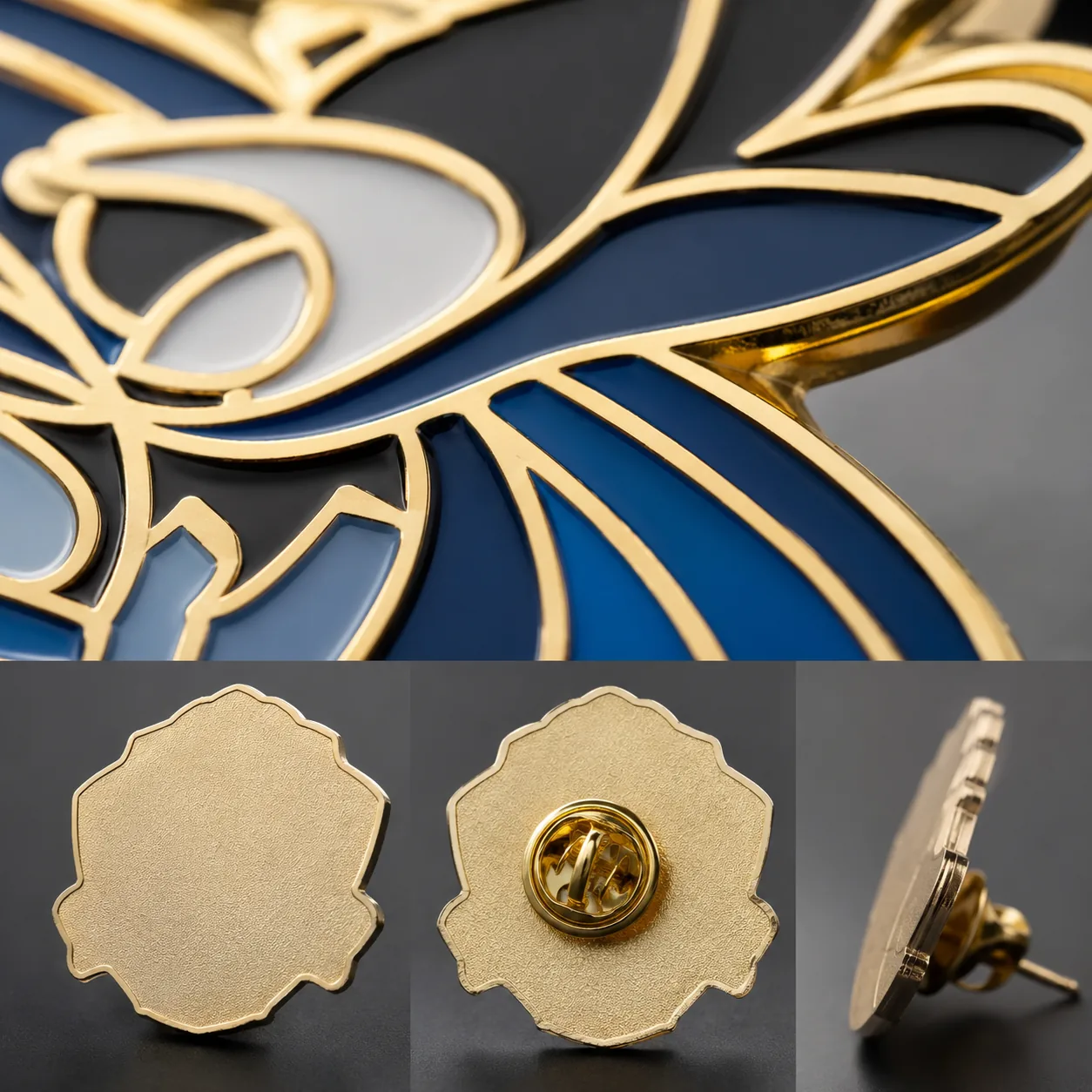
For photo approval, request front, back, side profile, attachment close-up, and a group shot of 5 to 10 pieces from the same trial run to check consistency. At least one image should show a caliper reading. For formed metal promos, workable dimensional tolerance is usually plus or minus 0.15 to 0.30 mm on width and height, with thickness tolerance around plus or minus 0.10 to 0.15 mm depending on process and complexity. For lanyards, width tolerance is commonly plus or minus 1 mm and cut-length tolerance plus or minus 5 to 10 mm.
Plating expectations should also be realistic. Bright nickel, black nickel, gold-color, gunmetal, and antique finishes on promo goods are decorative coatings, not heavy-duty wear layers. Decorative top-layer thickness in the rough range of 0.03 to 0.10 microns is common for appearance-driven items; undercoats and process sequence vary by factory. If salt-spray performance, sweat exposure, or prolonged skin contact matters, specify that requirement separately rather than assuming all decorative finishes behave the same.
Physical samples are worth the courier time only when touch, edge feel, mechanism fit, or perceived weight materially affects approval. For a repeat-style 2D pin or standard sublimation lanyard, high-resolution photos often save 3 to 5 days. For hinged keychains, magnet sets, numbered coins, or custom rigid boxes where closure fit matters, a physical sample usually prevents more expensive bulk errors.
Lock production with one control sheet and explicit QA limits
After sample approval, issue a single production lock sheet. This one-page control document should list SKU, approved artwork revision, finished dimensions, thickness, material, plating, PMS references, attachment, packaging, quantity, allowed overrun or underrun, carton targets, shipping marks, consignee format, and approved sample date. On fast-moving orders, this is more reliable than a long email chain because purchasing, production, QA, and freight all work from the same reference.
Inspection language should be measurable enough that a line inspector and a third-party inspector reach the same conclusion. For metal items, useful pass-fail points include no exposed base metal on the front display face, no missing enamel fill, no burrs or sharp edges in normal handling, attachment position within agreed tolerance, jump rings fully closed, and text above the minimum stroke width remaining readable. For lanyards, define print clarity, seam integrity, hook function, buckle fit, breakaway release if specified, and acceptable fray or stain limits. If edge roughness matters for coins or keychains, state that lightly textured antique finish is acceptable only if it does not snag fabric or feel sharp in hand.
- Confirm overrun or underrun policy, commonly `±5%` unless otherwise agreed in the PO.
- Lock inner-pack quantity and master carton count if the goods ship to a venue, `3PL`, or exhibitor-appointed contractor with receiving rules.
- Set a carton gross-weight target, typically below `15-18 kg`, to reduce handling issues and venue surcharges.
- State whether split shipment is allowed by SKU, carton, or partial quantity if one item finishes first.
- Name one final approver on your side so late comments do not reopen production.
- Align inspection timing: in-line inspection for process risk, or finished-goods inspection before release.
This is also the stage to align defect categories. `AQL 2.5/4.0` is common for promo goods, but it only works if major and minor defects are defined in advance. Missing attachment, unreadable text, wrong plating, wrong quantity per pack, or a failed breakaway function is usually major. A slight backside scuff, a small plating shade difference on a non-display area, or light carton rub that does not affect presentation may be minor.
Control the three bottlenecks that usually break rush orders
Most failed rush orders break at one of three points. First is buyer-side approval delay, especially when marketing, procurement, and sales all comment separately. Second is accessory availability: premium clutches, magnet backs, custom inserts, breakaway parts, special hooks, or gift boxes can run longer than the main item. Third is outbound timing, when finished cartons miss courier pickup, airline cutoff, customs review, or venue receiving windows.
Strong buyers reduce these risks before the PO is issued. Appoint one approver with authority. Ask which hardware and packaging materials are stocked and which are made to order. Standard butterfly clutches, split rings, lobster hooks, and plain polybags are usually available faster than magnetic backs, velvet boxes, EVA inserts, or custom printed sleeves. If a gift box adds 5 to 7 days, ship event units in polybags now and reserve premium packaging for post-show distributor kits or VIP mailers.
Partial shipment is often the best risk-control tool available. If an order includes 3,000 pins, 2,000 keychains, and 5,000 lanyards, there is rarely a functional reason every SKU must depart on the same flight. Shipping 1,000 pins and all lanyards first by courier or priority air while the balance follows by standard airfreight can protect the show date at lower cost than upgrading the entire program to the fastest mode. The key is to decide that split strategy early, before carton plans, packing lists, and export paperwork are fixed.
Separate product cost, rush cost, and freight cost in the decision
Rush pricing should be transparent. Valid surcharges may cover overtime, line reprioritization, urgent subcontract plating, accelerated packaging-material procurement, or premium export handling. They should not be a vague penalty for urgency. Ask suppliers to separate die charge, unit price, packaging, rush fee if any, and freight so you can see whether the smarter move is to simplify the product, change transport mode, or accept a modest acceleration fee.
As a 2026 FOB reference, standard 30 to 40 mm soft enamel pins often run about USD 0.45 to 1.05 each at 300 to 1,000 pieces depending on size, thickness, plating, color count, and attachment. A 45 to 50 mm 2D challenge coin at 300 to 1,000 pieces commonly falls around USD 1.35 to 2.80 FOB, with edge style, metal weight, and both-side detail affecting price. A standard 20 mm sublimation lanyard with stock hook and buckle is commonly around USD 0.55 to 1.15 FOB at 500 to 1,000 pieces. Rush production may add roughly 5 to 20 percent, but premium freight often exceeds the factory rush fee, especially for dense metal products shipped by courier.
That is why line-by-line trade-offs matter. If removing a custom box cuts only USD 0.08 per unit but saves 3 days, that may be a better business decision than paying a 12 percent rush surcharge. If stable production can finish one day later and priority courier still lands before venue cutoff, accelerating only the freight leg may be safer than forcing an unstable production slot. The best rush plan is usually the one with the fewest variables, not the one with the most overtime.
What buyers should do in the next 48 hours
If the show date is fixed, send a consolidated RFQ immediately with the exact in-hand date, final destination postcode, quantity tiers, vector artwork, target specs, compliance notes, and a clear statement on whether split shipment is acceptable. Ask each supplier for two commitments: the normal feasible schedule and the fastest low-risk schedule. That comparison quickly shows whether the date is realistic and which features are actually putting it at risk.
Then make three internal decisions the same day: who is the single approver, which specifications are truly non-negotiable, and what can be simplified if timing comes back tight. In many trade-show programs, the winning formula is not heroic factory speed. It is simpler construction, stocked hardware, standard packing, explicit QA limits, and a freight plan built around the real booth deadline rather than an optimistic ship date.
When comparing factories, schedule clarity matters as much as headline unit price. The stronger supplier is usually the one that states what can ship, by what date, under which assumptions, and with which trade-offs. On a rush custom promo order, that operational honesty is worth more than the cheapest first quote.
Have a project? Send your artwork and target quantity and we’ll reply with a detailed quotation within 12 working hours.
Ready to get this made?
Send your sketch, target quantity and ship-date. Detailed quotation in 12 hours.



