Rush Custom Pins for Trade Shows: A 2026 Timeline Playbook
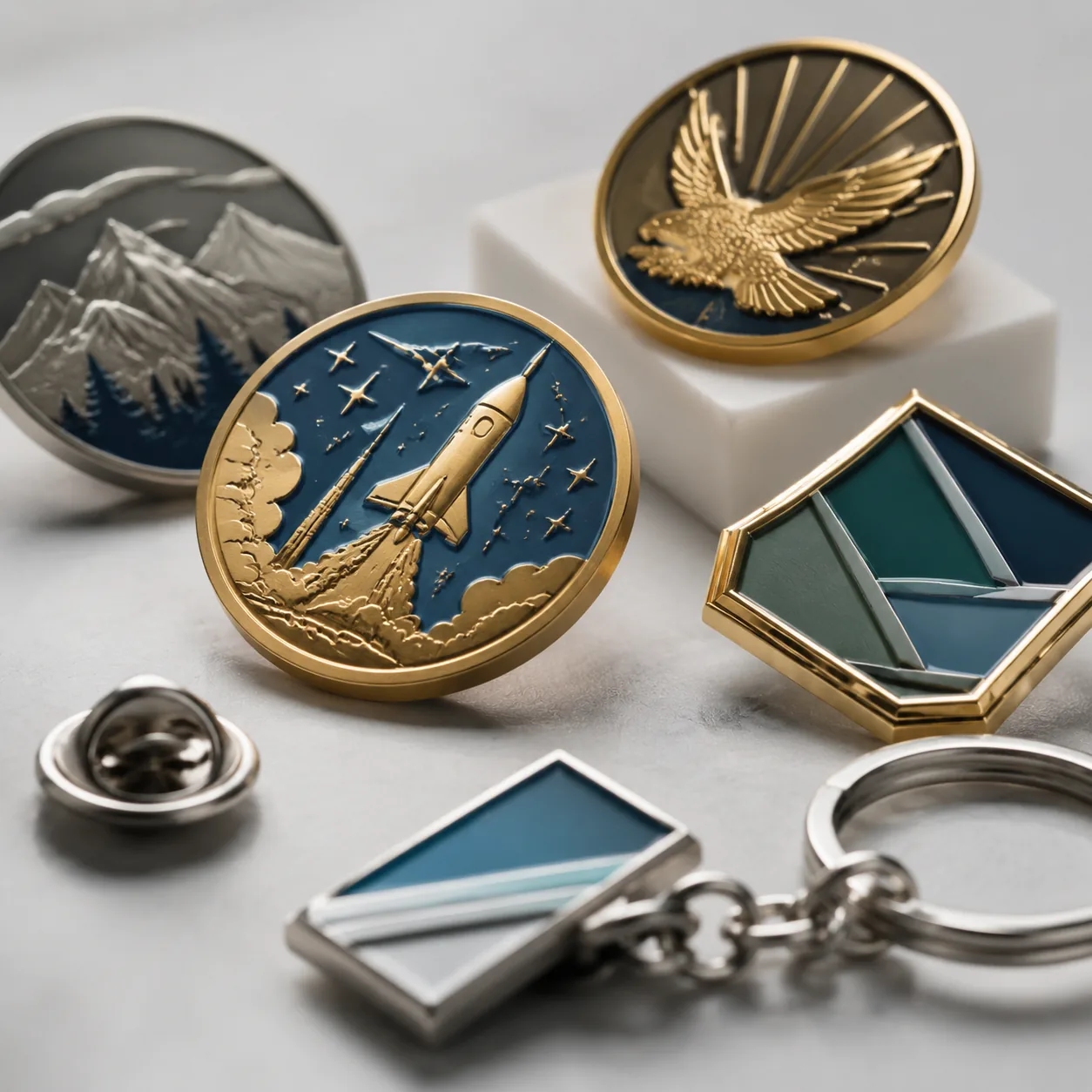
Rush pin orders usually fail in the first 72 hours, not on the factory floor
Most late trade-show pin orders do not fail because a factory lacks stamping or enamel capacity. They fail because the buyer loses the first 48 to 72 hours to incomplete RFQs, non-comparable quotations, artwork revisions, and confusion over what "ship date" actually means. That early delay is usually the critical path. Once the specification is frozen, a standard pin factory can often compress stamping, plating, color fill, assembly, and packing. What it cannot compress indefinitely is indecision.
Build the schedule backward from the date the pins must be usable at the booth. If a show opens on 12 October and your warehouse needs stock by 30 September for kitting, outbound parcel shipments, or exhibitor allocation, factory release often needs to happen around 20 to 28 August under a normal import plan. A controlled rush may still work with ex-factory release around 1 to 5 September, but at that point there is little room for a second sample, a packaging redesign, a customs delay, or a missed courier pickup. One lost approval day can remove both schedule flexibility and lower-cost freight options.
For a common event pin such as a 30 mm soft enamel custom shape in stamped iron, 1.2 mm thickness, bright nickel plating, one post with butterfly clutch, and individual polybag, MOQ usually starts at 100 pieces. Typical 2026 FOB pricing is roughly USD 0.70 to 1.05 at 100 pieces, USD 0.41 to 0.62 at 300 pieces, USD 0.30 to 0.48 at 500 pieces, and USD 0.22 to 0.38 at 1000 pieces, assuming 4 to 6 fill colors, no epoxy dome, and no rigid gift box. Tooling is commonly USD 45 to 80 for straightforward stamped iron, USD 70 to 120 for finer stamped brass, and USD 120 to 220 for cast zinc alloy with deeper relief or irregular cutouts.
Rush surcharges of 10 to 25 percent are real, but they are usually not the largest cost problem. The bigger cost comes from avoidable rework: a revised die line, a second pre-production sample, a late backing-card change, or a 100 percent cosmetic sort after defects are found too late. For a deadline-driven event, the safer construction is usually stamped iron or brass at 1.2 to 1.5 mm, 4 to 6 colors, bright nickel, black nickel, matte gold, or antique bronze plating, standard butterfly or rubber clutch, and simple packaging. Designs with moving parts, magnets, glitter, glow fill, transparent enamel, offset print overlays, or deep 3D casting can push a 10 to 14 working-day factory cycle into a 16 to 24 working-day cycle.
Day 0 to Day 1: send an RFQ that can be quoted without assumptions
A rush RFQ has to answer production questions before the supplier asks them. At minimum, specify finished size in millimeters, shape, thickness, base metal, process, plating, attachment type, number of colors, packaging method, quantity tiers, sample requirement, target ex-factory date, destination country, and hard in-hands date. Also state whether pricing should be FOB, EXW, or delivered. If those inputs are missing, the factory will still quote quickly, but the quote will be built on assumptions that later change price, lead time, or both.
Be specific about manufacturability. A 32 x 28 mm custom-shape pin can be made in stamped iron at 1.2 mm or stamped brass at 1.5 mm. At 1000 pieces, the unit-price difference may be only USD 0.03 to 0.08 FOB, but at 100 pieces the percentage gap is more noticeable. Brass generally holds finer separators better, plates more cleanly around narrow raised lines, and gives a cleaner edge in small recessed areas. Iron is often fully acceptable for simpler giveaway designs where cost matters more than edge fidelity.
State detail limits in the RFQ if the design is dense. As a practical benchmark, soft enamel works more reliably when raised metal lines are at least 0.30 mm wide and text is at least 1.2 mm high. Below that, factories often need to thicken lines, enlarge type, switch selected areas to print, or recommend imitation hard enamel or die-struck metal without fill. If you do not state those constraints up front, suppliers may quote different processes for the same art and the prices will not be comparable.
- Quote multiple MOQ tiers explicitly: 100, 300, 500, 1000, and 2500 pieces are useful breakpoints.
- Provide both a preferred-arrival date and a must-arrive date so suppliers can separate standard and rush scenarios.
- Specify approval method in advance: digital proof only, annotated sample photos, live video sample, or physical pre-production sample.
- Request separate line items for tooling, sample charge, unit FOB, rush surcharge, packaging adders, and estimated carton data.
- Set the inspection baseline before PO release; AQL 2.5 major / 4.0 minor is common for promotional hardware.
- Ask whether lead time is measured in working days or calendar days, and whether it starts after deposit, proof approval, or sample approval.
- Require the supplier to state whether the quoted ship date means ex-factory, FOB handover, or delivered to forwarder.
Day 1 to Day 3: shortlist suppliers on realistic lead times, not optimistic ones
For event work, the lowest quote is often the least reliable quote. One supplier may promise 7 production days but exclude proofing, sample review, plating queue time, backing-card assembly, and export carton preparation. Another may include those steps and look slower on paper while being the only offer that can actually hit the date. Compare quotations line by line: base metal, thickness, process, plating, hardware, packaging, inspection level, remake policy, and the exact trigger that starts the clock.
A credible quote should also include usable tolerances. For stamped pins, outer-dimension tolerance is commonly plus or minus 0.15 mm to 0.25 mm depending on size and cutout complexity. Thickness tolerance is often plus or minus 0.10 mm on 1.2 to 1.5 mm stamped parts. Printed registration for logos or backing cards is typically held around plus or minus 0.15 mm to 0.20 mm. Post-position tolerance of plus or minus 0.50 mm is standard for single-post or double-post backs, and backing-card mounting tolerance is often around plus or minus 1.0 mm. If a supplier cannot define these ranges, cosmetic disputes later will be difficult to resolve under rush conditions.
| Decision point | Lower-risk choice for rush | Higher-risk choice for rush | Typical effect on lead time |
|---|---|---|---|
| Base metal | Stamped iron for simple shapes; stamped brass for finer detail | Cast zinc alloy for deep 3D relief or heavy openwork | Casting typically adds 2 to 4 working days |
| Color process | Soft enamel or imitation hard enamel | Transparent, pearl, glitter, glow, or mixed-effect fills | Special fills often add 2 to 5 working days |
| Artwork detail | Lines 0.30 mm or wider; text 1.2 mm or taller | Micro text, halftones, or separators below process limit | Usually triggers art revision or print workaround |
| Attachment | Butterfly clutch or rubber clutch | Magnet back, safety-pin bar, cufflink fitting, spinner, or custom hardware | Non-standard hardware often adds 1 to 3 days |
| Packaging | Bulk polybag or pin on simple card in OPP bag | Velvet box, acrylic case, barcode labeling, or kitted set | Manual assembly can add 2 to 6 days |
| Inspection | AQL 2.5/4.0 with spot visual sort | 100 percent cosmetic sorting to multiple custom criteria | Usually adds 1 to 2 days plus labor cost |
Day 3 to Day 5: freeze one production-safe artwork file before proofing
Many rush schedules break at artwork stage because marketing keeps editing the design while procurement is pushing the factory to proceed. The die line is prepared from version A, then version B arrives after setup, and the supplier either charges for rework, asks for more time, or builds a compromised sample. On a compressed schedule, one production-safe version must be frozen before proofing begins.
Production-safe means more than sending a logo. The file should show finished size, metal boundaries, Pantone references where relevant, attachment positions, and any non-obvious requirements such as matte plating, sandblasted background, black-dyed recessed metal, or epoxy dome. Pantone is still useful, but enamel is a process approximation, not a laboratory color-matching system. For rush orders, the practical standard is visual acceptance under agreed lighting, not exact instrument equivalence.
A proper factory proof should show finished dimensions, nominal thickness, plating finish, enamel areas, line-width adjustments, post placement, packaging format, and any process exceptions. If the supplier widens a separator from 0.20 mm to 0.30 mm, thickens a border to avoid enamel bleed, or enlarges text for legibility, that change should be marked on the proof. Same-day approval matters. A supplier with in-house art handling can often turn proof revisions in less than 24 hours, but only if one buyer contact has authority to approve practical manufacturing edits immediately.
Day 5 to Day 9: use sample approval to remove shipment risk, not reopen design
On a rush order, sample approval should answer a narrow operational question: can this exact construction be mass-produced and shipped without creating a defect problem at receiving or at the booth. It is not the stage to revisit style preferences that should have been settled earlier. Every non-essential remake burns days faster than it improves the final result.
Inspect the sample under neutral light, ideally 5000 K to 6500 K, rather than warm office lighting that can hide scratches, pits, and plating inconsistency. Check front-face scratches, pits, edge burrs, underfilled enamel pockets, color contamination, loose clutches, weak solder joints, and plating holidays on raised metal. For soft enamel, recessed color below raised metal lines is normal. For imitation hard enamel, the surface should be flatter and more polished, but the process usually costs more and often adds 1 to 3 working days. Epoxy can improve apparent smoothness and scratch resistance, but it also changes the tactile feel and slightly softens fine metal detail.
Set pass-fail criteria in measurable terms. A practical sample checklist includes post-position tolerance within plus or minus 0.5 mm, backing-card placement within plus or minus 1.0 mm, no exposed base metal through plating on the front face, no sharp burrs on outer edges, and no visible front-face scratch at normal viewing distance under agreed inspection light. If you require a physical pre-production sample, budget around 5 to 7 days including courier transit. If annotated photos or live video approval is acceptable, you can usually save 3 to 4 days.
Day 9 to Day 18: lock bulk controls before the line starts moving
After sample approval, the priority shifts from design to variation control. Bulk production should run against one control sheet covering tooling revision, stamping, polishing, plating, color fill, post soldering, clutch fit, inspection, and pack-out. Late changes to backing-card stock, barcode placement, clutch finish, carton marking, or lot code can stop several stations at once and consume the schedule buffer you assumed was still available.
A usable bulk control sheet should list approved artwork revision, finished dimensions, base metal, nominal thickness, plating finish, attachment type and location, packaging method, unit pack, inner-pack quantity, master-carton limit, and inspection standard. If unit weight affects parcel postage or exhibitor kit planning, include a target weight with tolerance. For decorative promotional plating, suppliers usually work in a functional decorative range rather than heavy engineering thickness. Bright nickel, gold-tone, and black nickel finishes are commonly discussed at roughly 0.03 to 0.08 microns depending on finish and process route. If the pins may sit in inventory for several months, ask about anti-tarnish topcoat, sealed polybags, and desiccant in master cartons.
Inspection should match event exposure. AQL 2.5 major and 4.0 minor is standard for many promotional hardware orders. For flagship launches, executive gifting, or media events, many buyers use a hybrid approach: normal AQL sampling for general defects plus 100 percent front-face visual screening for scratches, missing clutches, enamel voids, and plating misses. That extra labor often adds only USD 0.02 to 0.06 FOB per unit, which is usually far cheaper than discovering a defect cluster while building show kits or VIP bags.
Day 18 to ship date: packaging and freight decide whether on-time production becomes on-time delivery
Factories often finish pins on time and still miss the event because packaging scope was vague or freight was booked too late. Bulk polybag packing is fast. Pin-on-card in an OPP bag is still manageable. A mounted pin with barcode label, printed insert, rigid box, tissue wrap, and collation with other giveaway items is no longer simple packing; it is a manual assembly project. Every added touchpoint increases both lead time and sorting risk.
For booth giveaway use, a 90 x 55 mm or 85 x 55 mm printed backing card in a clear OPP bag is a common balance of presentation, count accuracy, and packing speed. Typical adders are about USD 0.05 to 0.12 FOB for a simple printed card and OPP bag, versus roughly USD 0.35 to 1.20 FOB for a rigid gift box depending on board grade, insert type, wrap finish, and print method. Gift boxes also increase carton cube sharply, which matters because rush jobs usually move by express or air where volumetric weight can overtake product value quickly.
Build the logistics plan backward from the in-hands date with a real buffer. International express is commonly 3 to 7 days door to door in stable lanes. Air freight with export handling, customs clearance, and local delivery is often 5 to 10 days. Sea freight is usually unsuitable for genuine rush trade-show orders unless the factory and event are in the same region and several weeks of slack still remain. Ask the factory for final carton count, gross weight, net weight, and carton dimensions at least 2 to 3 days before goods are ready so the forwarder can book space early. Also confirm whether the promised date is ex-factory, FOB handover, or delivered, because buyers routinely lose time by mixing those terms.
What to do at 6 weeks, 4 weeks, and 2 weeks before show open
At 6 weeks out, a controlled sample and standard bulk production are still realistic if the art is straightforward and approvals happen the same day. Lock the RFQ within 24 hours, compare quotes by Day 2, approve the production-safe proof by Day 4 or 5, and keep packaging simple. Quantities from roughly 300 to 3000 pieces are still feasible for standard stamped iron or brass pins through a supplier that controls artwork, plating, and assembly directly.
At 4 weeks out, reduce complexity immediately. Use standard attachments, standard bright or matte plating, no glitter, no glow, no magnets, and photo approval instead of a physical sample unless brand risk clearly requires one. Keep packaging to bulk polybag or simple card. Before paying a deposit, confirm actual plating and assembly capacity for your production week, not just a generic lead time from sales. At this point, even technically simple pins can miss the date if the workshop queue is already full.
At 2 weeks out, proceed only if you can accept narrow choices and expensive freight. The fastest viable path is one size, one attachment, one standard plating, no gift box, no art changes after proof approval, and usually no physical pre-production sample. Send one complete RFQ package the same day with artwork, quantity tiers, pack method, destination country, approval method, and hard ship date. Then force a same-business-day go or no-go decision. On this timeline, speed comes from removing options, not from asking the factory to rescue an undecided specification.
Have a project? Send your artwork and target quantity and we’ll reply with a detailed quotation within 12 working hours.
Ready to get this made?
Send your sketch, target quantity and ship-date. Detailed quotation in 12 hours.



