Rush Custom Pins for 2026 Events: A Buyer Decision Framework
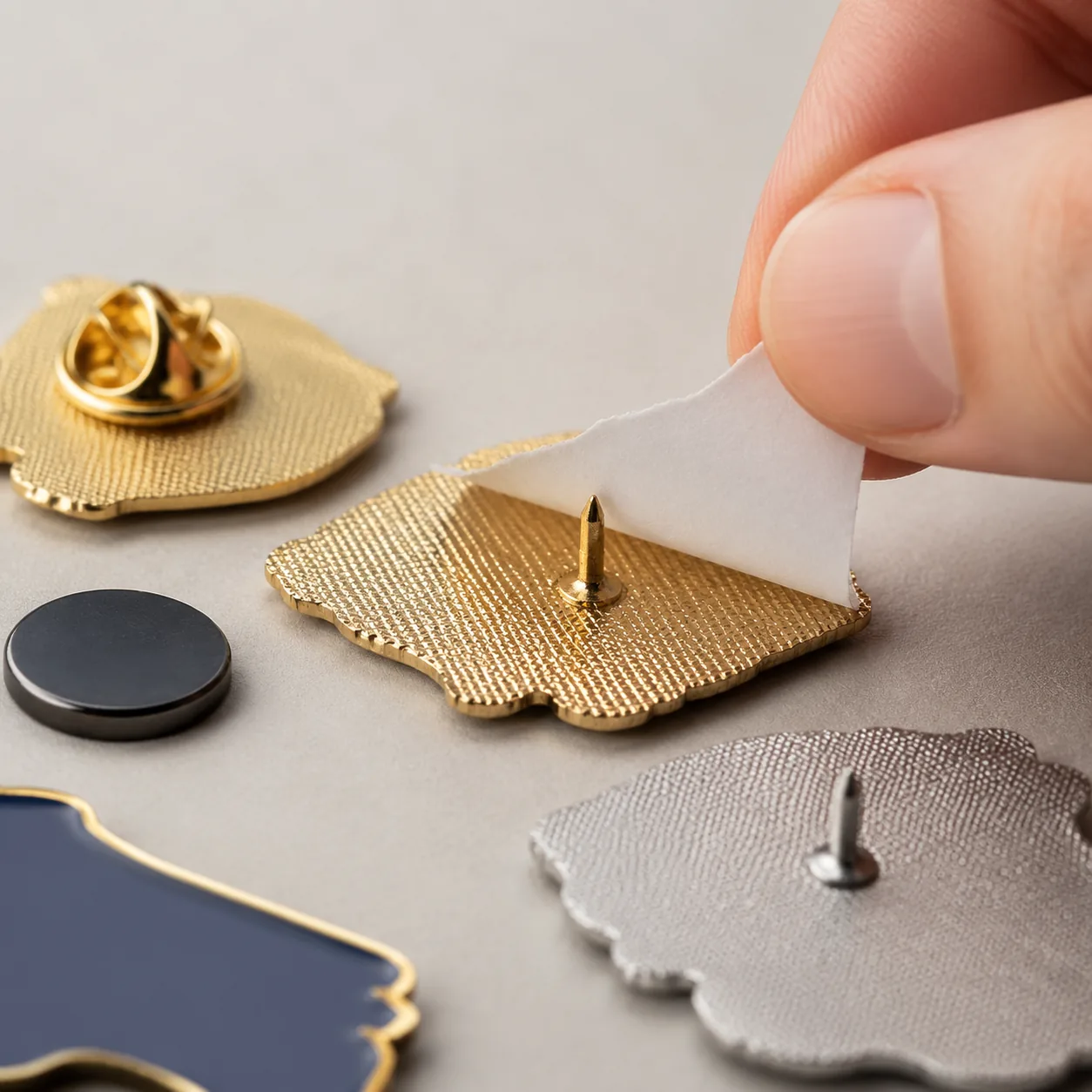
Start with the in-hand date, not the fastest promise
When the event date is fixed, the buying problem is not finding a factory willing to say yes. It is choosing a product construction that can survive engineering, tooling, plating, finishing, inspection, packing, and freight without consuming the buffer you need for the event. For trade shows, dealer meetings, campus recruiting, association events, and product launches, the wrong build can burn 5 to 12 days before stable mass production even starts.
A practical reverse schedule for 2026 cross-border B2B orders is usually: 2 to 4 days receiving buffer at the venue or warehouse, 1 to 3 days destination customs or handling buffer, 3 to 7 days air transit, 6 to 12 production days for standard custom metal items, 1 to 2 days tooling for simple molds, and 1 to 3 days for proof or sample approval. If the total remaining calendar is under 21 days, construction risk matters more than a small FOB saving such as $0.05 to $0.12 per piece.
Rush projects stay on track when four decisions are fixed on day one: finished size in mm, attachment or hardware, plating finish, and sample path. The common early failures are late artwork changes after mold drawing approval, comparing multiple plating finishes mid-order, and deciding packaging after goods enter finishing. Those are RFQ decisions, not end-of-production decisions.
A useful rule is simple: if the project has fewer than 28 calendar days left, default to the least complex product that still meets the event goal. If the goal is attendee recognition, table giveaways, dealer awards, or campus branding, schedule certainty usually outperforms collectible complexity.
Choose the product by process risk, not marketing preference
Not all promo products compress equally under time pressure. A 30 mm iron-stamped soft enamel pin with one plating color and a butterfly clutch is materially easier to rush than a 50 mm die-cast zinc alloy keychain with a swivel, spinner, epoxy dome, and custom backing card. If artwork includes gradients, halftones, or legal text below about 1.0 mm cap height, a woven patch or sublimated lanyard will often reach approval faster than a metal badge that needs repeated line-thickness correction.
For urgent timelines, compare options on three variables: number of production stages, dependence on outsourced parts, and reject sensitivity. A 45 mm challenge coin with 3D relief, edge text, antique plating, and a velvet box may look premium, but every added operation creates another queue and another inspection point. If the item is not being resold at retail, simpler geometry and fewer add-ons are usually the safer commercial choice.
| Item type | Typical MOQ | Standard lead time | Rush-capable lead time | FOB unit range | Main rush risk |
|---|---|---|---|---|---|
| Soft enamel pin, 30 mm, iron, 1 post | 100 pcs | 8-12 days | 6-8 days | $0.32-$0.75 | Plating queue and enamel fill capacity |
| Imitation hard enamel pin, 30 mm, brass or zinc alloy | 100 pcs | 12-18 days | 9-12 days | $0.60-$1.35 | Polish consistency before final plate |
| Die-struck badge, no color, 35 mm | 100 pcs | 7-10 days | 5-7 days | $0.45-$1.10 | Fine-detail approval and finish tone |
| Metal keychain, 50 mm, split ring only | 100 pcs | 10-15 days | 7-10 days | $0.72-$1.85 | Hardware assembly and scratch control |
| PVC patch, 70 mm | 100 pcs | 9-14 days | 6-9 days | $0.55-$1.50 | Mold revision if cavities are undersized |
| Woven patch, 70 mm, merrow border | 100 pcs | 6-9 days | 4-6 days | $0.30-$0.88 | Text legibility and border setup |
| Sublimated lanyard, 20 x 900 mm, stock hook | 100 pcs | 5-8 days | 3-5 days | $0.45-$1.15 | Accessory stock and sewing queue |
| Challenge coin, 45 mm x 3 mm | 100 pcs | 10-16 days | 7-10 days | $1.20-$3.25 | Edge detail, antique finish, and box packing |
Use the table as a first filter, then match the product to the art and use case. If the logo uses 7 to 9 colors, outlines below 0.30 mm, or dense text, woven or sublimated construction is usually lower risk than enamel metalwork. If the item will ship to a booth and be handed out from master cartons, a standard pin back in bulk polybags is safer than a magnet set with barcode labels, printed inserts, and retail sleeves.
Remove the features that create hidden queue time
Most rush delays do not come from the main metal body. They come from secondary features that require extra materials, handwork, curing, outsourced parts, or a second inspection pass. Common schedule traps are glitter enamel, glow pigment, transparent enamel over texture, offset print, UV print, epoxy dome, danglers, hinges, rhinestones, sequential numbering, acrylic toppers, custom backing cards, and rigid gift boxes.
If the event is within 3 to 4 weeks, every feature should justify its lead-time cost. Replacing two welded posts with one post plus an anti-rotation nub can reduce welding and alignment work on pieces under about 35 mm while keeping the pin stable. Switching from individual OPP bag plus printed insert to bulk polybag or plain card often saves 1 to 2 finishing days. Removing an epoxy dome from a keychain removes one curing cycle, commonly 12 to 24 hours depending on line load and humidity.
Plating is another underestimated bottleneck. Standard decorative finishes such as bright gold, bright nickel, black nickel, and dyed black usually move faster than dual plating, matte plus bright combinations, or antique finishes with tight appearance inspection. On decorative event items, a finish layer around 0.03 to 0.08 microns is common. If the program needs a heavier finish, anti-tarnish topcoat, or elevated corrosion performance such as 24 to 48 hours salt-spray resistance, specify it before quote approval because it changes both cycle time and price.
Geometry matters as much as finish. Bridges in cutouts below about 1.0 to 1.2 mm, raised lines under 0.20 to 0.25 mm, and recessed enamel cells narrower than roughly 0.30 to 0.40 mm are frequent causes of proof revision, underfill, or edge deformation. Simplifying those dimensions in the art file usually recovers more schedule than negotiating a few cents off the FOB.
Lock the critical specs and relax the rest
Rush orders fail when buyers try to preserve full custom freedom on every parameter. In practice, you can normally hold two priorities rigid and let one move: brand appearance, delivery date, or unit cost. Trying to maximize all three often triggers re-quoting, re-tooling, or last-minute freight upgrades that erase the original savings.
Before the first RFQ, separate fixed specs from negotiable specs. Fixed specs usually include logo shape, finished size, Pantone references, attachment type, and customer-facing packaging. Negotiable specs may include thickness within a practical range, base metal on a small pin, card stock such as 250 gsm versus 300 gsm, or whether bright silver is acceptable instead of nickel when the visual difference is minor in use.
For urgent metal items, normal commercial tolerances are often around +/-0.15 mm to +/-0.30 mm on finished outer size, +/-0.10 mm to +/-0.20 mm on thickness depending on process, and about +/-10% on unit weight unless otherwise agreed. Those figures are usually sufficient for event merchandise. Tighter tolerances are possible, but only when geometry, quantity, tooling method, and inspection plan justify the added review and slower yield.
Minimum manufacturable detail should be written in production language. Text below about 1.0 to 1.2 mm cap height on a metal pin is a readability risk after plating and enamel fill. For stamped or die-struck linework, 0.20 to 0.30 mm is often the lower practical limit for repeatable output. If a micro line is not legally or visually critical, giving the supplier permission to thicken it can remove a full art-correction loop.
Use a sample path that matches the calendar
Many procurement teams default to a physical pre-production sample because that is the standard compliance habit. On a normal launch, that can be sensible. On an event with fewer than 25 calendar days remaining, a physical sample often consumes the exact time needed for mass production, especially when courier transit takes 3 to 5 days each way and one revision cycle adds another 5 to 7 days.
A faster structure is to choose one of three approval paths. Level 1 is digital proof only and works best for repeat orders using an existing mold, unchanged size, and unchanged plating. Level 2 is factory sample photos and video with ruler, Pantone callouts, attachment close-ups, and packing confirmation; for new but simple builds, this is often enough. Level 3 is a physical pre-production sample and is best reserved for retail-facing items, unfamiliar attachments, multi-part sets, or artwork close to minimum production limits.
If you skip the physical sample, tighten control elsewhere. Require mold drawing sign-off, enlarged detail views, a color map, packaging dieline approval, and a stated inspection standard such as AQL 2.5 for major defects and AQL 4.0 for minor defects. For higher-value programs, some buyers move to AQL 1.5 major and 2.5 minor, but that tighter standard should be aligned with realistic yield and schedule.
Define 3 to 5 non-accept defects before production starts. Good examples are wrong plating tone, exposed base metal on front-facing surfaces, underfilled enamel, loose hardware, missing accessories, or unreadable text below the agreed threshold. Those no-go points are more actionable than a generic instruction to keep quality high.
Treat packaging and freight as part of the product
The item is not finished when plating is complete. It is finished when it arrives event-ready, count-correct, and commercially usable. Buyers often save 2 to 3 production days, then lose them again by adding labor-heavy packing too late. Gift boxes, barcode labels, mixed-SKU carton packs, retail sleeves, and venue-specific pack ratios are manufacturing steps, not warehouse admin.
For rush event distribution, the fastest format is usually bulk polybag by SKU, often 50 or 100 pcs per inner bag, then export cartons with clear carton marks. If handout-ready units are required, a plain backing card in an OPP bag is usually faster than a rigid box and is adequate for registration desks, booth counters, and dealer meetings. Keeping outer cartons around 12 to 15 kg gross reduces handling damage and makes venue-side movement easier.
Freight should be selected before mass production begins. Air express often lands in 3 to 5 days door-to-door, but becomes expensive for coins, magnets, and boxed sets because chargeable weight rises quickly. Standard air cargo is commonly 5 to 10 days and often more economical once chargeable weight exceeds roughly 80 to 120 kg, depending on route, fuel surcharge, and destination fees. Sea freight is rarely realistic for a true rush event unless the date is still 6 to 8 weeks away and packaging is already fixed.
If the order includes both core giveaway units and premium packed units, split the plan early. For example, 1,000 standard pins in bulk bags can move by express first, while 300 VIP boxed pieces ship by standard air cargo a few days later. That often protects the event date at lower total landed cost than forcing all units through the slowest packaging configuration.
Score the risk before you place the PO
A simple scorecard helps buyers decide whether to simplify, split, or substitute before money and time are committed. Add one risk point for each of the following: new custom mold, more than 6 enamel colors, cutout bridge under 1.2 mm, moving part, custom packaging, physical sample, mixed SKUs in one shipment, non-stock accessory, and required in-hand date under 28 days.
In many factories, a score of 0 to 2 is manageable with normal rush controls. A score of 3 to 5 usually means the project needs simplification, partial-shipment planning, or a less complex pack-out. Above 5 should trigger a substitute-product discussion. Substitution is not a failure; it is a schedule-control tool.
Concrete substitutions are often straightforward. If artwork has gradients, halftones, or micro text, a woven patch or sublimated lanyard will usually preserve brand clarity better than a rushed enamel badge. If color approval becomes the bottleneck, a die-struck badge without enamel can protect both legibility and schedule. If the event only requires attendee recognition, a 25 to 30 mm pin with stock clutch usually performs better commercially than a 50 mm multi-part keychain that needs assembly and heavier freight.
- Lock one plating finish only unless compliance absolutely requires variants
- Use stock attachments, split rings, and stock hooks whenever functionally acceptable
- Drop epoxy domes, glitter, rhinestones, and gift boxes first when the schedule tightens
- Split premium boxed units from standard giveaway units instead of slowing the whole order
- Substitute to woven patch or sublimated lanyard if artwork includes gradients or text below about 1.0 mm
- Reserve physical samples for high-risk builds, not routine event giveaways
Build an RFQ that engineering can price the same day
Rush production punishes vague RFQs. If the supplier needs multiple follow-up emails to confirm size, attachment, packaging, or shipping terms, planning hours are already lost. A strong RFQ should allow engineering, costing, and scheduling to assess manufacturability on the day it arrives.
Include exact dimensions in mm, quantity by SKU, base metal preference or acceptable alternatives, thickness target, plating finish, Pantone or CMYK references as applicable, attachment type, packaging format, destination country, required in-hand date, Incoterm, and whether partial shipment is allowed. If there is a reorder reference or old mold number, put it in the email subject line so planning can check compatibility immediately. State clearly which specs are fixed and which may move for schedule control.
Ask for a stage-by-stage timeline instead of one total lead-time number. At minimum, request artwork approval days, tooling days, sample route, mass-production days, packaging days, and shipping days. That exposes whether the real risk is plating capacity, outsourced accessories, curing, packaging labor, or transit. It also gives the buyer a factual basis to simplify the build or upgrade freight before the project slips.
For quality language, keep the request practical and auditable. Ask the supplier to confirm the process route, inspection standard, and key tests. Typical checks for rush metal promos include appearance inspection to AQL 2.5 major and 4.0 minor, attachment pull test, plating appearance review, color comparison under neutral light, count verification, and carton drop or compression checks appropriate to the pack style. Avoid requesting every possible report unless the program genuinely requires it; excess documentation can delay release almost as much as under-specification.
The best rush order is not the one with the most aggressive promise. It is the one whose construction, inspection level, pack-out, and freight plan are realistic enough to deliver usable inventory on the required date. In event sourcing, schedule reliability is usually the most valuable premium you can buy.
Have a project? Send your artwork and target quantity and we’ll reply with a detailed quotation within 12 working hours.
Ready to get this made?
Send your sketch, target quantity and ship-date. Detailed quotation in 12 hours.



