Rush Custom Pin Orders: 7 Failure Modes That Miss Events
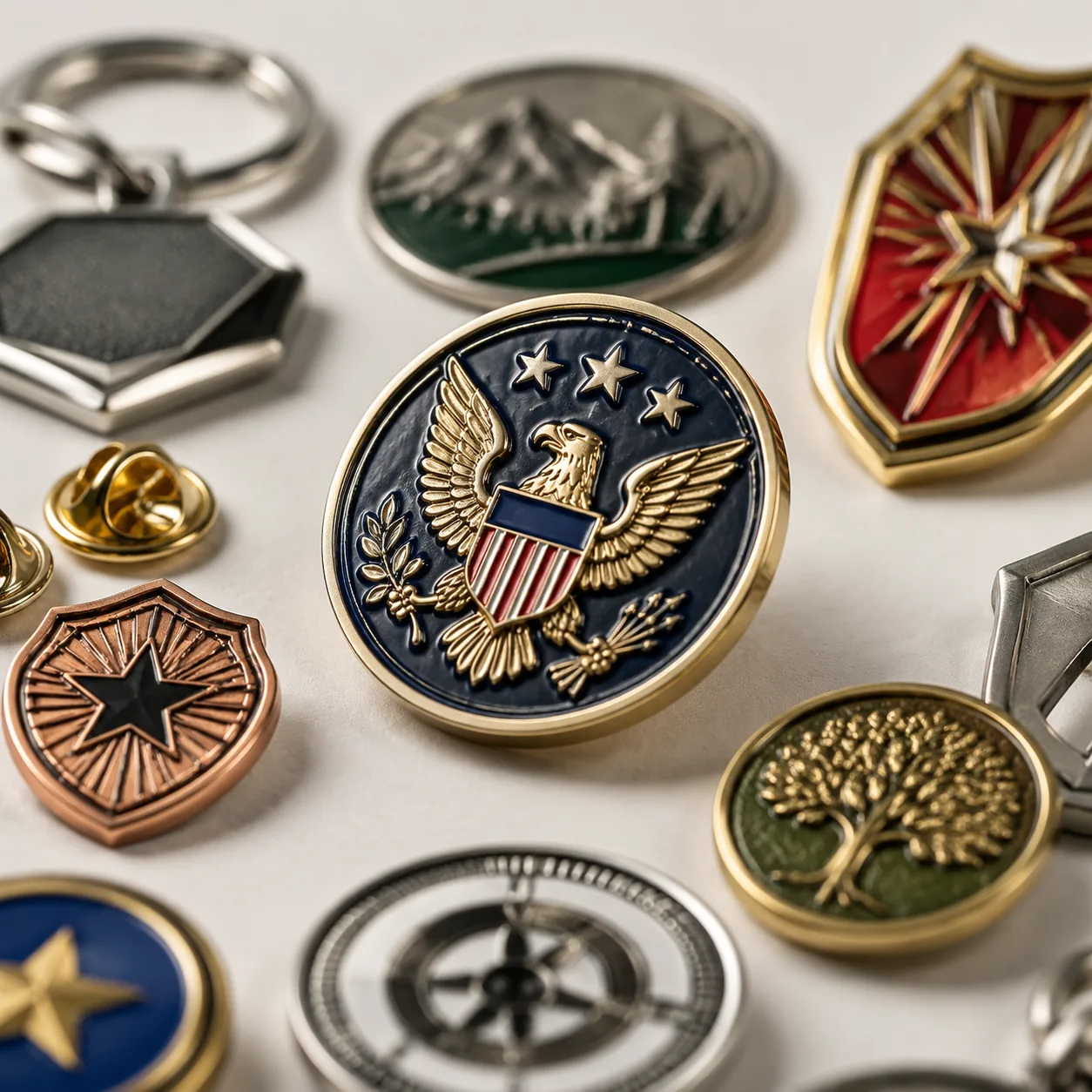
Rush pin orders miss deadlines through rework loops, not one bad production day
Most event-driven custom pin orders do not fail because a factory loses one shift of capacity. They fail because the job enters avoidable rework after artwork approval: die lines too fine to strike cleanly, enamel wells too narrow to fill consistently, plating defects discovered after polish, backing cards approved late, or carton specs never frozen. On a normal 18-24 production-day schedule, losing 2 days to corrections is inconvenient. On a 7-12 working-day rush schedule for a trade show, distributor launch, campus program, or conference, the same 2 days can consume the entire freight and customs buffer.
The control point is earlier than many buyers expect. Rush orders that ship on time usually share four traits: conservative construction, written technical limits agreed before tooling, one authorized approver on the buyer side, and no unpaid design changes after die cutting starts. Treat the RFQ, proof, and signed approval sheet as production documents, not marketing drafts. If the factory must interpret missing specs during production, schedule risk is already increasing.
As a realistic planning baseline, a simple 25-35 mm soft enamel pin in iron or brass, 1.2-1.5 mm thick, with standard decorative plating, butterfly clutch, and bulk packing can often be produced in 7-10 working days after final approval and deposit. Add 1-2 working days for each new proof round, 2-4 days for printed backing cards, 3-5 days for custom boxes or EVA inserts, and 1-3 days for epoxy, glitter, screen print, or unusual hardware that requires extra cure time, handling, or sorting. If the event date is fixed, the safest way to protect it is to simplify the build before tooling begins, not to demand overtime after defects appear.
Failure mode 1: approved artwork is not actually tooling-feasible
The most common rush-order breakdown happens before stamping starts. A design can look crisp on screen and still be unstable for die making. Frequent problem areas include 0.18-0.20 mm metal lines, isolated islands, micro serif text, narrow cutouts close to the outer edge, and sharp internal corners that do not release well from the die. The factory then widens lines, closes gaps, simplifies geometry, or pushes detail to print, backstamp, or laser mark. That adjustment cycle usually costs 1-2 working days, and buyer re-approval often adds another day.
For die-struck iron or brass soft enamel pins, rush production should use conservative minimums rather than laboratory minimums. Raised metal lines should be at least 0.30 mm, with 0.35 mm safer on curved outlines and small text. Recessed enamel cells should be at least 0.35 mm wide, with 0.40 mm preferred where adjacent dark colors make contamination obvious. Open cutouts should be at least 0.80 mm on simple centered shapes and 1.00-1.20 mm when the cutout sits near an edge, post, or corner. Front-face text below 5 pt is risky on most 25-35 mm pins; legal copy, URLs, and SKU codes are more reliable as backstamp or laser marking.
Dimensions also need usable tolerances. For pins under 40 mm, finished width or height tolerance of plus or minus 0.15 mm is commercially realistic; above 40 mm, plus or minus 0.20 mm is more typical. Standard thickness is usually 1.2 mm or 1.5 mm with a tolerance around plus or minus 0.10 mm. Attachment post location should be referenced from the finished edge or centerline, because even a 1.5 mm shift can make a pin sit crooked on a printed card. If presentation on a card matters, specify post spacing and card hole spacing on the same signed approval drawing.
- Request a tooling-feasibility review before final approval
- Set raised metal lines at 0.30 mm minimum and 0.35 mm on small details
- Keep enamel cells at 0.35-0.40 mm minimum width
- Use cutouts of at least 0.80 mm and 1.00 mm or more near edges
- Move micro text, URLs, and legal copy to backstamp or laser mark
- Freeze size tolerance at plus or minus 0.15 mm for pins under 40 mm
- Reference post positions from the centerline or finished edge
Failure mode 2: decoration choices increase reject rates and slow throughput
Rush jobs often fail because the decoration package is technically possible but operationally slow. Glitter, glow powder, transparent fills over texture, offset gradients, screen-printed halftones, and many tiny adjacent color compartments all increase handling time and the chance of rejects. Common defects include underfill, cross-color contamination, pinholes, shrinkage after bake, gloss inconsistency, and dust trapped under epoxy. These issues become much more likely when a small pin carries more than 6-8 enamel colors or when several adjoining cells fall below about 0.35 mm.
If the event date cannot move, the safest construction remains a 25-35 mm soft enamel pin with 4-6 Pantone-referenced colors, standard opaque fills, and no epoxy unless scratch resistance is essential. Epoxy can improve smoothness and reduce abrasion, but it adds another process step and typically 12-24 hours including queue and cure time. It also makes trapped particles, edge flow, and uneven fill more visible if the line is rushed. A simpler build moves faster through in-line QC, final inspection, and packout.
Color expectations also need to match factory reality. Most promotional pin factories perform visual matching to Pantone references rather than spectrophotometer-certified lab matching. For rush work, a commercial standard such as ANSI/ASQ Z1.4 General Inspection Level II with AQL 2.5 major and AQL 4.0 minor is practical, with slight cavity-to-cavity variation accepted if the color remains within the intended brand family under 5000K neutral light at 30-40 cm. Requiring zero visible variation on a low-cost promotional run usually increases sorting time beyond what a 7-10 day plan can absorb.
As a realistic 2026 FOB benchmark, a 30 mm die-struck iron soft enamel pin at 500 pieces with 4 colors, nickel or imitation gold plating, and standard butterfly clutch typically lands around USD 0.42-0.75 each. At 300 pieces, the same build is often USD 0.55-0.92 each; at 1,000 pieces it often drops to USD 0.31-0.58 each. Common custom MOQs are 100 pieces, but the strongest unit pricing usually begins at 300-500 pieces. Typical adders are USD 0.03-0.08 for glitter or glow, USD 0.04-0.10 for epoxy, and USD 0.05-0.12 for screen-printed detail. Those adders are small in cost but meaningful in schedule risk.
Failure mode 3: plating is selected for appearance, not process stability
Rush timelines leave almost no room to recover from plating defects. Typical problems are pits on mirror areas, thin decorative coverage on high points, polishing scratches that become obvious only after bright plating, edge burn, rack-to-rack tone variation, and early tarnish on poorly specified finishes. These failures usually appear after polishing and plating, which is exactly when the schedule has the least flexibility left.
For event merchandise, the best finish is usually the one that hides variation and survives handling, not the one that photographs most luxuriously. Bright gold and bright silver show pits, waviness, and hairline scratches immediately, especially on large flat logo fields. Black nickel is more forgiving on minor surface flaws but darkens the apparent tone of adjacent colors. Antique brass and antique nickel are often safer on relief-heavy designs because they hide minor polish variation well, provided recess depth is sufficient—typically around 0.15-0.20 mm—to keep wipe-back contrast readable.
| Finish option | Rush-order risk | Typical decorative spec | Best use case |
|---|---|---|---|
| Bright gold | High on large flat areas | Nickel undercoat with gold flash, commonly about 0.03-0.05 microns decorative layer | Premium logos with simple geometry and enough QC time |
| Bright silver | Medium to high | Bright nickel or nickel/chrome-look decorative finish | Corporate branding where crisp metallic contrast matters |
| Black nickel | Medium | Decorative black nickel over standard base plating | Modern branding that can tolerate a darker color cast |
| Antique brass or antique nickel | Low to medium | Base plating plus antiquing and wipe-back process | Relief-heavy designs that need visual forgiveness |
| Dyed black | Medium to high | Surface dye or coating over metal finish | Only when flat black appearance matters more than wear resistance |
Ask the supplier to state the plating system in writing and confirm whether the finish is standard promotional decorative grade or a heavier quoted build. Standard custom pins are not jewelry-grade unless specifically specified. If appearance consistency matters more than prestige, approve a plated sample or first-off photo under 5000K neutral light and define the viewing distance at 30-40 cm. That single inspection rule removes many last-minute disputes.
Failure mode 4: hardware is under-specified and causes post-delivery complaints
A pin can arrive on time and still fail at the event if the attachment rotates, releases, or damages fabric. Single butterfly clutches on wide horizontal pins are a common example. The apparent savings are only a few cents, but complaint rates rise when the pin is worn on knit shirts, tote fabric, lanyard straps, or badge holders where the substrate flexes and twists.
For pins wider than 32 mm, two posts are usually the safer minimum when orientation matters. Standard post diameter is often about 0.9-1.1 mm, with post spacing set as wide as possible without weakening the outer edge. A practical rule is to keep each post at least 4-5 mm in from the finished edge. Deluxe locking clutches improve retention for uniforms and premium apparel, but they add both cost and assembly handling. Rubber clutches are gentler on garments and reduce scratching during packout. Magnetic backs avoid puncturing fabric, but they are bulkier, can slide on heavier materials, and may require retail warning language for wearers with pacemakers or other medical devices.
Typical 2026 FOB adders at 500 pieces remain modest relative to replacement cost: a second post often adds USD 0.03-0.06, a rubber clutch instead of standard butterfly about USD 0.01-0.02, a deluxe locking clutch around USD 0.12-0.25 per set, and magnetic backing roughly USD 0.18-0.40 depending on magnet size and pull strength. For staff uniforms or all-day wear, those cents usually protect more value than upgrading to a more fragile mirror-bright plating finish.
Failure mode 5: packaging is treated as an afterthought instead of a parallel workstream
Many buyers finalize the metal item first and leave packaging until the end. On a rush schedule, that is a structural mistake because packaging has its own approval path: print proof, dieline confirmation, stock selection, barcode placement, insertion method, carton count, and sometimes retailer compliance review. A finished pin can sit ready to ship while the factory waits for approval on a card hole position that is 3 mm off-center or a retail envelope that no longer fits the assembled set.
For event giveaway distribution, a low-risk packout is usually a 300-350 gsm coated backing card with matte lamination, one pin attached in fixed orientation, and an individual OPP bag of about 0.04-0.05 mm thickness. For retail display, each added element—window box, EVA insert, sleeve, belly band, hang tab, tamper seal—can add 2-5 working days between print, assembly, and inspection. If the unboxing experience matters, freeze packaging specs before bulk metal production starts, not after plating is complete.
Carton controls matter as much as unit packaging. Pins packed loose can abrade; cards packed too tightly can bow or crush. A practical export standard is 5-ply outer cartons, gross carton weight below 12 kg, inner counts matched to the PO, and clear shipping marks showing item code, quantity, carton number, and destination. If goods are split to multiple event sites, write the overrun or underrun tolerance into the order. On custom work, plus or minus 5 percent is common unless exact-count packing is quoted separately.
Packaging cost is predictable enough to budget at RFQ stage. At 500 pieces, a simple printed backing card often adds about USD 0.06-0.15 each depending on size and print coverage, and individual polybagging adds about USD 0.01-0.03. A custom folding box can add USD 0.18-0.45 or more per set plus extra assembly time. Those numbers are too material, and too schedule-sensitive, to leave unresolved on a true rush order.
Failure mode 6: the QC standard is too vague to support same-day release decisions
When a defect is found on day 9 of a 10-day schedule, the buyer and factory need a written rule for what passes, what is sorted, and what is remade. Without that rule, every defect becomes a negotiation. Generic instructions such as good quality only or zero defects accepted do not work in custom metal production because they do not give the inspection team a usable release threshold.
A workable rush-order QC plan should define inspection level, AQL, sample basis, cosmetic viewing conditions, and defect classification. A common commercial setup is ANSI/ASQ Z1.4 General Inspection Level II with AQL 2.5 for major defects and AQL 4.0 for minor defects. Front-side cosmetics can be inspected at 30-40 cm under neutral white light around 500-1000 lux. Missing enamel, wrong plating, sharp burrs, exposed base metal, incorrect attachment, wrong size outside tolerance, and color outside the approved family should be treated as major defects. Light back-side polish haze, slight backstamp softness, or minor specking on hidden areas may be classified as minor if function is unaffected.
- State inspection level and AQL on the PO or signed approval sheet
- Define viewing distance at 30-40 cm under 5000K neutral light
- Mark non-negotiable defects such as sharp edge, missing clutch, wrong plating, wrong size, or missing color fill
- List acceptable minor variation on the back or hidden areas
- Request first-run photos from the first 30-50 pieces before full output continues
- Request final random inspection photos of packed goods, inner counts, and carton marks before shipment release
If there is no time for a third-party inspection, ask for in-line QC images after the first 30-50 pieces, then final random inspection records before shipment release. For example, on a 500-piece order under Level II, the factory can still pull and document a meaningful sample for appearance and count checks before courier handoff. That is not equivalent to an on-site audit, but it catches process drift while there is still time to stop the line, sort defects, or remake a limited quantity. On a compressed schedule, speed comes from pre-agreed thresholds, not from arguing about defects at the end.
Failure mode 7: logistics is planned with no customs or delivery buffer
The final mistake is building the logistics plan as if production, export, and final delivery will all go perfectly. Even when manufacturing is controlled well, weather, flight-space limits, customs questions, paperwork mismatch, and venue receiving restrictions can erase the remaining margin. For overseas event orders, production date and delivery date are not the same milestone. The schedule should separate at least four dates: final approval date, factory finish date, export handoff date, and venue receipt date.
For 2026 planning, international courier from China to North America or Europe is often 4-7 days door to door under normal conditions, but event-critical orders should budget 6-10 calendar days. Air freight can work for larger runs, but only if the commercial invoice, HS code, consignee data, declared value, and tax instructions are prepared early and consistently across documents. Sea freight is rarely compatible with a true rush program unless goods are already finished and the event is still weeks away. If the consignee is a first-time importer, expect higher clearance risk around address validation, tax handling, and importer-of-record requirements.
A practical rule is to complete factory production at least 7 calendar days before the venue need-by date when using courier, and 10-14 days before when customs procedures are unfamiliar or the site has strict appointment windows. If that buffer does not exist, the safest response is not to pressure the line harder. It is to simplify the product immediately: reduce color count, remove epoxy or fragile finishes, standardize hardware, freeze packaging, or switch to a more forgiving plating system.
For most trade-show and conference programs, the lowest-risk formula is consistent: 25-35 mm soft enamel, 1.2-1.5 mm thickness, 4-6 colors, standard decorative plating, two posts on wide shapes, simple backing card, AQL 2.5/4.0, and courier transit already built into the calendar. When comparing suppliers, ask the same operational questions every time: what is the fastest realistic lead time for this exact construction, which spec is most likely to trigger rework, what reject rate is normally sorted before packing, what MOQ and price break apply at 300, 500, and 1,000 pieces, and what overrun tolerance applies. Reliable suppliers answer with constraints, tolerances, and numbers, not only promises.
Have a project? Send your artwork and target quantity and we’ll reply with a detailed quotation within 12 working hours.
Ready to get this made?
Send your sketch, target quantity and ship-date. Detailed quotation in 12 hours.



