RFQ to Freight: Sourcing Custom Promo Goods in 2026
Start With the Shipment Constraint, Not the Product
If you start by asking for a price on a pin, coin, or keychain before you define how it will move, you usually get the wrong quote. In 2026, freight mode can change your landed cost more than a small change in unit price, especially when the order mixes metal items, printed cards, and retail packaging. The right starting point is not artwork; it is the shipment constraint: air, sea, rail, courier, or a split shipment with a sample-first lane and a bulk lane. At ZheCraft, we see the cleanest RFQs come from buyers who state destination, required arrival date, carton limits, and whether the order can be split across two shipments.
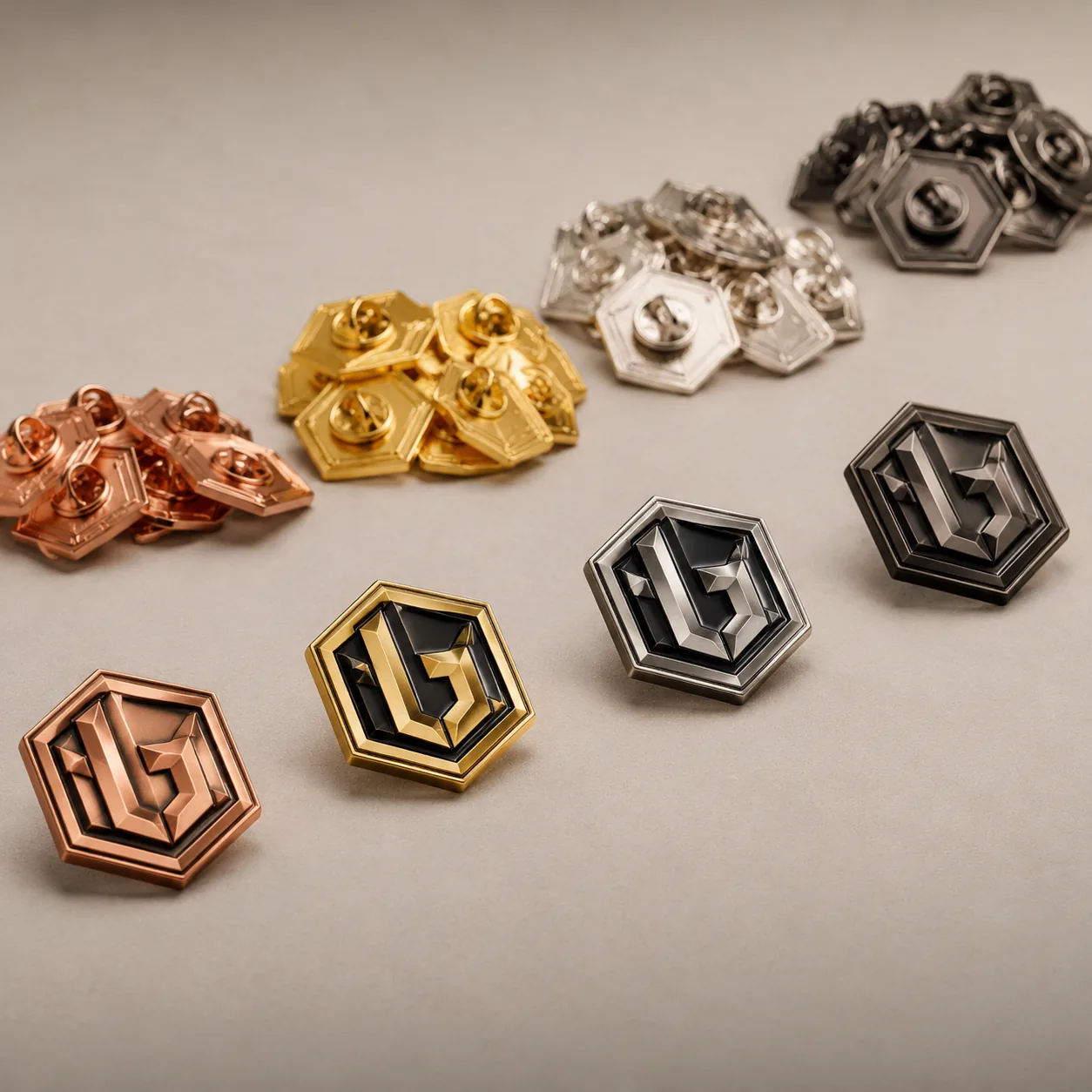
For example, 3,000 hard enamel pins with backer cards may look light on paper, but once packed into OPP bags, cards, inner boxes, and master cartons, the volume can push you into volumetric-air pricing. The same order as loose bulk pins may be easy to move by courier sample lane first and consolidated sea freight later. A buyer who decides the freight mode early can choose plating thickness, packaging density, and even backing style with a real cost target in mind. That reduces revisions later, which is where most lost time and expediting fees happen.
- State destination city, Incoterm, and whether you need door delivery or FOB only
- Confirm target arrival date, not just order date
- Give expected pack style: bulk, polybag, backing card, box, or mixed SKUs
- Tell the supplier if samples must ship by courier while bulk goes by sea
- Share any carton or pallet limits if your warehouse has receiving constraints
Write the RFQ So Suppliers Can Quote Like Engineers
A useful RFQ is not longer; it is more precise. For custom pins, badges, coins, keychains, patches, and lanyards, a supplier needs dimensions, material, plating, color count, attachment type, and packing format before the factory can choose tooling and line allocation. If the RFQ only says “metal keychain, 5,000 pcs,” the quote may look cheap, but it usually excludes the hidden choices that drive quality and freight size. That is why we recommend specifying the product structure first, then the finishing details, then the logistics expectations.
A good RFQ should let two factories arrive at nearly the same cost within a narrow range. If quotes vary wildly, the issue is often not factory margin; it is scope ambiguity. For example, a coin may be die-struck brass with antique nickel plating at 2.5 microns, or zinc alloy with soft enamel and epoxy dome, and those are not comparable products. The more exact your RFQ, the less likely you are to receive a sample that looks right but ships wrong.
| RFQ field | What to specify | Why it matters |
|---|---|---|
| Product structure | Stamped, cast, etched, woven, printed, or assembled set | Defines tooling, cycle time, and unit cost |
| Size and tolerance | Finished size in mm and allowable deviation, e.g. ±0.3 mm | Prevents mismatch with packaging and accessories |
| Material and plating | Brass, iron, zinc alloy, stainless steel; plating in microns | Affects appearance, corrosion resistance, and quote stability |
| Color and surface | Pantone refs, enamel type, texture, epoxy, polish level | Controls artwork approval and finish risk |
| Packing and freight | Bulk, retail, pallet, courier sample, sea shipment | Changes carton count, volumetric weight, and lead time |
Translate Artwork Into a Build Sheet Before Sampling
Artwork is only a visual reference; a build sheet is what the factory can manufacture. Before sampling, convert the design into a manufacturing spec with exact dimensions, line widths, cutouts, enamel fill areas, and attachment positions. For small metal giveaways, the difference between a 0.25 mm line and a 0.40 mm line can decide whether a detail is moldable, stampable, or a rework risk. This is especially important if you are ordering a mixed promo set, because each item may need a different minimum detail level.
For ZheCraft-style production, the build sheet should also state where the factory is allowed to simplify art. That could mean reducing micro-text, closing tiny openwork, or increasing the rim on a coin so the design survives stamping and polishing. If you allow the factory to “make it workable” without guidance, you may get a functional sample that no longer matches brand intent. The safest approach is to mark must-keep details and negotiable details separately.
- Fix final size in mm, not only in inches or pixels
- Mark minimum line width and smallest cutout
- Identify which colors must match Pantone exactly and which can be close
- Specify finish priority: gloss, matte, antique, brushed, or texture
- Call out any parts that must remain unchanged from the render
Use the Sample Round to Stress-Test Freight and Packaging Choices
Sampling is not only for checking appearance; it is where you confirm how the product will travel. A sample sent by courier shows the fit, finish, and packing efficiency of the actual shipment concept. If the sample arrives in a small, efficient carton but the bulk quote later assumes oversized retail boxes, your freight cost can double for no good reason. This is why a practical sample review includes product quality, inner pack count, and carton dimensions, not just color and plating.
For metal items, you should ask for the sample in the same packaging logic you plan to use in bulk, even if the quantity is small. A pin with butterfly clutch packed loose is a very different freight profile from the same pin mounted on a card inside a polybag. For coins and badges, sample the exact insert or tray type if you plan to use one, because foam, velvet, or thermoformed trays each change weight, protection, and space efficiency. ZheCraft usually recommends one courier sample for approval and one pack-config sample if the final order is moving by sea.
| Sample check | What to measure | Pass/Fail cue |
|---|---|---|
| Finish | Plating tone, polish, edge quality | Pass if appearance matches approved reference under daylight |
| Dimensions | Width, height, thickness, attachment spacing | Pass if within stated tolerance, usually ±0.3 mm to ±0.5 mm |
| Packing | Units per inner bag/box and carton fill | Pass if no wasted void that inflates volumetric weight |
| Function | Clasp strength, magnet pull, moving parts | Pass if attachment holds under normal handling |
| Labeling | SKU, batch mark, barcode or backstamp | Pass if it matches receiving and reorder records |
Choose the Freight Mode by Product Geometry, Not Habit
In 2026, freight mode selection is a design decision as much as a logistics decision. Small metal goods with high value density can tolerate air freight on urgent runs, but large-volume orders often move better by sea even when the unit price is slightly higher. Courier is still the best option for low-quantity samples, color approvals, and urgent reorder fixes, but it becomes expensive once packaging adds cubic volume. Rail and consolidated sea can be useful for buyers who can wait and who want a lower landed cost without the unpredictability of pure spot air rates.
The biggest mistake is assuming all promo items behave the same in transit. Pins and coins are compact but often packaged in ways that create air pockets. Lanyards and patches are light but bulky, so they can become freight-heavy faster than buyers expect. If your supplier is experienced, ask them to quote the same item under two or three freight assumptions before you approve the build. That gives you a real decision instead of a single quoted lane.
| Mode | Best for | Typical trade-off |
|---|---|---|
| Courier | Samples, replacements, small urgent orders | Fastest, but expensive on volume |
| Air freight | Medium urgency, compact high-value goods | Higher cost, sensitive to chargeable weight |
| Sea freight | Bulk orders with flexible timeline | Lowest unit freight, longer transit and port handling |
| Rail/consolidated | Europe or inland lanes with moderate urgency | Balanced cost, but less flexible schedules |
Lock the Bulk Order Only After a Pre-Production Sample
A pre-production sample is your last realistic chance to catch hidden cost and quality issues before mass production. At this stage, the factory should confirm the exact plating bath, enamel fill method, attachment hardware, carton count, and whether the approved sample can be duplicated at scale. If the sample was built with an extra hand-polish step or a special manual assembly aid, that must be disclosed, because bulk units may not reproduce the same result. The best approvals are boring: they use the same process route planned for the order.
For volume orders, ask the supplier to confirm batch plan, inspection point, and AQL target before cutting full production. AQL 2.5 is common for general appearance defects, while tighter requirements may use AQL 1.5 for critical function checks on attachments or magnets. You should also confirm overage allowance, especially for multi-piece sets where matching parts and packing losses can create shortfall risk. A clean approval includes not just the sample photo, but the factory’s written declaration of what exactly will be repeated in bulk.
- Match sample process to bulk process, not just sample appearance
- Confirm AQL target for appearance and function separately
- Ask whether any hand-finishing was used on the sample only
- Verify overage policy for breakage, loss, and QC rejection
- Record final approved carton count and piece count per carton
Compare Quotes on Landed Cost, Not Only FOB
FOB is useful, but it is not enough if you care about true budget control. Two suppliers can both quote the same FOB price and still produce very different landed costs because of carton size, shipping method, packing density, and whether the factory uses direct factory cartons or extra retail packaging. In 2026, freight swings can erase a small unit-price gain, especially on mixed promo sets where one item forces the shipment into a larger carton class. That is why the quote comparison should include estimated freight mode and a realistic packing assumption.
If a supplier gives you a surprisingly low FOB quote, check whether they excluded tooling amortization, sample freight, or special packing. If they did, the price may still be acceptable, but only if you know it in advance. ZheCraft’s approach is to separate tooling, unit price, packing, and freight assumptions so buyers can compare offers on the same basis. The lowest quote is not the best quote if it creates rework, delays, or freight surprises later.
| Quote element | Good practice | Common trap |
|---|---|---|
| Tooling | Separate one-time tooling from unit price | Tooling hidden inside unit price makes reorder comparison impossible |
| Packing | State exact inner and master carton configuration | Assuming “standard packing” causes size and freight drift |
| Freight basis | Quote under courier, air, and sea assumptions if needed | Comparing one supplier’s FOB to another’s delivered price is misleading |
| Lead time | State sample and bulk timelines separately | A fast sample can mask a slow bulk schedule |
What to Do Next Before You Place the Order
Before you issue the PO, confirm three things in writing: the approved build sheet, the approved sample photos or physical sample, and the freight mode you will actually use. If any of those three are still open, you do not yet have a stable order. Ask the supplier for a final shipment plan with carton count, gross weight, carton dimensions, and dispatch window so your forwarder can quote realistically. This is also the right time to lock reorder specs, because the cheapest reorder is the one that does not need re-approval.
If you are buying custom pins, coins, badges, keychains, patches, or lanyards for multiple markets, keep one master spec file per item and one shipment profile per lane. That way, when you reorder in 2026, you can decide quickly whether to use courier for a small urgent run, air for a mid-size campaign, or sea for the full roll-out. If you want a factory to quote efficiently, send a complete RFQ first, request one production-realistic sample second, and approve bulk only after freight and packing are aligned. That sequence avoids most of the expensive mistakes we see in international promo sourcing.
Have a project? Send your artwork and target quantity and we’ll reply with a detailed quotation within 12 working hours.
Ready to get this made?
Send your sketch, target quantity and ship-date. Detailed quotation in 12 hours.



