RFQ to Bulk: A Step-by-Step Sourcing Process for Custom Metal Goods
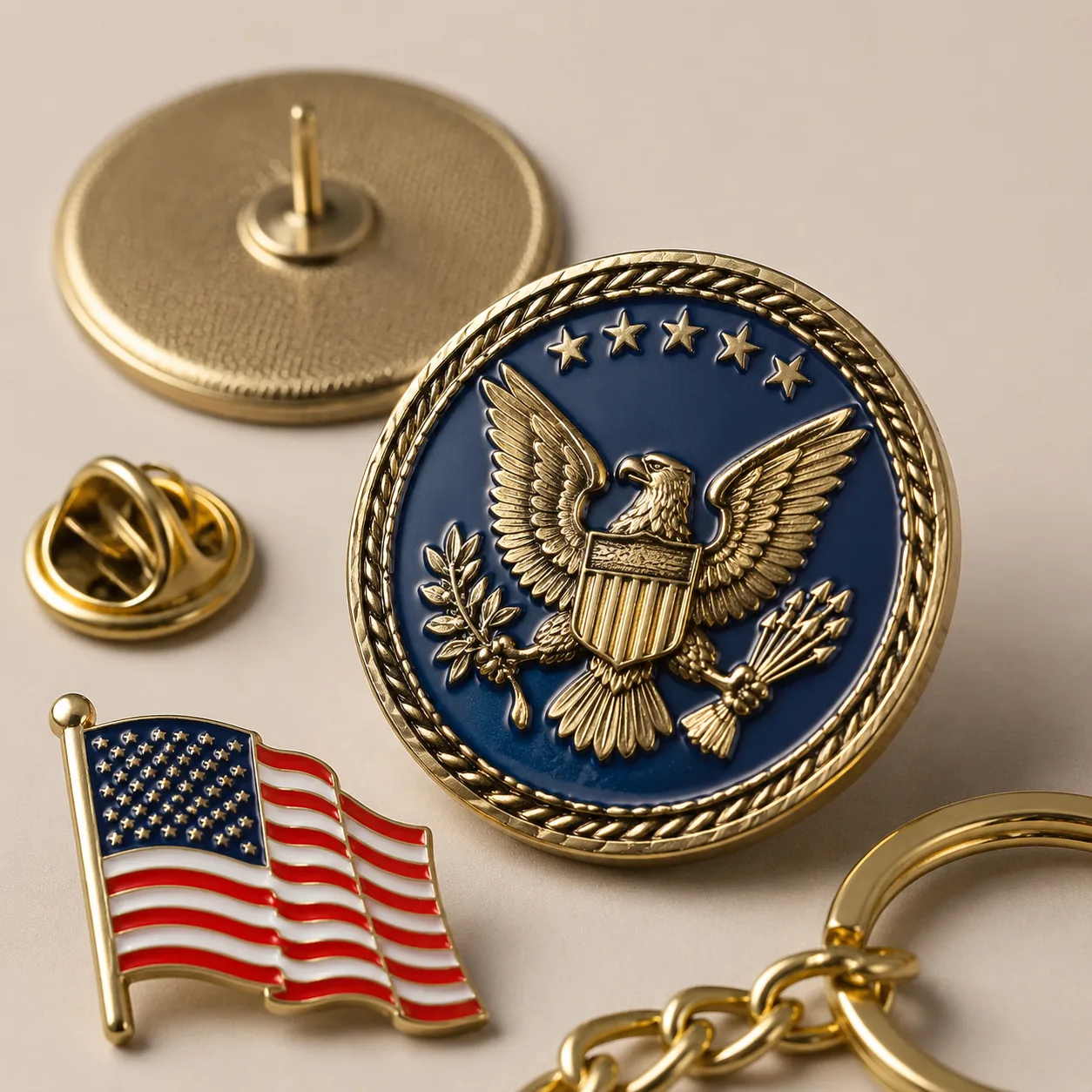
Lock the product definition before you ask for price
Most sourcing failures on custom metal promotional products start before the first quote arrives. Buyers ask for “a price,” but the factory has to infer the real object: size, thickness, base metal, finish, attachment, artwork complexity, packaging, and the acceptable defect level. If those inputs are loose, every supplier quotes a different product and the comparison becomes meaningless. The first step is not collecting numbers; it is freezing the specs that determine tooling, yield, and finish quality.
For enamel pins, challenge coins, badges, keychains, fridge magnets, metal bookmarks, and lanyard accessories, the non-negotiables are usually dimensions, metal type, process, plating, color count, attachment style, and target quantity. A buyer that defines those seven items gets tighter quotes and fewer sample revisions. For example, a 30 mm soft-enamel lapel pin with stamped brass and nickel plating is a different cost structure from a 45 mm die-cast zinc keychain with epoxy dome and laser engraving, even if both are called “custom metal accessories.”
A good spec sheet should also note practical tolerance targets. For parts under 40 mm, a dimensional tolerance of ±0.2 mm is realistic for key features such as outer diameter, pin post position, and loop size. For larger items, ±0.5 mm is more practical. Plating should be named by finish and target thickness: nickel at 0.10-0.15 μm, gold at 0.10-0.20 μm, antique brass at 0.08-0.12 μm, and black nickel at 0.08-0.10 μm. If the item has moving hardware, define the functional requirement too, such as clasp retention, swivel action, chain length, or magnet pull force.
- Write one master spec sheet per item, not one vague email for the whole range.
- State dimensions in mm and call out the critical tolerances.
- Name the base metal and process: stamped brass, stamped iron, die-cast zinc alloy, etched stainless steel, or aluminum.
- Define the finish by type and thickness, not just color.
- List the acceptance standard now: visual match, dimensional match, functional match, or all three.
Build an RFQ factories can quote consistently
A clean RFQ should let three factories quote the same item without follow-up questions. The practical format is straightforward: product name, artwork file, material, size, thickness, plating, color system, attachment, packaging, target quantity, delivery window, and destination port. If you skip thickness, backing style, or plating, the quote may look cheaper only because the supplier assumed the lightest build. That is a false comparison and usually turns into a sample change later.
For metal goods, include the production method when it matters. Use exact terms such as soft enamel, hard enamel, die-struck, die-cast, etched and color-filled, laser-engraved, or offset-printed with epoxy. If you do not know the build, ask the factory to propose one, but require a second quoted option so you can compare cost and lead time on equal terms. This is where a vertically integrated factory helps: one team can advise on tooling, plating, filling, polishing, and packing instead of passing the file between vendors.
| RFQ field | Why it matters | Common buyer mistake |
|---|---|---|
| Size and thickness | Directly changes tooling, material use, and weight | Saying only “medium size” |
| Material and process | Determines finish quality and durability | Mixing stamped and cast assumptions |
| Plating and color specs | Affects appearance and corrosion risk | Naming a color but not the metal finish |
| Quantity and reorder plan | Changes mold amortization and unit cost | Quoting one run size only |
| Packing requirements | Impacts labor, carton size, and damage rate | Adding packaging after sample approval |
A complete RFQ should also state whether the order is for first production or a repeat run. New tooling for a 25 mm pin typically adds USD 40-120 in setup cost; a coin die set is often USD 60-180 depending on relief depth and edge detail. If you do not separate tooling from unit pricing, the quote can look attractive while hiding the real landed cost. For reorders, ask whether the tooling fee is waived or reduced and whether the factory will reuse the approved die or rebuild it.
Compare quotes on structure, not just price
A low quote is only useful if the build is truly comparable. One factory may quote zinc alloy with standard plating, another may quote brass with thicker plating, and a third may leave out the backstamp or individual polybags. If you compare only the final dollar number, you can choose the wrong supplier for the wrong reason. The better method is to normalize the quote into tooling, unit price, sample charge, lead time, and packing cost.
For small to mid-size orders, MOQ tiers usually change the economics. A common pattern is 100-300 pcs at a higher unit price, 500 pcs at a better production rate, and 1,000+ pcs at a lower per-unit cost because tooling and setup are spread across more pieces. Useful screening ranges for FOB pricing are: soft-enamel pins at roughly USD 0.40-1.80 each at volume, die-struck challenge coins at USD 1.20-4.50 each, simple metal badges at USD 0.55-2.20 each, and keychains at USD 0.70-3.50 each. Thin, oversized, multi-layer, or heavily polished items can sit outside those ranges, especially if they need epoxy dome, sandblast texture, or premium packing.
Sample pricing should be separated from bulk pricing. A typical new-sample charge is USD 30-120 for a pre-production prototype, often refundable against bulk if the order converts. Lead times should also be split by stage: artwork confirmation in 1-3 days, sample development in 7-15 days, and bulk production in 12-30 days after sample approval for standard items. More complex castings, multi-finish badges, or mixed-pack orders often need 20-40 days. Ask for those numbers in writing so every supplier is being judged on the same clock.
| Quote item | What to normalize | Red flag |
|---|---|---|
| Tooling fee | Amortize across expected volume | No tooling listed at all |
| Unit price | Match same size, same finish, same pack | A cheaper quote with fewer process steps |
| Sample cost | Check whether it is refundable | Free sample but vague bulk spec |
| Lead time | Separate sample days from bulk days | One lead time for all stages |
| Packing | Compare carton and individual packing | Packing “included” without detail |
Use the sample stage to remove uncertainty
A sample is not a miniature shipment; it is a test of whether your spec can survive real production. The right sample checks include artwork legibility, color placement, plating tone, attachment strength, edge smoothness, and dimensional consistency. For custom metal products, the most useful inspection standard is usually a mix of visual comparison and simple functional tests rather than lab-grade perfection. If the sample is not judged against a written checklist, the approval becomes subjective and hard to defend later.
Factories usually work with a pre-production sample or golden sample before mass production. That sample should lock the agreed design, not open a new round of design debate. For enamel fills, check for overfill, underfill, color bleed, pinholes, and polish marks. For coins and badges, check rim symmetry, relief depth, and surface texture. For keychains and magnets, check swivel points, magnet pull, and hardware assembly. A clean sample phase saves money because every correction after mold release or plating setup is slower and more expensive.
- Confirm all dimensions with calipers, especially holes, loops, and attachment points.
- Check plating color under daylight and indoor light; nickel and antique finishes often read differently under warm LEDs.
- Test snap clasps, butterfly clutches, chains, and magnetic backs for hold strength.
- Inspect edge finishing for burrs, sharp corners, and plating voids.
- Approve only one reference sample and label it as the control for bulk.
For premium programs, ask for a pre-shipment sample or photo-verified lot sample before the full run is packed. That extra step is cheap compared with rework on 5,000 pieces. If the item has print, engraving, or epoxy, request close-up photos of the first-off sample and the first carton so you can catch color drift or packing errors before they scale.
Approve the right controls before bulk starts
Bulk production is where good samples can still become disappointing shipments. The reason is not always bad factory behavior; often the problem is that the approved sample did not define what must stay constant. Before mass production, lock the control points: approved artwork file, approved sample, plating thickness target, color references, packing method, and acceptable defect rate. If any one of those is missing, the production team has too much room to improvise.
For custom metal goods, ask the supplier what internal inspection standard they will use. AQL 2.5 for critical defects and AQL 4.0 for minor defects is a common buyer-side reference point for general promo products, though tighter controls may be needed for premium orders or items with moving parts. Also specify which defects are unacceptable: broken pins, missing backs, open seams, unreadable text, plating blistering, loose attachments, or mismatched color fills. The goal is not zero defects; it is to define what failure looks like before shipment.
| Control item | Suggested spec | Why it matters |
|---|---|---|
| Artwork file | Final vector file approved in writing | Stops silent design drift |
| Plating | Target thickness in microns plus finish name | Reduces color and tarnish surprises |
| Color reference | Pantone code or physical master sample | Keeps repeats consistent |
| Inspection | AQL 2.5 critical, AQL 4.0 minor | Sets a measurable acceptance standard |
| Packaging | Confirmed carton count and pack method | Prevents damage and count mismatch |
Tolerance needs to be explicit, not implied. For a 30 mm pin, ±0.2 mm is generally realistic for key dimensions; for a 60 mm badge, ±0.5 mm is usually more practical. If the product includes moving hardware, add functional tolerances too, such as clasp retention, chain length, or magnet pull strength. That keeps the factory from treating appearance as the only acceptance criterion.
Run production with change control, not hope
Once bulk starts, the main risk is uncontrolled change. A supplier may swap a material grade, alter packing to save labor, or adjust polishing to improve output without telling you. That is why change control matters as much as the original RFQ. Ask the factory to notify you before any change to base metal, plating bath, attachment supplier, packaging insert, or carton configuration. If the change affects appearance or durability, it should trigger a new approval rather than a quiet replacement.
Lead times for custom metal promo products often fall into a practical range of 7-15 days for sample development and 12-30 days for bulk after approval, depending on complexity and order size. Rush orders are possible, but they usually compress inspection and raise the risk of surface defects or inconsistent packing. A reliable buyer keeps the timeline realistic and buffers for art correction, sample freight, and peak-season congestion. If a factory promises unusually fast turnaround on a complex item, ask which step it is skipping or compressing.
Use a production release note that includes the approved artwork version, the approved sample photo, the target quantity, and the packing spec. That keeps the buyer, merch team, and factory aligned when the order moves from quote to line production. If the factory offers an internal report, ask for first-article photos and an in-process check on the first 5-10 percent of the run; that is where most preventable defects appear.
- Require written notice for any material or plating substitution.
- Separate sample approval from bulk production approval.
- Track one approved reference sample at both buyer and factory.
- Confirm shipping marks and carton count before the final pack-out.
- Reserve time for pre-shipment inspection if the order is premium or repeatable.
Inspect shipment acceptance the same way every time
The last checkpoint should be boring, repeatable, and documented. Inspect carton condition, item count, random visual quality, attachment strength, and whether the shipment matches the approved sample and packing spec. For mixed orders, verify that each SKU is labeled clearly and packed separately so fulfillment teams do not spend time sorting parts later. If the order includes multiple factories or multiple finishes, the acceptance process needs to catch mix-ups before the goods enter inventory.
A useful receiving check is simple: verify carton count, open a sample set from each carton, compare against the golden sample, and record defect types by SKU. If the defect rate is above the agreed AQL threshold, quarantine the lot and document the issue with photos. That makes claims and remake requests easier to settle because the evidence is tied to the agreed control sample rather than an informal opinion.
Shipment acceptance is also where you measure whether the sourcing process worked. If defects are concentrated in one SKU, one finish, or one packing method, that pattern tells you where the spec was too loose. Over time, the buyer should build a repeatable quality file that records what was approved, what failed, and what the factory had to fix. That file becomes more valuable than a one-time discount because it shortens every reorder and reduces the chance of rework.
Turn one order into a repeatable sourcing system
If you are sourcing a new custom metal product, start with one clear RFQ sheet and one approved control sample, not a dozen emails and guesses. Define the build, plating, color reference, attachment, packing, and acceptance level before asking for bulk pricing. Then compare quotes only after normalizing the structure, because the cheapest line item is often the one missing the most detail.
A strong sourcing system also gives you leverage on the next order. Once the factory knows your approved thickness, plating, tolerance, and AQL standard, reorders become easier to quote and faster to release. That is the real payoff: fewer surprises, fewer sample loops, and a cleaner path from concept to bulk production. If you want, I can turn this into a buyer checklist or an RFQ template for pins, coins, badges, or keychains.
Have a project? Send your artwork and target quantity and we’ll reply with a detailed quotation within 12 working hours.
Ready to get this made?
Send your sketch, target quantity and ship-date. Detailed quotation in 12 hours.



