RFQ to Bulk: A 2026 Sustainable Sourcing Playbook
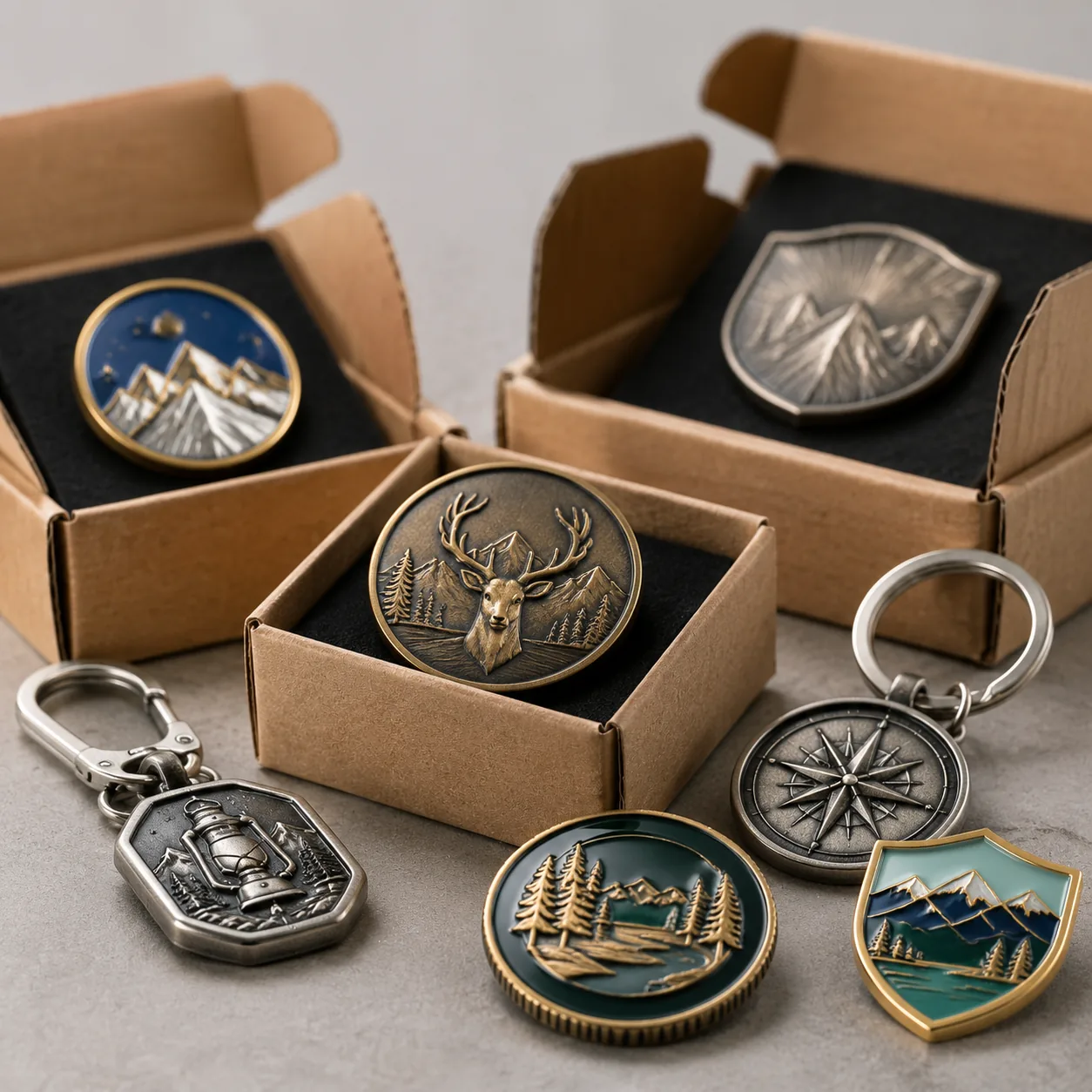
Start with the use case, not the material
Most sourcing mistakes begin when a buyer names the material before defining how the product will actually be used. A lapel pin for a three-day conference, a retail badge worn weekly for 12 months, and a commemorative coin kept in a display case do not need the same hardness, finish build, or packaging protection. In 2026, sustainable sourcing is less about selecting a “green” material in isolation and more about choosing a construction that lowers scrap, reduces shipping weight, and avoids rework without weakening the product.
Write the brief around duty cycle and presentation. For example: “daily-wear badge, 38 mm, nickel-free finish, recycled base metal acceptable, FSC paper backing card, target FOB under USD 1.20 at 1,000 pcs.” That language gives the factory room to propose a manufacturable option instead of forcing one construction across every promo item. It also reduces the risk of unsupported environmental claims, which still create procurement exposure when the spec is vague.
The use case should also define the acceptable trade-offs. A larger badge can use thinner aluminum if the buyer values shipping weight and cost over premium hand-feel. A premium coin may justify recycled brass and a tighter finish tolerance because it is meant to be kept, not worn daily. If the application is clear, recycled zinc alloy, brass, stainless steel, aluminum, and paper-based accessory components can be compared on equal footing.
Write the RFQ so factories can quote the same thing
A useful RFQ removes ambiguity without turning into a full engineering package. For metal promotional items, include item type, finished size, thickness, artwork count, attachment type, plating target, surface finish, packaging, and first-order quantity plus reorder expectation. Add sustainability requirements explicitly: recycled base metal preferred or mandatory, nickel-free or low-nickel plating, PVC-free packaging, and whether a simpler finish is acceptable if it reduces cost, cycle time, or waste.
Acceptance criteria belong in the RFQ because they affect sample approval and bulk yield. For small pins, a tolerance of ±0.2 mm is realistic; for badges and keychains, ±0.3 mm is common; for larger coins or medallions, ±0.5 mm is often acceptable unless the geometry is highly detailed. For visible edges, ask for burr-free finish, no sharp flash, and at least 95 percent plating coverage on exposed faces. For inspection, a common target is AQL 2.5 for major defects and AQL 4.0 for minor defects, though retail-facing programs often need tighter internal cosmetic limits than AQL alone would imply.
Commercial terms should be specified so the quote can be compared immediately. Ask for FOB port pricing and request tiered pricing at 500, 1,000, and 3,000 pieces if you expect the order to scale. For many custom metal promo items, MOQ tiers are typically 300 to 500 pieces for simple printed or engraved parts, 500 to 1,000 pieces for plated die-cast items, and 1,000 to 3,000 pieces for deeper 2D/3D tooling or multi-part assemblies. Tooling charges commonly range from USD 60 to 180 for simple soft enamel pins and USD 120 to 350 for deeper-relief die-cast or complex assemblies, depending on size, cavity count, and relief depth.
| Spec item | What to state in the RFQ | Why it matters |
|---|---|---|
| Size and build | Finished dimensions, thickness, and construction method | Prevents suppliers from quoting different manufacturing routes |
| Finish | Plating type, gloss level, color code, and sealing method | Controls appearance and wear performance |
| Sustainability | Recycled content required, preferred, or optional; packaging restrictions | Keeps lower-impact options comparable |
| Quality | Tolerance, AQL target, and no-go defects | Reduces sample and bulk disputes |
| Commercials | FOB port, tiered pricing, MOQ, reorder expectation | Makes the quote usable without follow-up |
Choose the sustainable swap that will still pass production
The best material swap is the one that improves footprint without introducing a new failure mode. Recycled zinc alloy is usually the easiest substitution for pins, keychains, and badges because it die-casts like standard zinc, supports familiar tooling, and seldom forces an artwork redesign. For flat parts, recycled brass or aluminum can also work well. Brass usually raises cost but gives a heavier, premium feel; aluminum lowers shipping weight but can feel less substantial unless the design compensates with size or stronger relief. Stainless steel is durable and corrosion resistant, but it is less forgiving for deep 2D/3D detail and can be more expensive to finish cleanly.
Recycled material is not automatically cheaper. Depending on mill input and plating requirements, it may carry a small premium or a slightly longer lead time, and some surfaces show more variation than virgin material. Packaging can also backfire if the paperboard is too thin or the insert is undersized, so ask for a ship-test sample instead of assuming paper is always safer. In many badge and pin programs, the simplest sustainability gain is packaging reduction: replace plastic sleeves with paper backing cards, remove non-protective inserts, and cut unit pack weight by roughly 10 to 20 percent.
Safer plating should be specified in microns, not just by finish name. Decorative flash plating is typically around 0.05 to 0.10 microns and is mainly visual. A more wear-resistant decorative finish is usually 0.15 to 0.25 microns. For frequently handled items, a 0.20 micron nickel-free or low-nickel system is more defensible than a cosmetic flash coat. If the supplier cannot state plating thickness, bath sequence, and whether the finish is sealed or post-baked, bulk consistency will be difficult to control.
Do not overstate what “eco” means in practice. A recycled zinc badge with a PVC-free backing card is a measurable improvement. A claim like “fully sustainable” is not, unless the buyer can document material source, packaging composition, and end-of-life assumptions. Keep the spec factual: recycled content percentage, plating chemistry, and packaging material are all easier to defend than marketing language.
Compare material choices before you send for sample
Do not sample five options at once unless the team truly needs five answers. Shortlist two or three constructions so the first round produces decision-making data rather than more noise. The table below is a practical benchmark for common promo metal products and helps buyers compare cost, lead time, and sustainability trade-offs before committing to tooling.
| Option | Best use | Typical FOB price range (USD) | Typical MOQ | Lead time | Notes |
|---|---|---|---|---|---|
| Recycled zinc alloy die-cast | Pins, badges, keychains with relief | 0.35-1.80/unit | 500-1,000 pcs | 12-20 days | Good detail; familiar tooling; usually the easiest sustainable swap |
| Recycled brass stamped/etched | Premium flat pins, coins, medallions | 0.45-2.20/unit | 300-1,000 pcs | 14-24 days | Heavier feel; higher material cost; edge control matters |
| Aluminum | Lightweight magnets, badges, key tags | 0.30-1.50/unit | 500-2,000 pcs | 10-18 days | Lower shipping weight; softer feel; limited deep relief |
| Stainless steel | Durable industrial-style items | 0.60-2.50/unit | 300-1,000 pcs | 15-28 days | Strong corrosion resistance; less forgiving on complex shapes |
These bands move with size, finish, and quantity, but they are useful for shortlisting. A 1.25-inch soft enamel pin in recycled zinc alloy often lands around USD 0.45 to 1.10 FOB at 500 to 1,000 pieces. The same design in brass is commonly 10 to 25 percent higher once die depth and plating are included. If a supplier quotes well below these ranges, ask what has been reduced: base metal grade, plating thickness, enamel fill, or inspection effort. Sustainable sourcing only works when the cost differences are visible and explained.
Packaging should be priced separately. FSC-style paper backing cards usually add about USD 0.03 to 0.12 per unit at 1,000 pieces. Molded pulp trays or rigid paper gift boxes may add USD 0.15 to 0.65 depending on print, insert shape, and folding complexity. That is often a practical trade if the packaging eliminates plastic clamshells, reduces damage, and still meets shelf presentation needs.
Build the first sample to test the real risk points
The sample stage is not just for checking color. It is where buyers verify whether the sustainability swap survives wear, handling, and transit. Request one pre-production sample built to the intended bulk method, not a hand-finished showcase piece that cannot be repeated at scale. For metal items, confirm plating thickness in microns and ask the factory to outline the process sequence, such as base plate, color fill, bake, top coat, and packing. If the supplier cannot describe the sequence, repeatability is weak.
For packaging, require the sample to ship in the exact transit configuration used for bulk. Many teams approve an item in a soft pouch and later discover carton scuffing after switching from plastic dividers to paper separators without testing compression. On the product itself, check edge condition, clasp movement, engraving clarity, and whether the finish remains uniform after a light rub test and tape pull. If recycled or lower-impact material creates porosity, dullness, or color shift, decide immediately whether that visual change is acceptable for the brand.
Use one measurable wear test tied to the item’s function. A practical example is 50 open-close cycles for a clasp or a 24-hour salt-spray spot check for plated items that need to resist visible tarnish during transport and storage. The goal is not laboratory certification for every promotional order; it is proving that the approved sample is not a one-off cosmetic piece.
A good sample also proves manufacturability at the chosen MOQ. If the first sample was hand polished or manually packed in a way that cannot be repeated, it should not be approved as a bulk reference. Ask the factory to confirm which steps are manual and which are production-standard, especially when recycled materials or paper-based packaging are involved.
Use a sample checklist that catches rework before bulk
A sample should answer whether the product can be made repeatedly, not whether one piece looks attractive. The most efficient buyers use a short pass/fail checklist and keep photo evidence with measurements. This matters even more when sustainable requirements are combined with tight delivery windows, because there is less room for silent assumptions. At this stage, the factory should confirm what is locked and what can still change before bulk release.
- Measure finished size against drawing and confirm tolerance within ±0.2 to ±0.5 mm depending on item size
- Inspect plating for coverage, blotching, edge thinning, and color drift against the approved sample
- Check attachment strength, clasp function, and rotation resistance if the item will be worn or handled often
- Confirm packaging material, print accuracy, and whether any plastic components remain in the packout
- Verify exact base metal, recycled-content claim wording, and whether the bulk lot can match the sample
- Record acceptable cosmetic exceptions so they do not become disputes later
If the sample exposes a weak point, do not try to fix it through inspection alone. For example, a soft recycled zinc alloy badge that bends at the clasp needs a structural change, not a tighter QC rule. Likewise, a thin paper box that crushes in transit may need a stronger board grade, a different insert, or less empty space inside the master carton. Good sampling reduces rework because it turns vague sustainability goals into measurable production limits.
Lock the bulk spec and inspection plan before release
Bulk approval should only happen after the factory confirms the same build can be repeated within a defined quality window. Lock the approved sample number, material lot if relevant, plating process, packaging bill of materials, and inspection standard. For most promo metal products, major defects should be controlled to AQL 2.5 or tighter, while minor cosmetic defects can be set at AQL 4.0 only if the buyer accepts some visible variation. If the item is retail-facing or gift-store grade, many teams use a stricter internal cosmetic limit for scratches, spot defects, and color mismatch.
It also helps to define reorder logic now. If the first order uses recycled zinc alloy and paper packaging, state whether future reorders must match exactly or whether the supplier may substitute an equivalent recycled source if the original material becomes unavailable. This prevents disputes later when a buyer wants the same SKU but a slightly different shade of metal or a heavier box insert. A locked master spec sheet should include item size, thickness, finish, attachment, packaging, plating thickness, and approved tolerance range so reorder risk stays low across seasons.
For planning, ask for a realistic timeline from approval to ship date. A typical sequence for a simple pin or badge order is 2 to 4 days for tooling confirmation, 5 to 7 days for sample production, and 12 to 20 days for bulk after sample approval, assuming no artwork changes. More complex orders with custom packaging, multiple colors, or nickel-free plating may extend to 18 to 30 days. If a supplier promises substantially faster, check whether curing, inspection, or packing steps are being compressed rather than optimized.
Build the inspection plan around the exact risks your product carries. For example, if the item has enamel fill, specify color bleed, void, and levelness checks. If the item relies on a clasp or magnet, define pull strength and alignment. If packaging is part of the customer experience, inspect board crush, print scuff, and fit. The goal is not broader QC; it is targeted QC that protects the specific design you approved.
What to do next if you want a cleaner 2026 order
Start with a one-page RFQ that names the item, use case, quantity, and the sustainability swap you are willing to accept. Then ask two or three factories to quote the same spec, with recycled or lower-impact options quoted separately from standard builds so the comparison is clean. Request one pre-production sample, not only images, and test it in the exact packaging and transit condition you plan to use in bulk. If the factory cannot clearly state material grade, plating thickness, tolerance, MOQ, lead time, and AQL, it is not ready for a low-rework order.
If you are sourcing pins, coins, badges, keychains, magnets, patches, or lanyards, ZheCraft can usually quote the standard and sustainable versions side by side so you can compare cost, lead time, and cosmetic trade-offs before you commit. The right next step is not to chase the lowest unit price, but to choose the version that can pass sample, bulk, and reorder without redesign. In 2026, that is what actually saves time and budget.
Have a project? Send your artwork and target quantity and we’ll reply with a detailed quotation within 12 working hours.
Ready to get this made?
Send your sketch, target quantity and ship-date. Detailed quotation in 12 hours.



