Respec Your Custom Pin Purchase Order for 2026 QC
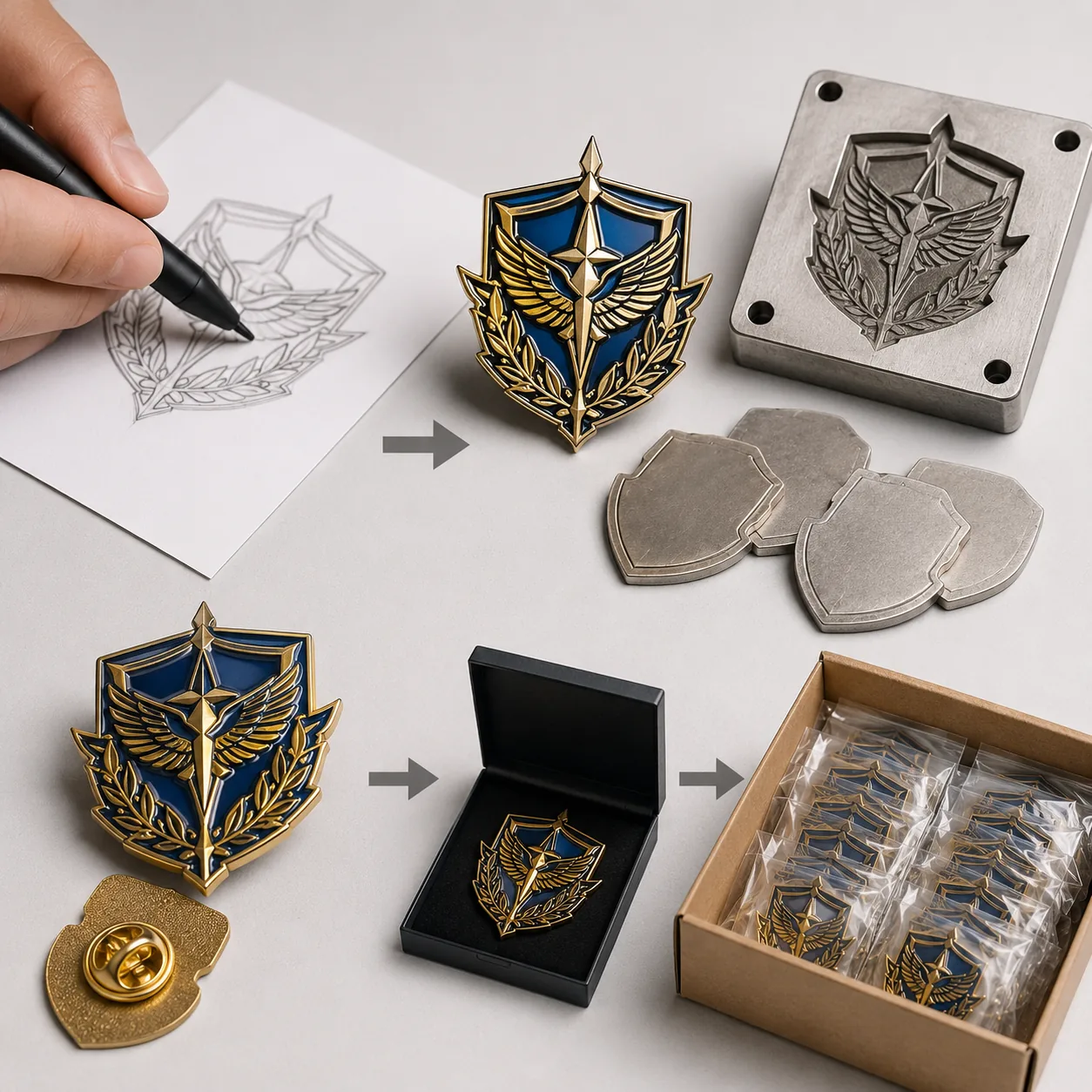
Why approved samples still fail in bulk production
Most enamel pin failures begin in the purchase order, not in the artwork. A first article or approved sample can look correct, then the production lot arrives with thinner metal, weaker plating tone, shallow enamel, softer borders, off-center posts, mixed cards, or carton-to-carton variation. In many cases the factory did not ignore instructions; it produced against an incomplete commercial PO instead of a technical specification.
For 2026 buying, the PO should act as a short manufacturing spec, packaging spec, and inspection plan. A line such as “35 mm soft enamel pin, gold plating, butterfly clutch, on card” leaves key variables open: process route, base metal, finished thickness, post count, plating system, decorative micron range, enamel fill height, minimum line width, critical Pantones, backstamp, pack-out method, AQL, and the exact lead-time start point. Those gaps are where quality drift and rework costs appear.
The fix is not longer prose. It is measurable limits tied to how pins are actually made and inspected. If the prior run caused returns, missed event dates, or manual sorting at receipt, respec the repeat PO before tooling release. This matters most for licensed merchandise, retailer programs, collector drops, subscription packs, and date-fixed event SKUs where a rerun is commercially useless.
1-4: Lock process route, finished dimensions, thickness, and reference weight
Start by fixing the manufacturing route because nearly every tolerance depends on it. Common routes are stamped iron soft enamel, stamped brass soft enamel, imitation hard enamel on brass, die-cast zinc alloy with soft enamel, and photo-etched brass. If the route is not locked, a supplier may quote brass and produce iron, or quote stamping then shift to zinc alloy for a complex outline. That changes edge sharpness, relief definition, achievable line width, tooling, weight, and defect risk.
State finished dimensions on the plated metal part, not on the artboard. For example: “Finished size 32.0 mm W x 28.4 mm H, measured on longest horizontal and vertical axes after plating; tolerance ±0.30 mm.” For irregular shapes, attach a dimensioned drawing with datum references and post-center dimensions. Without that, one team may measure from the art file while another measures the longest diagonal on the finished part.
Thickness should be stated as finished base thickness excluding posts, clutch, epoxy dome, and card. For stamped brass or iron pins in the 25-40 mm range, 1.2-1.5 mm is common. For a more premium retail feel, use 1.5 mm nominal with ±0.15 mm tolerance. For zinc alloy designs with cutouts, stacked relief, spinners, or danglers, 1.8-2.2 mm nominal is usually more realistic. If the approved sample felt heavy but the PO never stated thickness, a repeat run can arrive visibly lighter and still be hard to dispute.
Weight is best used as a reference band rather than a hard acceptance criterion because enamel volume, plating, and post placement create normal variation. A practical line is: “Reference unit weight 8.5-10.0 g including two posts, excluding clutch, card, OPP bag, and insert.” This helps freight planning and gives receiving teams a quick check for an obviously downgraded build without rejecting conforming parts over normal process variation.
| Spec line | Recommended PO wording | Production effect |
|---|---|---|
| Construction route | Stamped brass soft enamel | Sharper outlines and cleaner small text than iron at 25-45 mm |
| Finished size | 32.0 mm x 28.4 mm after plating, ±0.30 mm | Removes art-size versus part-size disputes |
| Base thickness | 1.50 mm nominal finished base, ±0.15 mm | Prevents thin repeat runs after a thick approved sample |
| Reference weight | 8.5-10.0 g each, excl. clutch/card/bag | Useful for freight and consistency checks |
| Zinc alternative | Die-cast zinc alloy, 2.0 mm nominal | Better for cutouts, deep relief, and moving parts |
5-8: Specify base metal, plating system, decorative microns, and polish zones
Base metal should never be implied. Brass is usually the safer choice for fine outlines, small text, and more even decorative plating. Iron is lower cost and common for entry-level souvenir pins, but it is less forgiving on thin details and more prone to oxidation if edge coverage is weak. Zinc alloy is appropriate when the design has undercuts, pierced areas, stepped levels, or a silhouette that would be difficult to stamp cleanly.
Write plating as a complete decorative finish, not just “gold” or “black nickel.” A practical specification is: “Decorative plating: bright nickel undercoat with imitation gold topcoat; decorative topcoat target 0.03-0.08 micron; cosmetic finish only, not corrosion-rated functional plating; front face free of exposed base metal at 30 cm under 800-1000 lux.” Decorative pin factories can usually control visual appearance, but many do not routinely verify heavy functional plating thicknesses used in engineering parts.
If plating tone matters, tie it to the approved golden sample and a viewing condition. Example: “Imitation gold tone to match approved golden sample; batch variation not visually obvious when 5 random pieces are compared side by side at arm’s length under D65-equivalent white light.” That is more enforceable than asking for laboratory color coordinates on a decorative metallic finish.
Separate polish expectations by zone. Example: “Front raised metal mirror polish; side edges standard machine polish acceptable; reverse matte to light brushed acceptable; no burrs, sharp edges greater than 0.05 mm, heavy pits, or black spots.” Many “plating defects” are really polishing expectation gaps. If only the face is customer-visible, say so. If the reverse will be shown in collector photography or unboxing content, upgrade the reverse requirement explicitly.
9-12: Control enamel fill height, Pantone matching, line width, and epoxy
Color complaints usually come from four missing details: fill level, Pantone references, minimum metal borders, and epoxy status. For soft enamel, use a realistic fill requirement: “Enamel fill 85-95% of raised metal line height, recessed appearance acceptable and expected; no missing fill, obvious pinholes larger than 0.20 mm, dust points, or overflow visible at 30 cm.” This matches actual process capability instead of pretending soft enamel should be flush like imitation hard enamel.
List Pantone codes as coated references and identify which are critical. Example: “Pantone 186 C and Black C critical; Cool Gray 3 C non-critical within normal decorative-process tolerance; white to match approved sample.” In practice, whites, creams, pale grays, and skin tones show the highest visible lot shift. If those shades are not brand-critical, state that and avoid unnecessary rework or line stoppage over subjective color debates.
Minimum raised metal line width belongs in the PO, not only in the art handoff. For stamped brass or iron soft enamel, 0.30 mm preferred and 0.25 mm absolute minimum is a safer rule. Below that, broken borders, enamel bleed, and poor visual definition become more common in bulk. If the design includes small text, specify: “Raised text minimum stroke 0.25 mm; minimum uppercase height 1.2 mm on front; reverse backstamp text minimum 0.8 mm where legibility is required.”
Epoxy should be a deliberate cost and handling decision. A clear epoxy dome of 0.30-0.50 mm can improve scratch resistance and reduce transit scuffing, especially for direct-to-consumer packs, but it also rounds the surface, slightly warms light colors, and reduces sharp metal reflectivity. For collector pins, no epoxy is often preferable. For giveaway pins shipped in bulk mailers, epoxy can reduce cosmetic rejects enough to justify an added FOB cost of about USD 0.03-0.08 each and 1-2 extra production days.
13-16: Define posts, clutches, solder quality, and retention strength
Hardware is where many wearable failures begin. State post count, post diameter, clutch type, finish, and post location tolerance. Example: “Two posts, 0.9-1.0 mm diameter, butterfly clutches in matching imitation gold tone, post centers per attached drawing, positional tolerance ±0.50 mm.” On pins wider than 30 mm or with asymmetrical shapes, two posts are usually worth the extra cost because they reduce rotation on fabric and keep the pin level on the backing card.
One post is acceptable for simple 20-25 mm souvenir pins where price dominates. Rubber clutches reduce scratching and are common for e-commerce packs, but standard brass butterfly clutches usually hold shape better during bulk transit and often cost USD 0.01-0.03 less per piece at 1,000+ units. Deluxe locking clutches improve retention for uniforms, bags, and retail resale, but typically add USD 0.12-0.35 per set depending on style and quantity.
If a previous order had detached posts, loose clutches, or leaning card presentation, add solder and pull-force language. Example: “Post solder joint continuous, centered, no cold solder, no excessive overflow beyond post base diameter; in-process pull test target minimum 3.0 kgf for single-post pin or 2.5 kgf per post for two-post pin.” Not every factory will provide records unless requested, but writing the target improves line control.
Also specify posture and usability: “Posts perpendicular enough to allow flat card mounting and stable wear; clutch engagement secure by hand, no free-fall release under normal handling.” This reduces shipments that technically include the right hardware but present crooked on card or feel loose in customer use.
17-20: Standardize backstamp, sample hierarchy, AQL, and viewing conditions
Back details are often treated casually, then become the reason a repeat run cannot match the original. If the reverse needs a logo backstamp, copyright line, URL, edition number, or date code, define content, orientation, and depth. Example: “Recessed backstamp depth 0.15-0.25 mm, centered on reverse, upright relative to front artwork, legible after plating, no fill or plating buildup obscuring text.” This prevents unreadable reverse details caused by shallow tooling or overpolishing.
Repeatability depends on sample hierarchy. State which master controls which attribute. A workable structure is: “Approved golden sample controls plating tone, enamel fill height, and final appearance; vector artwork revision B controls geometry, text, and line placement; approved packing photo revision 2 controls carding, bagging, barcode position, and carton presentation.” Without this, a factory may use one internal sample for plating and another file revision for geometry.
Set the inspection plan directly in the PO. For promotional pins, AQL 2.5 major / 4.0 minor at General Inspection Level II is common. For licensed retail or collector programs, AQL 1.5 major / 2.5 minor is more suitable, though sorting and inspection cost rise. Major defects should include wrong plating color, wrong critical Pantone, exposed base metal on front, missing enamel, bent body affecting wear, wrong hardware, detached post, unreadable required backstamp, wrong card, mixed-SKU packing, or count shortage beyond shipment tolerance. Minor defects can include light reverse scratches, slight reverse polish inconsistency, or tiny non-front-facing specks not visible at 30 cm.
Define the viewing condition so everyone inspects the same way: “Visual inspection at 30 cm under 800-1000 lux white light, front face oriented in normal viewing position.” One line removes many arguments over defects visible only in dim light, at extreme angles, or under phone flash close-ups that do not match real-world retail viewing.
21-24: Set packing method, carton controls, MOQ tiers, prices, and lead-time start points
Packing is one of the biggest avoidable damage points. “Each in polybag” is often too loose for plated pins because posts and clutches scratch adjacent pieces. A stronger retail-ready spec is: “Each pin mounted on 350-400 gsm printed backing card, inserted in self-seal OPP bag 40-50 microns, 50 pcs per inner bag, 500 pcs per export carton, 5-layer corrugated carton, gross weight not over 12 kg.” If the card is branded, specify card size, finish, barcode placement, and whether labels are factory-applied.
For multiple SKUs, require segregation and traceability. Example: “Outer carton to show PO number, SKU, description, quantity, GW/NW, COO, and carton number 1 of N; no mixed SKUs in one inner bag; inner bags labeled by SKU and quantity; overs/shorts tolerance 0/+0.5% only with buyer approval.” This cuts receiving errors and prevents manual resorting before events or retail launches.
Lead time should be stated in calendar days from a defined trigger, usually final artwork approval or written PPS approval. Typical bulk timing after final approval is 10-15 days for 500-1,000 pcs of simple soft enamel, 12-18 days for 3,000-5,000 pcs, and 15-22 days when epoxy, multiple platings, or custom printed cards are included. New tooling usually adds 3-5 days for standard stamped dies and 5-7 days for more complex zinc-alloy molds. Before Lunar New Year or Q4 holiday peaks, add a 5-7 day buffer and write both “latest ex-factory date” and “latest forwarder handoff date” into the PO.
MOQ and pricing should match the technical build so the factory is not forced to cut process steps to hit an unrealistic target. Many suppliers accept 100-300 pcs, but the strongest price breaks still start at 500 and 1,000 pcs. For a 30-35 mm soft enamel pin FOB China in 2026, practical buying bands are often: 100 pcs at USD 0.85-1.60 each, 300 pcs at USD 0.55-0.95, 500 pcs at USD 0.45-0.82, and 1,000 pcs at USD 0.38-0.75, depending on metal, color count, plating, and pack-out. Brass instead of iron often adds USD 0.04-0.10 each; a second post adds USD 0.02-0.05; custom card plus OPP bag adds USD 0.05-0.18; epoxy adds USD 0.03-0.08. Tooling for a new standard soft-enamel die commonly falls around USD 45-90, while larger or more complex zinc-alloy molds run higher.
A practical PO respec checklist for repeat orders
- Lock the process route: stamped iron, stamped brass, zinc alloy, imitation hard enamel, or etched brass
- State finished width and height after plating with ±0.30 mm tolerance, plus finished base thickness with tolerance
- Specify base metal and decorative plating system, including target decorative topcoat range of 0.03-0.08 micron where applicable
- Define polish by zone: front face, side edges, and reverse side
- List Pantone coated references, identify critical colors, and set enamel fill expectation at 85-95% of line height for soft enamel
- Set minimum raised metal line width at 0.30 mm preferred and 0.25 mm absolute minimum for stamped soft enamel
- Define epoxy as required or prohibited, never optional at factory discretion
- Specify post count, diameter, clutch type, post-center drawing, and pull-force target
- Write backstamp content, orientation, depth, and legibility requirement after plating
- State sample hierarchy: golden sample, vector art revision, and packing photo revision
- Set AQL level, defect definitions, and visual inspection condition at 30 cm under 800-1000 lux
- Set unit pack, card stock, bag micron, inner-pack count, carton max gross weight, label format, and no-mixed-SKU rule
- Write MOQ tier, FOB target price band, tooling charge, exact lead-time start point, latest ex-factory date, and latest forwarder handoff date
Before issuing the next repeat order, compare every complaint from the last batch against this checklist and ask one question: what measurable line in the PO would have prevented it? Rewrite adjectives into acceptance criteria. “Premium gold” is not a specification. “Imitation gold decorative plating to approved golden sample; no exposed base metal on front at 30 cm under 800-1000 lux” is. That shift turns a pin order from an art request into a controlled manufactured product.
Have a project? Send your artwork and target quantity and we’ll reply with a detailed quotation within 12 working hours.
Ready to get this made?
Send your sketch, target quantity and ship-date. Detailed quotation in 12 hours.



