Respec Your Custom Pin After First Sample Failure
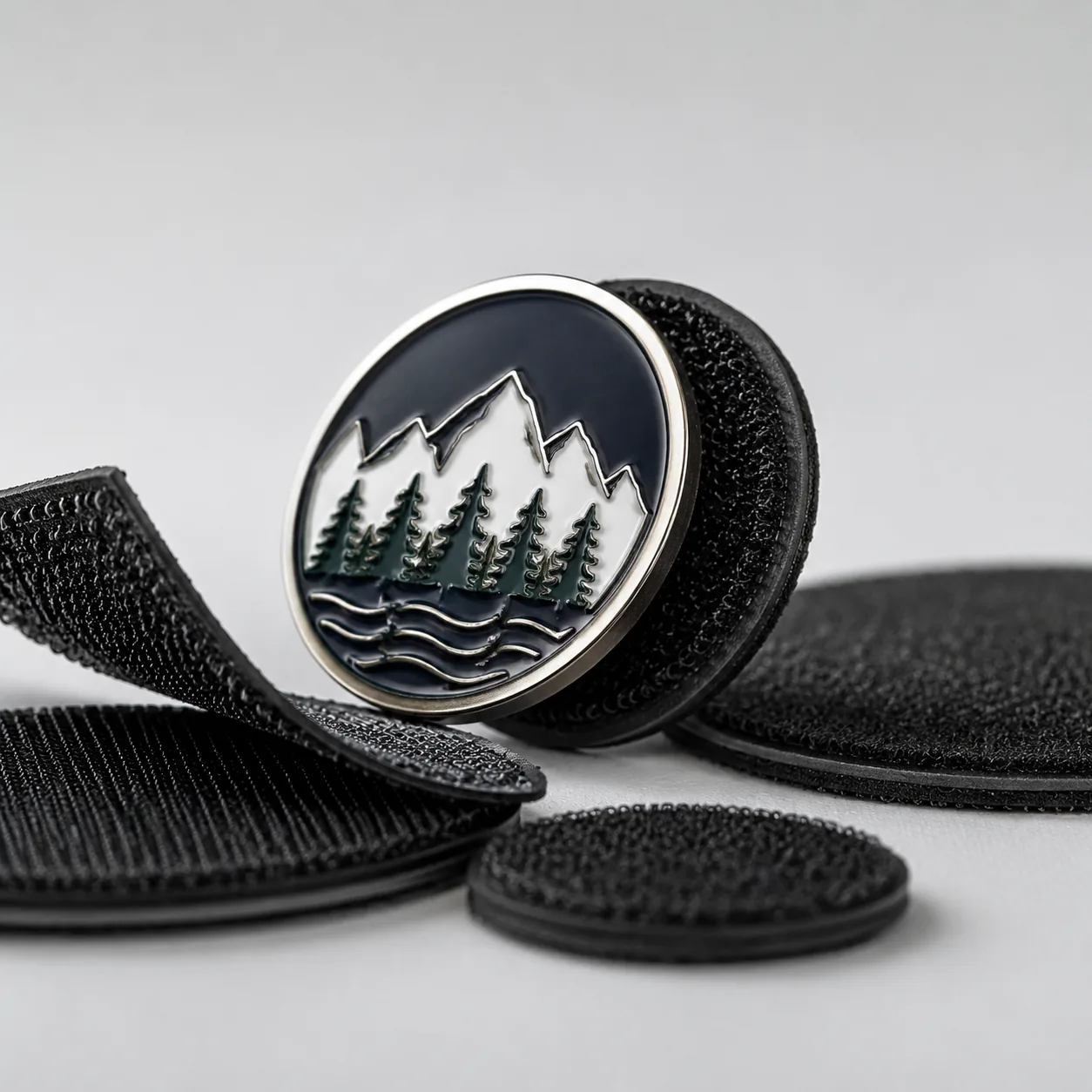
When the first sample fails, rewrite the spec before you replace the supplier
A failed first sample usually exposes a specification gap, not just a factory execution problem. Comments like “clean up the details,” “make the gold richer,” or “make it feel more premium” cannot be inspected, so they rarely produce a better second sample. The remake often comes back with the same root issue: artwork below process limits, enamel depth undefined, plating tone drifting lot to lot, or back posts positioned by visual judgment instead of a drawing. On custom pin programs, that vague feedback loop commonly adds 5 to 8 calendar days for a second sample, plus another 12 to 18 days if the same ambiguity carries into mass production.
The faster recovery method is an engineering respec. Convert each failed comment into a measurable line on the revision sheet: minimum metal line width, minimum recessed cell width, body thickness tolerance, edge profile, plating finish and decorative thickness, Pantone reference, enamel low-spot allowance, post spacing, card stock, pack method, and final AQL. If the sample “looks cheap,” specify thickness, bevel, flatness, and weight. If colors look dull, define Pantone, enamel type, plating finish, and minimum line width needed to preserve contrast. If the pin rotates on fabric, specify post count, post diameter, weld location, and clutch type.
Most first-sample recoveries do not require a new factory or a full redesign. On standard lapel pins, badges, and brooches, 6 to 10 revised control points usually remove the repeat failure. That matters because tooling is often already cut. For 2026 commercial planning, common MOQ remains about 100 to 300 pieces for stamped soft enamel or die-struck styles, and 100 to 500 pieces for photo-etched styles. Pre-production samples typically take 7 to 10 calendar days after art approval, while bulk production usually runs 12 to 18 calendar days after sample sign-off. Avoiding one failed sample loop is often the difference between hitting an event date and slipping by two weeks.
Respec geometry first, because most failures start in the artwork-to-process mismatch
Many “poor detail” complaints are geometry failures, not random factory carelessness. The process usually reproduced exactly what the design allowed: text too small, corners too tight to polish, gaps too narrow to fill, or metal walls too thin to survive plating and buffing. For stamped soft enamel in iron or brass, a production-safe minimum raised metal line is typically 0.25 mm, but 0.30 mm is the better target when ordering 1,000 pieces or more and expecting stable yield across multiple cavities. Recessed enamel cells should generally stay at 0.30 mm minimum. For fine maps, dense icons, or serif text below about 5 pt equivalent at final size on a 25 to 30 mm pin, photo-etched brass with color fill usually holds detail better than stamped construction.
Do not rely on scaled artwork alone. Dimension the smallest critical features directly on the production drawing. Example: logo border width 0.30 mm +/- 0.05 mm in the primary display zone; internal bridge width 0.60 mm minimum; text stroke width 0.22 mm minimum on etched construction; cutout corner radius 0.30 mm minimum to reduce distortion during stamping and polishing. Mark non-critical textures separately so engineering knows what can be relaxed to improve yield without affecting the visible brand elements.
If the first sample proves the quoted process is too coarse, change the construction early instead of forcing another sample through the wrong method. Moving a 30 mm pin from stamped soft enamel to photo-etched filled brass often adds about USD 0.03 to 0.10 FOB per piece at 1,000 units, but that increase is usually cheaper than a second tooling adjustment, another plating run, and higher reject rates in final inspection.
| Feature | Stamped soft enamel | Die-struck hard enamel style | Photo-etched filled |
|---|---|---|---|
| Minimum raised metal line | 0.25 to 0.30 mm | 0.30 mm typical | 0.20 to 0.25 mm |
| Minimum recessed cell/gap | 0.30 mm | 0.30 mm | 0.25 mm |
| Best fit | Bold logos, mascots, simple text | Premium flat polished look | Fine text, maps, dense line art |
| Typical MOQ | 100 to 300 pcs | 100 to 300 pcs | 100 to 500 pcs |
| Sample lead time | 7 to 10 days | 8 to 12 days | 7 to 10 days |
| Typical FOB, 30 mm at 1,000 pcs | USD 0.35 to 0.65 | USD 0.45 to 0.80 | USD 0.50 to 0.90 |
| Common first-sample failure | Merged lines or flooded cells | Over-polish softens detail | Thin etched walls feel weak |
Control thickness, flatness, edge profile, and weight so the pin feels premium
A note that says only “1.5 mm thickness” is too weak for quality control. Thickness alone does not control stiffness, warp, edge feel, or perceived value. For a 25 to 35 mm lapel pin, 1.5 to 1.8 mm body thickness is typical, with a practical tolerance of +/-0.10 mm. If presentation is important, add a flatness requirement such as maximum 0.20 mm bow or twist across the longest axis. For larger 40 to 50 mm commemorative pins or challenge-style badges, 1.8 to 2.0 mm generally gives better rigidity and lowers visible warp after plating and post welding.
Edge profile often changes perceived quality more than adding raw thickness. A square die-cut edge may be acceptable on a 22 mm promotional logo pin, but on a 45 mm collector piece it can feel thin and sharp. A 0.20 to 0.40 mm bevel or small perimeter radius improves hand-feel and makes the part feel heavier without materially changing metal usage. On zinc alloy cast badges, fuller edges and cleaner back finishing usually improve the premium impression more than adding another 0.20 mm to nominal stock.
For collector or retail programs, add a unit weight band. A 45 mm premium pin might specify 14 to 16 g with a tolerance of +/-5 percent. Weight is a fast incoming QC check and catches process drift that thickness alone may miss, especially if hardware or backing changes between lots.
Treat plating as a controlled finish, not a one-word color request
Terms like “shiny gold” or “black nickel” are enough to quote a pin, but they are not enough to hold a stable appearance from sample to production to reorder. If the first sample looks too yellow, cloudy, dark, or fingerprint-prone, separate the finish into four controls: base material, underplating, decorative top plating, and approval reference. Nickel underplating is common unless nickel-free compliance is required for EU retail, children's accessories, or specific customer standards. Decorative appearance plating on promotional pins is often in the 0.03 to 0.10 micron range. For resale items held in inventory for 6 to 12 months, add anti-tarnish topcoat or specify heavier decorative deposition if the factory can certify it.
Match the finish to the real use case. Bright silver, shiny gold, and black nickel highlight scratches, wheel marks, and handling haze more than antique brass or antique copper. Antique finishes hide minor cosmetic variation better, but they also reduce contrast on line-heavy branding and small lettering. Black nickel is especially variable: small changes in bath chemistry or dwell time can shift production from neutral charcoal to a blue-black tone that reads as a mismatch on shelf.
Lock the comparison method in writing. State whether production must match a retained golden sample, an approved sealed sample, or a controlled approval photo under D65 lighting. Without that rule, plating drift becomes a subjective argument instead of an inspectable defect.
- Define finish as shiny, matte, satin, or antique rather than naming only the color
- State underplating requirement, or specify nickel-free when compliance requires it
- Set decorative top-plating target, such as 0.03 to 0.10 micron, when tone consistency matters
- Add anti-tarnish topcoat for sea freight, humid storage, or resale inventory
- Approve against a retained physical sample or controlled D65 image for reorders
Separate enamel color, fill height, and cosmetic acceptance so QC can inspect them
Color complaints are often misdiagnosed. The problem may be low fill, pinholes after baking, contamination, or weak contrast because the metal walls are too thin for the chosen plating. A useful respec isolates those variables. Call out one Pantone reference per fill area, specify soft enamel or imitation hard enamel, and define fill height relative to the raised metal line. For soft enamel, a realistic target is 0.05 to 0.10 mm below the metal ridge on most stamped designs. For imitation hard enamel or polished hard-enamel-look products, specify a smooth face with no noticeable step between adjacent color fields when viewed at 30 cm.
Cosmetic acceptance should be linked to viewing distance and inspection zone. A practical rule is: no visible pinholes, foreign particles, exposed base metal, or major low spots at 30 cm in the primary logo zone under 800 to 1000 lux indoor lighting; in secondary background zones, allow no more than one minor low spot under 0.20 mm per piece. That creates a real sort threshold instead of the vague instruction “smooth fill only.”
Use a color approval method that matches actual factory capability. Most pin suppliers are not spectrophotometer-checking every small enamel batch. If brand sensitivity is high, approve against a master painted chip or sealed production sample under D65-style light. If a close visual match is acceptable, say that explicitly. It prevents unnecessary second and third sample loops, which typically add 5 to 7 days each.
| Enamel control point | Practical respec range | Why it matters |
|---|---|---|
| Pantone reference | One Pantone per fill area | Prevents informal color substitution |
| Soft enamel fill depth | 0.05 to 0.10 mm below metal line | Controls visual and tactile consistency |
| Minor low-spot allowance | 1 spot under 0.20 mm in non-critical area | Creates a clear sorting rule |
| Primary-zone pinholes | None visible at 30 cm | Protects front-face brand appearance |
| Color review condition | D65 daylight or approved visual sample | Reduces approval disputes |
Specify hardware layout and retention so the pin works in real wear use
A strong front face still fails if the back hardware is underspecified. Complaints such as “the pin spins,” “it tilts,” “it snags fabric,” or “it falls off” usually trace back to post count, post diameter, weld location, clutch type, and edge clearance. As a baseline, one post is usually acceptable for compact shapes under 25 mm. From 26 to 35 mm, two posts spaced as wide as geometry allows sharply reduce rotation. From 36 to 50 mm, two posts are the minimum and three are often better on asymmetrical or top-heavy designs. Standard post diameters are typically 0.8 to 1.0 mm for butterfly or rubber clutches.
If the first sample rotates, do not just request a tighter clutch. Dimension the layout. Example: two posts, center-to-center spacing 18.0 mm +/-0.5 mm, each post at least 4.0 mm from the nearest edge, posts aligned within 0.5 mm of the part centerline. Then select the clutch for the use case. Butterfly clutches are lowest cost and common for promotions. Rubber clutches are easier to handle and less likely to scratch adjacent products in the pack. Locking backs reduce field loss but usually add about USD 0.03 to 0.08 FOB per piece depending on type and packing method.
For magnetic brooches, specify the number of magnetic contact points, magnet grade if relevant, and intended fabric thickness range. A tall narrow badge may still slip on lightweight knit fabric even with strong magnets if the contact spacing is too narrow. For retail programs, add a basic retention check such as a manual pull comparison against the golden sample or a batch test frequency of 5 pieces per 1,000.
| Pin size | Recommended attachment | Typical clutch choice | Common respec trigger |
|---|---|---|---|
| 20 to 25 mm | 1 centered post | Butterfly or rubber | Single post acceptable unless shape is tall |
| 26 to 35 mm | 2 posts, wide spacing | Butterfly, rubber, locking | Rotation or tilt on fabric |
| 36 to 50 mm | 2 posts minimum, 3 if asymmetrical | Rubber or locking | Sagging, edge lift, higher loss risk |
| Magnetic brooch style | 2 to 3 magnet points | Neodymium magnet set | Slip on thin garments or weak hold |
Write packaging and AQL rules to prevent damage and sorting disputes
Many buyers approve a clean sample and then receive bulk production with scratches, bent posts, card tears, or tarnish caused after final polishing. That is usually a packaging-spec failure, not a manufacturing failure. If the finish is sensitive to rubbing, especially bright gold, shiny black nickel, or mirror-polished die-struck surfaces, define unit separation, bag type, backing card thickness, and carton loading. Moving from bulk packing of 50 to 100 pieces per polybag to individual OPP bags often reduces contact marking significantly, though it commonly adds about USD 0.01 to 0.02 FOB per piece plus labor.
For carded pins, specify card stock and mounting geometry. A practical range is 300 to 400 gsm for standard retail backing cards, with hole-position tolerance of +/-1.0 mm to keep the badge level. Thin cards bend in transit, preload the posts, and tear around the clutch holes before the customer opens the pack. If goods ship by sea during humid months, call for dry packing, desiccant, or sealed inner bags when the finish sensitivity justifies the extra cost.
Close the loop with a written QC block. For many custom pin orders, AQL 2.5 for major defects and AQL 4.0 for minor defects is a workable commercial baseline, with critical defects at zero acceptance. Tie in-process checks directly to the first-sample failure modes rather than relying only on final inspection. Good checkpoints include smallest line width after tooling approval, enamel low spots after bake, post spacing before plating, plating tone against the golden sample at final inspection, and packaging separation before carton seal.
- Set defect severity clearly: critical 0, major AQL 2.5, minor AQL 4.0 unless the program requires tighter limits
- Name 3 to 5 in-process checkpoints tied directly to the actual first-sample failures
- Define what requires remake, what can be 100 percent sorted, and what is cosmetic but acceptable
- Require written confirmation of revised spec lines before a second sample starts
- Retain the approved sample, revision sheet, and packaging standard for reorders
Issue a numbered revision sheet with cost, MOQ, and lead-time impact
The fastest recovery method is to rewrite every failed sample comment into six control categories: geometry, thickness and flatness, plating, enamel, hardware, and packaging. If a comment cannot be checked with a caliper, scale, fixture, visual standard, or retained sample, it is still too vague. Replace “looks cheap” with “body thickness 1.8 mm +/-0.10 mm, 0.30 mm bevel edge, flatness within 0.20 mm.” Replace “color muddy” with “Pantone 186 C soft enamel, no visible pinholes at 30 cm in primary zone, logo borders not under 0.30 mm.” Replace “pin spins” with “two posts, 18.0 mm +/-0.5 mm spacing, rubber clutches.”
Issue the respec as a numbered revision sheet with these fields: feature, current spec, revised spec, reason for change, tooling impact, unit-cost effect, and lead-time effect. That format prevents accidental changes in areas that already passed and makes trade-offs visible. Adding a second post may raise FOB only USD 0.01 to 0.03 at 1,000 pieces. Individual bagging may add another USD 0.01 to 0.02. Switching from stamped soft enamel to photo-etched construction adds more, but it is often still the lower-cost decision if it prevents another sample loop and a bulk rejection.
As a practical 2026 planning rule, standard stamped pin programs usually sit in these bands: MOQ 100 to 300 pieces, pre-production sample lead time 7 to 10 days, second sample after tooling adjustment 5 to 8 days, and mass production 12 to 18 days after approval. Photo-etched styles often start around 100 to 500 pieces MOQ. Use those numbers when deciding whether to keep forcing the original process. If the failed sample shows a process mismatch, changing the construction now is usually cheaper than paying for delay, remake labor, and inconsistent bulk quality later.
Have a project? Send your artwork and target quantity and we’ll reply with a detailed quotation within 12 working hours.
Ready to get this made?
Send your sketch, target quantity and ship-date. Detailed quotation in 12 hours.



