Replacing PVC and Virgin Plastics in Promo Products: A 2026 Buyer Scenario
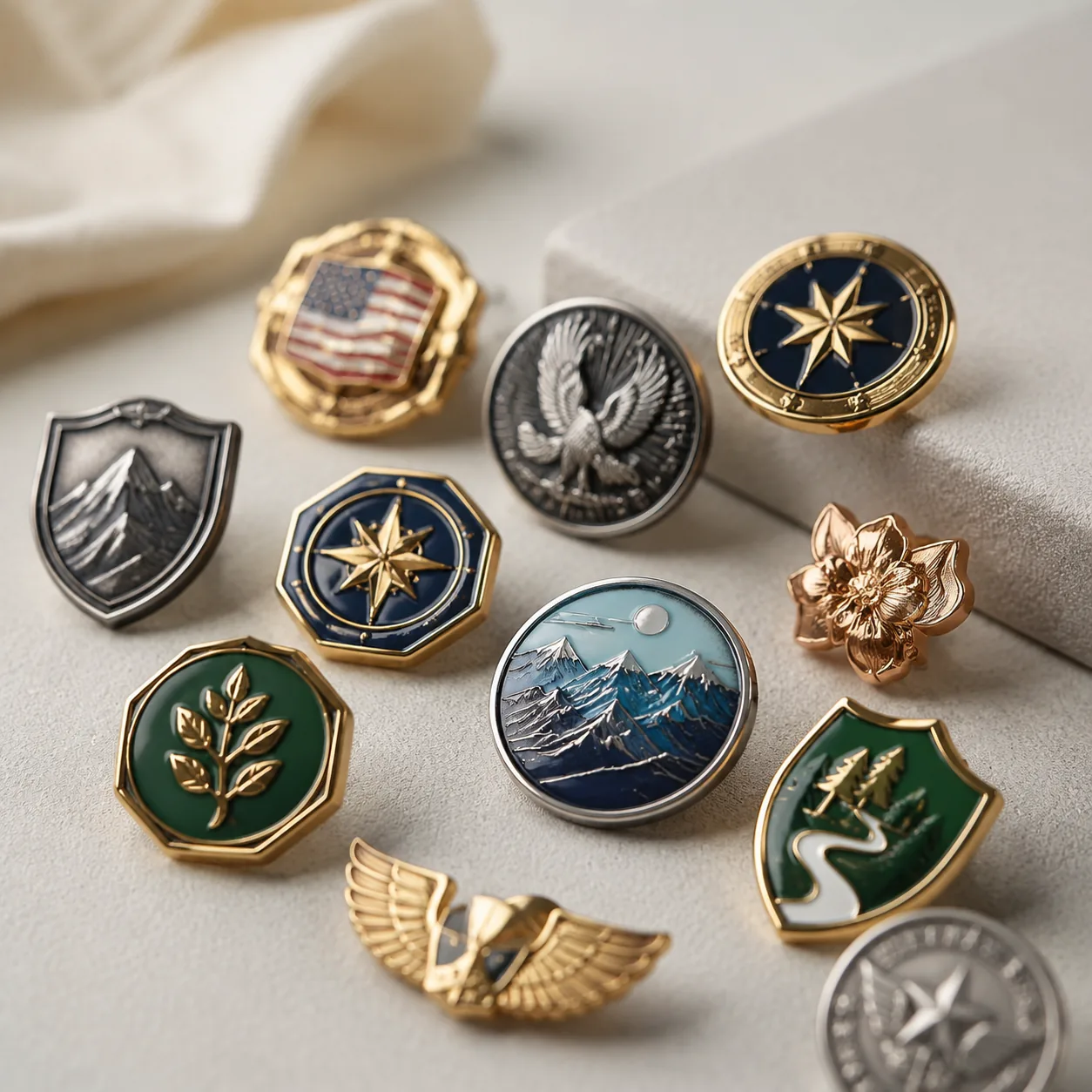
The sourcing brief: remove PVC, cut virgin plastic, and still hit a fixed launch
A European event organiser needs 8,000 branded giveaway sets for a September launch. Each set includes a lanyard, a keychain, a badge, and retail-style packaging. The brief is specific: remove PVC where practical, reduce virgin plastic content, keep the ex-factory and in-hand dates fixed, and avoid sustainability claims that the compliance team cannot substantiate. The job is not to find something that merely looks greener. It is to rebuild a mixed-product specification so print quality, durability, assembly yield, freight performance, and documentation still work together.
These projects usually fail when a buyer approves one isolated material swap without checking the downstream effect. An RPET lanyard can print 5 to 15 percent duller than standard virgin polyester if artwork density, underbase, or sublimation profile is not adjusted. Replacing a soft PVC keychain with zinc alloy or iron typically adds 10 to 25 g per set, which changes tray cavity depth, carton pack-out, and abrasion risk. A paper tray that feels premium in a sample room can soften after 28 to 35 days on water if the board grade, caliper, and moisture control are under-specified. In 2026, the safe approach is a controlled substitution program, not an eco refresh based on appearance.
Freeze the commercial boundaries before sampling. For this scenario, practical guardrails are MOQ 1,000 per SKU and 8,000 for the assembled set, target FOB set cost USD 1.90 to 2.40, sample lead time 5 to 7 days for artwork-only changes or 8 to 12 days with new tooling, bulk lead time 18 to 28 days after approval, and final random inspection at AQL 2.5 major and 4.0 minor. If those limits stay vague, the sustainability upgrade usually expands quietly in cost, approval cycles, and production risk.
Split the set into stable parts and true substitution candidates
At kickoff, divide the set into four technical groups: metal components, textile components, clear or flexible plastic components, and paper packaging. Not every part offers the same environmental upside or the same manufacturing risk. Metal items such as die-struck badges and keychains are already durable and recyclable in principle, so the larger gains often come from removing unnecessary plastic sleeves, reducing overpacking, and controlling plating and finishing. Textile straps and clear flexible holders usually offer the largest reduction in virgin polymer, but they also introduce the most variation in hand feel, colour saturation, edge quality, curl, and dimensional stability.
For the badge, keeping a conventional metal build is often the right decision. A workable 2026 spec is stamped iron, 1.2 to 1.5 mm thick, soft enamel fill, polished raised lines, and nickel or black nickel plating at about 0.03 to 0.05 microns decorative thickness. Size tolerance should stay within plus or minus 0.15 mm, edge burrs under 0.10 mm, enamel overfill under 0.15 mm, and backing alignment within 1 mm of centre. For a 30 to 35 mm badge at 8,000 units, a typical FOB range is USD 0.22 to 0.48 depending on attachment type, plating, and enamel colour count. That construction is mature, repeatable, and easier to inspect than an unproven low-plastic substitute.
The real substitution candidates are the lanyard, any flexible badge holder, the keychain if the original concept was soft PVC, and the packaging. Those parts usually account for most of the visible PVC and virgin-plastic content, and all of them have commercially viable 2026 replacements at event scale if the specification is written tightly.
The 2026 swaps that hold up in production
| Component | Typical legacy spec | Practical 2026 replacement | MOQ / lead time guide | FOB range / key controls |
|---|---|---|---|---|
| Lanyard strap | Virgin polyester, 15 mm or 20 mm | RPET webbing, 0.8 to 1.1 mm thick, screen print or dye sublimation | MOQ 1,000; samples 5 to 7 days; production 12 to 18 days | USD 0.20 to 0.45 each; width ±0.5 mm, thickness ±0.1 mm, pull test 15 kg for 10 seconds on finished assembly |
| Badge holder | Flexible PVC, 0.25 to 0.35 mm | Clear PET or rPET, 0.30 to 0.45 mm | MOQ 2,000 to 3,000; samples 5 to 8 days; production 10 to 18 days | USD 0.08 to 0.22 each; gauge tolerance ±0.03 mm, weld seal straightness ±1 mm, no cracking after 10 flex cycles |
| Soft PVC keychain | 2D molded PVC, 3 to 5 mm | Die-struck iron or zinc alloy with soft enamel | MOQ 300 to 1,000 per design; samples 7 to 10 days; production 12 to 20 days | USD 0.68 to 1.45 each plus tooling USD 80 to 180; inspect ring closure, plating, enamel fill, thickness ±0.2 mm |
| Flat acrylic charm | Virgin acrylic, 2 to 3 mm | Recycled acrylic with traceable source lot | MOQ 300 to 500; production 10 to 16 days | USD 0.40 to 0.95 each; watch haze, tint shift, and scratch sensitivity by batch |
| Retail box or tray | PVC box or PET-heavy insert | 350 to 450 gsm SBS or kraft board with molded paper tray | MOQ 1,000; samples 5 to 8 days; production 10 to 15 days | USD 0.24 to 0.80 each; caliper tolerance ±5 percent, packed compression test, moisture-controlled packing |
| Outer sleeve / bag | OPP polybag | Glassine sleeve, paper belly band, or no individual bag | MOQ 2,000 to 5,000; production 7 to 12 days | USD 0.03 to 0.12 each; lower gloss and lower scuff protection than film bags |
The best swaps preserve the original manufacturing logic. RPET lanyards are now mature enough for event programs if buyers specify more than the fibre label. Typical event-grade RPET lanyards are 15 or 20 mm wide, around 0.9 mm plus or minus 0.1 mm thick, with heat-cut or woven edges and either screen print for spot colours or dye sublimation for full coverage graphics. For logos with fine type under 1.2 mm stroke width, woven labels or high-resolution sublimation usually outperform basic silkscreen. A practical internal standard is 20 to 50 pull cycles on the finished hook assembly, with no webbing tear, stitch failure, or hardware separation.
Metal replacing soft PVC keychains also works well when the artwork relies on outline, linework, or enamel colour blocking rather than soft sculpted relief. For a 50 mm zinc alloy soft enamel keychain at roughly 3.0 mm thickness, typical 2026 FOB pricing is USD 0.78 to 1.35 at 1,000 pieces, excluding one-time mold charges of about USD 80 to 180. Iron is often cheaper by USD 0.05 to 0.15 per piece for flatter shapes, but zinc alloy usually gives cleaner edges on detailed silhouettes and cut-outs. If the original PVC design depended on a rubbery hand feel or deep cartoon relief, expect visible artwork adaptation rather than a like-for-like copy.
The weakest swaps are still the vague ones: unspecified biodegradable plastics, bamboo-filled resins with unstable surface finish, or recycled compounds without a consistent source declaration. If a supplier cannot define substrate type, recycled-content basis, thickness tolerance, expected cosmetic variation, and defect criteria, the greener-looking option often creates more scrap and more rework than the conventional item it replaced.
Where cost really moves: printing, assembly, protection, and freight
Raw material is only one part of the cost story. Secondary processes usually create the larger variance. RPET straps may need revised sublimation curves or denser spot colour application to maintain colour strength. Metal keychains replacing soft PVC often need tissue wrap, glassine sleeves, or card mounting to prevent plating rub and enamel contact marks. Board trays may need deeper cavities, locking tabs, or a higher caliper if the keychain mass increases and starts moving inside the pack.
In this scenario, a legacy mixed-material set might land around USD 1.55 to 1.75 FOB at 8,000 sets using a standard polyester lanyard, soft PVC keychain, conventional badge, and plastic-heavy retail pack. A revised build using an RPET lanyard, die-struck metal keychain, PET or rPET holder, and board-based packaging typically lands around USD 1.88 to 2.18 FOB, with premium versions reaching USD 2.30 if every item is individually protected. That implies a realistic uplift of roughly USD 0.20 to 0.45 per set. In practice, most of the premium comes from handling, finishing protection, and slower assembly rather than from the substrate alone.
Lead time also shifts. A repeat order on legacy materials may ship 16 to 22 days after artwork approval. A first substitution order often stretches to 20 to 28 days because the buyer needs material confirmation, pre-production samples, packaging fit approval, and in many cases a new metal mold. If sea freight is planned, paper-based packs also need better moisture control. A practical export spec is lined master cartons, sealed poly liner at carton level if permitted by the brief, dry inner packing, and 20 to 40 g desiccant per master carton on humid or 30-day-plus lanes.
The useful commercial question is not whether the lower-plastic version is cheaper. It usually is not. The real question is whether the added spend reduces restricted-material exposure, lowers transit damage, improves client acceptance, or meets an ESG requirement that would otherwise block the project. When one of those answers is yes, the premium is usually defensible.
Sample approval needs engineering, not just visual sign-off
Alternative materials need a more technical sample review than standard PVC, virgin acrylic, or conventional polyester because variation is typically higher. A visual sign-off is not enough. Buyers should approve function, tolerance windows, and acceptable natural variation in writing so mass production does not drift later.
- Measure substituted components individually, not just the assembled set: lanyard width and thickness, holder gauge, keychain thickness, and packaging board caliper or gsm.
- Compare colour under controlled lighting such as D65; for branded colours, agree a Delta E target such as ≤2.5 for critical logo areas or a signed visual tolerance if substrate variation makes that unrealistic.
- Run simple use tests: 20 to 50 hook cycles, badge holder flex checks, split-ring pull tests, and packed-carton drop or compression checks.
- Inspect metal hardware closely: jump-ring gap, split-ring wire diameter, chain link closure, plating coverage, enamel cleanliness, and burr control.
- Assemble the full set before sign-off; failures often appear only when the heavier keychain, credential card, holder, and tray are packed together.
- Record acceptable variation such as fibre flecks, slight haze, or small tonal differences if those are normal for the chosen recycled substrate.
For metal parts, standard controls should remain tight. Check plating consistency, enamel fill level, raised-line polish, burr control, clutch fit, and attachment alignment. On keychains, the most common field failure is still mechanical, not cosmetic: a weak jump ring, a split ring with undersized wire, or poor closure that opens in use. When upgrading from PVC to metal, also check whether the extra mass changes the hanging method, card slot strength, or tray retention inside the retail pack.
Write the RFQ so factories cannot improvise the brief
An RFQ that says eco-friendly material will produce non-comparable quotations. One supplier will quote RPET. Another will keep the product unchanged and only switch the outer bag. A third will offer a low-grade recycled blend with no batch consistency. The RFQ has to define which plastic-heavy parts are being replaced, which dimensions are locked, and which attributes may move.
For this set, a strong RFQ is specific: replace standard polyester lanyard with RPET webbing, 20 mm width, target thickness 0.9 mm plus or minus 0.1 mm, full-colour sublimation print, black safety breakaway optional, nickel-finish swivel hook. Replace molded soft PVC keychain with zinc alloy soft enamel keychain, maximum size 50 mm, thickness 3.0 mm plus or minus 0.2 mm, split ring plus 25 mm short chain, individual paper sleeve instead of OPP bag. Replace flexible PVC badge holder with clear PET or rPET, minimum thickness 0.35 mm, sized for the event credential with 2 to 3 mm insertion clearance on each side. Replace the plastic-heavy insert with a 350 to 450 gsm paperboard structure that holds the assembled components without movement during a 60 cm drop test.
The RFQ should also force price transparency. Ask suppliers to separate tooling, sample charges, unit FOB by component, assembly cost, and export packaging cost. Request MOQ per component and per full set, plus separate sample and production lead times in calendar days. State the inspection standard, carton specification, target carton gross weight such as under 12 kg if manual handling matters, and whether the approved substrate is locked to the golden sample for repeat orders. Without that language, a reorder can quietly revert to a more available material when supply becomes tight.
Know when not to force a lower-plastic answer
Some conventional materials remain the better technical choice. If an item needs high transparency, repeated flexing, rain exposure, or very low campaign cost, the lower-plastic alternative may underperform. A paper-based badge holder is not a serious option for a wet outdoor event where credentials must remain visible and scannable for several days. In that case, moving from PVC to PET or rPET is usually the realistic improvement, not removing clear plastic altogether.
The same logic applies by channel and volume. A museum shop or corporate gift program can support a premium die-struck keychain on a board card at roughly USD 1.80 to 3.20 FOB in retail pack. A 50,000-piece public campaign may need simpler high-volume changes: RPET straps instead of virgin polyester, elimination of double polybags, lighter packaging, and retention of a conventional iron badge because it is robust and cost-stable. One sustainability rule across every SKU usually creates the wrong answer for at least part of the range.
Claims should stay conservative. PVC-free, plastic-reduced, or contains recycled content can often be supported if the bill of materials and supplier declarations match the delivered goods. Plastic-free, compostable, carbon neutral, or fully sustainable are much riskier unless every substrate, coating, adhesive, ink, and window film genuinely supports the claim. In promo sourcing, overclaiming is usually a bigger commercial risk than underclaiming.
The practical PO path: quote three versions, approve one full set
Start with one existing giveaway set rather than a full catalogue conversion. Identify the two components with the highest plastic content or the weakest brand story, then request three side-by-side quotations: current spec, partial swap, and full swap. That creates a real cost ladder for procurement and gives the sustainability team a concrete trade-off instead of an abstract materials debate.
For orders above roughly 3,000 to 5,000 mixed sets, require one complete pre-production sample, not only loose item samples. Approve assembly sequence, material behaviour, print result, packaging fit, and acceptable cosmetic variation on one sign-off sheet. Then hold the bulk order to that standard with final random inspection at AQL 2.5 major and 4.0 minor before shipment. If sea freight or long storage is involved, add carton review, moisture-control checks, and packed-sample compression confirmation to the approval package.
If one supplier can coordinate the badge, keychain, lanyard, and packaging together, that usually reduces failure points. Cross-item issues such as pack weight, tray fit, colour mismatch between RPET webbing and enamel fills, or carton efficiency are easier to catch when one factory or one project manager owns the full set. The buying decision then becomes straightforward: keep the parts that are already durable and compliant, replace the plastic-heavy parts that have credible 2026 alternatives, and reject any swap that improves the story on paper while making the product worse in actual use.
Have a project? Send your artwork and target quantity and we’ll reply with a detailed quotation within 12 working hours.
Ready to get this made?
Send your sketch, target quantity and ship-date. Detailed quotation in 12 hours.



