Recycled and Lower-Impact Promo Specs: A 2026 Buyer Walkthrough
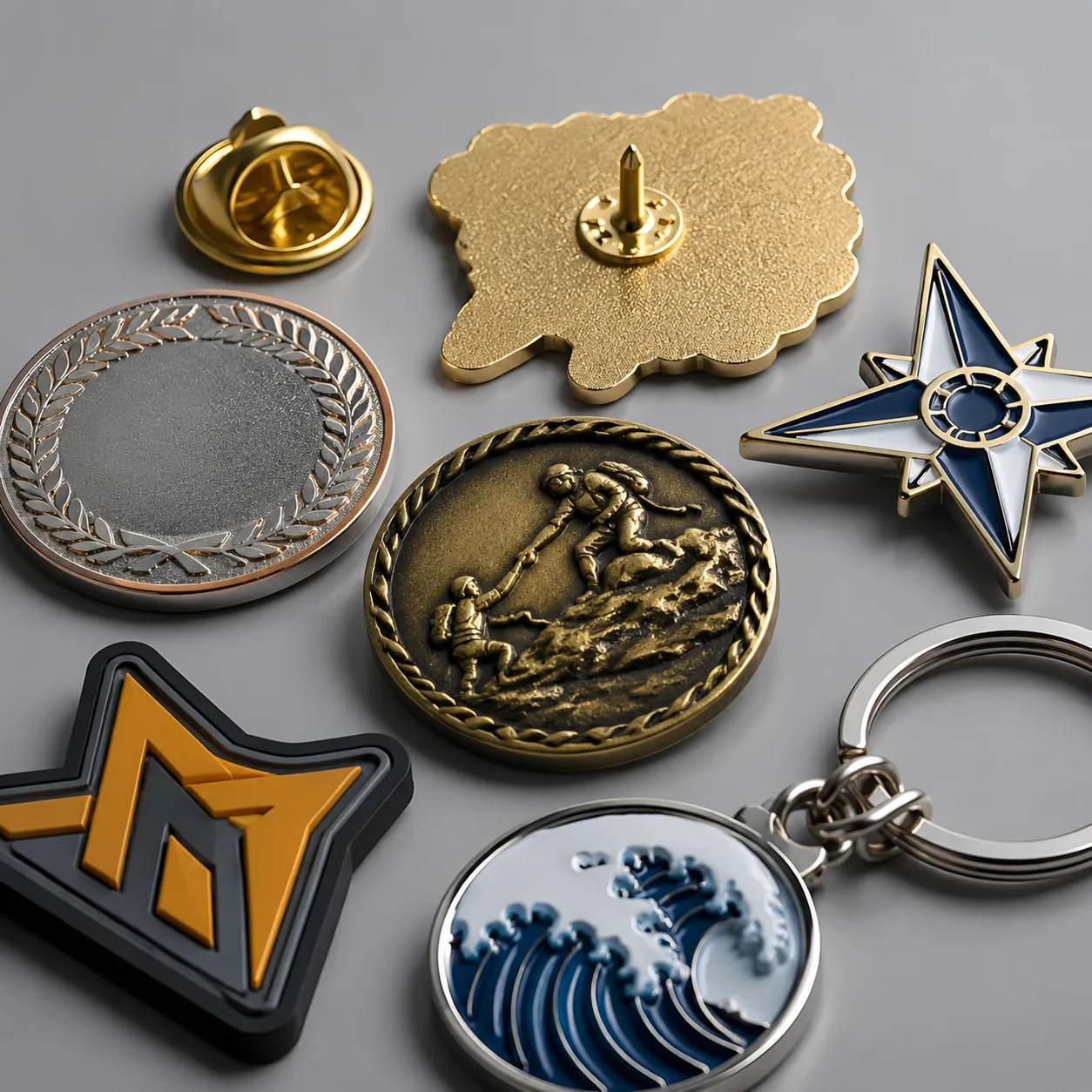
Treat lower-impact buying as a controlled specification change
A European distributor is preparing a spring launch kit with three SKUs: 5,000 soft enamel pins for retail staff, 3,000 zinc alloy keychains for customer gifts, and 2,000 woven lanyards for a trade event. Artwork is locked, packaging layouts are in progress, and the brand team adds a late instruction: move to recycled or lower-impact options where practical, but keep the ex-factory date and do not reduce perceived quality. That is a normal 2026 brief. The risk does not sit in the slogan. It sits in the technical details that decide whether the order runs cleanly: base metal, plating thickness, webbing composition, hardware grade, individual pack method, carton compression strength, and inspection standard.
The most expensive RFQ wording is still “please make this eco-friendly.” It produces non-comparable quotes. One supplier may only change the backing card to recycled board, another may quote rPET lanyards, a third may remove individual polybags, and a fourth may market “recycled metal” without batch-level traceability. Those are different products with different risk profiles, lead times, and prices. Buyers often discover the mismatch only after samples arrive or after the PO is released.
A better method is to split every SKU into three buckets before quotation: material substitutions, process reductions, and packaging reductions. Then set the fixed points. In this case, the non-negotiables are Pantone-critical logo colors, no visible oxidation in normal indoor use for at least 12 months, and a 32-day window from sample approval to ex-factory completion. Those limits rule out unproven coatings, new tool geometry, or any material change that forces process redevelopment. The commercial target is not the strongest claim. It is the highest measurable improvement that still protects yield, lead time, and field performance.
Select the lower-impact move by SKU, not by campaign
A pin, a keychain, and a lanyard do not fail in the same way, so they should not be “greened” in the same way. Soft enamel pins fail through weak die detail, burrs, plating inconsistency, uneven enamel fill, or bad post soldering. Keychains fail through split-ring opening, jump-ring deformation, weld cracking, and plating wear on high-contact edges. Lanyards fail through print blur, width variation, fold-stitch weakness, hardware mismatch, or buckle malfunction. One blanket sustainability rule across all promo items usually creates either poor comparability or unnecessary risk.
In a mixed order like this, the practical 2026 shortlist is usually clear. Use recycled-board backing cards in the 350 to 450 gsm range, FSC-certified outer cartons only if chain-of-custody paperwork is actually required, 100% rPET webbing for lanyards, reduced individual polybag use, and tighter carton loading to reduce shipping cube. On the metal SKUs, the safest gains usually come from eliminating redundant accessories, simplifying pack-out, and reducing rework instead of making broad recycled-content claims on the finished item. That approach sounds less dramatic, but it is the version most likely to ship on time, pass inspection, and avoid post-shipment disputes.
| Item | Recommended lower-impact specification | Core specs kept standard | Typical MOQ / lead time / FOB |
|---|---|---|---|
| 30 mm soft enamel pin | 400 gsm recycled-board backing card; water-based or standard offset print; remove individual OPP bag only if carded sample passes 24-hour rub test | 1.2 mm iron or 1.5 mm brass base; total thickness 1.4-1.8 mm after fill; 8-10 mm post; butterfly clutch; nickel, imitation gold, or black nickel plating at 0.03-0.08 micron decorative thickness | MOQ 500; pre-pro sample 5-7 days; production 12-16 days; FOB USD 0.24-0.52 at 5,000 pcs |
| 50 mm zinc alloy keychain | Recycled paper belly band or insert card; no velvet pouch; one standardized 25 mm split ring across SKUs | Die-cast zinc alloy body 3.0-4.0 mm thick; welded 25 mm split ring; 1.6-1.8 mm wire jump ring; nickel or black nickel plating; static pull test 3-5 kg for 10 seconds | MOQ 300-500; pre-pro sample 6-8 days; production 15-20 days; FOB USD 0.78-1.35 at 3,000 pcs |
| 20 mm rPET lanyard | 100% rPET webbing with sublimation print; recycled paper belly band instead of polybag where venue rules allow | 15 or 20 mm width; width tolerance +/-1 mm; cut-length tolerance +/-5 mm; standard swivel hook or lobster hook; breakaway buckle only if required; stitched fold assembly | MOQ 500; sample 4-7 days; production 10-15 days; FOB USD 0.40-0.78 at 2,000 pcs |
| Mixed kit packing | 5-layer export carton; reduced inner bags; carton fill optimized to 85-90% to control void space and crush risk | Master carton markings, barcode labels, desiccant only for long transit or humid storage; gross carton weight target 12-15 kg | Pack prep 1-3 days; cost effect often neutral to minus 3% when presentation packaging is simplified |
Pins: leave the metal architecture alone and improve pack-out
For a 5,000-piece staff pin program, “recycled metal” is often the least reliable part of the conversation. Some upstream mills do use recycled feedstock, but many badge factories still cannot tie a finished custom pin to batch-specific recycled-content paperwork that will satisfy buyer audit. More importantly, the finished pin still succeeds or fails on die sharpness, post soldering, plating consistency, and enamel control. If those variables drift, the claim does not save the order.
For a 30 mm soft enamel pin, stable commercial specifications are usually 1.2 mm iron for cost-sensitive programs or 1.5 mm brass where cleaner edges matter, finished size tolerance of +/-0.15 mm, thickness tolerance of +/-0.10 mm, and one centered 8 to 10 mm post for a standard badge profile. Decorative plating thickness is commonly 0.03 to 0.08 micron for nickel, imitation gold, or black nickel. That is adequate for normal indoor wear, but it is not a heavy-abrasion coating. If pins will contact zippers, trays, or metal lanyard clips, request a simple rub-resistance check during sample review rather than assume standard plating will survive repeated edge contact.
QC should be written into the RFQ. AQL 2.5 major and 4.0 minor is common for promo metal items, with zero critical defects. In working terms, that means no sharp points, no detached posts, no missing clutches, no exposed base metal on front-facing areas, and no obvious plating voids on the logo face. For enamel appearance, a practical acceptance standard is no major sink visible at 30 cm under normal office lighting and no color contamination outside metal borders. Those criteria reduce the common argument where buyers reject normal soft-enamel variation that should have been defined in advance.
The lower-impact gain on pins usually comes from the pack-out. Use one 400 gsm recycled-board card that combines branding, legal copy, and barcode; avoid rigid gift boxes; and remove the extra sleeve only if the mounted sample survives transit simulation without visible scratching. Bulk packing can be 50 pieces per inner bag and 500 to 1,000 pieces per master carton depending on card size and target gross weight. For scratch-prone finishes such as polished black nickel, keep the protective bag. For matte nickel staff pins mounted on card, removing the outer OPP sleeve is often the cleanest low-risk reduction.
Keychains: verify hardware integrity before adding visible materials
Keychains are usually the highest return-risk SKU in a mixed promo set because they live in pockets, bags, and ignition clusters. Buyers often focus on the visible body and ask for bamboo tags, cork wraps, or recycled straps because those changes are easy to market. In actual field use, most failures come from the hardware system, not the decorative plate: split rings open, jump rings deform, clasp springs weaken, or welds crack. If the hardware fails, the product is lost and the sustainability story becomes irrelevant.
For a stable 45 to 55 mm keychain, the normal construction is a die-cast zinc alloy body at 3.0 to 4.0 mm thickness, a welded 25 mm split ring, a jump ring with 1.6 to 1.8 mm wire diameter, and the minimum connector count needed for movement. A useful assembly requirement is a static pull test of 3 to 5 kg for 10 seconds with no permanent opening, ring separation, or weld fracture. If a woven strap or rPET strap is added, sample review should also include edge-fray and abrasion checks after repeated hand rubbing, because softer recycled yarn constructions can fuzz faster than standard polyester in pocket use.
The practical lower-impact gains are usually simplification measures. Standardize one split-ring size across related SKUs, remove one redundant connector, and drop velvet pouches or rigid paper boxes unless the customer is paying specifically for gift presentation. At 3,000 pieces, a plated zinc alloy keychain typically lands around FOB USD 0.78 to 1.35 depending on size, relief depth, plating, and pack-out. Presentation packaging can add USD 0.12 to 0.40 per unit and increase carton cube without improving service life. Keep those adders on separate quote lines so the buyer can evaluate function and presentation independently.
Lanyards: the cleanest recycled-material conversion in most promo programs
Lanyards are usually the safest recycled-material conversion in 2026 because the substitution is visible, mature, and easy to define at component level. For 15 mm or 20 mm widths, 100% rPET webbing with sublimation or heat-transfer printing is typically the least disruptive option. The claim is clearer because the webbing is the primary visible material, and market supply is now broad enough that MOQ and lead-time penalties are usually modest rather than structural.
The buyer still needs realistic performance expectations. rPET does not always feel identical to virgin polyester. Depending on yarn denier, weave density, and finishing, it may feel slightly softer and may show less crisp edge definition on fine text or thin reverse lines. Reverse text below roughly 1.0 to 1.2 mm cap height often loses clarity on textured webbing, especially on dark flood backgrounds. Width tolerance is commonly +/-1 mm, cut-length tolerance +/-5 mm, and fold-stitch alignment should match the approved sample within a visually centered tolerance. If a breakaway buckle is required, test buckle release and stitch security as one assembly, not as separate parts.
Lead time is another reason lanyards are the strongest lever in a mixed order. For 2,000 pieces, sample lead time is often 4 to 7 days, with production in 10 to 15 days after approval if the hardware is standard and artwork is final. FOB pricing is commonly USD 0.40 to 0.78 each for 15 to 20 mm sublimated rPET lanyards with a standard swivel hook. Breakaway buckles, safety clips, detachable phone loops, or individual bagging can add USD 0.03 to 0.18 per unit and may add 1 to 3 production days. In other words, lanyards usually offer the cleanest measurable recycled-material gain while the metal items stay on proven constructions.
Rewrite the RFQ so every supplier prices the same job
Broad instructions such as “use recycled materials where possible” should be removed from the RFQ. Each SKU should instead state what is mandatory, what is optional, and what is prohibited. That one change prevents three common failures: suppliers pricing different packing assumptions, factories quietly downgrading hardware to recover cost, and finished-goods sustainability claims being implied when only a card or bag changed.
- List each SKU with size, thickness, attachment, plating or print method, packing method, inspection standard, and ex-factory target date.
- Mark every lower-impact change as mandatory, optional, or prohibited so suppliers cannot reinterpret the brief.
- Request component-level disclosure for webbing, card stock, inner bag, outer carton, inserts, straps, and any decorative add-on material.
- State QC terms up front: AQL 2.5 major, 4.0 minor, zero critical defects, plus any required pull test, rub test, or buckle-release check.
- Ask suppliers to separate tooling, sample charge, unit FOB, packaging adder, certification or document adder, and courier cost in USD.
- Require any rPET, FSC, or recycled-packaging premium to appear as a separate line item rather than being hidden in the unit price.
- Specify whether certification copies are mandatory for this PO or whether equivalent material grade is acceptable without chain-of-custody paperwork.
For this order, a usable RFQ would read like this: pins remain standard iron or brass with soft enamel and 400 gsm recycled-board cards; keychains remain zinc alloy with welded 25 mm split rings and no gift pouch; lanyards move to 100% rPET webbing with sublimation print; individual polybags are reduced except where scratch protection is necessary; master cartons are 5-layer export grade, FSC-certified only if documentation is required. Once written that way, sample approval becomes faster because there is less room for hidden substitution and price comparisons become meaningful.
Approve samples in the right order: function, finish, then claim
When pre-production samples arrive, buyers often spend too much time on the sustainability message and not enough on whether the product works properly. The review order should be function first, finish consistency second, and packaging execution third. A pin with an off-center post, a keychain with a weak weld, or a lanyard clip that binds during rotation is a larger commercial risk than a recycled carton that looks slightly duller because of higher fiber content.
For the pin, check burr control, edge smoothness, enamel recess consistency, post alignment, clutch retention, and whether the item sits square on the card. For the keychain, check split-ring closure, weld cleanliness, plating coverage on edges and recessed logos, logo legibility, and any strap fray after repeated handling. For the lanyard, check print sharpness, color match against approved art, fold stitching, clasp rotation, and buckle release if included. Carton specification should also be confirmed before mass packing starts: 5-layer corrugate is standard for mixed small metal items, carton fill should stay around 85 to 90%, and gross carton weight is best held around 12 to 15 kg to reduce crush damage and handling claims.
At PO release, the real decision is rarely between a perfect green option and a bad conventional one. It is usually between a conventional version with unnecessary packaging and a lower-impact version that keeps the critical product architecture unchanged. In many programs, the second option is the better commercial answer. rPET lanyards often carry little or no premium at practical volumes, recycled-board cards are frequently cost-neutral if graphics stay simple, and packaging reduction can offset part of the added cost elsewhere. Across a mixed order like this, total FOB impact often lands around 0% to 8% when the changes are specified before tooling and sample development instead of being added late. The operational lesson is simple: credible lower-impact promo buying comes from disciplined SKU-level scope control, component-level specifications, and sample approval that prioritizes performance over marketing language.
Have a project? Send your artwork and target quantity and we’ll reply with a detailed quotation within 12 working hours.
Ready to get this made?
Send your sketch, target quantity and ship-date. Detailed quotation in 12 hours.



