Rebuilding a 2026 Promo Budget After Tariffs: A Buyer Scenario
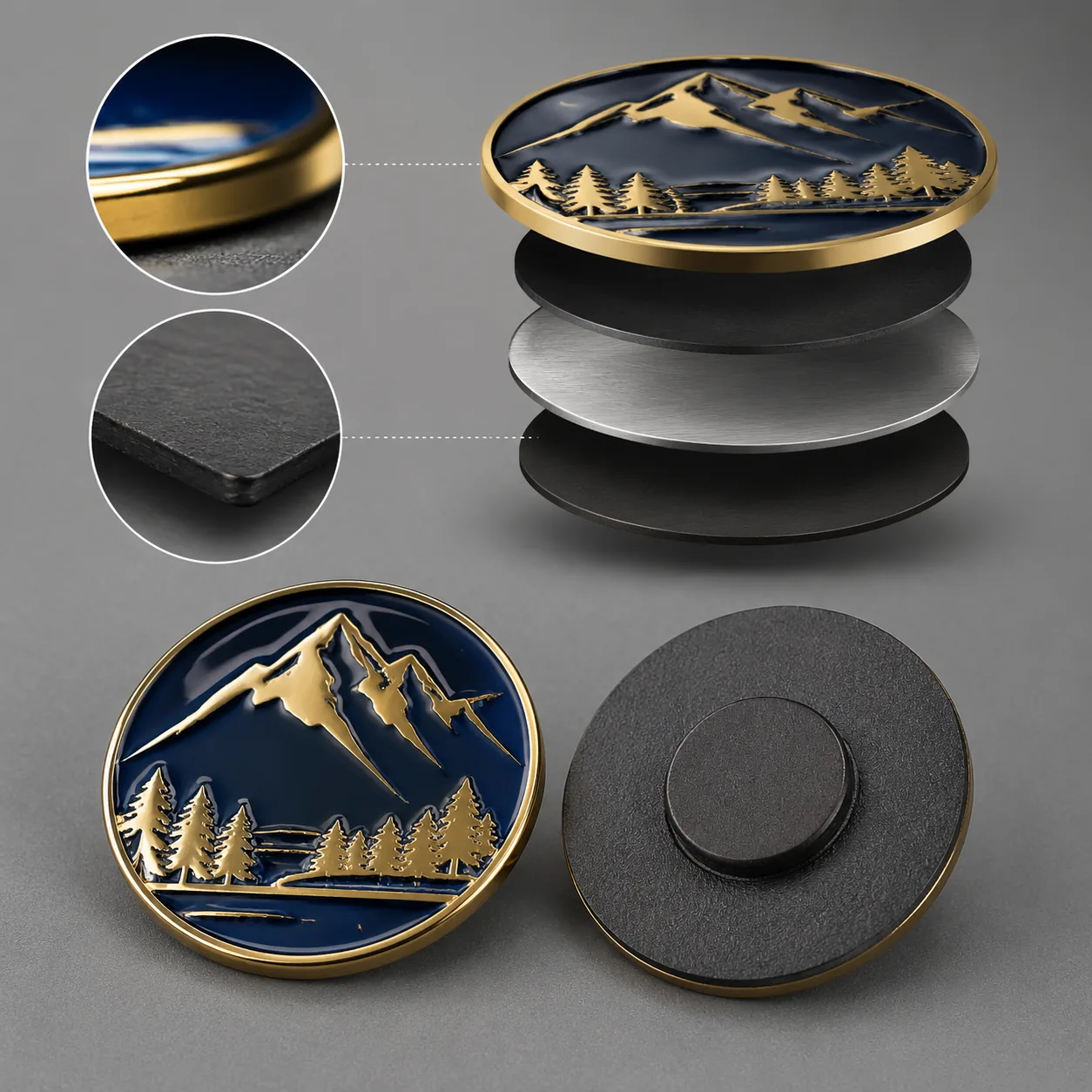
Scenario: approved Q2 kit, then landed cost rises 18%
A US distributor has a spring launch kit built around 10,000 custom enamel pins, 5,000 zinc alloy keychains and 3,000 challenge coins. Creative is approved, the in-hands date is fixed, and finance reruns the 2026 landed-cost model with updated duty and tariff assumptions, ocean freight, customs brokerage, domestic receiving and fulfillment labor. The blended landed cost rises 18%, pushing the program below margin before the PO is released.
The weak response is to ask every factory for a flat 10% FOB reduction. That usually moves cost in uncontrolled ways: thinner metal, lighter plating, looser Pantone matching, weaker clutches, lower-grade split rings, thinner backing cards or more aggressive bulk packing. The quote improves, but scratch rate, color variance, attachment failures and replacement exposure move in the wrong direction.
The better response is to rebuild the specification stack. Freeze three inputs first: required in-hands date, non-negotiable visual features and maximum landed-cost ceiling per SKU. Then adjust base metal, process, thickness, finish, hardware, packaging, cartonization and shipping mode against those limits. On metal promo programs, a disciplined re-spec can often recover 6% to 14% of total landed cost without changing the campaign date.
Protect what the recipient actually notices
The three SKUs do not carry equal perceived value. The pins go to influencers and will be photographed close-up. The keychains are event giveaways where daily-use durability matters more than a jewelry finish. The challenge coins are internal recognition pieces, where diameter, weight, antique contrast and relief usually matter more than mirror-flat enamel.
That distinction should drive the cost strategy. A 35-38 mm hard enamel pin with polished nickel plating, flush color fill and clean raised metal lines is a premium visual object. If the artwork uses outlines below 0.25 mm, small text below 1.2 mm cap height or large flat brand-color fields, switching to soft enamel can visibly change the face. Hard enamel also wipes clean more easily and usually photographs better in macro shots because the color sits flush with the raised metal.
A 50 mm challenge coin is different. If recognition value comes from the emblem, antique finish and diameter, the buyer may be able to move from 3.0 mm to 2.5 mm thickness or remove edge text without harming perceived value. A 50 mm giveaway keychain may move from 3D cast zinc alloy to 2D die-struck iron if the design does not depend on sculptural depth. The recipient still gets a functional branded item, while the buyer removes metal weight, mold complexity and assembly time.
Keep premium specs where users notice surface flatness, edge feel, relief sharpness, attachment reliability and brand color accuracy. Reduce cost where the item is viewed at arm's length, distributed in volume or handled briefly. This avoids the common mistake of downgrading the most visible SKU while leaving low-visibility packaging, edge treatments and hardware untouched.
Re-cost engineering options, not vague price cuts
The fastest reliable budget recovery comes from comparing the approved build against technically valid alternatives. In 2026, the safest savings usually come from process complexity, packaging format, accessory standardization, plating choice and carton density rather than from weakening the front-face artwork.
| Item | Approved spec | Lower-cost option | Typical 2026 FOB impact | Lead-time impact | Primary risk |
|---|---|---|---|---|---|
| Enamel pin | 35-38 mm die-struck iron, hard enamel, polished nickel, 1.5 mm thick, 2 posts, 2 butterfly clutches, 350 gsm printed backing card + OPP bag, MOQ 1,000 | Same size and metal, soft enamel + epoxy, polished nickel, 1.5 mm, 2 posts, unbranded card or 100-piece bulk inner pack, MOQ 1,000 | -USD 0.12 to 0.24/pc | Neutral: 12-18 calendar days after sample approval | Medium: loses flush premium feel; epoxy can show scuffs |
| Keychain | 50 mm cast zinc alloy, 3D front, black nickel, 4.0 mm body, 25 mm chain + 30 mm split ring, individual polybag, MOQ 500 | 50 mm die-struck iron, 2D relief, black nickel, 2.0-2.5 mm body, direct 30 mm split ring, bulk pack, MOQ 1,000 | -USD 0.20 to 0.45/pc | Often improves from 18-24 days to 12-18 days | Low to medium: lighter hand feel and less sculptural depth |
| Challenge coin | 50 mm zinc alloy or brass, 3D both sides, antique brass, 3.0 mm thick, edge text, PVC sleeve, MOQ 300 | 50 mm stamped iron or brass, 2D both sides, antique brass, 2.5 mm thick, plain edge, PVC sleeve, MOQ 500 | -USD 0.40 to 0.85/pc | Often improves from 18-25 days to 12-20 days | Low if artwork is emblem-based; higher for portraits or sculpted logos |
| Packaging | Rigid gift box with EVA or flocked insert, individual barcode label | PVC sleeve, OPP bag or 50-100 pcs per inner carton with consolidated labeling | -USD 0.35 to 1.20/pc | Can reduce pack-out by 1-3 days | Low for handouts; high for executive gifting |
FOB ranges remain predictable when the spec is clear. At 1,000 pieces, a 35-38 mm iron enamel pin commonly lands at USD 0.45 to 1.05 FOB Asia depending on enamel type, plating, post count, carding and pack-out. A 50 mm custom keychain at 1,000 pieces is commonly USD 0.75 to 1.80 FOB. A 50 mm challenge coin at 500 to 1,000 pieces often falls between USD 1.20 and 3.20 FOB depending on base metal, relief complexity, edge treatment and packaging. Quotes far below those bands usually imply a spec downgrade, lighter metal, thinner plating, looser inspection or simplified packing.
Do not under-specify hardware. Saving USD 0.02 to 0.05 by using weak butterfly clutches, thin split rings or open jump rings can create field failures that exceed the savings. For daily-use keychains, 1.8-2.0 mm split-ring wire is a practical durability target. For pins above roughly 32 mm wide, two posts are usually worth keeping because they prevent rotation and reduce complaints.
MOQ tiers: where tariff pressure changes the math
Tariffs raise landed cost, but they also change how MOQ should be evaluated. Fixed charges such as tooling, setup, pre-production samples, export documentation, customs entry, domestic receiving and fulfillment setup are spread across the order. The smallest advertised MOQ can become the most expensive usable option once all-in cost is calculated.
For new custom metal designs in 2026, workable MOQ tiers are typically 100-300 pieces for simple coins, magnets or stock-shape badges; 300-500 pieces for many keychains; and 500-1,000 pieces for pins when the buyer wants efficient pricing and stable finishing. The largest unit-cost drop often occurs between 300 and 1,000 pieces. From 1,000 to 2,500 pieces, savings continue but more gradually. Above 5,000 pieces, the buyer is usually optimizing freight, packaging density and variant planning more than factory conversion cost.
In this scenario, 10,000 pins do not automatically mean one ideal build. If the buyer needs assortment variety, five variants at 2,000 pieces each using the same size, plating, post pattern, backing card and packaging are usually more efficient than ten fully separate variants at 1,000 pieces each. Shared tooling standards reduce approval cycles, plating interruptions and assembly errors. If only enamel colors and backstamps change, the factory can run the order with fewer resets.
A practical rule is to compare landed cost at 500, 1,000, 2,500 and 5,000 pieces for each SKU. Include tooling amortization, sample cost, inner-carton format, freight weight, tariff rate, broker fees and domestic handling. The right MOQ is based on cost per distributed unit, not the lowest unit FOB on a quote sheet.
Hidden levers: plating, tolerances, QC and pack-out
When teams are under tariff pressure, they often challenge the face design first. Several less visible inputs usually move total program cost more cleanly: plating area, carton utilization, packaging density, accessory standardization, dimensional tolerance and inspection level.
- Use standard hardware wherever possible: butterfly clutch, military clutch, 30 mm split ring, common magnet sizes such as 10 x 2 mm or 12 x 2 mm. Custom hardware adds tooling, sourcing time and assembly risk.
- Avoid masked dual plating unless the artwork requires it. One finish is cheaper, faster and less failure-prone than combinations such as polished gold plus black nickel.
- Set QC by use case. AQL 2.5 for major defects and 4.0 for minor defects is common for general promo distribution; premium retail or executive programs may justify AQL 1.0/2.5 on critical appearance points.
- Specify plating realistically. Decorative nickel or black nickel on promo metal items commonly runs about 3-8 microns; gold flash may be only 0.03-0.10 micron. Heavy wear or salt-spray requirements should be quoted separately.
- Use realistic dimensional tolerances. A 40 mm badge may not need +/-0.20 mm if the application functions at +/-0.50 mm. Tight tolerances can add sorting, scrap and rework without visible value.
- Consolidate packaging dimensions and master-carton counts. Inner packs of 50 or 100 pieces improve carton utilization, reduce pick-pack errors and lower handling damage.
For enamel fill, a practical visual standard is usually more useful than an unrealistic measurement standard: no missing color, no obvious overflow at normal viewing distance and no critical logo-color deviation beyond the agreed tolerance. For brand-critical colors, specify Pantone Solid Coated references and review under D65 or daylight-equivalent lighting. For secondary fills on internal coins, a wider tolerance may be acceptable.
Finish choice can also reduce rejects. Mirror-polished nickel, gold and black nickel look premium but show small surface marks and polishing inconsistency. Antique brass, antique silver and antique copper hide minor texture variation better and often reduce cosmetic rejects on detailed relief artwork. Antique finish is not automatically cheaper, but it may reduce rework and inspection failures.
Revised build: recover margin without damaging the launch
Applied to the scenario, the defensible move is selective redesign rather than across-the-board downgrading. Keep the influencer pin premium if it appears in unboxing content. If the design requires flush surfaces, fine lines or a jewelry-like finish, hold hard enamel at 1.5 mm thickness and save elsewhere, such as replacing individual card-and-polybag packing with standardized 100-piece inner packs if the fulfillment center can card or kit later.
If the pin artwork uses broad color blocks and limited fine outlines, a soft enamel plus epoxy version may recover USD 0.12 to 0.24 per piece with limited downside on camera. On 10,000 pieces, that is USD 1,200 to 2,400 FOB before duty and freight multipliers. Simplifying printed 350 gsm cards to unbranded cards or bulk inner packs may add another USD 0.06 to 0.15 per piece in savings.
The keychain is the strongest redesign candidate. Moving from cast zinc alloy, 3D, 4.0 mm body, chain plus split ring to die-struck iron, 2D, 2.0-2.5 mm body with direct split-ring attachment removes casting complexity, reduces weight and cuts assembly steps. At 5,000 pieces, a USD 0.20 to 0.45 reduction yields USD 1,000 to 2,250 FOB savings, and production often shortens by 4-6 calendar days.
The coin is next. If recognition value comes from the emblem, antique contrast and 50 mm diameter, dropping from 3.0 mm to 2.5 mm and removing edge text can save USD 0.40 to 0.85 per piece. Across 3,000 coins, that is USD 1,200 to 2,550 FOB. The recipient will still perceive it as a substantial award if the diameter, relief contrast and finish remain strong.
Combined, these changes can recover roughly USD 3,400 to 7,200 FOB, before secondary savings from lower gross weight, simpler pack-out and reduced production touches. If the duty or tariff base applies to declared product value, lower FOB also reduces tariff dollars paid. That compounding effect is why engineering the spec is usually more effective than arguing over margin alone.
RFQ language that produces usable factory quotes
Factories cannot optimize against a vague request for a better price. A tariff-reset RFQ needs ranked priorities: target quantity by SKU, latest ex-factory date, shipping term, non-negotiable appearance points, acceptable base metals, packaging flexibility and preference for standard hardware.
A strong brief would say: keep front-face artwork, logo legibility and primary Pantone brand colors within agreed tolerance; acceptable to change back texture, edge style, packaging and thickness within functional limits; quote iron and zinc alloy where relevant; use AQL 2.5/4.0 as standard and quote AQL 1.0/2.5 separately; show tooling, sample charge, unit FOB, carton count, net weight, gross weight and production lead time in calendar days.
Ask for three quote levels instead of one: lowest landed-cost build, balanced build and premium build. This turns the RFQ into an engineering comparison. It makes trade-offs visible: whether USD 0.08 per coin is worth keeping 3.0 mm thickness, whether dual plating is justified, or whether premium packaging belongs on a giveaway SKU.
Separate one-time and recurring charges. Tooling may be USD 40 to 120 per pin design, USD 80 to 180 per keychain or coin design, and more for complex 3D molds. Pre-production samples commonly add 5-8 days after artwork approval, plus 3-5 days for buyer review and revision. Bulk production lead time should be stated after written sample approval, not after initial RFQ.
Fast checklist for a 2026 budget reset
To reset a metal promo budget quickly, do not reopen every decision at once. Rank SKUs by visibility and recipient sensitivity. Then identify one must-keep feature and two negotiable features per SKU. Most cost recovery becomes obvious once the team stops treating all items as equally premium.
- Build a landed-cost sheet, not only an FOB sheet: unit price, tooling, samples, packaging, freight, duty and tariff assumptions, customs and broker fees, receiving and domestic fulfillment labor.
- Ask for alternate specs on thickness, process, plating, hardware and packaging, each with lead-time ranges in calendar days.
- Compare MOQ tiers at 500, 1,000, 2,500 and 5,000 pieces to find where the quote curve flattens.
- Keep premium surface quality only on products that will be closely handled, photographed, sold at retail or gifted to high-value recipients.
- Request pre-production samples only on shortlisted specs unless visual risk is unusually high; sampling every option can burn 10-15 days.
- Confirm AQL level, dimensional tolerance, enamel standard, attachment hardware, packaging method, inner-pack quantity and master-carton count before PO release.
- Ask for carton dimensions and gross weight early so freight and tariff modeling uses real shipment data, not placeholder assumptions.
The objective in a 2026 tariff year is not simply to make the quote cheaper. It is to remove cost the end user will not value while protecting the details that drive perception, durability and on-time delivery. Buyers who can discuss thickness, plating, AQL, tolerance and pack-out in concrete terms usually get better quotes, cleaner approvals and fewer landed-cost surprises.
Have a project? Send your artwork and target quantity and we’ll reply with a detailed quotation within 12 working hours.
Ready to get this made?
Send your sketch, target quantity and ship-date. Detailed quotation in 12 hours.



