Re-Spec or Rework? Pin vs Coin QC Comparison for 2026
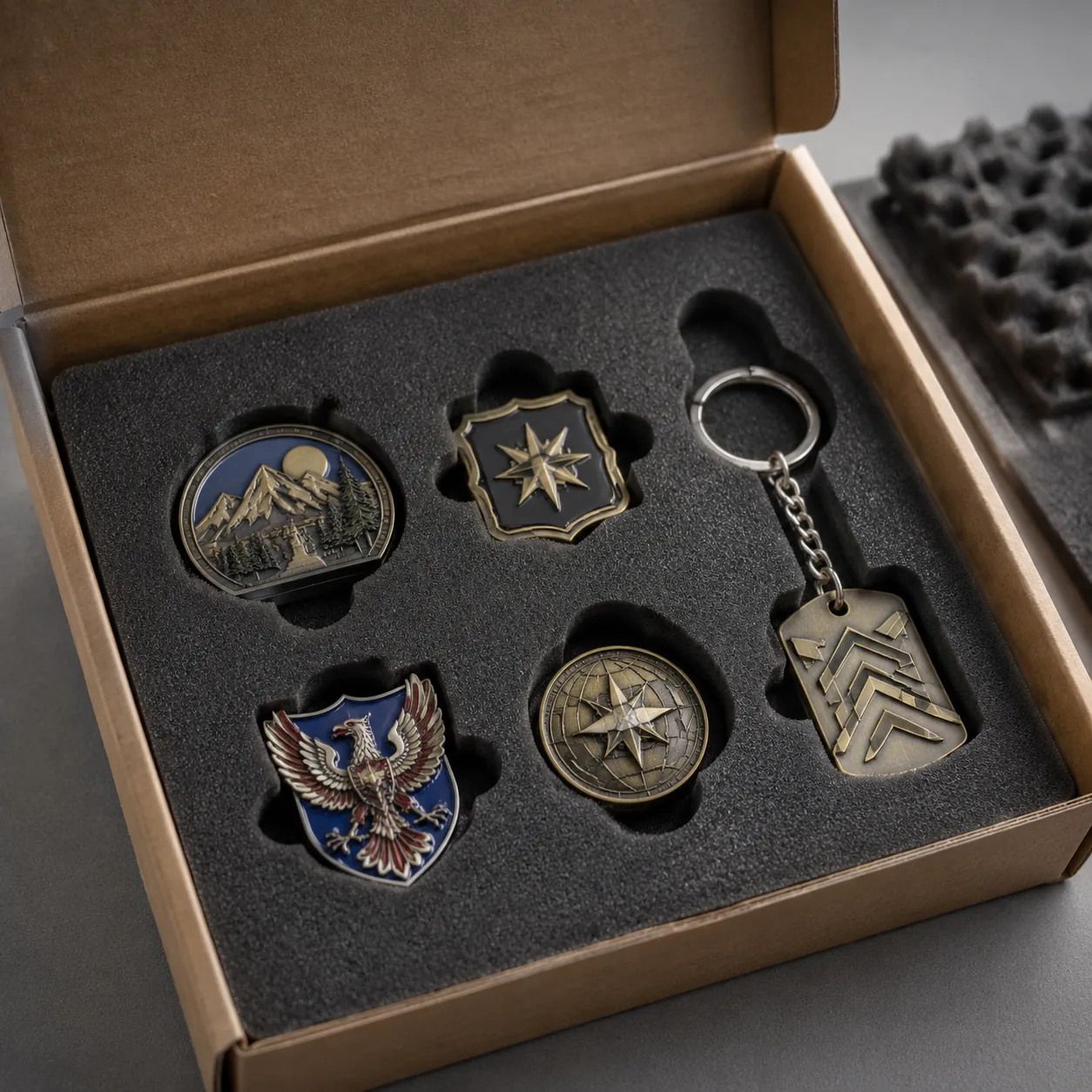
The real question in 2026: re-spec early, or pay for rework later?
When a promo program slips, buyers often ask the factory to remake the order. The better move is to ask whether the defect can still be corrected at the specification stage, before tooling, plating, fill, or packaging make the mistake expensive to unwind. In 2026, that distinction matters more because most buyers are pushing smaller MOQs, shorter lead times, and tighter standards on thickness, color match, and finish consistency.
For custom pins and challenge coins, the same defect does not carry the same cost. A pin is often re-spec friendly because the artwork is compact and the hardware is modular. A coin is more rigid: once the die is cut, changes to relief hierarchy, rim width, edge treatment, or diameter affect the entire visual balance and hand feel. In practical terms, pins are usually easier to rescue; coins are usually more expensive to correct after tooling.
The QC question is not whether a sample looks good in a photo. It is whether the factory can repeat the same result across the run within a defined tolerance and AQL. That is the difference between a sample issue and a bad order.
Pin vs coin: the specs that drive QC risk
The ranges below reflect typical production in brass, zinc alloy, or iron. Exact limits still depend on artwork density, plating method, and whether the finish is soft enamel, hard enamel, die-struck, epoxy-coated, or printed.
| Spec area | Custom pins | Challenge coins |
|---|---|---|
| Common size range | 20-40 mm typical; 15-50 mm workable | 38-50 mm typical; 32-70 mm workable |
| Common thickness | 1.0-2.0 mm; 0.8 mm ultra-thin, 2.5 mm premium | 1.8-3.5 mm; 1.5 mm light, 4.0 mm heavy feel |
| Minimum practical line width | 0.20-0.25 mm for repeatable production | 0.25-0.30 mm for raised/recessed detail |
| Minimum pocket depth | 0.30-0.40 mm for reliable fill and polish | Usually not used; color is often through metal finish, enamel, or print |
| Typical dimensional tolerance | ±0.2 mm on small parts; post placement ±0.15-0.25 mm | ±0.2 mm on diameter; thickness ±0.15-0.25 mm |
| Attachment sensitivity | High: post count, clutch grip, and angle affect wear and presentation | Low: no attachment, but diameter, rim, and edge errors are obvious |
| Re-spec friendliness | High if caught before plating, fill, or backing-card print | Medium: relief and edge changes usually require a die revision |
| Typical MOQ tier | 100-300 pcs standard; 300-500 pcs for complex effects or special backing | 100-200 pcs simple die-struck; 300+ pcs for deep relief, color fill, or custom edge |
| Lead time to first sample | 5-10 days | 7-12 days |
| Mass production lead time after sample approval | 10-18 days | 12-20 days |
| Common FOB price range, USD/unit | $0.45-$2.80 standard soft enamel; $2.50-$6.50 hard enamel or epoxy with custom card | $0.90-$3.80 standard die-struck; $3.50-$9.50 heavy relief, antique finish, or 3D edge work |
Pins are easier to correct because the geometry is smaller and the hardware is modular. If linework is too tight, the factory can often widen a border, enlarge the art by 10%-15%, increase pocket depth, or change the backing without redesigning the whole product. Coins are less forgiving: if the relief is too shallow or the rim is too narrow, the fix usually requires a new die or a substantial die revision, not a cosmetic touch-up.
QC triggers that should force a re-spec, not a cosmetic approval
Some defects are not worth accepting with a note. If the problem changes repeatability across the run, it is a spec issue. That includes lines below process limit, fill that breaks out after curing, plating that pools in recesses, or geometry that only looks correct from one angle. If a sample needs a long explanation to justify why it is acceptable, it usually should be re-specified instead of approved.
- Linework disappears after plating or polishing
- Enamel escapes from cells or domes unevenly after cure
- Raised detail looks soft because relief is too shallow
- Pin backs rotate, sag, or tear fabric under normal wear
- Coin edges feel sharp, thin, or uneven in hand
- Antique wash hides detail instead of defining it
- Artwork depends on a feature narrower than the chosen process can hold
A practical inspection standard for corrective work is usually AQL 2.5 for major appearance defects and AQL 4.0 for minor cosmetic variation, with tighter checks on critical fit points such as post spacing, clutch retention, diameter, and thickness. For critical-to-function dimensions, many buyers now specify 100% visual checks plus spot verification with calipers and go/no-go gauges on the first and last cartons. For premium awards, some programs tighten the acceptance target further to AQL 1.5 on major defects because the quantity is lower and the end-user expectation is higher.
Tolerance stack-up is another common failure mode. Example: a pin body oversizes by 0.2 mm, post placement drifts slightly, and a tight backing-card die-cut makes the product appear crooked at retail. On a coin, a 0.3 mm diameter drift plus an overcut rim can make the piece feel cheap even when the face art is correct. Buyers often approve artwork and miss production geometry, then discover the issue only when the sample arrives.
What a sensible correction path looks like by product
Pins usually have four correction paths: artwork simplification, build-method change, hardware change, or finish change. If text is too small, simplify before chasing polish quality. If the item sags, change post placement or move from one post to two. If the enamel looks crowded, enlarge the art instead of forcing the factory to fill features that are already below process limit. In many cases, the cheapest fix is to preserve the concept but relax the geometry so the factory can hold repeatable QC.
A realistic pin correction sequence looks like this: widen the thinnest line to at least 0.20-0.25 mm, keep enamel pockets around 0.30-0.40 mm deep, and lock post position within a defined tolerance before approving mass production. For soft enamel, make sure the raised metal can still support the painted cells after polishing. For hard enamel, remember that final polishing reduces apparent depth, so the design often needs slightly more relief than the CAD file suggests.
A common example: a 28 mm soft enamel pin with 6-point microtext failed because the smallest characters were only 0.18 mm wide. The correct fix was not to ask for cleaner printing. The proper re-spec was to reduce the copy, open the spacing, and enlarge the central mark by about 12%, which allowed the factory to hold the detail without flooding the cells.
Coins need a more structural correction path. If the central emblem is getting lost, increase relief hierarchy rather than adding random texture. If the rim lettering is weak, widen the rim or reduce the number of micro-features. If the antique finish is muddy, reduce recess clutter and specify a cleaner wash balance. On an award coin, a 0.2 mm adjustment to rim width or a small change to bevel angle can improve perceived quality more than another plating step.
For both products, a correction should be written as a measurable spec change, not a vague comment such as make it nicer. The production floor can hold dimensions; it cannot hold opinions.
Decision guide: re-spec, rework, or restart?
Use the table below when deciding whether to approve a revised sample or stop the job. The goal is to spend money only where the defect can actually be controlled.
| Scenario | Pins | Challenge coins |
|---|---|---|
| Thin text below process limit | Re-spec artwork or enlarge size before tooling | Usually re-spec the die; tiny text is less forgiving in relief |
| Poor color appearance | Change enamel type, pocket depth, or color count | Change antique wash, contrast, or relief hierarchy |
| Item feels too light | Add thickness, change base metal, or add epoxy doming | Increase diameter, thickness, or rim mass |
| Attachment fails | Re-spec post count, clutch type, or pin angle | Not applicable |
| Detail lost after plating | Simplify micro-lines or reduce tiny openings | Increase relief and reduce micro-texture |
| Surface looks too flat | Use texture, dual plating, or different fill style | Add stepped relief, doming, or stronger edge definition |
| Budget overrun | Simplify the build; pins are usually cheaper to re-spec | Reduce diameter or relief before changing the whole die |
Timing matters. If the issue is caught before mold engraving or die cutting, re-spec almost always wins. Once the tooling is cut, pins can still often be rescued because the geometry is smaller and the hardware is modular. Coins are less forgiving after tooling because face relief, border treatment, and edge design all interact visually. Once mass production starts, the cost of correcting a coin rises faster than the cost of correcting a pin.
Specs that must be locked before approving a corrective sample
Do not approve a revised sample until the spec sheet is rewritten with the correction. A photo approval alone is not enough because the factory needs measurable targets on the floor. The values below are the ones inspectors can verify with calipers, gauges, and visual standards.
- Overall size in mm, with acceptable tolerance, usually ±0.2 mm for small items
- Thickness target and minimum acceptable thickness
- Minimum visible line width and minimum gap between separated elements
- Plating family and finish type, such as shiny nickel, antique brass, matte black, gold tone, or black nickel
- Color count and enamel type, including soft enamel, hard enamel, or epoxy doming
- Attachment spec for pins, including post count, clutch type, and post angle
- Edge treatment for coins, including plain, reeded, beveled, rope, or custom edge
- Inspection standard, typically AQL 2.5 for major defects and AQL 4.0 for minor cosmetic variation
A stronger corrective sample also includes one control point that defines success. For a pin, that may be the smallest text line, the thinnest border, or the most crowded color cell. For a coin, it may be the shield relief, rim lettering, or the deepest recess in the background. If the correction does not improve that control point, the re-spec did not solve the real problem.
Buyers should also define the measurement method. For example: caliper checks for diameter and thickness, 3-point visual comparison for plating consistency, and a simple pull test for pin clutches. Without a method, two factories can interpret the same spec differently and still both claim compliance.
Commercial trade-offs: when the cheaper fix becomes the more expensive product
Buyers sometimes choose the cheapest correction path and end up with a product that no longer matches the campaign. For pins, switching from soft enamel to hard enamel can improve the premium feel, but it may flatten texture and reduce contrast. Adding epoxy can protect artwork, but it also changes gloss and hides fine detail. For coins, increasing diameter to recover detail can raise freight, packaging, and display cost, and the coin may no longer fit the original holder or insert.
FOB pricing shifts quickly once specs change. A standard soft enamel pin in the $0.45-$2.80 range can move above $3.00/unit if the job adds hard enamel, complex plating, dual clutch hardware, or custom packaging. Typical adders are straightforward: extra post hardware may add $0.05-$0.12, epoxy doming $0.08-$0.20, and custom backing-card print $0.12-$0.35 depending on quantity. A die-struck coin in the $0.90-$3.80 range can jump above $4.00/unit if you increase thickness, add deep relief, antique washing, or a custom edge. Heavy 3D relief and specialty edges can add $0.40-$1.50 per unit, especially on smaller MOQs.
Lead time changes matter too. A simple pin re-spec that only adjusts artwork may add 2-4 days before sample approval. A coin re-spec that requires a new die or revised 3D relief can add 5-10 days, and more if the revision is made after tooling has started. Typical production after approval is still faster on pins, usually 10-18 days, versus 12-20 days for coins. If the project has a fixed launch date, that delay can be more expensive than the unit cost difference.
For employee recognition, a heavier coin and a cleaner edge may justify the extra cost because the piece is meant to feel substantial in hand. For a mass giveaway, the smarter path is usually a simplified pin with tight QC control, because pins ship more efficiently, occupy less carton space, and tolerate smaller design corrections without changing the entire product experience.
What to do next if your sample is wrong
Start by identifying whether the problem is visual, structural, or commercial. Visual defects can often be corrected by finish changes or small artwork edits. Structural defects usually require a re-spec. Commercial defects, such as the item feeling too cheap for the campaign, may require switching product type altogether. If you cannot state the defect in one sentence with a measurable spec attached, do not approve the sample yet.
For a pin order, send the factory a marked-up file showing the exact line, fill, and backing changes, plus a revised tolerance note and a clear approval photo of the control point. For a coin order, define the new diameter, thickness, relief depth, rim type, and finish balance in one revision sheet so the die is corrected once instead of twice. In both cases, the best recovery is the one that makes the next sample measurable, repeatable, and easy to inspect under AQL-based final inspection before shipment.
A good close-out checklist for a corrective order is simple:
- Confirm the corrected dimension in mm, not only in images
- Approve the revised plating and fill standard in writing
- State AQL targets for major and minor defects
- Lock the packaging spec if retail presentation matters
- Verify lead time impact before releasing tooling
- Get one control-point photo that proves the fix worked
Have a project? Send your artwork and target quantity and we’ll reply with a detailed quotation within 12 working hours.
Ready to get this made?
Send your sketch, target quantity and ship-date. Detailed quotation in 12 hours.



