QC Respec Costs in 2026: What One Change Really Does
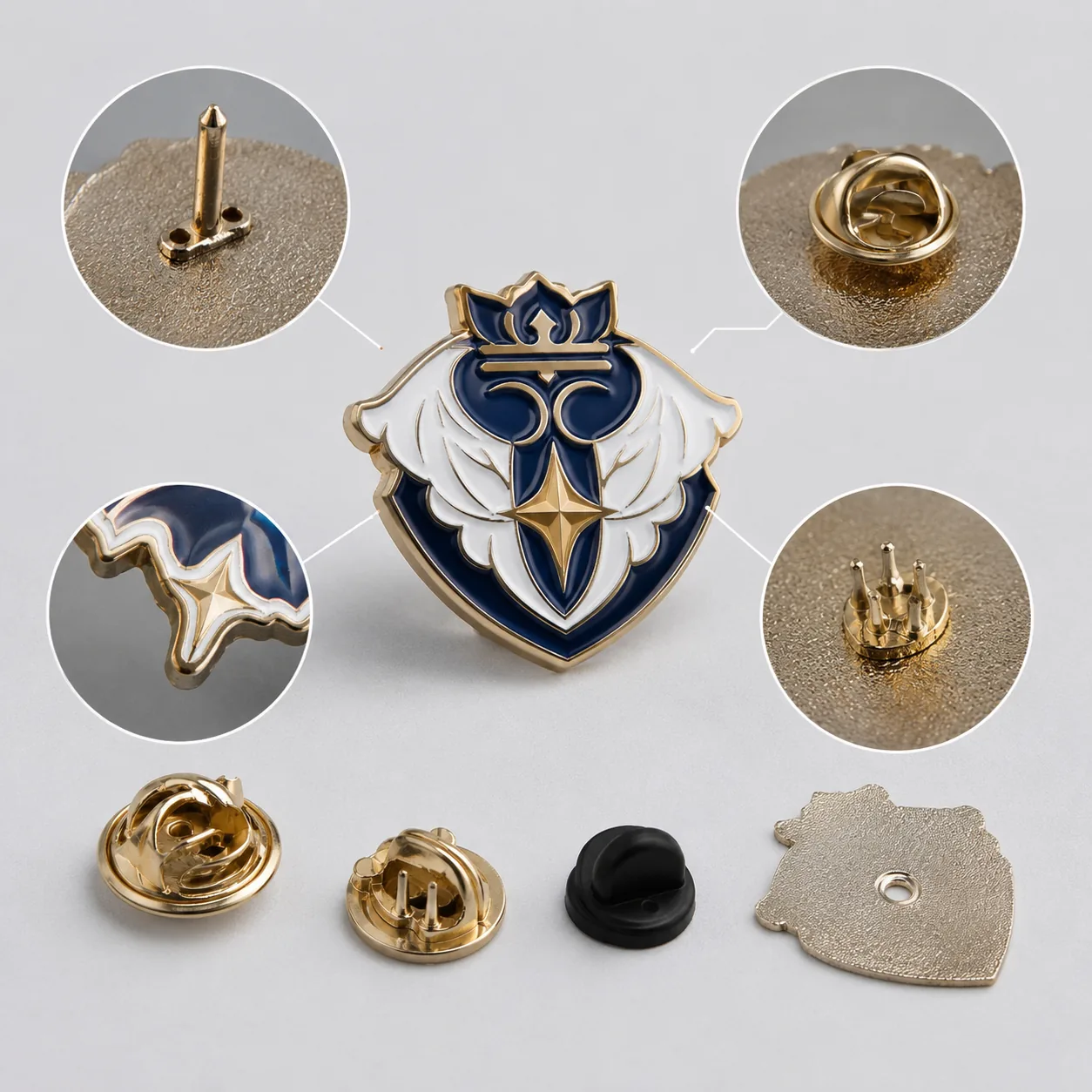
When QC flags a late sample issue, the cheapest fix is rarely the lowest quote
A common 2026 sourcing scenario is straightforward on paper: the pre-production sample looks acceptable visually, but QC identifies a functional defect mode that is likely to cause returns in normal use. Typical examples include a butterfly clutch releasing below a 2.5-3.0 kgf pull, a fridge magnet failing to hold through a 300-350 gsm insert card plus matte or gloss varnish, black nickel plating wearing through on raised edges after 20-30 dry rub cycles, or a keyring gap opening beyond 0.30 mm during a 5 kgf tensile check. The buyer then asks the practical question: if we change the specification now, what happens to unit cost, MOQ, tooling, and dispatch date?
The answer depends less on negotiation than on which manufacturing assets the revision touches. If the change stays within approved die lines, enamel recesses, polishing method, plating route, jig positions, and assembly method, the impact is often measured in cents and 2-4 working days. If it changes post location, hole diameter, relief depth, bridge width, magnet seat, or any bought-in hardware, the order may require die correction, a fresh sample round, or a subcomponent repurchase. In custom metal promos, a QC-driven respec is really a test of whether the approved tooling, artwork, plating process, and assembly setup remain valid.
A useful buyer shortcut is to classify the request before asking for a quote. Most revisions fall into four buckets: cosmetic-only, process-only, hardware-only, and structure-changing. That one step usually predicts whether the impact will be a USD 0.02 per piece adder, a hidden hardware MOQ, or a full production reset with 7-14 added working days.
Use four respec tiers so supplier quotes are comparable
Tier 1 is cosmetic-only. Geometry does not change. Examples include adjusting an enamel shade within an agreed Pantone tolerance, shifting a screen-printed line by 0.30-0.50 mm, switching a sandblast background to mirror polish, or adding an epoxy dome over a flat badge face. Typical adders are USD 0.01-0.08 per piece FOB. MOQ usually stays unchanged. Lead-time impact is commonly 2-4 working days. If die lines, recess areas, and drill points remain unchanged, no new mold is normally needed.
Tier 2 is process-only. The design stays the same, but the manufacturing route changes. Examples include moving from soft enamel to imitation hard enamel, increasing decorative plating on visible surfaces from roughly 0.03-0.05 microns to 0.08-0.12 microns, adding an anti-tarnish clear topcoat, or requiring 24-hour neutral salt spray verification on plated hardware. These changes typically add USD 0.03-0.20 per piece FOB and 3-7 working days because polishing, plating, curing, and inspection controls change.
Tier 3 is hardware-only. Common cases are switching from butterfly clutch to deluxe locking clutch, upgrading a split ring from 25 mm OD with 2.0 mm wire to 30 mm OD with 2.3 mm wire, replacing ferrite magnets with N35 or N42 neodymium discs, or adding a breakaway buckle and swivel hook to a lanyard. Unit cost typically rises by USD 0.04-0.35 per piece FOB. MOQ may increase if the replacement hardware has its own vendor minimum, and lead time usually extends by 4-9 working days.
Tier 4 is structure-changing. This is where buyers feel the real cost. Examples include resizing from 35 mm to 45 mm, increasing thickness from 1.5 mm to 2.0 mm, moving pin posts by 4-8 mm to reduce rotation, widening text strokes from 0.20 mm to 0.30 mm to match die-struck capability, increasing openwork bridge width from 0.60 mm to 0.80 mm, or deepening relief from 0.25 mm to 0.40 mm to improve plating coverage on high points. Expect die modification or new tooling, a revised sample round, and usually 7-14 extra working days. On a 100-300 piece order, tooling amortization often dominates the unit economics.
Typical 2026 cost impact by product and change type
| Change after sample approval | Typical added FOB cost | MOQ impact | Lead-time impact | Technical note |
|---|---|---|---|---|
| Pin: enamel color correction only | USD 0.01-0.03/pc | No change | 2-3 working days | No die change if recess areas are unchanged; define Pantone tolerance as Delta E or approved swatch range before remake |
| Pin: butterfly clutch to deluxe locking clutch | USD 0.05-0.12/pc | May require +100 to +300 pcs hardware buy | 3-5 working days | Check post diameter, typically 0.9-1.2 mm, and verify retention fit and pull-force target |
| Keychain: upgrade split ring and chain | USD 0.07-0.18/pc | Usually no change at 500+ pcs | 4-6 working days | Useful when ring gap opens or chain link deforms under 3-5 kgf pull; confirm wire dia. tolerance +/-0.05 mm |
| Fridge magnet: ferrite to N35 neodymium | USD 0.10-0.30/pc | Often +200 to +500 pcs magnet sourcing MOQ | 5-8 working days | Confirm magnet seat depth, polarity, adhesive grade, and target pull force in N or kgf |
| Challenge coin: increase decorative plating thickness | USD 0.04-0.15/pc | No change | 3-5 working days | Visible-face target often 0.08-0.12 microns; specify reading points, not one average |
| Patch: merrow border to laser-cut edge | USD 0.03-0.10/pc | No change | 2-4 working days | Review backing compatibility and edge-fray risk with rub or wash check |
| Lanyard: add breakaway and buckle | USD 0.08-0.20/pc | Usually no change | 3-6 working days | Verify hardware color match, webbing width fit, and breakaway release performance |
| Any metal item: resize, move posts, alter die lines | Tooling USD 60-180 plus unit-cost change | MOQ often resets to standard tier | 7-14 working days | Fresh die correction and new pre-production sample usually required |
These are realistic 2026 FOB deltas for common promo categories, not fixed rules. A USD 0.06 change can become USD 0.18-0.22 if the order is only 100 pieces, the finish is black nickel, and the replacement hardware is non-stock. At 3,000-5,000 pieces, the same revision may barely move the unit price if the component is standard and existing tooling remains usable.
MOQ usually moves first when the respec touches purchased components
Many buyers treat MOQ as if it belongs only to the finished item. In practice, QC-driven changes often hit subcomponent MOQ before product MOQ. Clutch backs, split rings, chains, magnets, buckles, springs, hinges, insert cards, and custom polybags are purchased parts with their own lot sizes. If the replacement part is common stock in nickel, imitation gold, or black nickel, MOQ impact may be zero. If it requires a special finish, custom-dyed rubber, stronger magnet grade, or unusual dimensions, the factory may need to buy more than your PO quantity.
Typical 2026 baseline MOQs remain around 100 pieces for standard pins and keychains, 50-100 for challenge coins, about 100 for magnets and patches, and 100-300 for lanyards. But the effective MOQ can jump to 300, 500, or 1,000 pieces if QC requests custom-dyed PVC clutches, nonstandard neodymium sizes such as 12 x 2 mm discs, branded insert cards, or uncommon safety buckles. Buyers should ask for both product MOQ and subcomponent MOQ in the same quote. Otherwise a low unit price can hide a forced component buy, excess hardware balance, or scrap liability.
Volume sensitivity still matters. Under 300 pieces, even a small hardware respec can distort the economics because setup cost, supplier minimums, and leftover stock have little volume to absorb them. Between 500 and 1,000 pieces, most standard hardware upgrades remain manageable. Above 3,000 pieces, structure changes still hurt lead time, but the per-piece penalty narrows because tooling, sampling, and setup spread over more units.
Lead-time penalties usually come from queue resets, not the physical fix itself
Factories often say a hardware change adds only one day. On the shop floor that may be true. On the calendar it is often false. A revised sample that must be approved before polishing or plating can miss a process window and sit 2-3 extra days. If new magnets, clutch backs, or chains are coming from a local vendor, assembly cannot start even if die-struck parts or embroidered blanks are already finished. The delay usually comes from scheduling friction and approval gates, not direct labor time.
For pins, badges, keychains, coins, and magnets, standard 2026 production after art approval is still commonly 7-12 working days, with pre-production sampling around 5-7 working days. A cosmetic-only revision late in sampling can sometimes stay inside that range. A hardware-only or structure-changing revision more often pushes the schedule to 12-20 working days, especially if it triggers die correction, incoming-part replacement, plating re-queue, adhesive cure, or a new golden sample signoff.
A better supplier will not quote one vague added number. They will remap the critical path. That should show die correction, sample remake, approval hold, plating queue, assembly queue, QA, and packing separately. Once those steps are visible, buyers can judge whether the fix is commercially worth it. A revision that improves field performance only slightly but adds 7 working days may not make sense for event-driven orders with a hard in-hands date.
Do not respec normal variation: separate wrong spec from weak process control
A specification change is the right response only when the failure is systemic. If 1-2 percent of butterfly clutches feel tighter or looser than average, sorting may be enough. If a few pieces show minor backside scratches, isolated enamel dust points, or print shift still within the approved visual standard, the issue is more likely inspection discipline than a wrong design. Changing materials or geometry in those cases adds cost without fixing the real weakness.
Respec is justified when the failure comes from the specification itself. Examples include pin rotation because post spacing is too narrow for a 40 mm wide badge, text filling because line width is below process capability, plating wear on repeated contact points, chain breakage under normal pull, or magnet slip because holding force is below the application need. Those are not random defects. They are design, material, or hardware mismatches.
- Use sorting when the issue is isolated, visible, and reworkable without changing design intent.
- Use tighter AQL when the spec is correct but process variation is wider than acceptable.
- Respec immediately when the failure can cause returns, safety complaints, or obvious brand damage in normal use.
- Ask for defect rate by defect mode, not one blended reject percentage.
- Require photos or video with caliper, pull-force, gap, plating-thickness, or magnet-hold readings for any functional complaint.
For many B2B orders, AQL 2.5 for major defects and 4.0 for minor defects remains a workable commercial baseline, with critical defects at zero acceptance. But AQL alone is weak protection for functional hardware. Add measurable criteria: post spacing tolerance of +/-0.20 mm, overall size tolerance of +/-0.15 mm for small die-struck pins and +/-0.30 mm for larger pieces, split-ring wire diameter tolerance of +/-0.05 mm, clasp gap limit of 0.20-0.30 mm after pull test, decorative plating target by finish, or minimum magnet pull force in newtons or kgf.
For example, instead of stating that a magnet must be strong enough, specify that a finished magnet set must hold a 90 x 55 mm card at 300 gsm plus varnish on a vertical powder-coated steel panel for 24 hours with no slip greater than 5 mm. Instead of stating that a keychain must be durable, specify that the split ring must show no permanent opening above 0.30 mm after a 5 kgf pull for 10 seconds. These are buying specifications, not opinions.
A stronger spec can raise FOB by cents and still reduce total landed cost
The most expensive respec is not always the one with the highest per-piece increase. A stronger clutch, heavier split ring, more durable plating route, or higher magnet grade can add only USD 0.05-0.20 per piece FOB while sharply reducing complaint handling, replacement shipments, account-management time, and brand damage. For distributors and event buyers, the downstream cost of one failed giveaway often exceeds the factory-side upgrade cost.
Take a simple case: a 1,000-piece keychain order priced at FOB USD 0.72 per piece is upgraded with a stronger ring and chain at +USD 0.11 per piece. That adds USD 110. If the original ring opens on 3 percent of units, 30 replacements plus parcel freight, customer service time, and account friction can exceed that number easily. The same logic applies to lanyards with weak breakaways or magnets expected to hold through a thick insert card.
Where buyers should stay disciplined is low-risk use. Premium plating on a one-day event giveaway, oversized neodymium magnets for light 250 gsm inserts, or locking clutches on items rarely worn may be unnecessary spend. Good procurement is not about choosing the strongest possible specification. It is about matching the spec to actual use conditions and the real cost of failure.
Send a buyer data pack that gets an accurate respec quote in one round
Revision quotes go wrong when the request is vague. Make the magnet stronger or the pin back feels weak forces the factory to guess both the failure mode and the target condition. Buyers get faster and more accurate answers when they send a compact respec pack stating the defect mode, current approved spec, proposed new spec, and whether existing tooling can remain in use.
For metal promo items, the minimum useful data pack is straightforward: product code, PO quantity, current dimensions, thickness, hardware specification, finish, packaging spec, photos or video of the failure, and a measurable acceptance target. For example, not better plating but increase black nickel decorative plating on visible face to 0.08 microns minimum at three agreed reading points, with no copper show-through after 3M tape adhesion test and 20 dry rub cycles on raised edge. That level of specificity saves days of back-and-forth.
- State whether remaining old hardware can be used, segregated, reworked, or must be scrapped.
- Confirm whether the respec applies to this PO only or to all future reorders.
- Ask for three numbers separately: one-time tooling cost, unit-cost delta, and added working days.
- Request a new golden sample when the change materially affects fit, function, or front-face appearance.
- If dispatch timing is critical, ask whether unchanged items can ship partially while revised items follow.
- Require the supplier to identify any subcomponent MOQ or excess stock exposure created by the change.
When buyers provide this level of detail, a capable factory can often respond within 24 hours with a usable quote rather than a placeholder estimate. That matters in 2026 because plating houses, hardware vendors, and magnet suppliers are generally stricter on batch minimums and replenishment windows than they were a few years ago.
Have a project? Send your artwork and target quantity and we’ll reply with a detailed quotation within 12 working hours.
Ready to get this made?
Send your sketch, target quantity and ship-date. Detailed quotation in 12 hours.



