QC Hold Points That Change Custom Pin Cost and Lead Time
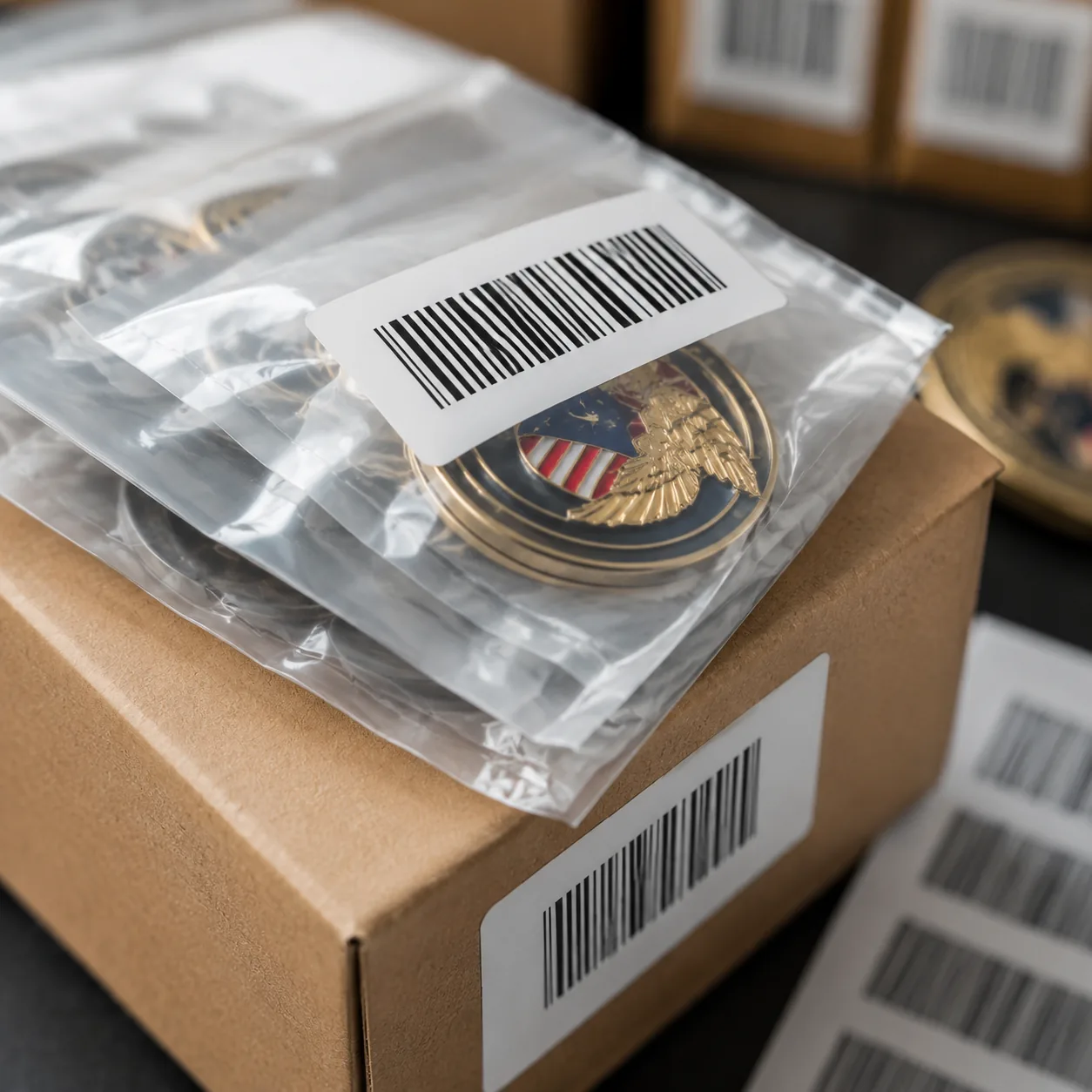
Why cheap pin quotes become expensive after the first QC hold
The most costly pin quote is often not the highest one. It is the low quote built around a standard factory flow when the buyer actually expects staged approvals, cosmetic screening, retained samples and packaging controls that were never priced into the offer. A 35 mm soft enamel pin quoted at USD 0.39-0.46 FOB at 1,000 pieces can realistically land at USD 0.50-0.62 once the program adds a pre-production sample, written AQL limits, plating confirmation, a retained golden sample and a final packaging audit.
That gap shows up most often on museum merchandise, concert merch, employee awards, subscription-box collectibles and retail carded sets where front-face appearance matters more than absolute lowest cost. A buyer may specify size, plating color and clutch type, but leave the QC route vague. The supplier prices normal production; the buyer assumes engineering review, sample photos, lot segregation, cosmetic sorting and outgoing inspection are already included.
For mainstream 30-45 mm stamped iron soft enamel pins or zinc-alloy die-cast pins, a gated QC route usually adds 2-6 working days and USD 60-220 in order-level cost before any remake exposure. If the order also includes backing cards, barcode labels, carton mark checks, assortment counts or third-party inspection, the add-on frequently reaches USD 280-450. On a 100-piece or 200-piece MOQ, that fixed cost has more impact than metal weight, enamel volume or even one extra color.
The right sourcing question is not whether QC costs money. It does. The real question is which hold points prevent a remake, chargeback or missed launch date, and which ones only interrupt line scheduling. On a low-risk event pin, multiple holds can add cost without reducing meaningful risk. On a retail-facing SKU with mirror plating, fine line art and printed packaging, the same holds can prevent a full lot from being unsellable.
Where QC cost actually enters the quote
Inspection labor is rarely the main cost driver. The bigger cost is stop-and-start production. Every pause after artwork, mold cutting, first plating, first fill or pack-out forces the factory to wait for comments, hold WIP and then restart the order. On a 100-300 piece run, that disruption can add more to unit cost than an extra enamel color or upgraded clutch.
Transparent suppliers usually break the quote into predictable components. Vector cleanup is often included, but an engineering redraw that shows thickness, post location, cutout dimensions and tolerance notes commonly adds USD 15-35. New mold charges for a 32-40 mm design typically run USD 45-85 for stamped iron and USD 85-160 for die-cast zinc alloy, with higher charges for deep relief, multiple levels, cutouts or 3D sculpting. A physical pre-production sample usually adds USD 35-70 on an existing mold or USD 75-150 on a new mold, plus courier at roughly USD 25-45 and 2-5 transit days.
Third-party inspection is another hidden line item. In common production clusters such as Dongguan, Zhongshan and Wenzhou, a one-man-day final random inspection for small hardgoods typically costs USD 180-320. A packaging audit, barcode scan check, carton drop test or 100 percent visual sort costs more if the lot is split across SKUs, assortments or retailer-specific labels. For low-value promo pins, that spend can be disproportionate. For a retail program with chargeback risk, it is often justified.
Finish requirements also change price. If a buyer asks for shiny nickel, black dye black nickel, imitation gold or antique brass without specifying the functional target, most factories quote a decorative plating system. On custom pins, flash decorative finishes are commonly around 0.03-0.08 microns for gold-tone topcoat, with nickel undercoat around 0.5-1.0 microns. If the buyer specifies 1.2-1.5 microns nickel undercoat, or requests 24-48 hour neutral salt spray resistance on a low-cost promo item, cost rises and rejection risk rises with it because thicker deposits make pits, edge roughness and polishing marks more visible.
MOQ tiers: when extra QC stops making financial sense
QC intensity needs to match the order size. On a 100-piece order for a 32 mm soft enamel pin packed in individual OPP bags, adding a metal sample, Pantone confirmation, final AQL inspection and carton drop testing can double the administrative handling around a tiny run. The resulting unit price may look irrational beside a 500-piece order, but the difference usually comes from fixed setup and review cost, not excessive factory margin.
For new designs, MOQ planning is less about the supplier's formal minimum and more about the volume at which QC overhead spreads efficiently. At 100-199 pieces, buyers should usually choose one major gate only: either a physical sample or a defined final inspection standard. At 200-499 pieces, one upstream hold point becomes economical because the order can absorb the sample and review cost. Above 1,000 pieces, it is usually worth locking a written cosmetic standard, a retained golden sample and a final AQL plan, especially for retail-facing or repeat SKUs.
| Order tier | Typical use case | Reasonable QC route | Typical FOB unit range |
|---|---|---|---|
| 100-199 pcs | Pilot run, VIP event, internal launch | Artwork approval plus final in-house visual QC | USD 0.60-1.20 |
| 200-499 pcs | Team merch, regional promo, club sales | One physical sample plus final in-house QC | USD 0.42-0.90 |
| 500-999 pcs | Campaign run, distributor reorder | Physical sample, one inline check, AQL final | USD 0.31-0.72 |
| 1,000-3,000 pcs | Retail program, chain rollout, e-commerce stock | Golden sample, inline hold point, AQL final, pack audit | USD 0.22-0.56 |
These ranges assume a standard 30-40 mm design in stamped iron or zinc alloy, 1.2-1.5 mm body thickness, 2-4 enamel colors, one butterfly clutch and export master-carton packing. Common adders are USD 0.02-0.05 per piece for rubber clutches, USD 0.04-0.10 for printed backing cards, USD 0.08-0.18 for deluxe metal clutches, and USD 0.18-0.60 for gift-box packing depending on insert style and box size. At very low MOQs, strict QC should be budgeted as risk-control overhead, not as a unit-cost optimization tool.
Lead-time math: which hold points add hours and which add days
Buyers often overestimate machine time and underestimate waiting time. A straightforward pin order may need only a few working days for tool making, stamping or casting, polishing, plating, color fill, baking and pack-out. The longer lead time usually comes from waiting for comments, shipping samples, collecting internal approvals and rebuilding samples after specification changes.
A realistic non-rush timeline for a new custom pin is: artwork proof in 1-2 working days, mold making in 3-5 days, first sample build in 2-4 days if required, and bulk production in 7-12 working days after approval for standard quantities. If the project includes printed backing cards, barcode labels, suffocation warnings, assortments or retail inserts, add 1-3 working days. In peak seasons before trade shows, holidays or major fan-merch launches, bulk production often stretches to 12-18 working days because plating lines and packing stations become the bottleneck.
Not all QC holds create the same delay. A same-day photo approval after first plating typically adds only 0.5-1 working day. A hold after first enamel fill usually adds 1-2 days because refill, oven curing and color adjustment are batch operations. A physical pre-production sample adds around 5-8 days if approved from factory photos once made, or 8-12 days if the buyer wants the actual sample couriered, reviewed internally and then signed off. Slow customs clearance can push total sample delay beyond two weeks.
Final third-party inspection is usually a one-day on-site event, but the calendar effect depends on the result. If the lot passes, shipment may release within 1-2 days. If it fails for major appearance defects, count shortages, mixed finishes or packaging errors, lead time can slip by another 3-10 days while the supplier sorts, reworks, remakes or repacks and then books re-inspection.
| QC step | Typical added time | Main benefit | When to skip |
|---|---|---|---|
| Physical pre-production sample | 5-8 days | Confirms relief depth, enamel layout, plating tone and clutch placement | Skip on exact repeat orders with an approved retained sample |
| Photo hold after plating | 0.5-1 day | Catches finish mismatch before filling and final packing | Skip on low-risk standard shiny nickel or black dye jobs |
| Inline enamel check | 1-2 days | Prevents large-batch underfill, dust, overflow or color drift | Skip on simple one-color giveaway pins |
| Final AQL inspection | 1-3 days | Controls outgoing defect rate before shipment release | Skip only on low-value urgent orders using accepted factory standard |
AQL, tolerances and cosmetic limits that actually move price
AQL is one of the clearest buyer requirements that changes cost without changing the drawing. Many buyers ask for good quality but never define defect acceptance, so the supplier applies its normal outgoing standard. That may be acceptable for giveaways, but too loose for collector sets, museum retail or chain-store hanging cards.
For custom pins, a common working standard is critical defects at zero acceptance, major defects at AQL 2.5 and minor defects at AQL 4.0. Tightening that to major 1.5 and minor 2.5, or even 1.0 and 1.5, increases sorting time and sharply raises the chance of 100 percent screening, rework or remake. On basic matte or shiny soft enamel, the cost increase may stay manageable. On glitter enamel, transparent enamel, screen-printed details or imitation hard enamel with polished surfaces, reject rates rise faster because cosmetic consistency is harder to hold lot to lot.
Tolerance language matters the same way. On many stamped or die-cast pins, practical overall size tolerance is about plus or minus 0.15-0.25 mm, and body thickness tolerance is often plus or minus 0.10-0.15 mm depending on geometry and process. Post location or attachment centering often needs control within plus or minus 0.20-0.30 mm if the pin must sit straight or align precisely on a backing card. Requiring plus or minus 0.05 mm on the outer profile, perfectly uniform enamel height in every recess and exact Pantone appearance across different production days is usually unrealistic for a mainstream promo pin.
The better approach is to specify visible and measurable limits. Examples that factories can price and inspect against include: no exposed base metal on the front face at 30 cm viewing distance under 500-1,000 lux indoor light; no scratches longer than 2 mm on mirror-polished areas; enamel underfill not more than 0.10 mm below the metal line on the front face; back post centering within 0.5 mm; and backing-card print registration within 1.0 mm where a border is visible. Measurable language moves price predictably. Generic instructions such as premium quality do not.
The respec triggers that hit pin programs most often
The most expensive QC event is usually not a failed final inspection. It is a mid-order respec after production has already started. That often happens when artwork is approved quickly, then expectations change after a plated sample arrives, a stakeholder compares the item to a competitor product, or late comments appear from marketing or retail operations.
Common change requests include switching soft enamel to imitation hard enamel, changing black dye to shiny nickel, increasing thickness from 1.2 mm to 1.8-2.0 mm, moving from one post to two posts, or changing from a butterfly clutch to a rubber or locking clutch. Each change affects more than raw material cost. A thickness increase changes weight, mold depth, polish time and sometimes side-wall plating quality. A finish change affects contrast, fingerprint visibility and scratch visibility. A switch to imitation hard enamel adds extra fill, bake and polish steps, along with flatter surface expectations.
If the change happens after mold completion, buyers should expect either a tooling revision fee or a new mold charge, not just a revised unit price. If the change happens after sample approval or after bulk plating, the risk becomes partial remake, dead stock or mixed lots that cannot ship together. That is why freeze points matter: one freeze for artwork and dimensions, one for finish and color, and one for packaging. If internal stakeholders want flexibility, it is usually cheaper to budget one limited revision round before production than to renegotiate once parts are already plated, filled or carded.
Buyer checklist: reduce risk without buying avoidable delay
- For orders under 300 pieces, choose one main QC gate only: physical sample approval or final inspection.
- For new molds, freeze size, thickness, edge style, attachment position and plating before tool cutting starts.
- State whether plating is decorative only or whether a heavier nickel undercoat or corrosion target is required.
- Use AQL terms only if you are prepared to pay for sorting, rework, remake or re-inspection when a lot fails.
- Ask for a retained golden sample on orders above 500 pieces, retail programs or any repeat SKU.
- Define viewing conditions for cosmetic defects, such as 30 cm to arm's length under normal indoor lighting.
- Separate critical, major and minor defects so the factory does not oversort trivial appearance issues.
- Lock packaging early because backing-card alignment, barcodes, suffocation warnings and assortment counts create frequent late delays.
How to quote a pin program without buying avoidable delay
Start by classifying the order as one of three types: low-risk giveaway, branded promotional stock or retail-sensitive product. Then match the QC route to that risk level. A giveaway pin usually needs only an approved proof, standard factory outgoing inspection and simple OPP-bag packing. A retail-sensitive SKU often justifies a physical sample, written cosmetic criteria, retained golden sample, final AQL inspection and a packaging audit before shipment release.
When collecting quotes, ask each supplier to split base unit cost from QC-related adders. Request separate lines for mold charge, sample charge, packaging charge, inspection charge, rush surcharge, revision assumptions and any remake exposure if the specification changes after approval. This makes offers comparable and prevents the common situation where one quote looks cheaper only because it excludes the approval route the buyer actually needs.
A practical RFQ method is to request three scenarios on the same design: standard production, sample plus final inspection, and retail-ready with packaging audit. On a 1,000-piece, 35 mm soft enamel pin, those three routes may differ by only USD 0.04-0.12 per piece, but by 3-8 working days in lead time. That trade-off is easy to manage when visible before PO placement; it becomes expensive when it appears after tooling starts.
Finally, control buyer-side response time. If the supplier returns artwork in 24 hours but internal approval takes 3-4 days at every hold point, the schedule slip is no longer a factory issue. For most custom pin programs, the best outcome comes from a short written specification, one accountable approver, no more than two formal QC gates before shipment, and defect language tied to measurable conditions. That protects appearance quality without turning a simple metal promo item into a slow, over-engineered project.
Have a project? Send your artwork and target quantity and we’ll reply with a detailed quotation within 12 working hours.
Ready to get this made?
Send your sketch, target quantity and ship-date. Detailed quotation in 12 hours.



