QC-Driven Respec Workflow for Custom Metal Giveaways in 2026
Why clear RFQs still fail in bulk production
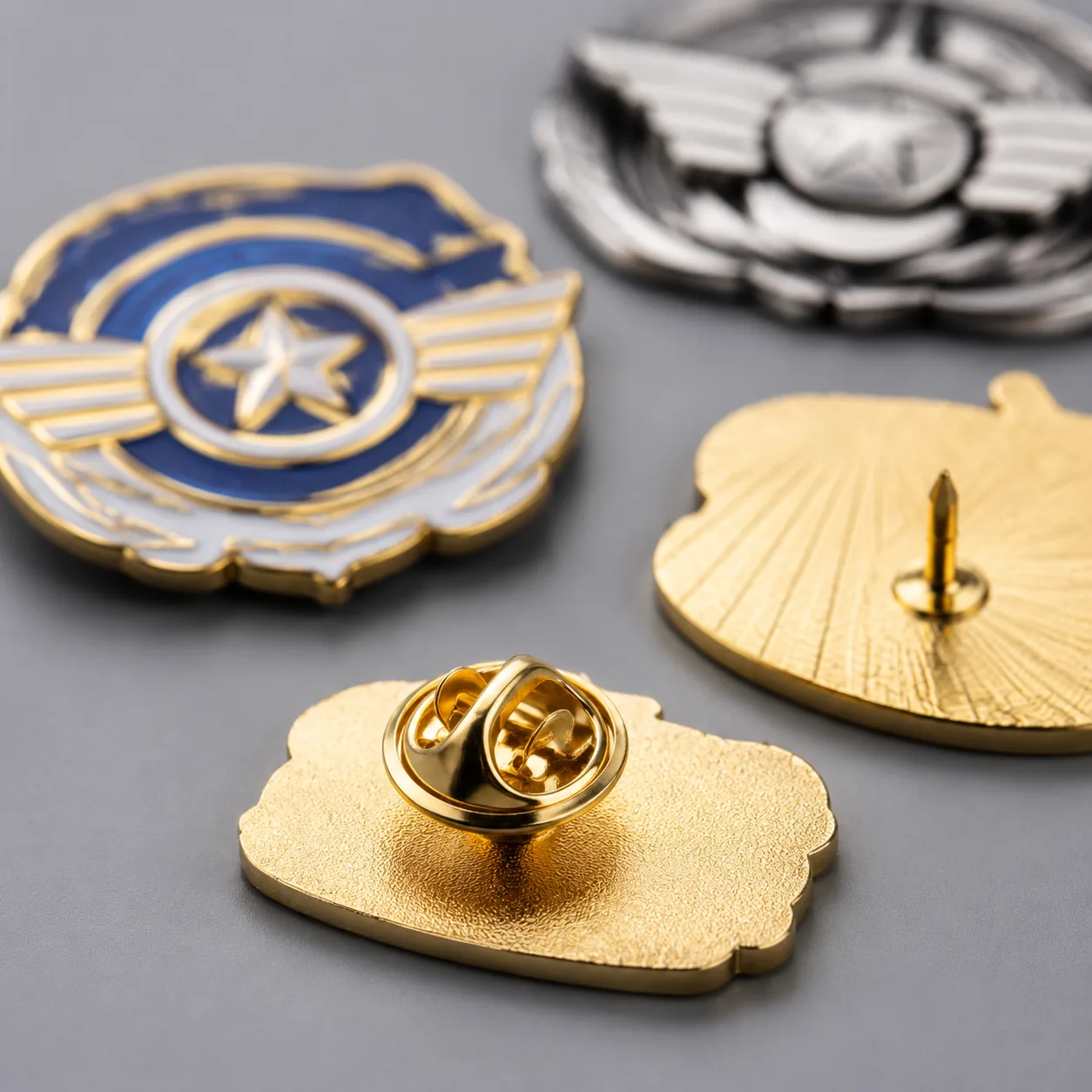
A detailed RFQ can still produce bad bulk goods because most quote-stage documents are written to secure pricing, not to control manufacturing. The artwork may be correct, but the production standard is still open. That is when avoidable problems appear at sample or final inspection: gold tone too yellow versus brand expectation, soft enamel sunk below borders, pin posts rotated or placed too close together, magnet pull too weak for the intended substrate, or a keychain jump ring opening after light use.
The practical fix is staged respecification. For custom pins, coins, badges, magnets and keychains, each QC gate should add measurable limits based on new evidence. RFQ opens the commercial discussion. Engineering proof freezes geometry and process route. Pre-production sample resets the spec around what the chosen process actually delivered. Golden sample converts acceptance into a defect dictionary. Final inspection release then applies AQL, test methods and carton rules against that revised packet.
A simple operating rule works: every time a new physical reference appears, rewrite the specification in measurable terms. Replace vague words like "good plating," "strong magnet" or "nice finish" with numbers and pass/fail criteria: tolerances in mm, plating undercoat in microns, pull force in kgf, maximum ring gap in mm, light source for visual checks, packaging material thickness, carton gross weight, and defect classes. Most bulk-order surprises happen where that conversion was skipped.
1) RFQ for price, but log every QC variable that is still open
At RFQ stage, buyers often overspecify visual points that cannot yet be validated and underspecify the few variables that actually drive tooling, reject rate and FOB cost. A quote-ready RFQ should define product family, process route, nominal size, thickness, finish, attachment, packaging style, quantity, and use environment. It should also state what is still assumed rather than fixed.
A stronger RFQ line is specific enough to price, but honest about what will be tightened later. Example: zinc alloy die-cast keychain, 45.0 mm body width, 3.0 mm nominal body thickness, bright nickel finish, integral loop plus 4 curb links, split ring 32.0 mm OD x 1.6 mm wire, individual self-seal OPP bag 0.04 mm, order qty 3,000 pcs, indoor promotional use, no salt-spray requirement unless added in final release. That gives the supplier a cost basis without implying jewelry-grade durability.
Quote-stage assumptions should be written down. For custom metal giveaways, workable starting points are: overall size tolerance +/-0.20 mm for stamped parts under 50 mm and +/-0.30 mm for die-cast parts; thickness tolerance +/-0.15 mm stamped and +/-0.20 mm cast; minimum raised metal line width 0.25 mm for soft enamel and 0.35 mm for die-cast recessed detail; decorative plating color controlled by approved sample or visual reference; and enamel fill level subject to sample approval. If you need tighter post location, heavier undercoat, stronger magnet grade, lower AQL or retail-pack drop performance, declare it before quoting because it changes process, inspection labor and lead time.
- Typical MOQ by design: stamped iron pins/badges 100-300 pcs; die-cast zinc keychains 100-300 pcs; challenge coins 100 pcs; metal-face fridge magnets with bonded ferrite 200-500 pcs; NdFeB magnet versions often 200 pcs due to magnet sourcing and assembly
- Indicative FOB ranges: 30 mm soft enamel iron pin at 500 pcs USD 0.40-0.78; 45 mm zinc alloy keychain at 1,000 pcs USD 0.88-1.65; 50 mm challenge coin at 500 pcs USD 1.25-2.90; 60 mm antique coin with cutout and edge detail at 300 pcs USD 2.30-4.40
- Typical lead times from approved artwork: engineering proof 1-3 days; pre-production sample 7-10 days stamped, 10-14 days die-cast; bulk production 12-20 days after sample approval; add 2-5 days for carding, barcode labels, mixed-set kitting or retail blister assembly
Close the RFQ with a risk register. List Pantone targets, expected substrate for magnet testing, attachment pull requirement, split-ring wire diameter, plating undercoat, corrosion expectation, barcode format, unit pack, master carton weight limit, and any 100% screening points. That list becomes the agenda for the next revision instead of leaving the factory to infer the standard.
2) Turn artwork into an engineering proof with release dimensions and process notes
After pricing is accepted, the artwork proof must become an engineering proof. Approving only shape and color leaves critical decisions open on the factory floor: relief depth, edge break, post coordinates, loop geometry, solder location, chain hardware and assembly sequence. A usable engineering proof names measurable features and identifies the intended process route.
For pins and badges, specify overall dimensions, base metal, nominal stock or cast thickness, finished thickness, rim width, recessed depth, attachment coordinates from two datums, post diameter and clutch type. Example: 32.0 mm W x 28.0 mm H, iron stamping 1.5 mm stock, finished thickness 1.80 mm +/-0.15 mm, raised rim 0.35 mm minimum, recess depth 0.25-0.35 mm, two posts dia 0.95 +/-0.05 mm, centers 8.0 mm from top edge and 10.0/22.0 mm from left edge, brass butterfly clutches, no epoxy dome. If anti-rotation matters, specify post spacing minimum 12.0 mm center-to-center where design allows.
For coins, add edge style, relief depth, flatness, and cutout or spinner geometry. Example: 50.0 mm challenge coin, zinc alloy die-cast, finished thickness 3.00 mm +/-0.20 mm, front/back relief depth 0.40-0.60 mm, oblique reeded edge, antique brass finish with dark wash, no color fill, flatness gap not over 0.50 mm on a glass plate. For cutout designs, also define minimum bridge width, for example 1.20 mm, so thin areas do not distort after polishing.
For keychains, define loop ID, link count, jump-ring closure method, and split-ring dimensions. Example: 45.0 mm body, integral top loop 5.5 mm ID, 4 curb links, welded jump ring 6.0 mm OD x 1.2 mm wire, split ring 32.0 mm OD x 1.6 mm wire, free rotation required after assembly with no binding through 360 degrees. If a non-welded jump ring is used for cost reasons, specify maximum post-assembly gap and retention test level.
Plating should be specified as a process expectation, not only a color name. Decorative promo plating is thin. Typical top decorative layer is about 0.03-0.10 micron, while nickel undercoat is commonly 0.3-1.0 micron depending on base metal and finish route. If appearance stability matters, ask for nickel undercoat minimum 0.8 micron on bright nickel or imitation gold finishes. If abrasion or sweat exposure matters, standard promo plating may be insufficient; upgrade the route instead of assuming decorative plating will survive key-on-key wear.
| Feature | Quote Stage | Engineering Proof Stage | Golden Sample Stage |
|---|---|---|---|
| Overall size | Nominal only, e.g. 40 mm | 40.0 +/-0.20 mm stamped or +/-0.30 mm cast | Measure 5 pcs with calibrated digital caliper; record actual range |
| Finished thickness | Nominal only, e.g. 2.0 mm | 2.0 +/-0.15 mm stamped; +/-0.20 mm cast | Check center and edge points on sample and first-off |
| Plating | Shiny gold | Approved tone reference; nickel undercoat 0.5-1.0 micron if required | Visual pass under 5000-6500K light at 30-40 cm; cross-check against master sample |
| Attachment | Butterfly clutch | Post dia 0.90-1.05 mm; position fixed from two datums | Pull, alignment and anti-rotation check on sample pcs |
| Enamel/recess | Soft enamel | Raised line min 0.25 mm; recess depth 0.25-0.35 mm | Approve realistic sink/meniscus limit from physical sample |
| Packaging | Polybag | Self-seal OPP bag 0.04 mm; tissue wrap if scratch risk | Count check, barcode verification, rub/drop check |
| Inspection | General visual | Critical 0, Major AQL 2.5, Minor AQL 4.0 unless revised | Release by defect dictionary plus sampling plan |
3) Use the first sample to reset specs around real process capability
The pre-production sample is the best point to tighten the specification around real output. This is where buyers should stop writing theory and start writing controls based on evidence. If a soft enamel pin shows a consistent meniscus 0.05-0.10 mm below the metal line, that becomes the acceptable range. If a die-cast keychain feels sharp at the outer edge, this is when to specify tumble time, buffed zones, or a target edge break such as R0.15-R0.30 mm on exposed perimeter edges.
Do not approve with "looks good overall." Mark the sample in three groups: freeze, correct, and monitor. Freeze means dimensions, logo placement, process route, hardware family, and unit pack are locked. Correct means mandatory changes before bulk—for example moving a second pin post 3.0 mm outward to reduce rotation, increasing a magnet from 1.5 mm to 2.0 mm thickness, changing bonded ferrite to N35 NdFeB for a minimum pull requirement, increasing split-ring wire from 1.4 mm to 1.6 mm, or enlarging a loop ID from 4.5 mm to 5.5 mm to reduce assembly stress. Monitor means accepted but naturally variable items such as antique wash darkness, matte texture, glitter density, or slight backside polish haze.
Magnets especially need sample-stage respecification because performance depends on substrate. A pull force that feels adequate on 0.8 mm painted steel may fail on 0.5 mm powder-coated sheet or on stainless-like decorative panels with poor magnetic response. Write the actual test condition: minimum 0.9 kgf pull on 0.8 mm painted low-carbon steel with full-surface contact after 24-hour adhesive cure. Without that, "strong magnet" is meaningless.
Packaging should also be revised at this stage based on actual product behavior. If polished coins scratch in shared bags, move to individual OPP bags or tissue sleeves. If a gift set allows metal-to-metal contact, add EVA tray, blister cavity or paper partition. Typical FOB adds are modest: about USD 0.03-0.06 per OPP bag, USD 0.05-0.12 for tissue sleeve or card insert, and USD 0.12-0.25 for EVA or blister protection. That is cheaper than sorting and repacking after arrival.
4) Build a defect dictionary before approving the golden sample
AQL is only a sampling method. It does not define what a defect is. The defect dictionary is where buyer and factory align on failure modes, viewing conditions, measurable limits and severity. Without it, sales, production and QC often work from different definitions of "acceptable."
Good defect definitions are product-specific. For shiny plated pins, any front-face scratch visible at 30 cm under 5000-6500K white light is Major; backside scratch under 2.0 mm is Minor if base metal is not exposed. For soft enamel, exposed base metal in a color cell is Major; meniscus variation up to 0.10 mm below the metal line may be Minor if normal-view appearance remains even. For challenge coins, reeded edge drift visible over more than 10% of the perimeter is Major. For keychains, jump-ring gap over 0.30 mm after assembly is Major; burr that can catch skin or fabric is Major, and if it can cut the user it is Critical.
The golden sample pack should include the approved physical sample, annotated photos, final engineering proof, approved packaging sample, carton mark artwork, and defect dictionary under one revision code. Keep one controlled set with the buyer and one at the supplier QC station. If a third-party inspector will be used, send the same packet before the inspection booking, not on inspection day.
- Critical defects: detached sharp post, missing magnet, broken split ring, wrong barcode or SKU, wrong design packed in correct carton, plating peel creating a sharp edge, mixed origin label where regulated text is required
- Major defects: wrong color family, obvious front scratch, crooked attachment, major enamel underfill, wrong hardware finish, jump-ring gap above limit, failed magnet pull requirement, offset print on retail card
- Minor defects: light backside mark, slight antique-tone shift within approved range, tiny side burr after deburr process, small backside polish haze not visible in normal use
5) Set bulk inspection by failure mode, then apply AQL and 100% screening
Writing "AQL 2.5" is not enough. Inspectors need to know what to measure, what to test, what to classify, and which points require 100% screening. The right inspection plan starts with the top failure modes for each product family.
For pins and badges, the highest-risk points are post alignment, solder strength, clutch fit, front-face cosmetics and sharp edges. For keychains, check split-ring spring-back, jump-ring closure, chain weld integrity and plating wear on friction points. For magnets, test magnet presence, adhesive bond after cure, and actual pull force on the defined substrate. For coins, focus on edge consistency, front/back orientation, relief fill, and flatness if the item is sold as a collector piece.
For lots of 1,001-3,200 pcs, a practical final random inspection often uses single sampling under ANSI/ASQ Z1.4 General Level II with Critical 0, Major AQL 2.5 and Minor AQL 4.0. But that should be combined with 100% in-line screening for the top one or two failure modes. Examples: 100% ring-gap check for keychains, 100% solder-position check for dual-post badges, 100% magnet-presence check, 100% front/back orientation check for double-sided coins, or 100% barcode scan verification for multi-SKU retail packs. Premium collector or reseller channels should usually tighten Major to 1.5 and increase in-process checks instead of relying only on final inspection.
Useful test references: post pull test 3-5 kgf for soldered pin posts depending on part size and number of posts; keychain jump-ring retention 2-3 kgf without opening; split-ring closure gap max 0.20-0.30 mm after assembly; magnet adhesive bond checked after minimum 24-hour cure; tape test on UV print, epoxy labels or inserts where used; and visual plating inspection under standardized white light. If corrosion performance matters, write a realistic expectation such as 12-24 hours neutral salt spray for decorative hardware, understanding that promo-grade finishes are not equivalent to engineered corrosion-resistant plating systems.
6) Respec unit packing and carton packing after carton math is known
Many projects pass product inspection and still fail in freight. Carton compression, humidity, abrasion and mixed-SKU errors can undo acceptable manufacturing. Freight release should therefore happen only after unit pack is confirmed and carton quantities are recalculated from the actual packed dimensions.
For small metal giveaways, a practical master-carton target is usually 8-12 kg gross using 5-ply export cartons. For bright nickel, silver-tone and black nickel finishes shipping by sea in humid conditions, add desiccant and sealed inner bags because these finishes show tarnish and rub marks faster than antique finishes. For carded pins, check whether pin points or clutches emboss adjacent cards under stack pressure; if they do, add pad sheets, reduce stack height, reverse clutch orientation or change blister height.
Label control is part of QC, not admin. Carton marks should state PO number, SKU, design code, quantity, carton sequence, net/gross weight and country of origin in exact format. If multiple designs are visually similar, require inner-bag labels at least 25 x 40 mm with human-readable SKU and, where needed, barcode. Scan-test at least one label per SKU before sealing masters. Mixed-design claims are often caused by weak inner labeling, not by production defects.
7) Release mass production only when the revised spec packet is complete
A sample that looks acceptable is not enough to release bulk. Production should start only when the revised packet is complete, internally consistent and version-controlled. That packet should include the commercial quote, final engineering proof, approved sample photos, golden sample decision, defect dictionary, inspection plan, packaging spec and carton mark layout under one revision code or date.
The highest-value release check is simple: do all documents describe the same product? Confirm that the approved sample still matches the quoted process, that any hardware or packaging upgrades are reflected in price and lead time, that carton quantity still works after pack changes, and that QC limits in the final plan match what was actually approved. A 15-minute document review before bulk can prevent a 10-15 day remake.
- Confirm all RFQ risks are closed or accepted in writing before bulk start
- Verify sample-to-proof match on size, hardware, finish, attachment location and packaging
- Lock measurable limits: tolerances, micron targets, pull tests, gap limits, AQL and defect definitions
- Confirm production lead time and pack-out lead time in days, including added days for carding, labels, barcode scans or mixed sets
- Build at least 7 buffer days before event deadlines for inspection, remake risk or freight handover delay
For standard custom metal promotional orders, once the revised packet is locked, bulk production typically runs 12-20 days after sample approval, plus 2-5 days for retail carding, serial sorting, barcode labels or mixed-set kitting. If delivery is tied to an event date, reserve at least 7 extra days for inspection fallout, partial remake or logistics delay.
On repeat programs, do not try to perfect everything in the first RFQ. Start with a quote-ready spec, then run two formal respec rounds: after engineering proof and after the pre-production sample. After several projects, the buyer’s defect dictionary, test thresholds, plating expectations and carton standards become reusable purchasing assets. That shortens approvals, improves supplier consistency and reduces claim risk even when the artwork changes.
Have a project? Send your artwork and target quantity and we’ll reply with a detailed quotation within 12 working hours.
Ready to get this made?
Send your sketch, target quantity and ship-date. Detailed quotation in 12 hours.



