PVC Promo Products: Specs for Keychains, Patches and Magnets
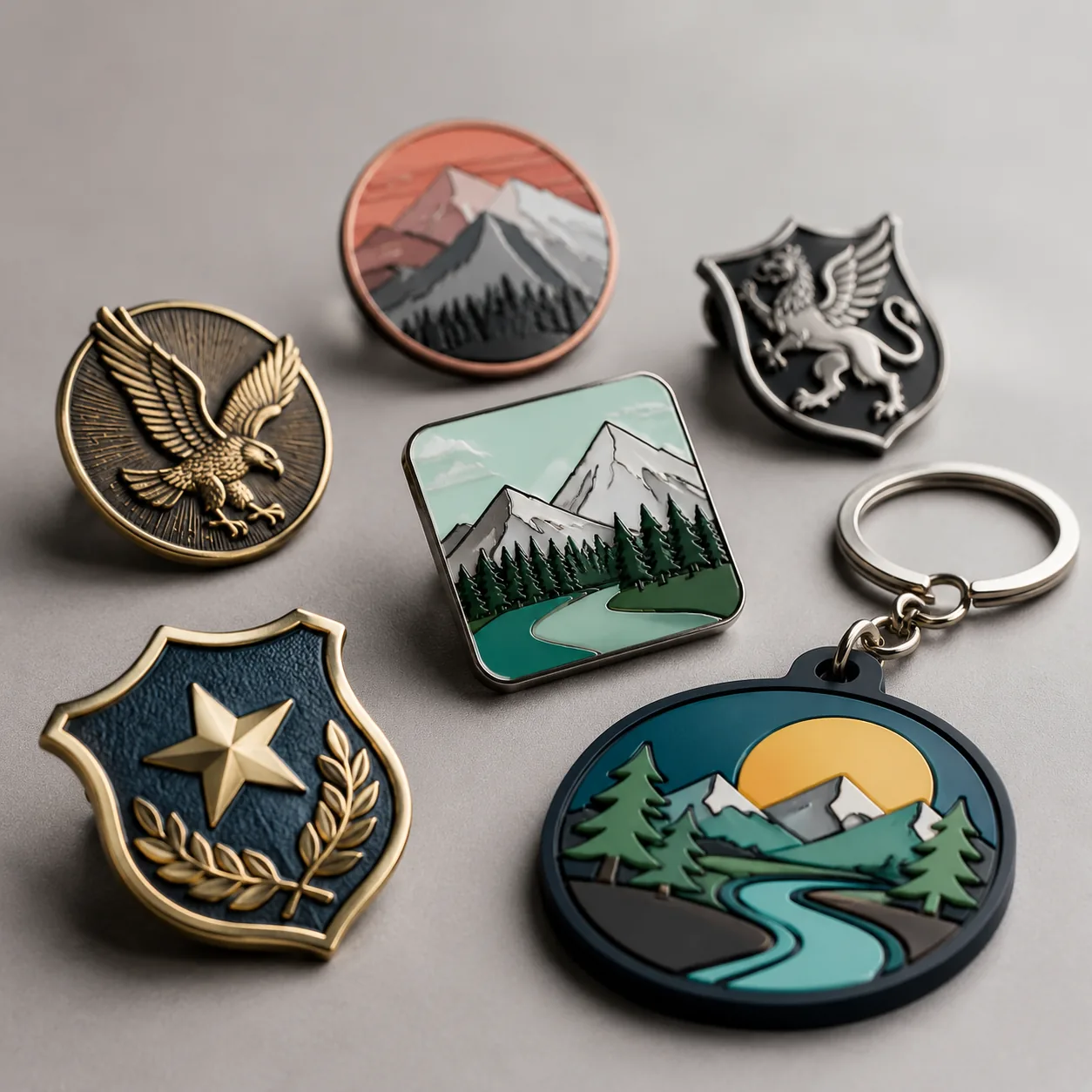
The buyer problem: PVC looks simple until it bends, smells, or stains packaging
PVC is often chosen because it delivers bold color, soft edges, and lower cost than die-cast metal for medium and large shapes. The trouble starts when a purchase order only says soft PVC keychain, 60 mm, 5 colors. That leaves the factory to guess hardness, relief height, backing thickness, magnet grade, pull strength, packaging film, and whether the item must sit against white paper, fabric, or painted metal for weeks.
The risk is not that PVC is hard to make well. The risk is that flexible plastic behaves differently from zinc alloy, iron, brass, or embroidered fabric. PVC can warp if it is too thin, trap odor if curing is rushed, collect dust if the compound is too soft, and transfer color onto light packaging if pigments and plasticizer are not controlled. Those failures usually appear after approval, not during the mockup phase.
At ZheCraft, we most often see PVC used for rubber-style keychains, luggage tags, patch badges, fridge magnets, zipper pulls, and mixed promo sets with lanyards or pins. This guide focuses on the specs that reduce sampling loops and bulk rework, not on generic material descriptions.
Choose PVC only when its trade-offs fit the use case
Soft PVC fits designs that need thick color blocks, raised cartoon shapes, rounded edges, or a flexible hand feel. Typical finished thickness is 3.0 to 5.0 mm for keychains, 2.0 to 4.0 mm for patches, and 3.0 to 6.0 mm for fridge magnets depending on the backing. For molded parts under 80 mm, a dimensional tolerance of plus or minus 0.5 mm on length and width, and plus or minus 0.3 mm on thickness, is realistic in production.
Do not choose PVC when the brand needs a premium metallic surface, mirror plating, very fine serif text, thin raised borders below 0.6 mm, or a rigid coin-like feel. Metal enamel pins and challenge coins hold sharper edges and cleaner plating lines. Woven patches also reproduce small lettering better when the logo includes multiple words or text under 4 mm high.
PVC is not the safest default for long-term outdoor exposure in very hot climates. UV-stable pigments and harder compounds help, but direct sun, car dashboards, and high-humidity storage can still accelerate discoloration or surface tackiness. If the product will sell as a retail accessory instead of a short-cycle giveaway, specify a higher hardness, a colorfastness target, and a storage temperature limit.
| PVC item | Recommended size / build | Common hardness | Typical FOB at 1,000 pcs |
|---|---|---|---|
| Keychain, 50 to 70 mm | 3.5 to 5.0 mm thick | 60 to 75 Shore A | USD 0.55 to 1.25 |
| Patch, 60 to 90 mm | 2.5 to 4.0 mm thick | 70 to 80 Shore A | USD 0.70 to 1.60 |
| Fridge magnet, 50 to 80 mm | 3.0 to 5.0 mm body + magnet | 65 to 75 Shore A | USD 0.60 to 1.45 |
| Luggage tag, 80 to 110 mm | 5.0 to 6.0 mm thick | 70 to 85 Shore A | USD 1.20 to 2.80 |
Set hardness, thickness, and relief before discussing price
PVC hardness is normally specified in Shore A. For soft-touch keychains, 60 to 70 Shore A is common. For patches that must keep a crisp outline on bags or uniforms, 70 to 80 Shore A is better. Below 55 Shore A, the part may feel pleasant in hand but can stretch around hardware holes, attract lint, and deform faster in warm cartons.
Thickness should match both the size and the mounting method. A 50 mm keychain can work at 3.5 mm total thickness, but an 85 mm luggage tag usually needs 5.0 to 6.0 mm to resist bending. PVC patches with sew-on channels usually need at least 2.5 mm total thickness, with a recessed sew line 1.0 to 1.5 mm wide and at least 0.8 mm of material remaining below the channel so the edge does not tear.
Relief height is where many artwork files fail. Raised areas of 0.5 to 1.2 mm are practical for most logos. Borders should be at least 0.8 mm wide, and recessed color fields should normally be no narrower than 1.0 mm. If the buyer wants a 3D cartoon effect, allow 1.5 to 2.5 mm of height difference, but expect a thicker mold, slower cycle time, and a higher unit price.
For fine details, keep text stroke width above 0.35 mm on the mold file and avoid isolated islands smaller than 1.0 mm across. In practice, a two-color logo with large blocks will hold up better than a six-color logo packed with tiny cutouts, even if both fit inside the same overall size.
Color count, mold complexity, and MOQ drive the real cost
PVC pricing is driven less by material weight than many buyers expect. Mold time, number of colors, manual color filling, trimming, hardware assembly, and inspection usually matter more. A simple 2D PVC keychain with 4 colors is much faster to run than a 10-color design with many isolated islands, even if both are the same size and use the same hardware.
For standard custom PVC items, practical MOQ is usually 300 pcs for a simple shape, 500 pcs for multi-color keychains or patches, and 1,000 pcs when the design requires custom magnet cutting, special hardware, or retail packaging. Trial runs below 300 pcs are possible, but mold cost spreads poorly and the unit price can approach the 1,000 pc price of a more complex design.
As a working estimate, simple 2D mold and setup cost often falls in the USD 50 to 180 range, while complex 3D or oversized pieces can run USD 150 to 400. Production lead time after sample approval is commonly 10 to 15 days for 500 to 2,000 pcs, 15 to 22 days for larger multi-color runs, and 20 to 30 days if the order combines PVC with custom backing cards, barcode stickers, or carton-level kitting.
A buyer asking for 800 pcs of a 60 mm, 5-color keychain with split ring hardware should expect a lower per-piece price than a 250 pcs run of the same design. If the same item adds a full-color backing card, individual OPP bag, and retail header card, the packaging often adds more cost than the PVC body itself.
Specify hardware and attachment as part of the PVC body, not as an afterthought
For PVC keychains, the hole area is structural, not decorative. The PVC around a metal eyelet or chain hole should have at least 3.0 mm of material from the hole edge to the outer edge. For a standard 25 mm split ring with short chain, a 4.0 to 5.0 mm reinforced tab is more reliable than a thin ornamental loop.
Common hardware includes 25 mm or 30 mm split rings, 6 to 8 mm jump rings, ball chains, lobster clasps, and swivel hooks. For promotional use, nickel-plated iron hardware is economical, while stainless steel or zinc alloy hooks cost more but resist rust better. If the item will attach to bags or zippers, request a pull test of at least 5 kg for small keychains and 8 kg for luggage tags or zipper pulls.
PVC patches need their own attachment decision. Sew-on channels are clean and durable but require end-user stitching. Hook-and-loop backing adds about USD 0.15 to 0.45 per piece depending on size and lets event staff replace badges quickly. Adhesive backing is convenient for packaging but is not reliable for fabric after washing, heat, or repeated bending.
Packaging should be specified in thickness as well as format. A practical individual bag is 40 to 60 micron OPP or CPP, while backing cards are often 300 to 400 gsm paperboard. If the PVC touches printed paper, request low-migration ink and a barrier layer or interleaf to reduce staining during storage.
Control odor, color migration, and storage conditions early
A strong plastic smell usually comes from compound choice, pigment load, curing time, or sealing the product too soon after production. Buyers should not write odorless PVC because that is not realistic. A better specification is low odor after 24 hours airing, individual packing only after full cooling, and no strong odor detectable at 30 cm when the inner bag is opened.
Color migration is the hidden failure that appears after delivery. Dark red, black, and navy PVC can stain white backing cards, light fabric, or soft-touch coated boxes when stored under pressure and heat. If the product touches white paper or textile, request a migration test: 48 hours at 50 degrees Celsius under light pressure, with no visible stain on the contact material.
Storage also matters. Finished PVC goods should be packed dry, kept away from direct sun, and stored below 35 degrees Celsius when possible. For sea freight, avoid over-compressed cartons; a carton under 15 kg is easier to handle and reduces deformation risk. If the piece has a large flat face, use interleaving paper or individual OPP bags so raised areas do not emboss neighboring pieces.
For magnet products, specify the magnet backing rather than assuming one standard. Ferrite sheet is cheaper and usually 0.4 to 0.8 mm thick for light promotional use. If stronger holding force is needed, ask for a 1.5 to 2.0 mm ferrite magnet or a flexible magnetic sheet with a stated pull target, especially when the piece must hold paper on a painted steel board.
Write inspection criteria that match flexible molded parts
PVC inspection should not copy metal-pin criteria exactly. Flexible molded items naturally have small gate marks, trimming lines, and slight surface texture variation. A fair visual inspection distance is 30 to 40 cm under normal light, while critical logo text, missing colors, major shape errors, and hardware defects should be checked more tightly.
For general promotional orders, AQL 2.5 for major defects and AQL 4.0 for minor defects is a practical default. Critical defects should be zero tolerance, including sharp exposed wire, loose small magnets, broken rings, severe odor, wrong logo, unsafe metal burrs, or packaging that mixes customer SKUs. Dimensional inspection should use a caliper for thickness and overall size, not only visual comparison to the sample.
If the buyer needs a stronger control plan, define one golden sample, one pre-production sample, and first-article approval for the first 20 pieces from the line. For multi-color or 3D designs, that is often the fastest way to catch fill order errors, color drift, and trimming problems before the full run is packed.
- Approve one golden sample with signed size, thickness, hardness, Pantone colors, hardware, backing, and packaging noted on the sample tag.
- Set visual acceptance at 30 to 40 cm, but inspect text legibility, missing colors, and logo orientation at close range.
- Specify plus or minus 0.5 mm for length and width under 80 mm, plus or minus 0.8 mm for larger flexible pieces, and plus or minus 0.3 mm for thickness.
- Require pull testing for rings, chains, magnets, hook-and-loop, or sewn tabs before bulk packing.
- Check the first 20 production pieces before full run when the design has more than 6 colors or complicated 3D relief.
- Ask for one retention test on packaging contact points if the item ships against white paper, coated card, or fabric.
Use sampling to test real handling, not just appearance
A PVC sample should be handled like the final product will be handled. For a keychain, attach it to a set of keys and flex the tab 100 times by hand. For a patch, bend it around a backpack strap and check whether the edges lift. For a fridge magnet, place it on a painted steel surface with two sheets of A4 paper underneath if the buyer expects it to hold notes.
Sampling normally takes 5 to 8 days after artwork confirmation for simple 2D PVC and 7 to 12 days for 3D relief or oversized molds. If color accuracy matters, provide Pantone Solid Coated references and accept a practical tolerance of about one Pantone step because PVC pigments do not reflect light like enamel, ink, or fabric thread. Transparent, fluorescent, and glow-style PVC should always be sampled because digital proofs cannot predict final depth and brightness.
At ZheCraft, we usually recommend one physical sample round before mass production for PVC orders with custom shape, custom hardware, or retail packaging. For urgent events, buyers sometimes skip samples after approving digital drawings, but that is only sensible for repeat molds or very simple 2D designs. The cost saved by skipping a sample is usually smaller than the cost of air-freighting replacements.
A useful sample test list is simple: check fit, color, smell, pull strength, surface tack, and packaging scuffing. If any one of those fails, adjust the spec before production rather than adding manual sorting later.
What to do next: send a PVC RFQ that leaves no critical blanks
Before asking for quotes, decide whether PVC is being chosen for flexibility, color, lightweight handling, or lower cost. If the real requirement is premium finish, fine detail, or long outdoor life, metal, woven, or acrylic may be safer. If PVC is the right fit, the RFQ should lock the engineering details before factories compete on price.
Send a vector file or high-resolution artwork with the intended size, total thickness, hardness, number of colors, Pantone references, relief style, backing or hardware, packaging, order quantity, delivery deadline, and target inspection level. Include how the product will be used: attached to keys, sewn on garments, stuck to a fridge, packed against white card, or handed out at a one-day event. That context changes the factory recommendation more than many buyers expect.
For a reliable first quote, use this minimum spec: 60 mm soft PVC keychain, 4.0 mm thick, 70 Shore A, 5 raised colors, 0.8 mm minimum raised border, 25 mm split ring with 6 mm jump ring, pull test 5 kg, individual 50 micron OPP bag, AQL 2.5 major and 4.0 minor, sample before production, quantity 500 and 1,000 pcs quoted separately. With that level of detail, ZheCraft or any capable factory can price the same product instead of guessing at different versions of it.
Have a project? Send your artwork and target quantity and we’ll reply with a detailed quotation within 12 working hours.
Ready to get this made?
Send your sketch, target quantity and ship-date. Detailed quotation in 12 hours.



