Promo Product Format Matrix: How to Choose the Right Item
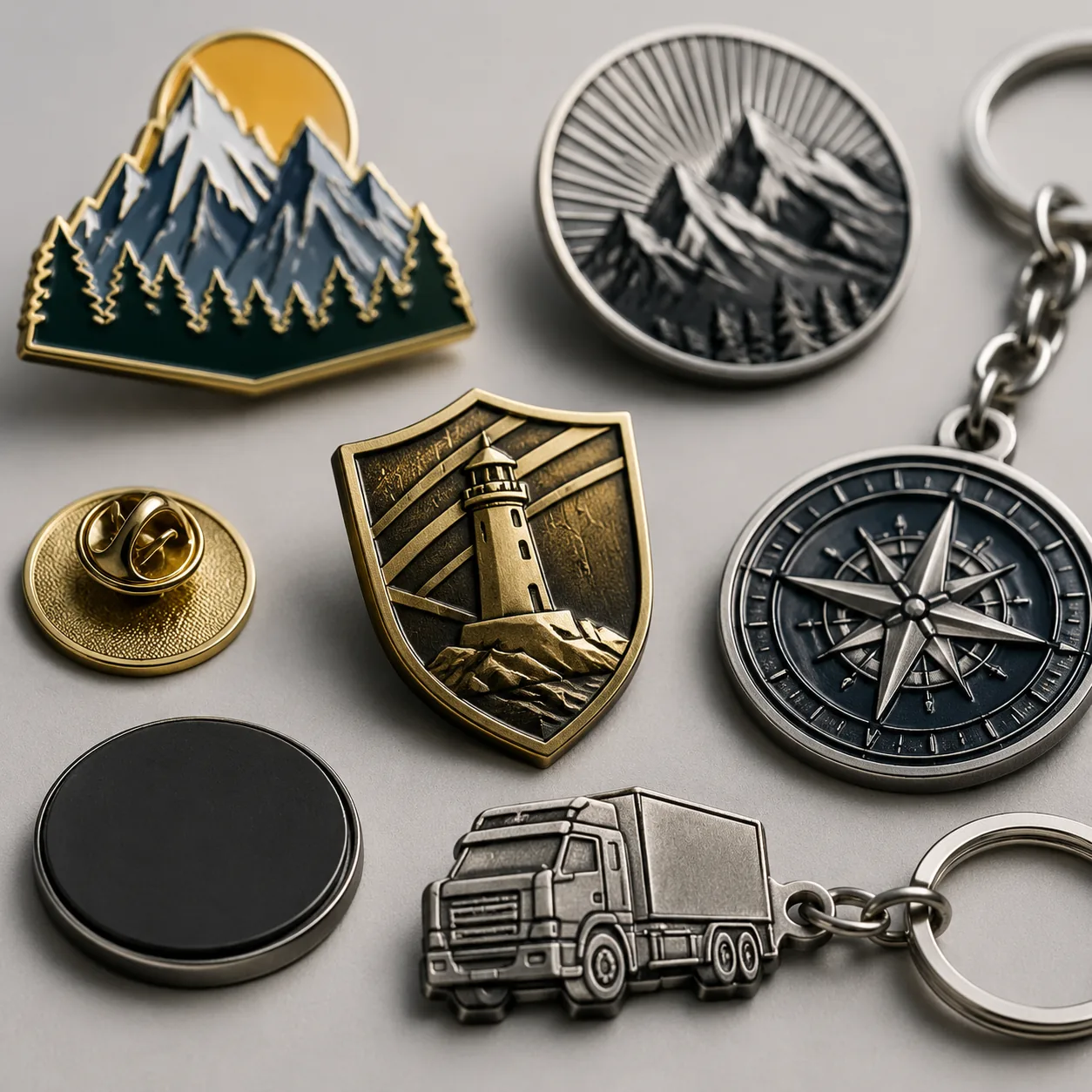
Start with the job, not the product
Most sourcing mistakes happen because buyers choose a format first and a use case second. A trade-show handout, retail souvenir, membership gift, and staff recognition piece solve different problems, so they should not be judged against the same spec sheet. If the format is wrong for the job, tooling, sampling, and dead inventory usually cost more than the unit savings ever recover.
Before requesting quotes, define four variables: where the item will be used, how long it must last, how much detail the artwork contains, and whether the priority is low FOB cost or high perceived value. In production terms, that means deciding whether you need a hard metal build, a textile build, or a printed format before you compare vendors. Buyers get better results when they describe the application clearly and let the factory narrow the format instead of forcing every design into the same product family.
- Trade-show giveaway: prioritize low weight, fast distribution, and simple pack-out.
- Retail souvenir: prioritize finish quality, shelf appeal, and repeatable color.
- Internal recognition: prioritize heft, durability, and stable reorders.
- Mailing program: prioritize flatness, impact resistance, and low breakage risk.
Choose the decoration method after the use case
Once the job is clear, the decoration method becomes easier to specify. Die-struck metal, hard enamel, soft enamel, and laser engraving work well when you want crisp marks and a premium feel. Woven patches, printed lanyards, and sublimated textiles make more sense when the artwork is text-heavy, repeatable, or too broad to fit cleanly into small recessed cavities.
The common mistake is overspecifying artwork into a process that cannot reproduce it at the target size. A 35 mm pin can carry a clean logo and short iconography, but it is a poor home for a sentence-length slogan. A woven patch can hold more text, but it will not deliver the same weight or metallic presence as a die-cast coin or enamel pin. The quote should reflect that trade-off instead of stretching one process to fit every design.
| Use case | Best-fit formats | When not to choose |
|---|---|---|
| Trade-show handout | Enamel pins, keychains, fridge magnets | Avoid heavy coins or thick 3D castings |
| Recognition award | Challenge coins, premium pins, presentation boxes | Avoid thin printed PVC or low-mass souvenirs |
| Retail souvenir | Pins, magnets, embroidered patches | Avoid low-detail builds with weak packaging |
| Uniform branding | Lanyards, patches, badge accessories | Avoid bulky pieces that snag or twist |
Match durability to the failure mode
Durability is not a single attribute. A lapel pin sees abrasion and snagging, a keychain sees drop impact and torsion, a magnet sees little mechanical stress but constant visual scrutiny, and a patch flexes repeatedly and may be washed. Good selection starts with the most likely failure mode, then works backward to the material and attachment system that prevents it.
For long wear, die-struck zinc alloy or brass with nickel, black nickel, gold, or antique plating usually outlasts printed surfaces. For carry items, stainless steel split rings, lobster clasps, and reinforced jump rings matter more than a slightly thicker face plate. For magnets and badges, the backer and adhesive matter as much as the visible design; a weak adhesive, poor magnet grade, or undersized backing is a common source of returns even when the front print looks perfect.
Useful spec targets are fairly consistent across factories. Enamel pin bases typically run 1.2 to 1.5 mm thick, challenge coins 3.0 to 4.5 mm, and soft PVC keychains 3 to 5 mm at the thickest point. For textile goods, an embroidered patch with 75D to 120D thread and a 3 to 4 mm merrow border is usually durable enough for repeated wear. If the product will see outdoor handling or humid storage, ask for plating guidance and corrosion notes rather than assuming all finishes age the same.
- Daily wear or contact with fabric: favor metal, stitched textile, or reinforced backing.
- Pocket and bag carry: favor compact shapes with rounded edges and secure attachment.
- Wet or outdoor exposure: specify tarnish-resistant plating and avoid exposed inks where possible.
- Repeated flexing: avoid brittle resin-heavy builds unless the geometry is simple.
Use detail density as the deciding filter
A simple logo can work in almost any format. The moment artwork includes gradients, small type, hairline borders, or layered shading, the choice becomes technical. Buyers often ask for a process that cannot physically reproduce the artwork at the target size, which creates approval delays, hidden compromises, or a second sampling round.
As a practical rule, hard-goods metal formats handle sharp outlines and small recessed areas better than soft goods, but they still need realistic line widths and cavity depth. For enamel and die-struck parts, a safe minimum line width is usually 0.25 to 0.30 mm, with text below about 1.5 mm tall becoming hard to read after plating and polishing. For patches, lettering under 2.5 to 3.0 mm high is risky unless you move to woven construction or simplify the typography. Review the art at actual size before locking the format.
Concrete examples make the decision easier. A two-color shield logo with a 28 mm footprint is a strong hard-enamel pin candidate. A 12-word commemorative slogan is better suited to a woven patch or printed lanyard. A detailed crest with dates and texture can work as a challenge coin if the buyer accepts a larger diameter, usually 38 to 50 mm. A single-icon retail mark with strong outline contrast can become a fridge magnet if the print face, lamination, and backing are specified correctly.
- If the art is mostly outlines and flat color: enamel pins or badges are efficient.
- If the art has lots of text: woven patches or printed lanyards are safer.
- If the art needs dimensionality: challenge coins or sculpted metal pieces fit best.
- If the art is simple and scale-sensitive: fridge magnets can work well with the right print process.
Compare formats on cost, tooling, and reorder risk
The cheapest first order is not always the cheapest program. Tooling, plating complexity, packing, freight density, and reorder stability can change total landed cost more than the base unit price. A quote that looks inexpensive at 300 pieces can become expensive if it needs new artwork, new mold work, or color corrections on every repeat run.
For annual programs, ask whether the item can be reordered without changing specs. Metal items with fixed tooling and frozen plating references are usually the most stable to repeat. Printed items, mixed-material assemblies, and products with loose accessories are more likely to drift if color, backing, or attachment details are not locked. A clean RFQ separates tooling, sample approval, and repeat-unit pricing so you can compare true program cost instead of a single headline number.
Typical FOB ranges below reflect common factory pricing for standard specs, not decorated retail packaging or freight. MOQ, lead time, and cost vary with design complexity, plating, and attachment hardware, but the ranges below are realistic for early-stage sourcing conversations.
For tolerance planning, ask for dimensional tolerance around ±0.3 mm on smaller metal pieces and ±0.5 mm on larger cast items unless the product has a tight mechanical fit. For printed badges and magnets, color consistency is usually evaluated visually against a Pantone reference rather than a numeric tolerance alone. If your program needs a specific fit, such as a badge clip or ring attachment, state it in the RFQ rather than assuming the factory will choose the correct hardware.
Use supplier specs to avoid quote surprises
A good RFQ is not long; it is complete. The supplier needs enough detail to confirm build method, finishing limits, tolerances, packaging, and acceptance criteria without guessing. If those items are left open, the factory may quote a cheaper assumption that does not survive production or inbound inspection.
The fastest buyer checklist is the one that removes ambiguity before sampling. It should identify the exact size, the build method, the back attachment, the finish, and the pass/fail points for approval. Orders move faster when the buyer sends one reference image, one dimensioned drawing, and one short list of what must not change.
- State final size in mm, not only artwork scale.
- Specify material and finish, including plating tone or textile type.
- Confirm attachment style, backing, or hardware.
- Set tolerance expectations for thickness, color, and edge quality.
- Define whether the item is for display, wear, or frequent handling.
- Ask for a pre-production sample before mass production.
If you want tighter control, request the supplier’s inspection standard as part of the quote. For decorative goods, many buyers use an AQL 2.5 major / 4.0 minor inspection target, with 100% visual checks on plating defects, loose parts, and broken attachments before carton sealing. For premium programs, a first-article sample plus a sealed golden sample reduces disagreement later, especially when the order will be repeated months later by a different procurement team.
Pick the format that fits the channel
Different channels reward different product behaviors. Wholesale distributors value broad appeal and easy replenishment, while brand teams often care more about visual identity, packaging, and approval speed. Event organizers care most about queue speed, safety, and bag weight, because a giveaway that slows handout lines is effectively a bad giveaway regardless of design quality.
If the item will be handed out in volume, choose a flat or light format that packs efficiently and does not snag on clothing. If it will be mailed, prioritize break resistance and carton efficiency. If it will live on a shelf or function as a collectible, perceived value matters more than shaving a few cents off unit cost. A 20 g coin in a presentation box communicates a different message from a 7 g printed key tag, even when the artwork is similar.
| Channel | Best priorities | Usually avoid |
|---|---|---|
| Trade-show giveaway | Speed, light weight, low cost | Heavy coins and fragile assemblies |
| Brand merch store | Finish, packaging, repeatability | Overly simple items that feel disposable |
| Internal awards | Prestige, weight, clarity of detail | Thin printed goods with low perceived value |
| Postal campaign | Flat pack, break resistance | Bulky items with loose accessories |
What to do next
Shortlist two or three formats that can truly solve the same use case, then ask suppliers to quote them on identical assumptions. Send final size, artwork at actual scale, expected annual volume, and the one quality failure you cannot accept. That makes the comparison useful because the factory can recommend a build instead of forcing a one-size-fits-all answer.
If you are still undecided, request one sample in each of the top two formats and compare them side by side for weight, readability, attachment strength, and pack efficiency. ZheCraft can quote mixed promo programs across pins, coins, keychains, magnets, patches, and lanyards from the same spec set, which makes it easier to compare landed cost instead of isolated unit price. For most buyers, the best decision is the format that meets the spec with the fewest compromises, not the one with the lowest headline quote.
Have a project? Send your artwork and target quantity and we’ll reply with a detailed quotation within 12 working hours.
Ready to get this made?
Send your sketch, target quantity and ship-date. Detailed quotation in 12 hours.



