Procurement Questions Buyers Should Ask Before Ordering Lanyards
What problem are buyers actually trying to solve?
Most lanyard orders fail for the same reason: the buyer asked for a logo and a quantity, but not the production details that control fit, print fidelity, safety, and delivery. By the time the first sample arrives, the factory has already made assumptions about width, weave density, print method, attachment hardware, and packing. Those assumptions are where rework starts.
This article is a procurement Q&A and checklist, not a branding guide. It is written for buyers who need to compare quotations, reduce sample loops, and lock specifications before purchase order release. The goal is to help you ask the questions that prevent inconsistent shade, twisted straps, weak clips, or a lanyard that looks fine on screen but performs badly in use.
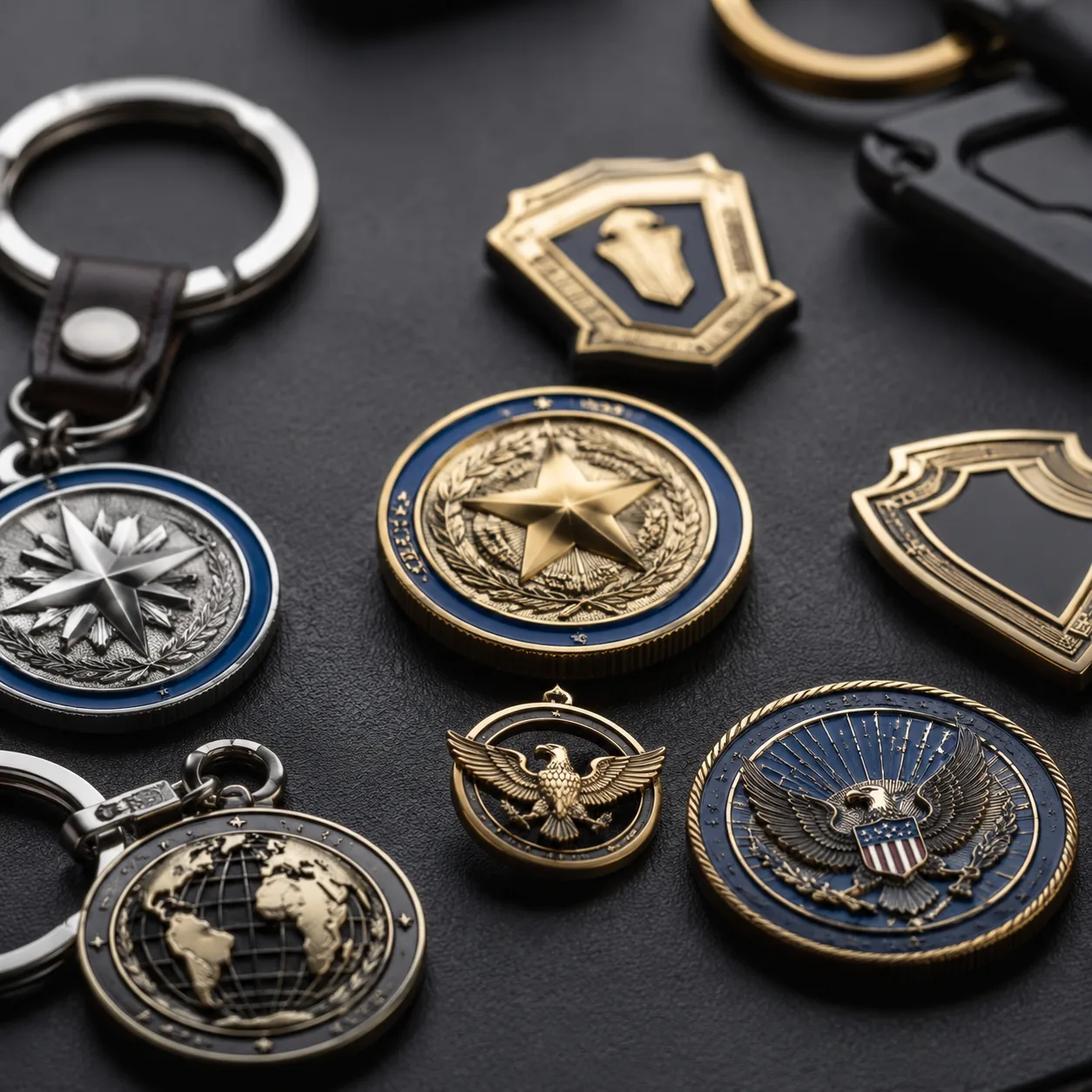
ZheCraft produces custom lanyards alongside pins, coins, keychains, and badges, so the same factory discipline applies here: define the structure, then the decoration, then the finishing and packing. If those are ordered in the wrong sequence, the quote may still look cheap, but the landed result usually is not.
A useful way to think about a lanyard is as a small textile assembly, not a single printed strap. The strap material, edge finish, stitch density, hardware plating, and packing method all affect performance and the final FOB price. Buyers who specify only artwork usually end up paying for uncertainty later in the process.
Q: Which lanyard specification should be locked first?
Start with construction before artwork. The main base choices are polyester screen print, sublimated polyester, woven jacquard, and nylon satin. Width is usually 10 mm, 15 mm, 20 mm, or 25 mm. For most event and corporate programs, 15 mm and 20 mm are the safest starting points because they balance print area, comfort, and hardware load. A 10 mm strap is lower cost but feels light; a 25 mm strap shows graphics well but can feel bulky on the neck.
Then decide the attachment stack: strap only, strap plus safety breakaway, strap plus metal hook, or strap plus badge reel connector. If the lanyard will carry a phone, ID holder, or heavier credential, the attachment rating matters more than the decoration method. A cheap swivel hook can become the weak point long before the strap itself fails. For heavier badges, specify a reinforced stitch box or bar tack at the attachment point.
Finally, lock the material and finish expectations. Polyester is the lowest-cost and most stable option for printed graphics; woven or jacquard gives a premium textile feel but is less forgiving for fine gradients. If you need photographic artwork, sublimation is usually better than weaving. If you need crisp type and solid logos at low cost, screen printing often wins. Nylon satin is softer to the touch but can cost more and may show sheen variation between lots.
If you want a practical starting spec, many buyers begin with 900 mm finished length, 15 or 20 mm width, one metal hook, and one safety breakaway for open-to-public environments. That spec is common because it fits most badge formats without making the strap feel oversized. For school or healthcare use, a breakaway is often non-negotiable; for conference kits, it is usually a strong value-add rather than an optional extra.
Q: What questions should go into the RFQ?
A good RFQ should force the supplier to answer measurable details, not just say yes. Ask for strap width tolerance, print method, color count, attachment type, safety feature, and packing unit. If the factory cannot state those items clearly, the quote is not yet comparable to another supplier’s quote. Compare only like-for-like quotations.
- What is the exact strap width and width tolerance, for example 15 mm ±1 mm or 20 mm ±1.5 mm?
- What is the finished length, usually 900 mm or 1000 mm, and is that measured end-to-end before hardware?
- What is the base material: polyester webbing, satin nylon, or woven jacquard?
- What decoration method is included: screen print, sublimation, heat transfer, or woven pattern?
- What hardware is included: J-hook, lobster hook, swivel hook, badge clip, or detachable buckle?
- Is a safety breakaway included, and where is it positioned on the strap?
- What is the packing unit: bulk packed, individual polybag, backing card, or custom header card?
- What is the sample lead time in days and the mass-production lead time in days?
- What is the FOB price at 500, 1,000, and 5,000 pcs, and does that include standard hardware?
- What inspection standard will be used, and what is the AQL target for major and minor defects?
If you want comparable quotes, ask every supplier to quote the same structure. A quote for 10 mm sublimation with swivel hook and safety breakaway is not comparable to 20 mm woven with lobster hook and no safety feature. The cheapest price often hides a narrower strap, lower thread density, a lighter hook, or a different packing method. Ask the supplier to list exclusions explicitly, such as tax, freight, special carding, or anti-scratch bags.
A strong RFQ also states the artwork file format and proofing expectation. Ask for vector artwork where possible, confirm whether the supplier will send a digital proof or a physical strike-off, and specify whether the first sample must match Pantone references under D65 light. That avoids the common dispute where the buyer expects a brand-standard blue and the factory matches a visually close but technically different shade.
How do print methods compare in procurement terms?
Buyers often choose a print method by visual preference, then discover the production implications too late. Screen print is economical for simple artwork and solid color blocks; sublimation handles complex gradients and full-color designs; woven and jacquard are best when the textile itself should carry the pattern. Your choice should depend on artwork complexity, order volume, and how closely the finished lanyard must match a brand color standard.
The table below gives a practical comparison for sourcing discussions. Prices vary by attachment, width, packing, and order size, so use these as planning ranges rather than fixed quotes. For small promotional runs, setup cost can dominate; for large runs, decoration efficiency becomes the main cost driver.
| Method | Typical use | Typical MOQ | FOB range USD/pc | Typical lead time |
|---|---|---|---|---|
| Screen print | Simple logos, 1-4 spot colors | 100-300 pcs | 0.18-0.45 | 7-12 days |
| Sublimation | Full-color art, gradients, fine detail | 100-300 pcs | 0.25-0.65 | 8-14 days |
| Woven/jacquard | Premium textile look, repeat patterns | 300-500 pcs | 0.35-0.90 | 10-18 days |
| Heat transfer | Short runs, detailed graphics, flexible art | 100-200 pcs | 0.22-0.55 | 8-15 days |
Do not choose woven or jacquard if your logo uses tiny text or thin reversed lines. Do not choose screen print if the design depends on photographic shading or fine gradients. If the artwork is likely to change every campaign, sublimation usually reduces redesign friction because it is less sensitive to color count than woven construction. For brands that require Pantone control, ask whether the factory is matching to coated or uncoated references and how many delta-E variation units are acceptable.
As a procurement rule, request a pre-production sample for every new construction and a strike-off for every new print layout. That small step can prevent a production lot that is technically correct but visually off-brand. For repeat orders, lock the approved sample as the golden reference and require the factory to reuse the same strap lot, hardware code, and packing method unless you approve a change.
Which hardware choices create hidden risk?
Hardware looks minor on paper but drives real-world failure rates. The hook style determines how easily the credential is attached and whether it spins, scratches, or detaches too easily. For lightweight badges, a standard J-hook or lobster hook may be enough; for heavier holders, a stronger swivel hook or a double-clamp solution can reduce returns. If the lanyard is used with phone cases or ID wallets, ask the supplier for the recommended working load in grams rather than assuming all metal hooks are equivalent.
A practical working-load range for common promotional hardware is about 200-400 g for light clips, 400-700 g for standard J-hooks and lobster hooks, and 700 g plus for reinforced swivel or badge-reel interfaces. Those numbers are not universal standards, but they are useful for quoting and internal review. If the use case involves repeated pulling, side loading, or heavier badge stacks, ask for a higher safety margin and a simple pull test during sample approval.
Safety features should be specified, not assumed. A breakaway is not just a comfort item; in some environments it is a practical risk-control feature. If you need one, specify its location, opening force expectation, and whether it is stitched in or snap-fit, because these details change both performance and cost. For school, healthcare, and manufacturing settings, buyers often require the breakaway to open under approximately 2.5 to 4.5 kgf of pull force, but the final requirement should follow the site standard.
Buyers should also confirm plating and finish on metal hardware. Typical nickel plating thickness for basic promotional hardware is often around 3-5 microns, while upgraded hardware may use 6-8 microns with a clear top coat. If the hardware will see sweat, humidity, or outdoor use, specify corrosion resistance in days or a salt-spray target. A low-grade finish can discolor before the event ends, especially on silver-toned clips and swivels.
For plastic components, ask about material grade and break-point behavior. Low-cost side-release buckles can vary more than the strap itself, so if the buckle is functional rather than decorative, it should be treated as a controlled component with a separate approval. If a detachable buckle is included, confirm insertion force, release force, and whether the two halves align without twisting the webbing.
What should be checked in a sample before mass production?
A sample is not just a visual approval; it is a specification audit. Measure the width, verify the print alignment, check edge cutting, test the hook action, and confirm the breakaway release if included. If the sample passes only by eye and not by measurement, the risk simply moves to production.
Use the checklist below as a minimum pre-production review. For recurring programs, the sample should become the control reference for future reorders, including packing and attachment configuration. That is how you avoid a “same item” reorder arriving with different hardware or a slightly different strap feel.
- Measure strap width at multiple points; accept only within the agreed tolerance.
- Confirm logo position, repeat length, and color placement on both sides if double-sided.
- Check stitch density at attachment points and the breakaway seam; reinforce if stitch spacing is loose or uneven.
- Pull-test the hook and buckle by hand for obvious slippage, deformation, or weak spring tension.
- Verify there are no sharp burrs, frayed threads, puckering, or print cracking on fold lines.
- Match the sample against the approved Pantone or artwork reference under daylight or D65 light.
- Check packing count per inner bag and master carton, then verify carton markings.
- Photograph the approved sample and save it as the reorder baseline with date, supplier name, and order code.
For event buyers, do not ignore comfort. A lanyard can pass visual inspection and still be rejected by users because it twists, curls, or feels abrasive on the neck. If your end user will wear it for long periods, ask for a softer weave or satin finish and confirm that the edge cut does not create scratch points. Ultrasonic cutting can reduce fray on polyester, while heat-cut edges may be acceptable if sealed cleanly.
If you are buying at scale, define an acceptance plan before the order ships. A common approach is AQL 2.5 for major defects and 4.0 for minor defects, though premium programs may tighten that further. Major defects should include wrong width, wrong hardware, broken breakaway, or unreadable logo; minor defects usually include small thread ends, slight print offset, or packing label errors.
For numeric tolerances, keep the spec realistic. A width tolerance of ±1 mm is reasonable for 10-20 mm straps, while ±1.5 mm may be acceptable on 25 mm constructions depending on the weave. For length, buyers often allow about ±10 mm on a 900 mm finished lanyard, but the safer approach is to state the exact tolerance in the RFQ instead of relying on factory habit.
How should buyer specs be written to prevent rework?
Write the spec in layers. First define the structure: width, material, and finished length. Then define decoration: print method, color count, and artwork placement. Then define the commercial controls: quantity, tolerance, sample timing, packing, and inspection standard. This order matters because factories price and plan production in the same sequence.
A simple example is better than a vague request. Instead of saying “premium lanyard for trade show,” specify “20 mm polyester sublimation lanyard, 900 mm finished length, one lobster hook, one safety breakaway, full-color front print, bulk packed, FOB Ningbo, 1,000 pcs, width tolerance ±1 mm, AQL 2.5/4.0.” That sentence gives the supplier enough information to quote a realistic process and reduce assumptions.
For planning, ask the supplier to separate the quote into strap, hardware, packing, and any special options. That makes it easier to compare a basic promotional version against an upgraded version with carding or detachable buckles. It also helps identify where the price is moving, which is useful when you want to trade packaging cost against hardware quality without changing the core strap spec.
| Spec item | Write this | Why it matters |
|---|---|---|
| Width | 10/15/20/25 mm plus tolerance | Affects comfort, print area, and cost |
| Length | Finished length in mm | Controls wearability and badge position |
| Material | Polyester, nylon, woven jacquard | Affects texture, durability, and price |
| Decoration | Screen, sublimation, woven, transfer | Determines artwork limits and setup |
| Hardware | Hook, clip, buckle, breakaway | Controls attachment strength and safety |
| Packing | Bulk, polybag, card, custom box | Affects labor cost and channel readiness |
Also specify the acceptable quality level if your buying process uses one. For many promotional products, an AQL 2.5 for major defects and 4.0 for minor defects is a common starting point, but the target should match the channel and brand sensitivity. If the lanyards will be distributed at a one-day event, a slightly looser cosmetic standard may be acceptable; if they are for executive kits, the finish should be tighter. Include a note on color tolerance as well, because many disputes come from shade expectations rather than mechanical defects.
When is a cheap lanyard actually the wrong choice?
A low FOB price is not always the best procurement outcome. If the lanyard will carry heavier credentials, go through repeated on-off use, or represent a premium brand, the cheapest strap often fails on durability, color consistency, or hardware life. In those cases, a slightly higher unit price can reduce complaints and replacement costs.
Cheap options are usually acceptable when the event is short, the badge is lightweight, and the branding is simple. They are usually the wrong choice when there is high wear time, strict brand color control, or safety requirements. If you need a 5,000-piece conference run with basic logo printing, economy polyester is fine; if you need an executive welcome kit, the feel and finish matter enough to justify a better substrate and hardware package.
As a rough planning range, simple economy lanyards may land around USD 0.18-0.35 FOB at moderate quantity, while higher-spec printed or woven options can sit around USD 0.35-0.90 FOB depending on hardware and packing. Add custom backing cards, detachable buckles, or specialty clips and the price can move higher. That difference is usually small relative to the cost of a bad first impression or a replacement shipment.
Lead time also changes with complexity. A simple repeat-order promotional lanyard might ship in 7-10 days after sample approval, while a new woven construction with custom hardware can take 12-18 days. If you need delivery by a fixed event date, always work backward from the freight cut-off, not the factory’s start date. For air freight, leave extra time for carton closure, booking, and customs clearance; for sea freight, build in at least one additional buffer for vessel schedules.
When comparing quotes, ask for MOQ tiers in writing. Many factories price best at 1,000, 3,000, and 5,000 pcs, with a step-down in unit cost as the order scales. A common pattern is that 500 pcs may carry a small setup premium, 1,000 pcs hits the first efficient tier, and 5,000 pcs gives the best balance of decoration cost and packing efficiency.
What should you do next?
Build a one-page RFQ that locks the structure, decoration, hardware, packing, and inspection standard before asking for price. Then request two or three quotes on exactly the same spec, not on loosely similar descriptions. If the factory returns a quote with missing details, ask them to rewrite it in spec language before you compare pricing.
Before placing the order, approve one physical sample as the reorder baseline and save photos, measurements, and packing details. If you are sourcing mixed promo items, keep the lanyard spec aligned with the rest of the set so the carton, card, and branding all feel intentional. That is the simplest way to avoid rework without adding bureaucracy.
A useful buyer workflow is: define the spec, confirm artwork, approve the sample, then release production. Skipping any of those steps usually increases cost later. If helpful, ZheCraft can help buyers turn a rough brief into a factory-ready spec sheet for lanyards, badges, pins, and promo sets so the same approval logic is used across the entire order.
Have a project? Send your artwork and target quantity and we’ll reply with a detailed quotation within 12 working hours.
Ready to get this made?
Send your sketch, target quantity and ship-date. Detailed quotation in 12 hours.



