Pre-Shipment QC Photos for Custom Promo Orders: Buyer Q&A
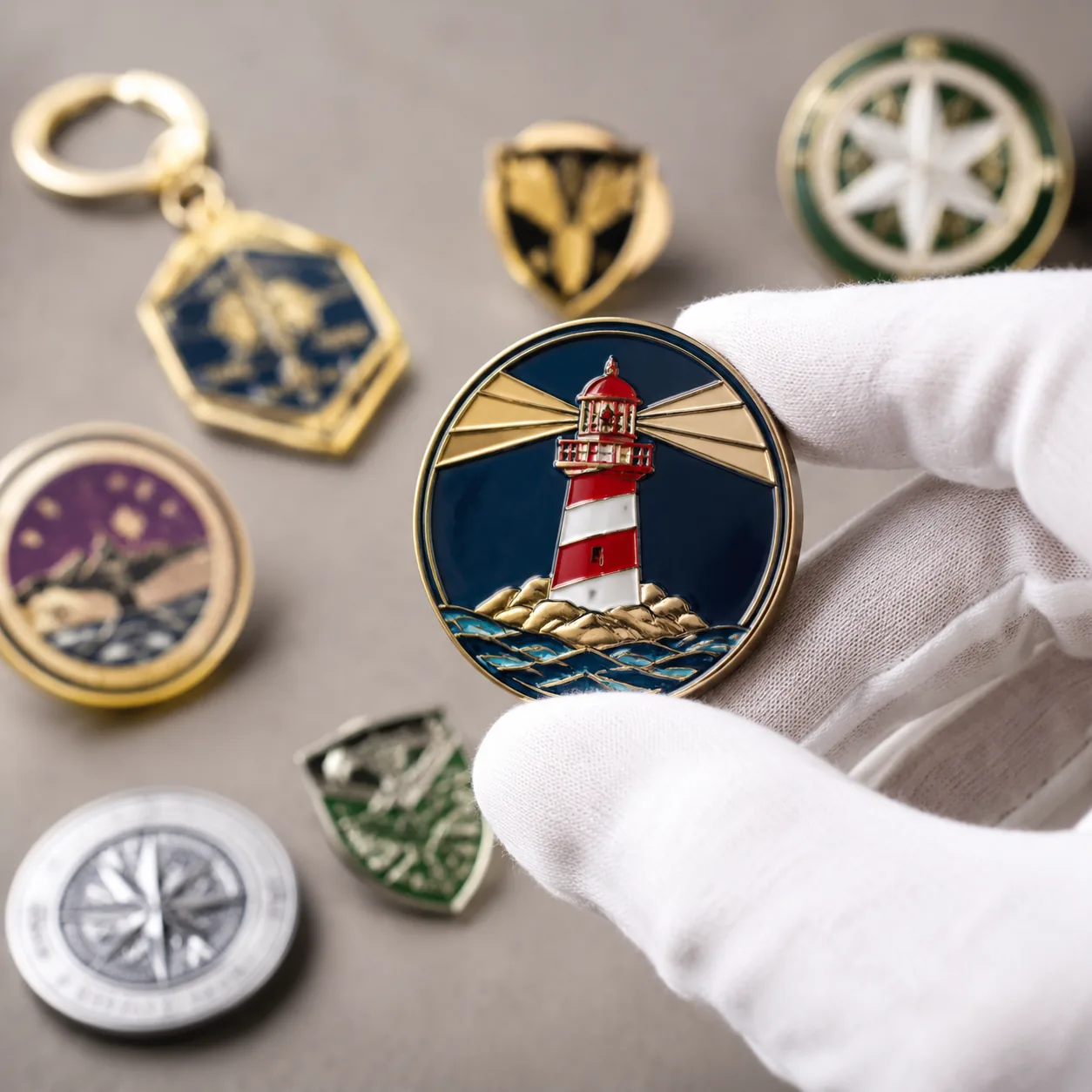
Q: Why do approved samples still become rejected shipments?
Most rejected promo shipments do not fail because the signed sample was wrong. They fail because bulk production drifts from that sample and the drift is not checked before export. A 35 mm hard enamel pin can look acceptable in a sales photo but still have 0.25 mm enamel sink, 4 micron plating where 8 microns were quoted, pin posts soldered off-center by 2 mm, mixed clutch colors, or backing cards from an earlier SKU. Once cartons are loaded, the practical remedy is usually a credit, local sorting, or rework after arrival—not a clean factory correction.
Pre-shipment QC photos are not a substitute for a third-party inspection, but they are a practical release gate for custom promotional orders where inspection cost is disproportionate. For FOB orders around USD 800 to USD 6,000, a disciplined factory photo set can catch wrong plating tone, missing serial numbers, weak magnets, unreadable QR codes, poor carton labels, incorrect inner counts, mixed SKUs, and visible finish defects. The value comes from specificity. “Send photos before shipment” produces selected beauty shots; a numbered checklist produces evidence tied to the purchase order.
The best timing is after bulk production, internal sorting, and random packing, but before balance payment, freight release, or final carton sealing where feasible. Metal items should be checked against the golden sample, approved artwork, CAD dimensions, Pantone references, plating requirement, attachment specification, packing method, and shipping mark. Textile items such as patches and lanyards need tighter checks on color, stitch density, print registration, finished dimensions, hardware, and count accuracy because defects can hide inside bundles or inner bags.
Q: Which photo evidence should be mandatory?
Mandatory photos should prove identity, dimension, finish, function, quantity, and packing. A top-down image of 20 pieces on a table does not prove carton counts, backside hardware, plating consistency, or whether the pieces were pulled from packed stock. Require random-unit views, measurable readings, functional tests, and carton evidence in one release package.
For orders below 500 pieces, request 8 to 12 randomly selected units from finished stock. For 500 to 3,000 pieces, request 20 to 32 units pulled from at least 3 inner bags or cartons. For orders above 3,000 pieces, more than 5 SKUs, or retail-bound shipments, factory photos should be paired with ANSI/ASQ Z1.4 inspection or an independent pre-shipment inspection. A common standard is general inspection level II, AQL 0 for critical defects, AQL 1.5 or 2.5 for major defects, and AQL 4.0 for minor defects.
- Show random bulk pieces beside the approved golden sample, signed approval sheet, or printed artwork revision number.
- Photograph the front and back, including backstamp, pin posts, magnets, rings, safety pins, sew-on backing, clutches, hooks, or badge clips.
- Show digital caliper readings for width, height, thickness, hole diameter, border width, and any cutout shown on the drawing.
- Include close-ups of plating, enamel, print, weave, embroidery, epoxy dome, laser engraving, QR code, and barcode under neutral light.
- Demonstrate function: clasp closure, split-ring pull, swivel hook rotation, magnet hold, brooch balance, adhesive peel, or badge holder fit.
- Photograph packing: OPP bag, backing card, inner box, carton label, carton dimensions, gross weight, net weight, and shipping mark.
Q: What measurements and tolerances should be photographed?
The measuring tool reading must be visible. A product beside a ruler is not enough for release approval. For small metal products, require digital calipers with 0.01 mm display resolution, but apply production tolerances, not laboratory tolerances. Practical tolerances for custom promo items are usually ±0.2 mm for enamel pin width and height, ±0.3 mm for challenge coin diameter, ±0.5 mm for soft PVC or acrylic magnet face size, and ±1 mm for woven or embroidered patch size.
Thickness and weight need separate evidence because a supplier can reduce material while keeping the front artwork unchanged. A 50 mm zinc alloy keychain quoted at 3.0 mm thickness should not ship at 2.3 mm unless the change was approved and the FOB price was revised. For pins and coins, ask for edge thickness and unit weight. For lanyards, ask for strap width and finished length from hook end to hook end. For magnets, ask for magnet sheet thickness and a hold test on painted steel using the intended paper insert or packaging weight.
| Product type | Photo measurement to request | Practical tolerance to specify | Typical MOQ and FOB range |
|---|---|---|---|
| Soft or hard enamel pin | Overall width, height, metal thickness, post length, clutch type | Size ±0.2 mm; thickness ±0.15 mm; post length ±0.5 mm | MOQ 100-300 pcs; USD 0.55-1.80 FOB for 25-35 mm iron or zinc alloy pins |
| Challenge coin | Diameter, edge thickness, unit weight, edge style, enamel recess | Diameter ±0.3 mm; thickness ±0.2 mm; weight ±5 percent | MOQ 100-300 pcs; USD 1.80-5.80 FOB for 40-50 mm coins, depending on plating, 2D/3D relief, and enamel |
| Metal keychain | Charm size, ring wire diameter, chain length, connector gap | Charm ±0.3 mm; ring wire ±0.1 mm; chain ±2 mm | MOQ 100-500 pcs; USD 0.90-3.20 FOB for zinc alloy custom shapes |
| Fridge magnet | Face size, magnet sheet thickness, pull/hold test on steel | Face ±0.5 mm; magnet thickness ±0.1 mm | MOQ 300-500 pcs; USD 0.45-1.60 FOB for soft PVC, acrylic, or printed magnets |
| Woven or embroidered patch | Width, height, border width, backing coverage, stitch density area | Size ±1 mm; border ±0.5 mm; backing coverage ±2 mm | MOQ 100-300 pcs; USD 0.60-2.40 FOB depending on size, stitch coverage, merrow edge, and backing |
| Printed lanyard | Strap width, finished length, logo repeat, hook type, stitching length | Width ±0.5 mm; length ±10 mm; repeat ±3 mm | MOQ 100-500 pcs; USD 0.45-1.50 FOB for polyester with standard metal hook |
Q: How should color, plating, and surface finish be judged?
Photo color is only useful when the reference and lighting are controlled. Ask the factory to place the approved sample, bulk pieces, and Pantone or printed approval sheet in the same frame. Use neutral daylight or a 5000K light source, avoid warm office lighting, and request one straight photo plus one angled photo for polished gold, nickel, black nickel, imitation rhodium, epoxy, or mirror surfaces where glare can hide pits and scratches.
For enamel, screen print, heat transfer, and woven lanyards, photos can confirm the color family but cannot prove exact Delta E unless a measured color process is specified. If a brand color is critical, require a physical pre-production sample, lab dip, woven strike-off, or printed strike-off before mass production. A realistic production target for many custom promotional items is Delta E 2.0 to 3.0 against a measured standard; small-batch factories usually will not provide spectrophotometer data unless it is written into the PO.
Plating must be specified in technical terms because visual labels are vague. “Gold” may mean imitation gold, light gold, rose gold, antique gold, or real gold flash. Standard decorative plating for low-wear pins is often 3 to 5 microns total. Keychains, coins, zipper pulls, and bag charms that receive more handling should be specified at 5 to 8 microns. Heavy-use hardware may need 8 to 12 microns, stainless steel components, electrophoretic lacquer, or a clear topcoat. For EU skin-contact goods, request written nickel-release compliance evidence instead of relying on appearance.
Q: Which defects should be sorted before photos are sent?
The buyer’s photo check should not be the factory’s first inspection. Before evidence is sent, production should remove obvious rejects, complete the packed quantity, and document any rework. For enamel pins and coins, major defects include missing color fill, wrong plating, broken posts, incorrect backstamp, exposed base metal, sharp burrs, enamel pits above about 0.5 mm on visible faces, cracked epoxy, and unreadable engraving. For patches, major defects include wrong border color, missing backing, loose merrow edge, distorted text, skipped stitching, or size outside tolerance. For lanyards, major defects include weak stitching, wrong hook, reversed logo direction, unreadable print, poor heat-transfer adhesion, or unsafe breakaway performance where required.
Minor defects need realistic limits. Small rear-side plating specks, faint polish lines, enamel sink below 0.15 mm, short thread tails, or lanyard print offset below 1 mm may be acceptable for standard promotional use if not visible at normal viewing distance. A practical viewing rule is to inspect the front face at 30 to 40 cm under normal light for 5 seconds. If the defect is not noticeable under that condition, it is usually minor unless the product is retail-grade, safety-related, or part of a premium gift set.
- Reject as major: wrong artwork, wrong size outside tolerance, missing attachment, loose post, wrong plating, wrong color fill, unreadable logo, cracked epoxy, weak magnet, or broken clasp.
- Limit as minor: small rear-side plating specks, enamel sink under 0.15 mm, faint polishing marks, short thread tails, or lanyard print offset under 1 mm.
- Set AQL 0 for critical defects: sharp edges that cut skin, exposed needles, detachable small parts on child-use orders, contamination, or missing safety warnings.
- Trigger re-sorting if the photo sample shows more than one major defect in 20 random pieces or any repeated functional defect.
- Require replacement evidence after sorting, including a new random pull from packed stock and confirmation that failed pieces were removed.
Q: When is third-party inspection worth the cost?
Factory photos are useful, but they are not independent evidence. Pay for third-party inspection when the shipment is high value, retail-bound, safety-sensitive, launch-critical, or complicated by many SKUs. In common production areas such as Guangdong, Zhejiang, Jiangsu, and Fujian, a standard pre-shipment inspection often costs about USD 180 to USD 320 per man-day, excluding travel surcharges, weekend fees, and lab testing. Booking usually needs 2 to 4 working days, and goods should be at least 80 percent finished and 100 percent packed for final inspection.
Use independent inspection when shipment value exceeds roughly USD 8,000, when the order has more than 5 SKUs, when goods must meet a retailer manual, or when it is the first order with a new supplier. The inspector should receive the approved sample, production artwork, PO, packing instructions, barcode file, AQL limits, tolerance sheet, and defect definitions. Without these documents, the inspection becomes a generic visual count and may miss the buyer’s highest-risk details.
For lower-risk repeat orders, a factory-side photo checklist plus random pull tests is often enough. This is practical for repeat pin, coin, patch, keychain, magnet, and lanyard programs where tooling, color standards, attachments, and packing specs are already locked. Risk is lower because the factory is checking against known production data rather than interpreting a new design for the first time.
Q: How should timing and payment gates be written?
Put the photo QC requirement in the RFQ, proforma invoice, or purchase order before deposit. If the instruction arrives after final packing, the factory may need to reopen cartons, re-count inner bags, and reseal export cartons. That usually adds 1 to 2 working days and increases the risk of mixed repacking. For normal custom promo production, digital artwork confirmation takes 1 to 3 working days, physical sample approval takes 5 to 10 days after artwork confirmation, mass production takes 10 to 25 days depending on process and quantity, and photo QC should be scheduled 1 to 3 days before freight booking.
The checklist should be short, numbered, and measurable. Exact quantities, pass/fail conditions, and payment linkage make it easier for sales, production, and packing teams to follow. For example: “Supplier must send QC photo set from randomly packed goods and receive written buyer approval before balance payment and freight release.” If the supplier uses Chinese internal QC forms, ask them to mirror the same checkpoints so the requirement reaches the workshop, not only the sales desk.
- Send QC photos after internal sorting and random packing, but before balance payment, freight release, or final carton sealing where practical.
- Pull samples from at least 3 cartons for orders above 1,000 pieces and from every SKU for mixed-SKU shipments.
- Show approved sample, bulk pieces, caliper, scale, order number, and carton label in the same frame where practical.
- State AQL limits clearly: critical 0, major 1.5 or 2.5, minor 4.0 for standard promotional use.
- Confirm carton data: SKU, pieces per inner bag, pieces per carton, carton count, gross weight, net weight, carton size, and shipping mark.
- Require written confirmation that failed pieces shown in photos are removed, replaced, and excluded from final packing.
Q: What should I check before approving shipment?
Review the photos against the approved artwork, golden sample notes, PO, tolerance sheet, and packing instructions. Do not approve from a phone screen between meetings. If something looks wrong, ask one precise question at a time: “Please measure 10 random pieces and confirm average thickness,” “Please show gold plating beside the approved sample under 5000K light,” or “Please pull one sealed carton and show the inner count.” Precise questions produce usable evidence; broad complaints create delay.
If the issue is cosmetic and within tolerance, approve with a written note so the point is not disputed later. If it is functional—weak key rings, loose brooch pins, poor magnet strength, unreadable QR codes, poor hook closure, weak stitching, or adhesive backing that peels during handling—stop shipment and require sorting or remake of the affected quantity. A 2-day delay before export is cheaper than receiving 2,000 unusable event giveaways.
For the next order, build the evidence package into the RFQ: product drawing, material, plating thickness in microns, Pantone or measured color standard, dimensions, tolerance, attachment, packing, AQL level, sample approval stage, lead time, and required pre-shipment photo set. ZheCraft can prepare pre-shipment photo reports for custom enamel pins, brooches, keychains, fridge magnets, challenge coins, patches, and lanyards when these checkpoints are confirmed before production. The best QC outcome is not more photos; it is fewer surprises before the carton leaves the factory.
Have a project? Send your artwork and target quantity and we’ll reply with a detailed quotation within 12 working hours.
Ready to get this made?
Send your sketch, target quantity and ship-date. Detailed quotation in 12 hours.



