Post-Tariff Cost Planning for Custom Promo Metal Orders
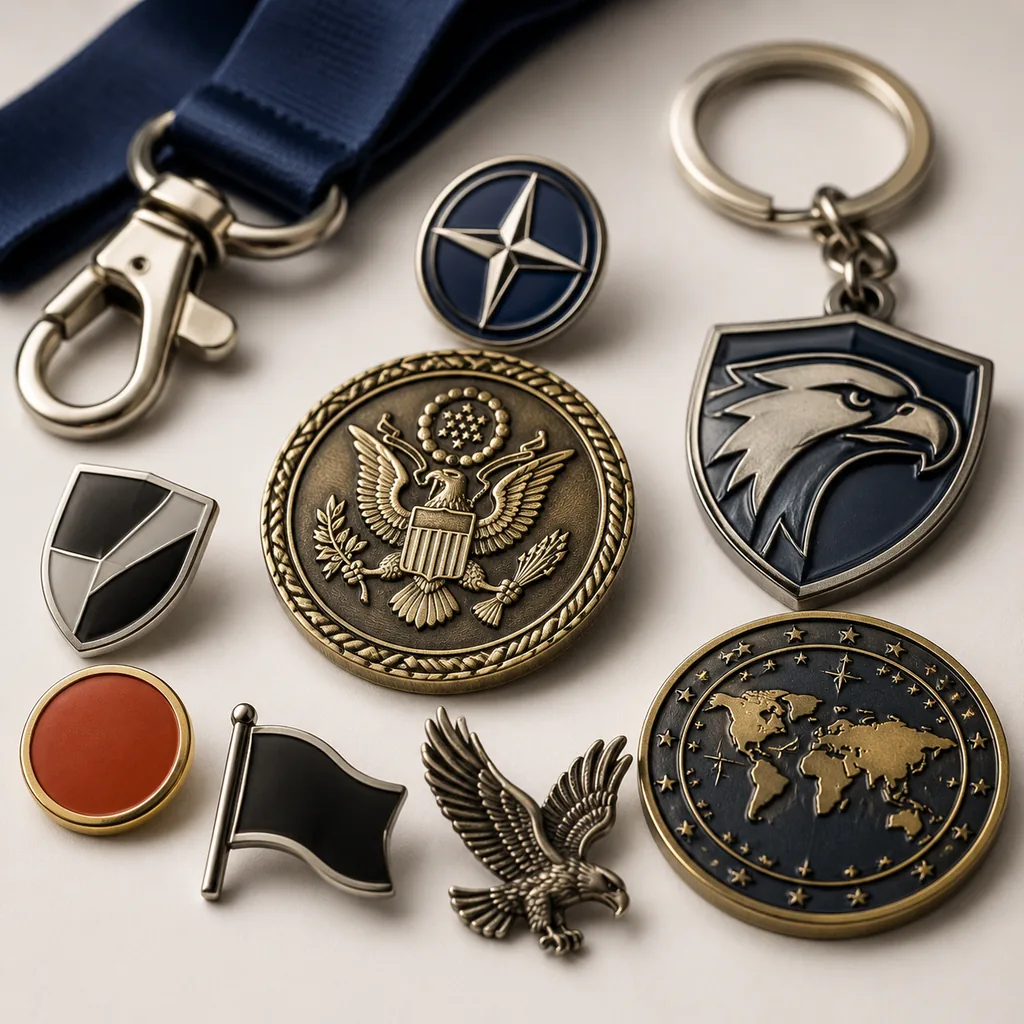
Why did our 2026 reorder quote rise when the artwork did not change?
Most 2026 reorder increases are not caused by a single tariff line. On custom promo metal goods, the bigger drivers are usually base-metal cost, low utilization on small runs, plating chemistry, polishing labor, export packing, inland trucking, quote-validity risk, and schedule compression. A repeat design can therefore cost more even when the art file is unchanged. For example, a 30 mm soft enamel iron pin that previously ran at USD 0.52 FOB Ningbo at 1,000 pieces can realistically move to USD 0.58-0.68 if the supplier is now pricing 0.5 micron bright nickel instead of 0.3 micron, two posts instead of one, stricter cosmetic inspection, or individual backing cards instead of bulk bagging.
Factory pricing is still governed first by physical specification. Iron versus zinc alloy, 1.2 mm versus 1.5 mm stamped thickness, one post versus two posts, no epoxy versus epoxy dome, 0.3 micron versus 0.8 micron plating, and bulk OPP packing versus carded retail presentation all change labor, yield, and freight density. A small shift in those variables often moves FOB more than a modest change in duty exposure. Buyers should therefore split cost into tooling, ex-factory unit cost, FOB handling, international freight, duty or tariff, brokerage, inspection, and local delivery instead of comparing one blended landed number with no detail.
The largest avoidable quote swings usually start with a weak RFQ containing only a photo, quantity, and in-hand date. A controlled RFQ should lock key tolerances and process assumptions: outline tolerance of +/-0.30 mm for pins and coins, thickness tolerance of +/-0.15 mm for stamped iron and +/-0.20 mm for die-cast zinc alloy, Pantone references, minimum raised line width of 0.20-0.25 mm, base metal, attachment type, plating finish, minimum plating thickness, packing method, carton gross-weight limit, and inspection standard. Without those details, each factory prices a different product and a different level of risk.
Which cost increases are tariff-related, and which are factory choices?
A disciplined quote separates manufacturing choices from import charges. The supplier's FOB price normally covers tooling, raw material, stamping or die casting, trimming, polishing, plating, enamel fill or printing, assembly, unit packing, export carton packing, inland trucking to port, and export documents. Tariffs, duties, brokerage, harbor fees, customs exams, and local delivery are assessed after export based on destination rules, importer status, HS classification, declared value, and country of origin. If a supplier says tariffs caused the FOB price to rise but cannot identify a production input change, ask for a line-item refresh before accepting the increase.
Typical 2026 benchmarks help isolate the issue. A 35 mm hard enamel iron or brass-look pin at 1,000 pieces commonly carries tooling of USD 45-95 and an FOB unit price of roughly USD 0.72-1.20, with mass production in 20-30 days after artwork and sample approval. A 45 mm challenge coin at 3.5 mm thickness commonly needs USD 90-220 tooling and runs about USD 1.60-3.80 FOB at 1,000 pieces, depending on alloy, edge, and enamel coverage, with production in 24-40 days. The importer or customs broker should determine final tariff treatment; the factory should provide accurate product description, material declaration, net weight, gross weight, carton count, and packing list data, not guess the buyer's customs outcome.
| Cost item | Typical 2026 range | Buyer control level | Specification notes |
|---|---|---|---|
| Pin tooling | USD 40-120 per design | Medium | Confirm die ownership, die storage period, revision fee, and whether one die covers all colorways or attachment changes. |
| Coin tooling | USD 90-220 per design | Medium | Confirm 2D or 3D relief, edge style, backstamp, and whether antique finish or cutouts are included. |
| 25-30 mm soft enamel pin | USD 0.38-0.82 FOB at 1,000 pcs | High | Usually stamped iron, 1.2-1.5 mm thickness, 0.3-0.5 micron plating, one butterfly clutch, individual OPP bag. |
| 35 mm hard enamel pin | USD 0.72-1.20 FOB at 1,000 pcs | High | Requires flatter polishing, tighter color fill control, and commonly 0.5-0.8 micron plating. |
| 40-45 mm challenge coin | USD 1.60-3.80 FOB at 1,000 pcs | High | 3.0-4.0 mm thickness, zinc alloy, iron, or brass; shiny or antique plating; optional edge texture and enamel fill. |
| Zinc alloy keychain, 45-55 mm | USD 0.88-2.10 FOB at 1,000 pcs | High | Usually 3.0-4.0 mm die-cast body, split ring plus short chain, more polishing than flat stamped pieces. |
| Printed backing card | USD 0.035-0.14 per pc | High | 300-400 gsm C1S or C2S, matte or gloss lamination, barcode optional, punched or unpunched. |
| Export carton packing | USD 0.02-0.09 per pc | Medium | Keep dense metal cartons at 12-15 kg gross weight; specify inner bags, trays, dividers, and dimensions. |
| Tariff, duty, brokerage | Destination-specific | Low | Keep these outside FOB comparisons and confirm with broker before PO. |
What MOQ tiers make sense when tariff recovery is uncertain?
MOQ is a risk-control tool, not just a price target. Enamel pins, flat metal keychains, and magnets can often be produced at 100 pieces, but the unit cost absorbs tooling, setup, plating rack occupancy, enamel filling, inspection, and packing labor. At 300 pieces, quotes become useful for event pilots and distributor testing. At 500-1,000 pieces, production labor spreads enough to compare factories more fairly and the FOB curve usually starts flattening.
For a 30 mm soft enamel iron pin, realistic 2026 FOB ranges might look like this: USD 1.20-1.85 at 100 pieces, USD 0.78-1.30 at 300 pieces, USD 0.62-1.05 at 500 pieces, and USD 0.38-0.82 at 1,000 pieces, assuming one standard clutch, 1.2-1.5 mm thickness, and basic individual packing. Beyond 1,000 pieces, savings often narrow. Moving from 1,000 to 3,000 pieces may reduce FOB by only USD 0.04-0.10 per piece; moving to 5,000 pieces may save another USD 0.02-0.06. Those gains disappear quickly if demand shifts, storage costs rise, or duty treatment changes before inventory is consumed.
Coins and thick zinc alloy keychains face stronger MOQ pressure because they consume more polishing and plating capacity per unit. A 45 mm coin at 3.5 mm thickness can be uneconomic below 300 pieces unless the buyer accepts roughly USD 4.50-8.50 FOB. For a new coin program, a 300-piece pilot is often more disciplined than a 1,000-piece launch because it lets the buyer validate weight, relief depth, edge texture, enamel color, and packaging before scaling. The same logic applies to premium keychains with spinner parts, cutouts, or multi-part assembly.
- Ask for 100, 300, 500, 1,000, and 3,000 piece breaks when demand or tariff exposure is uncertain.
- Compare landed cost per usable unit, not FOB alone; include fallout from defects, damage, and repacking.
- Keep tooling separate from unit price so first orders and reorders stay comparable.
- Do not change thickness, plating thickness, attachment, or packing between price breaks unless the change is intentional.
- For distributor programs, quote first-order MOQ and reorder MOQ separately, for example 500 pcs first order and 300 pcs reorder.
- Confirm whether MOQ applies per design, per colorway, per attachment, or per packing style.
Which specification changes reduce landed cost without weakening the product?
The safest savings usually come from reducing labor, rework, and freight volume, not from quietly downgrading the item. Cutting a pin from 12 enamel colors to 6, replacing a custom rubber back with a standard butterfly clutch, standardizing one backing-card size across SKUs, or removing nonessential barcode variants often saves more reliably than shaving metal thickness. For most 25-35 mm promotional pins, 1.2 mm stamped iron with +/-0.15 mm thickness tolerance is serviceable. Moving to 1.5 mm improves hand feel and perceived value, but adds metal weight, polishing time, and plating area.
Plating should be tied to use case. A short-life indoor giveaway may be acceptable at 0.3-0.5 micron nickel, brass-tone, or gold-tone plating. Retail merchandise, employee awards, and frequently handled items are better specified at 0.5-0.8 micron minimum, and some premium programs push to 0.8-1.0 micron where the process and finish allow. Anti-tarnish top sealing should be requested for finishes that support it. Black nickel, rose gold, antique brass, and antique copper are less forgiving than plain bright nickel; thinning those finishes to save USD 0.02-0.08 per piece can create visible wear, color inconsistency, or complaint risk.
Packaging is often the cleanest cost lever. A 300 gsm printed backing card plus OPP bag may add only USD 0.04-0.11 per set and works for trade shows, staff badges, and mailer inserts. A rigid gift box can add USD 0.45-1.30 per set and may increase carton cube by two to four times. For air freight or courier, that volume can cost more than any tariff delta because carriers bill on the higher of actual and dimensional weight. On magnets, patches, and lanyards, one standardized insert card and one outer bag size across SKUs can remove sorting labor and lower packing error rates.
| Specification change | Typical saving | Use it when | Avoid it when |
|---|---|---|---|
| Hard enamel to soft enamel | USD 0.10-0.35 per pc | Event giveaways, budget merchandise, designs with larger color fields. | Retail pins needing a flat polished surface or higher premium perception. |
| 1.5 mm to 1.2 mm iron pin | USD 0.03-0.10 per pc | 25-35 mm pins for short-use promotion. | Large pins, brooches, medals, or designs needing better rigidity. |
| Two posts to one post | USD 0.02-0.06 per pc | Small pins under about 28 mm where rotation risk is low. | Long horizontal pins or badges that need anti-rotation stability. |
| Custom backer to standard butterfly clutch | USD 0.04-0.18 per pc | Basic promo pins and staff badges. | Heavy items, child-safety programs, or products needing locking backs. |
| Gift box to backing card | USD 0.30-1.05 per pc | Mass giveaways, kitting, mailer inserts. | VIP awards, shelf retail, fragile premium finishes. |
| 0.8 micron to 0.3-0.5 micron plating | USD 0.02-0.08 per pc | Indoor giveaways with limited handling life. | Outdoor use, paid merchandise, or black nickel and antique finishes. |
Where do buyers create hidden post-tariff cost?
Most hidden cost enters through vague tolerances, late revisions, and over-complicated packing. If a buyer approves a 28 mm badge but rejects a 27.7 mm pre-production sample without a written size tolerance, both sides lose days to an avoidable dispute. Practical defaults for custom metal goods are +/-0.30 mm on outline dimensions, +/-0.15 mm on stamped thickness, +/-0.20 mm on die-cast thickness, and reasonable Pantone matching under normal viewing conditions unless a stricter standard is written. Cosmetic standards should also distinguish between front display surfaces and non-display backs; applying front-face standards to hidden backs raises scrap rates for no commercial benefit.
Mixed packing is another common trap. A 1,000-piece order split into 20 carton marks, 8 language cards, 4 attachment types, and 3 barcode sets behaves like several small orders. Sorting, label control, and final inspection time increase, and the factory is more likely to mispack. If landed cost is already under pressure, every packing variant should be linked to a real fulfillment requirement, not internal convenience.
Rush freight is the most expensive hidden cost because it appears after the event date is fixed. Standard production after approval is commonly 15-25 days for soft enamel pins, 20-30 days for hard enamel pins, 24-40 days for challenge coins, 12-25 days for metal keychains, 7-15 days for die-struck magnets with laminated print, 12-22 days for embroidered patches, and 10-20 days for woven lanyards. Add 3-7 days for pre-production sample approval and more time if the buyer requires legal, packaging, or compliance review. Compressing a 25-day plan into 12-15 days can add overtime cost, reduce schedule buffer for rework, and force air shipment.
- Approve production only after size, thickness, attachment, plating, packing, carton mark, and AQL are written into the pro forma invoice.
- Freeze artwork before tooling; die revision after cutting typically costs USD 20-80 and adds 2-5 days.
- Limit carton gross weight to 12-15 kg for pins and coins to reduce handling damage, carton burst risk, and warehouse claims.
- Use General Inspection Level II with AQL 2.5 for major defects and AQL 4.0 for minor defects unless the program requires tighter limits.
- Define critical defects clearly: exposed base metal on front face, sharp burrs, loose post, loose magnet, wrong attachment, unsafe edge, missing mandated origin mark.
- Define major defects clearly: enamel overflow above metal lines, obvious plating stain, wrong Pantone family, deep scratch, misaligned print, incorrect backstamp.
- Require carton labels to show PO, SKU, item description, quantity, gross weight, net weight, carton number, and country of origin where required.
Should we redesign for another material or origin strategy?
Material switching can reduce cost, but only when it fits the use case. Acrylic keychains may run about USD 0.35-0.95 FOB at 500-1,000 pieces and eliminate metal plating cost, but they scratch more easily and feel less substantial than zinc alloy. Soft PVC keychains often land around USD 0.45-1.25 FOB and work well for cartoon shapes, thick outlines, and bright color blocking, but they do not reproduce polished relief, metallic detail, or premium plated finishes as well as metal. Printed fridge magnets can be cheaper than die-struck magnetic badges, yet they solve a different product need.
For pins, medals, and challenge coins, moving away from metal can undermine the reason the product exists. A 40-45 mm challenge coin at 3.0-4.0 mm thickness typically weighs about 30-55 g depending on alloy, relief depth, cutouts, and edge style. That weight contributes directly to perceived value. If the item is an employee recognition piece, service coin, award, or paid collectible, a lighter substitute may reduce landed cost while lowering user acceptance and reorder performance.
Country-of-origin strategy belongs to the importer, but design choices can preserve sourcing flexibility. Avoid proprietary clasps, unusual gradient plating effects, undocumented specialty edges, or one workshop's custom assembly process unless brand value clearly justifies the lock-in. Maintain clean vector artwork, written tolerances, approved golden samples, material declarations, and inspection records for all long-running programs. Those controls make it easier to dual-source or re-quote accurately if the next order must move to another factory.
What should a 2026 RFQ include for comparable quotes?
A strong RFQ removes interpretation. For example: 32 mm longest side, 1.2 mm stamped iron, soft enamel, 6 Pantone colors, raised metal line width 0.25 mm minimum, recessed enamel, shiny gold plating 0.5 micron minimum, one butterfly clutch, 300 gsm printed backing card, individual OPP bag, 1,000 pieces, FOB Ningbo or Shanghai, pre-production sample required, General Inspection Level II, AQL 2.5 major and 4.0 minor. That wording forces suppliers to price the same build instead of competing through hidden omissions.
Each product category should be quoted as its own build, even if the products ship in one campaign kit. A pin, coin, keychain, patch, magnet, and lanyard do not share the same tolerance stack, defect criteria, weight profile, or packing risk. A woven lanyard width tolerance may be +/-1.0 mm, while a metal pin outline should remain within +/-0.30 mm. A rubber magnet may be judged for pull strength and laminate bond, while a coin is judged for relief crispness, edge uniformity, plating, and enamel fill.
Ask each supplier to state assumptions directly: plating thickness, epoxy or no epoxy, card or no card, bulk or individual bag, carton weight, sample lead time, mass-production lead time, quote validity, and excluded costs. Quote validity matters in volatile input periods; 7-15 days is common on metal promo work, while 30-day validity may carry more buffer in the unit price. If one quote assumes 0.3 micron plating and bulk packing and another assumes 0.8 micron plating, retail cards, and barcode labels, they are not comparable no matter how close the unit prices look.
- Product type and end use: event giveaway, retail resale, employee award, outdoor use, child-facing item, or mailer insert.
- Size, thickness, base metal, finish, enamel or print method, attachment, edge treatment, and magnet grade if applicable.
- Pantone colors, vector artwork, minimum line width, cutout limits, backstamp, and origin-marking requirements.
- MOQ tiers and reorder quantity, with tooling shown separately from unit price.
- Packing style, carton gross-weight limit, shipping marks, barcode, SKU, and inner-carton requirements.
- Inspection standard: AQL level, any deviation from ANSI/ASQ Z1.4 practice, and written critical, major, and minor defect definitions.
- Incoterm, port, quote validity, sample lead time, mass-production lead time, payment terms, and excluded import charges.
What should you do before placing a post-tariff order?
Before issuing a PO, build a one-page landed-cost worksheet with separate rows for tooling, FOB unit price, packing adders, inland freight, ocean or air freight estimate, inspection, duty or tariff estimate from the broker, customs clearance, and local delivery. Add a risk note beside each row: for example, thin plating, mixed SKU packing, short quote validity, or unapproved sample. This prevents the cheapest FOB quote from winning when it creates higher freight cube, weaker durability, or more inspection fallout.
Then align specification to use case instead of applying one quality level to every campaign. For a one-day trade show giveaway, a 1.2 mm soft enamel iron pin with 0.3-0.5 micron plating, standard clutch, backing card, OPP bag, and AQL 2.5 major inspection may be appropriate. For retail merchandise, outdoor use, awards, or paid collectibles, move toward thicker metal, 0.5-0.8 micron or better plating, tighter cosmetic limits, stronger attachments, and a pre-production sample or golden sample retention even if FOB rises.
The practical next step is simple: send every supplier the same controlled RFQ package and request price breaks at 300, 500, 1,000, and 3,000 pieces, with sample and mass-production lead times stated in calendar days. Ask the customs broker to review classification and tariff exposure before final supplier selection, not after cartons are packed. For mixed programs covering pins, coins, keychains, magnets, patches, and lanyards, convert each artwork file into item-by-item manufacturing specs so the landed-cost comparison is based on the same quality level across the full set.
Have a project? Send your artwork and target quantity and we’ll reply with a detailed quotation within 12 working hours.
Ready to get this made?
Send your sketch, target quantity and ship-date. Detailed quotation in 12 hours.



