Post-Tariff 2026: Which Custom Promo Item Holds Cost Best?
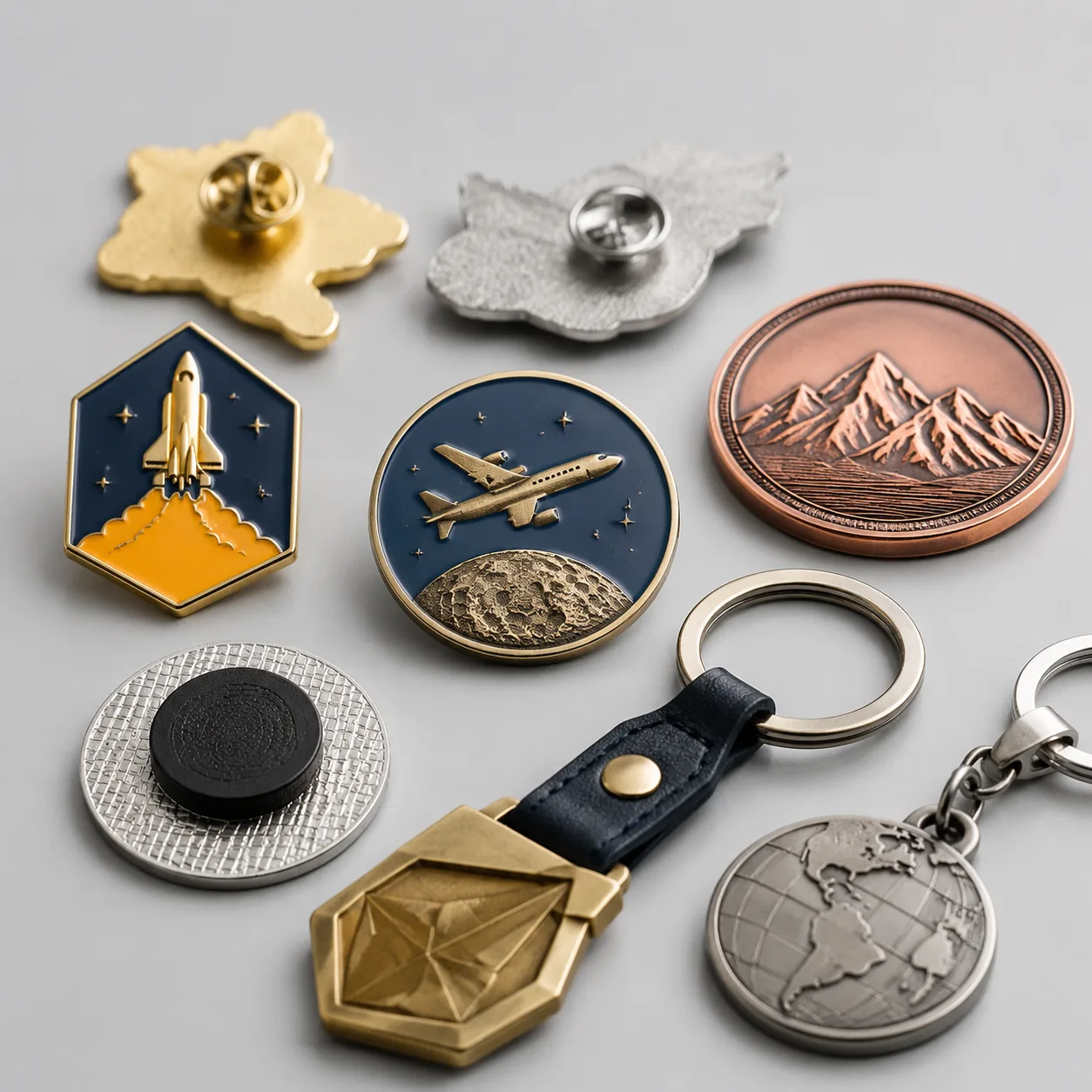
When tariff pressure rises, FOB price stops being the real comparison
A common 2026 buying mistake is choosing the lowest FOB quote and discovering later that the landed cost per usable piece is worse after duty, freight, packaging volume, inspection rejects, and replacement reserve are included. A 45 mm zinc alloy keychain quoted at USD 0.86 FOB can easily land above a 38 mm iron soft enamel pin quoted at USD 0.49 FOB once higher metal weight, extra assembly, individual bagging, and a 2% to 4% cosmetic sort rate are added.
The practical question is not which product is cheapest to manufacture. It is which product still holds its cost position after tariff exposure, transport mode, packed cube, AQL standard, and accepted yield are included. For most mid-volume orders, six variables explain the result: metal mass, packed volume, process complexity, MOQ efficiency, usable yield, and accessory count.
That is why mixed inquiries for pins, keychains, coins, patches, lanyards, and magnets need to be normalized before any category decision is made. Align visible size, thickness, hardware, finish, packaging, and inspection standard first. Once those are held constant, one or two product types usually separate as the commercial winners.
1. Start with the actual job the item must do
If the main job is brand visibility on jackets, bags, uniforms, or caps, soft enamel pins and patches usually hold cost better than coins or heavy keychains. A die-struck iron soft enamel pin at 30 to 40 mm, 1.2 to 1.5 mm thick, with 2 to 4 spot colors and a butterfly clutch, commonly runs USD 0.31 to 0.58 FOB at 500 to 1,000 pieces, excluding tooling. A woven patch with similar visible area often lands at USD 0.16 to 0.34 FOB at the same volume, provided the artwork does not rely on ultra-fine filled text, metallic thread, or dense satin borders.
If the item must signal recognition, commemorative value, or executive presentation, challenge coins still outperform lighter products in perceived value per recipient. The tradeoff is direct: more metal, tighter cosmetic expectations, and more expensive packaging. A 45 mm die-struck brass or cast zinc alloy coin at 3.0 mm thickness, two-sided, antique nickel or antique brass finish, typically runs USD 1.08 to 2.10 FOB at 300 to 1,000 pieces. Add an acrylic capsule at roughly USD 0.18 to 0.35 or a velvet box at USD 0.55 to 1.10, and freight cube starts moving faster than the unit metal cost.
For event access, school IDs, conferences, and sponsor-heavy graphics, lanyards often defend total cost best because they deliver large printable area for relatively little material. A 20 mm polyester sublimation lanyard, about 900 mm cut length, with swivel hook and safety breakaway, commonly prices at USD 0.28 to 0.60 FOB at 500 to 2,000 pieces. Add a detachable buckle, phone tether, card holder, or retail bag and the quote can rise by USD 0.04 to 0.18 per set, but the cost per impression usually remains favorable.
Magnets sit between promo and retail. For museum, tourism, and mail-safe campaigns, a flat PVC or stamped metal magnet can work well. For layered magnets on backing card or in blister retail packs, the apparent savings often disappear once volume and carton count are modeled.
2. Normalize the spec before comparing categories
| Item type | Typical spec | MOQ sweet spot | FOB range USD | Lead time after approval | Main landed-cost risk | When it holds cost best |
|---|---|---|---|---|---|---|
| Soft enamel pin | 35 mm, iron, 1.5 mm, 2-4 colors, butterfly clutch | 300-1000 | 0.31-0.58 | 10-15 days | Minor plating/color-fill rejects, metal duty, tooling spread | Brand merch, employee recognition, event giveaways |
| Metal keychain | 45 mm, zinc alloy, 3.0 mm body, split ring plus 25 mm chain | 300-1000 | 0.84-1.42 | 12-18 days | Higher weight, assembly labor, larger packed cube | Retail merch, daily-use promo, stronger perceived value |
| Challenge coin | 45 mm, brass or zinc alloy, 3.0 mm, 2-sided relief | 100-500 | 1.08-2.10 | 12-20 days | Weight, cosmetic sort rate, presentation packaging | Recognition awards, commemoratives, low-quantity gifting |
| Woven patch | 75 mm, laser edge or merrow edge, iron-on or sew-on backing | 300-1000 | 0.16-0.34 | 9-14 days | Fine-detail interpretation limits, backing choice, edge finish | Uniforms, clubs, detail-heavy logos |
| Embroidered patch | 75 mm, twill base, 75%-100% coverage, merrow border | 300-1000 | 0.22-0.52 | 9-14 days | Thread coverage, border style, backing upgrade | Workwear, outdoor apparel, classic badge look |
| Sublimation lanyard | 20 mm x 900 mm polyester, hook, breakaway, optional buckle | 500-2000 | 0.28-0.60 | 8-12 days | Hardware mix, rush assembly, accessory add-ons | Events, schools, conferences, ID programs |
| Fridge magnet | 70 mm PVC or stamped metal with ferrite magnet | 300-1000 | 0.33-0.88 | 10-15 days | Magnet material cost, retail carding cube, mailer thickness limits | Tourism, souvenir retail, direct-mail inserts |
A usable comparison requires normalized specs. Buyers routinely compare a 30 mm pin with a 50 mm keychain, or a one-sided coin with a full-color lanyard, then conclude that one supplier is expensive. That comparison has no analytical value. Normalize by visible area, base material, nominal thickness, attachment hardware, finish, packaging, and whether the quote includes tooling, mold, setup, and pre-production sample cost.
In 2026, the most stable categories are usually standard soft enamel pins, woven or embroidered patches, and basic sublimation lanyards. The least stable are heavy keychains, premium coins, and anything with gift boxing, because metal cost, handling labor, and freight cube stack together.
3. Process choice determines reject rate and usable yield
Two items can share the same headline quote and still deliver very different accepted-piece cost. A soft enamel pin with 4 spot colors, metal lines above 0.20 mm, and optional epoxy dome usually runs with predictable yield under AQL 2.5 major and AQL 4.0 minor. A bright black nickel keychain with a large mirror field is far more vulnerable to hairline scratches, swirl marks, plating haze, and bag rub. The unit price may look competitive, but the cost per accepted piece rises once sorting, remake allowance, and claims handling are counted.
Stamped iron is usually the most cost-efficient route for flat badges and pins in the 0.8 to 1.8 mm thickness range. Zinc alloy casting makes more sense for deep relief, cutouts, hollow forms, bottle-opener features, spinner parts, or irregular outlines, but buyers should not assume precision equal to machined parts. For cast metal, smaller feature tolerance commonly sits around plus or minus 0.15 mm to 0.25 mm, while overall dimensions on well-controlled projects may hold around plus or minus 0.10 mm to 0.20 mm. Pin post location tolerance is often looser, typically plus or minus 0.30 mm, which matters on multi-post backers and tight retail cards.
Artwork drives hidden cost more than many buyers allow for. Text below about 0.8 mm letter height, line widths below 0.20 mm, unsupported narrow bridges, recessed islands, and broad reflective surfaces all increase cosmetic reject risk. Satin, antique, sandblasted, and stippled backgrounds usually hold appearance better than mirror-bright plating, especially when decorative top-plating thickness is only about 0.03 to 0.08 micron over the nickel or copper base. That is standard decorative plating for appearance, not a heavy wear layer.
The same logic applies to textile items. Dense embroidery can blur small text and close narrow counters. Woven patches usually hold finer detail, often down to about 0.5 to 0.7 mm line interpretation depending on thread count and artwork contrast. Sublimation handles gradients and sponsor-heavy art cleanly, but edge stitching, buckle insertion, and carding still affect total yield and labor content. On lanyards, color variance between print lots is usually more visible on large flat solids than on photographic or gradient art.
4. MOQ tiers decide whether custom metal still makes sense
Post-tariff buying pressure has made MOQ structure more important than many teams expect. Splitting 1,000 pieces across four designs rarely performs like one design at 1,000 pieces. Tooling, color setup, plating line handling, pre-production sampling, carton segregation, and count verification all reduce factory efficiency. On metal products, the difference between 250 pieces per design and 1,000 pieces per design is often large enough to change the recommended category.
As a working rule, metal items usually become commercially sensible from around 300 pieces per design, improve materially at 500, and improve again at 1,000. A 35 mm soft enamel pin quoted at about USD 0.61 FOB for 300 pieces may drop to USD 0.46 to 0.50 at 1,000 pieces. A 45 mm cast keychain at USD 1.28 to 1.38 for 300 pieces may move to roughly USD 0.91 to 1.04 at 1,000 if the finish and hardware remain standard. Simple stamped pin tooling often runs USD 60 to 120, while a cast metal mold for a larger irregular keychain usually runs USD 90 to 180. Multi-level relief, cutouts, or spinner assemblies push mold cost higher.
Patches and lanyards also improve with volume, but their setup burden is lower, so they absorb design variation more efficiently. That matters for programs with multiple sponsors, regional logos, chapter-level designs, or seasonal artwork refreshes. A woven patch program split across four SKUs may still price cleanly. A cast keychain program split the same way often does not, because each SKU carries more setup, more handling, and more quality risk.
Consolidation is not always the right answer. If one hero design has predictable demand and three secondary designs are speculative, it is often smarter to keep the hero SKU in soft enamel and move the lower-volume designs to woven patches or standard lanyards. Forcing every SKU into cast metal for category consistency can damage the budget more than it helps the brand system.
5. Freight cube and packaging can reverse the ranking
Freight does not usually change the order of similar items, but it often flips the ranking across categories. A bulk-packed pin on a backing card in an OPP bag is compact and predictable to carton. A challenge coin in a velvet box, rigid paper box, or acrylic capsule can multiply packed volume several times beyond the metal size itself. A keychain with chain, split ring, bag, and retail card also packs less efficiently than first-time buyers assume.
Ask for packed piece dimensions and carton data before artwork approval, not after sample signoff. For standard programs, suppliers should be able to estimate units per export carton, carton size in cm, and gross weight in kg at quotation stage. Reasonable export practice usually keeps carton gross weight below about 15 to 18 kg for manual handling, and outer-dimension variance within plus or minus 2 cm on repeat runs. Without those numbers, the landed-cost model is incomplete.
Protection has its own cost logic. Thin polybags and loose bulk packing reduce unit cost, but bright plating and polished edges mark easily in transit. For polished keychains or coins, spending an extra USD 0.03 to 0.08 per piece on separate bagging, tissue wrap, or compartment trays can be cheaper than receiving 3% to 5% appearance claims. Antique-finish pins, woven patches, matte lanyards, and flat PVC magnets usually do not need that level of piece-by-piece protection.
A simple example shows why this matters. One thousand 35 mm pins with card and OPP bag may fit into a single compact master carton with stable dimensional weight. One thousand 45 mm coins in acrylic capsules may require multiple cartons and materially higher cubic volume, even if the FOB delta looked modest on the quote sheet. Packaging is often where a premium-looking item loses its cost position.
6. Match durability to the real service life
Over-specification is a quiet budget leak. If a conference lanyard will be used for three days, there is usually no reason to specify premium webbing, oversized lobster hooks, or a custom-molded safety release. If a souvenir keychain is intended for daily key use, then a 3.0 mm cast body, closed jump ring, and better-controlled plating system are worth paying for because field failure costs more than modest hardware savings.
The same rule applies to finishes and attachments. A ceremonial lapel pin for occasional indoor wear can work well with a standard butterfly clutch and decorative finish. A bag charm or keychain exposed to abrasion needs more conservative hardware, cleaner solder joints, and geometry that avoids stress concentration around narrow necks, cutouts, and moving parts. For magnets shipped by mail, thickness also matters: keeping total pack thickness under common letter-mail thresholds can protect distribution cost better than upgrading face material.
- Use standard decorative plating for low-abrasion, indoor, short-cycle items; reserve premium cosmetic upgrades for products with longer display life or gift presentation requirements.
- Upgrade hardware before upgrading surface appearance on daily-use items; split rings, jump rings, pin posts, and hooks usually fail before color fill does.
- Avoid large unsupported shapes above about 60 mm unless thickness, ribbing, or attachment count increases; otherwise bending and deformation complaints rise.
- For wearable textile applications, reduce weight first; wearer comfort usually matters more than extra relief depth or added metal area.
- Set cosmetic expectations by finish: antique, matte, and textured surfaces hide handling marks much better than mirror polish or flat bright plating.
- When specifying magnets for mailers, confirm the finished pack thickness and backing card weight early; postal cost brackets can erase small FOB savings.
A reliable buying framework ties quality target to actual use. If the expected service life is six months, there is rarely a reason to buy a five-year specification. If the item must survive repeated handling, structural reliability should take priority over decorative extras.
7. A practical 2026 shortlist under budget pressure
If the objective is the lowest landed cost with acceptable branding impact, start with soft enamel pins, woven patches, embroidered patches, and standard sublimation lanyards. These categories usually offer manageable MOQs, lower freight cube, simpler packaging, and more predictable inspection results. Typical production lead times after artwork approval are about 8 to 12 days for lanyards, 9 to 14 days for patches, and 10 to 15 days for standard pins. Pre-production samples commonly add 3 to 7 days, and peak-season approvals can add another 2 to 5 days.
If the objective is premium feel per recipient and quantity is limited, challenge coins and cast keychains still make sense, but only after checking packed dimensions, per-piece weight, hardware detail, and packaging assumptions. For metal items, confirm base material, nominal thickness, plating finish, decorative plating range, attachment style, and dimensional tolerance before comparing offers. Without those details, a low quote is often just an under-specified quote.
The final filter is reorder stability. Products built around standard molds, simple color fills, common hardware, and standard packaging are easier to repeat with less drift in cost and appearance. That matters in 2026 because many buyers are avoiding one-off hero items that cannot be reordered six months later at anything close to the original economics.
What buyers should request before choosing a category
Rank the project by function first: visibility, perceived value, daily utility, or event access. Then request quotes on only two or three realistic constructions, each normalized by size, thickness, hardware, finish, packaging, and inspection standard. Finally, ask every supplier for the same commercial data set: FOB unit price, tooling or mold charge, packed piece dimensions, estimated export carton size, estimated gross carton weight, and production lead time in calendar days after approval.
Pressure-test the shortlist with direct technical questions. What is the MOQ per design and per colorway? What nominal thickness is quoted, and what tolerance is stated? What inspection standard will final release follow: AQL 2.5/4.0, AQL 1.5/4.0, or another level? What plating finish is included, and is it bright, satin, matte, or antique? What plating thickness or process note is the supplier willing to state? What accessories are included in the FOB price, and which are charged separately? Clear answers usually provide a better buying basis than the lowest headline number alone.
For most 2026 orders, the best product is the one that keeps tariff exposure, freight, and rework under control while still doing the campaign job. In practice, that usually means simpler pins, patches, or lanyards for broad distribution, and coins or keychains only where higher perceived value is necessary and justified by the budget.
Have a project? Send your artwork and target quantity and we’ll reply with a detailed quotation within 12 working hours.
Ready to get this made?
Send your sketch, target quantity and ship-date. Detailed quotation in 12 hours.



