Planning a Limited-Edition Pin Drop: A Buyer Scenario
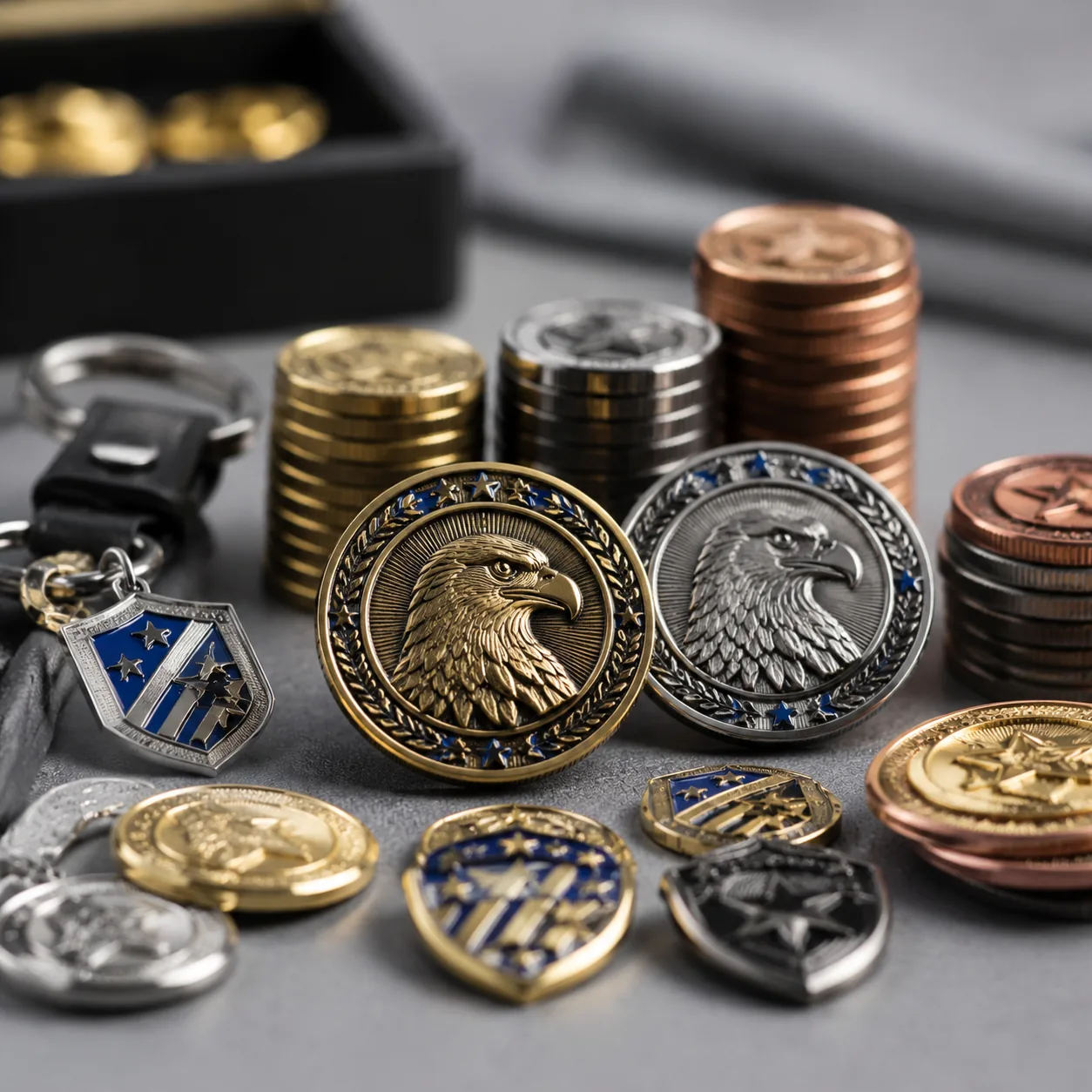
Scenario: 4 SKUs, 2,500 Pins, One Fixed Opening Date
A museum shop buyer has 10 weeks before a new exhibition opens and wants a limited-edition enamel pin drop. The assortment has four SKUs: a museum-logo pin, a lead character, a secondary character, and a date-stamped exhibition souvenir. The total opening forecast is 2,500 pieces, but the risk is not only quantity. The risk is that four small pins behave like four separate products once they reach the factory.
Each design needs its own mold or die, plating control, enamel filling sequence, backing-card artwork, barcode verification, inspection count, and SKU-specific packing stream. A late edit to one UPC, card file, clutch type, or plating finish can delay all four SKUs if the PO treats the order as one undivided project. For a fixed retail launch, the buyer should manage the program by decision deadlines: SKU split first, sellable-unit specification second, physical sample third, production calendar fourth, inspection and packing last.
In this scenario, the target is to approve samples by day 14 to 18, complete mass production by day 45 to 55, inspect and pack by day 58, and leave 7 to 12 days for air freight, customs, and local delivery. That schedule is achievable, but only if the buyer freezes commercial and technical specifications before sampling starts.
Day 1: Quote the SKU Split Before Final Art
For custom enamel pins, MOQ must be evaluated per design, not only by total order quantity. A practical starting point is 100 pieces per design for a paid sample run or VIP gift, 300 pieces per design for stable small-batch production, and 500 pieces per design when the buyer wants better unit economics, more consistent enamel work, and cleaner packing. A 2,500-piece order is efficient only if no SKU falls below the factory’s practical production floor.
An equal split of 625 pieces per SKU is simple, but it may not match demand. Museum, entertainment, sports, and attraction channels usually over-index on the logo, mascot, or most recognizable character. Date-stamped designs can sell quickly during the exhibition window but become obsolete after the closing date. A stronger opening allocation is 900 museum-logo pins, 700 lead-character pins, 500 secondary-character pins, and 400 date-stamped pins. That keeps every SKU above 300 pieces while putting more inventory behind the safest designs.
| MOQ Tier Per Design | Best Use | Production Impact | Typical USD FOB Range |
|---|---|---|---|
| 100-199 pcs | VIP gift, artist proof, donor merchandise | Tooling and setup dominate cost; manual packing; limited QC sample size | $1.45-$3.40 per pin |
| 300-499 pcs | Museum counter test or short event run | Usable AQL sample size; moderate mold amortization; higher packing cost per unit | $0.92-$2.20 per pin |
| 500-999 pcs | Main retail drop with SKU-level replenishment | Better enamel-line efficiency; steadier color control; lower carton handling cost | $0.60-$1.55 per pin |
| 1,000-1,999 pcs | Venue, wholesale, or chain-store program | Stable pricing; buyer carries more forecast and storage risk | $0.46-$1.20 per pin |
| 2,000+ pcs | Repeat program or mass retail launch | Best FOB cost; stricter cash-flow, storage, and markdown exposure | $0.36-$0.98 per pin |
These ranges assume a 25-35 mm soft enamel pin in iron or zinc alloy, 1.2-1.5 mm thick, standard nickel, black nickel, imitation gold, antique brass, or antique copper plating, one rubber clutch, one printed backing card, and one OPP bag. Hard enamel typically adds $0.12-$0.45 per unit. Brass base metal, dual plating, epoxy dome, glitter, glow pigment, laser numbering, dangling charms, safety-pin backs, magnetic backs, or clamshell retail packs can add $0.10-$0.90 depending on MOQ and complexity.
Ask the supplier to quote each SKU separately and the combined shipment. Also request breaks at 300, 500, 750, and 1,000 pieces per design. That lets the buyer move 200 or 300 units from the weakest SKU into the strongest SKU without reissuing the RFQ or guessing at the final landed cost.
Day 3: Freeze the Sellable Unit Specification
Artwork approval is not a retail specification. The factory needs the complete sellable unit: pin size, base metal, thickness, plating finish and target thickness, enamel process, color references, attachment type, clutch material, backing-card stock, card size, barcode position, polybag requirement, warning labels, inner-box count, master-carton rules, carton marks, and inspection standard. If these are unresolved after sample approval, the sample may look correct while the production product remains commercially undefined.
For a 25-35 mm retail pin, common metal choices are 1.2 mm iron for budget soft enamel, 1.5 mm iron or zinc alloy for stronger edges and better perceived weight, and 1.5-2.0 mm brass when the design needs sharper stamping or a premium finish. Thin raised metal lines should normally be at least 0.25-0.30 mm wide. Enamel wells should be at least 0.30-0.35 mm wide where possible. Text below 4 pt, tiny isolated metal islands, and narrow bridges may survive on a digital proof but fail during stamping, polishing, or enamel filling.
Plating should be specified in measurable terms. Standard decorative plating may be 0.08-0.15 microns; a more durable retail target is 0.20-0.30 microns for pins handled by shoppers or staff. Specify nickel-free or low-nickel requirements before sampling because bath selection and lab testing can add 3-7 days. If the product may be sold to children or used in a youth program, confirm CPSIA, EN 71, REACH, Prop 65, heavy-metal, and small-parts requirements before the factory buys materials.
Backing cards create many avoidable retail failures. Use a defined card size such as 55 x 85 mm or 60 x 90 mm, 300-400 gsm C1S or art card, matte or gloss lamination, and a hanging hole matched to the display fixture. Pin-hole location should hold +/-1.0 mm tolerance so the pin sits straight. UPC or EAN artwork should keep a minimum 3 mm quiet zone, high print contrast, and enough magnification for the retailer’s scanner. A card can be visually attractive and still fail receiving if the barcode cannot scan.
Day 7: Use Samples to Prove Production Risk
The pre-production sample should prove the riskiest production details, not merely confirm that the artwork is attractive. For this four-SKU drop, approve one physical golden sample per SKU and one fully packed sample that includes the card, barcode, bag, warning copy, and carton mark. The factory should keep one signed sample set, and the buyer should keep one identical set for inspection comparison.
Typical sample lead time is 7-10 calendar days after vector art and mold drawing approval for standard soft enamel, and 10-14 days for hard enamel. Transparent enamel, glitter, glow pigment, epoxy, cutouts, sliders, spinners, chains, or multiple attachments should be allowed 12-18 days. International courier transit to North America or Europe normally adds 3-5 days, so a two-day delay in sample feedback can easily become a one-week loss in the launch calendar.
- Approve actual width, height, thickness, post spacing, card size, and packed unit weight against the written specification.
- Inspect enamel under neutral 5000K lighting for pits, dust, underfill, overflow, color bleed, bubbles, and contamination.
- Scan every UPC, EAN, QR, or SKU barcode on the packed sample using the retailer’s intended scanner or POS app.
- Check clutch fit, post straightness, weld strength, card-hole alignment, bag seal, hanging-hole position, and warning-copy placement.
- Define normal variation in writing, such as +/-0.3 mm size tolerance, +/-0.1 mm thickness tolerance, and minor enamel meniscus at raised metal edges.
- Photograph approved plating tone and enamel colors next to the signed sample, not only next to a Pantone book or monitor proof.
This sample discipline matters when multiple SKUs share the same brand color. The same Pantone reference can look darker in a small enamel well and lighter across a large filled area. If color matching is critical, specify a physical enamel chip, approved prior production sample, or acceptable Delta E range rather than relying only on a PDF proof.
Day 18: Build the Calendar Around Bottlenecks
After sample approval, production is a sequence of separate operations: mold adjustment, stamping or casting, trimming, polishing, plating, enamel filling, baking, epoxy if used, post attachment, clutch fitting, carding, inspection, and export packing. For 2,500 pins across four SKUs, a realistic mass-production lead time is 15-25 days after sample approval for standard soft enamel. Hard enamel, epoxy domes, nickel-free plating, tight retail packing, or complex polishing can extend production to 22-35 days.
The bottleneck is often enamel filling and packing rather than metal forming. Four designs with six enamel colors each create 24 color-fill programs. Operators must change colors, clean needles or syringes, reset fixtures, bake batches, and check contamination between runs. Packing slows again when every SKU uses a different backing card, barcode, SKU label, and carton mark.
| Stage | Typical Time | Buyer-Controlled Risk | Factory-Controlled Risk |
|---|---|---|---|
| Mold drawing and tooling adjustment | 3-6 days | Late art edits, unresolved trademark approval, lines under 0.25 mm | Detail loss, weak bridges, mold rework |
| Stamping or casting and polishing | 3-5 days | Fragile cutouts, sharp points, unrealistic 3D relief | Burrs, surface waves, size drift |
| Plating and adhesion check | 2-5 days | Unclear finish, nickel-free requirement declared late | Tone variation, weak adhesion, bath contamination |
| Enamel filling and baking | 5-10 days | Too many tiny fill areas, late Pantone change | Dust, underfill, overflow, color bleed |
| Post attachment and clutch fitting | 2-4 days | Wrong attachment type, card holes not matched | Loose posts, crooked posts, weak welds |
| Carding, bagging, and SKU packing | 3-6 days | Late UPC, card file, country-of-origin wording, or assortment rule | Wrong card, mixed SKU, tilted carding |
| Final QC and export packing | 2-4 days | Unclear AQL, carton weight limit, or label format | Short count, label error, crushed cartons |
Freight should be planned, not treated as a rescue tool. Air express is usually 3-6 days door to door for compact pin cartons. Standard air freight with customs clearance and final delivery is often 7-12 days. Ocean freight may take 25-45 days depending on port pair, consolidation schedule, and inland routing. For a 10-week launch, budget air from the start unless the PO is released early enough to absorb ocean transit.
Day 30: Inspect to Retail Standards, Not Souvenir Standards
Retail inspection must verify sellable units, not just attractive metal pieces. The order must arrive with correct SKU separation, readable barcodes, secure posts, safe edges, consistent cosmetics, accurate counts, and cartons receiving staff can process quickly. A mixed-SKU carton error can cost more than a minor enamel mark because it disrupts store intake, replenishment, inventory reporting, and shortage claims.
A practical inspection standard is AQL 2.5 for major defects and AQL 4.0 for minor defects, with zero acceptance for critical defects. Critical defects include sharp hazardous burrs, needle-like exposed points, prohibited materials, missing legally required warnings, or failed compliance tests. Major defects include wrong plating, wrong enamel color, missing or loose post, unscannable barcode, wrong backing card, mixed SKU, missing warning label, obvious front-face scratch, or incorrect quantity. Minor defects include tiny polishing lines, slight enamel meniscus, small card scuffs, or plating tone variation within the approved sample range.
Put dimensional and functional tolerances in the PO. For most 25-35 mm pins, use +/-0.3 mm on width and height, +/-0.1 mm on thickness, +/-5% on unit weight, and +/-0.5 mm on dual-post spacing. Single-post pull strength should generally exceed 5 kgf after attachment. If the design uses magnets, sliders, chains, spinners, or dangling charms, add functional cycle checks, such as 50 open-close or movement cycles with no detachment, cracking, or abnormal looseness.
Count logic should be inspected at the same time as cosmetics. A 2,500-piece order packed 50 pieces per inner box creates 50 inner boxes. If master cartons hold 500 pieces, the shipment should contain five master cartons. Ideally each master carton contains one SKU only; if assortments are required, the carton label and packing list must show the exact SKU ratio, not only the total piece count.
Day 35: Pack for Receiving, Replenishment, and Display
A limited drop can fail in the last ten meters if the product arrives intact but is hard to count, scan, allocate, or display. Packaging should match the selling model. A museum shop usually benefits from 50 pieces per inner box by SKU for stockroom control. An event operator may prefer booth-ready bundles of 25 pieces, but those must be specified as assortment packs with exact SKU ratios and carton labels.
For standard carded enamel pins, a reliable default is one pin on one backing card, one OPP bag, 50 pieces per inner box, and 500 pieces per master carton. Keep master cartons below 15 kg gross weight for manual receiving at venues. A typical 500-piece carton for carded pins may be about 38 x 28 x 25 cm, but 400 gsm cards, clamshells, hang tabs, blister trays, and header bags can change cube and freight cost quickly.
Carton marks should show buyer name or PO number, SKU code, design name, quantity, net weight, gross weight, carton number, carton dimensions, and country of origin where required. Avoid mixed master cartons unless the buyer explicitly needs assortment packing. Mixed cartons may save space but increase receiving errors and make shortage claims harder to prove.
If the pins ship directly to a retailer, confirm routing-guide rules before carding begins: carton drop requirements, master-carton strength, GS1-128 or carton label format, suffocation warning text, retail barcode placement, and country-of-origin wording. A supplier can usually change a carton label within a day. Changing backing cards, UPC codes, or inner-pack configuration after carding may require opening and repacking thousands of units.
Day 42: Protect the Reorder Before the First Sale
Limited edition does not always mean no reorder. If the logo pin sells out during opening weekend, the buyer may want another 500-1,000 pieces within 21-30 days. That is realistic only if the original tooling, enamel colors, plating finish, backing-card file, barcode, carton label, inspection standard, and packing diagram are documented before the first shipment leaves the factory.
Ask how long molds will be retained and who controls them. For typical enamel pin tooling, 2-3 years of retention is reasonable if the buyer reorders periodically, but it should be written into the PO or supplier agreement. A factory may charge a mold fee while retaining physical custody of the mold. Some suppliers allow mold transfer for a handling fee, but moving tooling between factories can still create quality drift because plating baths, polishing wheels, enamel viscosity, and operators change.
A useful reorder file includes final vector art, mold drawing, approved dimensions, Pantone or enamel references, plating reference, base metal, thickness, attachment type, backing-card file, barcode file, carton label, approved sample photos, AQL standard, packing diagram, and final carton list. The buyer should hold this file internally rather than relying only on a supplier salesperson. Staff turnover is a common reason annual exhibition merchandise has to be re-sampled from scratch.
- Issue the RFQ as four SKU rows with one shared packing and inspection specification.
- Request FOB breaks at 300, 500, 750, and 1,000 pieces per SKU before locking the final split.
- Require one physical pre-production sample per SKU and one fully packed sample before mass production.
- Set AQL 2.5 major and 4.0 minor, with zero tolerance for sharp burrs, wrong barcode, wrong SKU, missing warning, and loose posts.
- Freeze card artwork, barcode files, carton marks, country-of-origin wording, and inner-pack count before sample approval.
- Hold at least 7 calendar days between planned factory completion and freight cutoff for inspection, rework, or repacking.
- Keep the mold-retention term, reorder pricing validity, and approved production file in writing before shipment.
The disciplined sequence is simple: forecast the SKU split, define the sellable unit, sample the actual packed product, build the production calendar around bottlenecks, inspect by retail defect standards, and pack by SKU. That process gives the buyer a stronger chance of launching on time with pins that staff can count, scan, display, and reorder without rebuilding the program.
Have a project? Send your artwork and target quantity and we’ll reply with a detailed quotation within 12 working hours.
Ready to get this made?
Send your sketch, target quantity and ship-date. Detailed quotation in 12 hours.



