Planning a 300-Piece Custom Pin Order Without Costly Rework
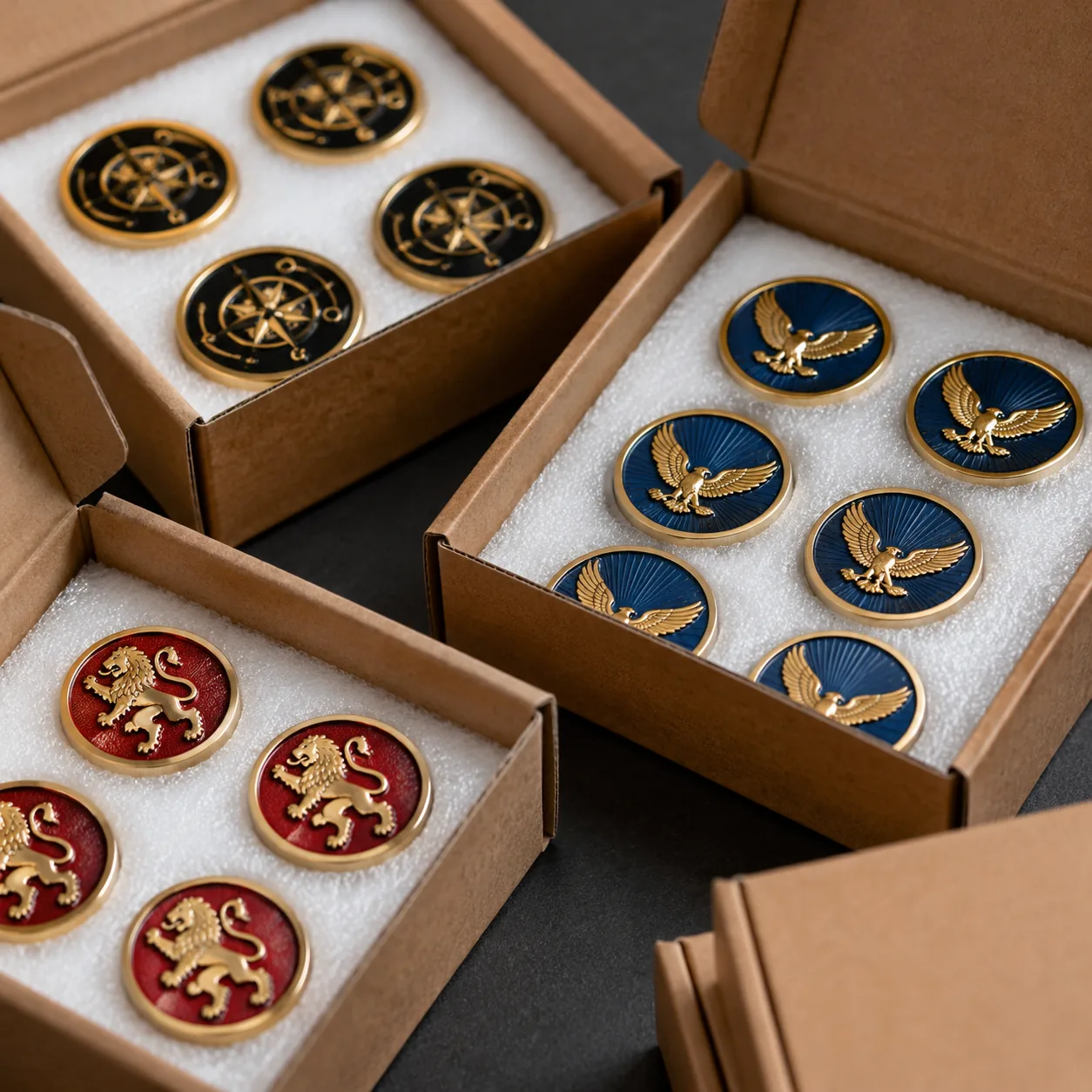
Why 300-piece custom pin orders get misquoted—and why corrections are expensive
A 300-piece custom pin order sits in an awkward manufacturing band. It is too small to dilute tooling, sample making, setup, plating, and packing labor across a large run, but large enough that one avoidable mistake can materially raise landed cost and delay an event date. Typical buyers at this volume include HR teams, schools, associations, nonprofits, clubs, marketing departments, and distributors buying for onboarding kits, donor recognition, limited retail drops, conferences, or internal award programs.
At 300 pieces, rework is not a small variance. If a die must be recut because text closed up, plating changes after sample approval, a backing card is resized, or a second post is added to stop rotation, those fixed costs are spread over only 300 units. A job first quoted at USD 0.82-1.08 FOB per piece for a standard 30 mm soft enamel iron pin can quickly move to USD 1.05-1.38 FOB once a second sampling loop, rush handling, or upgraded packing is added. One artwork-to-sample revision loop usually adds 3-7 calendar days. A full die remake often adds 4-6 more days plus another approval cycle.
The practical approach is to treat the purchase as a controlled micro-production run. Freeze the build before RFQ, force suppliers to quote against the same assumptions, and approve against measurable standards rather than a general visual impression. On low-MOQ metal accessories, the best commercial outcome is rarely the lowest headline unit price. It is the lot that passes on the first run, ships on schedule, and matches the approved sample without costly sorting or remake.
Choose a pin construction a 300-piece budget can actually support
For most buyers, the lowest-risk specification at 300 pieces is still a die-struck soft enamel iron pin in the 25-32 mm range, 1.2 mm base thickness, 4-6 enamel colors, one butterfly clutch, and individual OPP bag packing. This remains the mainstream build because tooling cost is moderate, cycle time is predictable, and factories can usually hold the detail level without premium finishing steps.
Once you move beyond that baseline, fixed cost rises quickly. Hard enamel needs more grinding and polishing to achieve a near-flat face. Brass costs more than iron but usually stamps with cleaner edges and a heavier feel. Zinc alloy casting is the better route for irregular outlines, internal cutouts, thicker 3D relief, or larger sizes—typically above 40-45 mm—where a stamped construction becomes inefficient or loses detail. Printed pins are the right answer for very fine text, gradients, halftones, or map art, but they shift risk from metal definition to print proofing, color drift, and surface protection.
Keep manufacturability limits realistic. For stamped soft enamel pins, raised metal lines below about 0.25 mm are vulnerable to weak or broken definition. Enamel wells narrower than about 0.40 mm often fill inconsistently. Inner cutouts narrower than 0.80-1.00 mm are common redraw items, especially on iron. Text below roughly 5 pt at final pin size often must be thickened, simplified, converted to a printed detail, or removed. If the artwork depends on tiny lettering under about 1.2 mm cap height, a printed recessed area is usually more reliable than forcing stamped metal below process capability.
| Build option | Best use at 300 pcs | Typical FOB unit price | Tooling / sample impact | Typical lead time after art approval | Wrong choice when |
|---|---|---|---|---|---|
| Soft enamel iron, 30 mm, 1.2 mm, 5 colors | Best baseline for events, staff recognition, giveaways | USD 0.82-1.08 | Tooling USD 45-70; sample fee often waived or USD 20-35 | 14-18 calendar days before transit | You need jewelry-flat polish, premium resale feel, or complex cutouts |
| Soft enamel brass, 30 mm, 1.2 mm, 5 colors | Cleaner edges, heavier feel, stronger brand presentation | USD 0.95-1.25 | Tooling USD 55-85; sample in 4-6 days | 15-19 calendar days before transit | The program is cost-sensitive and distributed free |
| Hard enamel brass, 30 mm, 1.5 mm, 4 colors | Executive kits, commemoratives, premium retail | USD 1.18-1.72 | Longer polish cycle; tooling USD 60-90 | 17-22 calendar days before transit | Deadline is tight or the design has many tiny separated color areas |
| Zinc alloy cast, 45 mm, 2.0 mm, antique finish | Irregular shapes, 3D relief, larger commemoratives | USD 1.28-1.95 | Tooling USD 80-140; higher sampling risk | 16-22 calendar days before transit | Artwork is a simple flat logo under 35 mm |
| Printed pin with epoxy dome, 30 mm | Photo detail, gradients, micro text, maps | USD 0.88-1.20 | Print proof is critical; epoxy adds about 1 day cure/handling | 15-19 calendar days before transit | You cannot accept dome edge visibility, minor orange peel, or long-term yellowing risk |
| Custom backing card + OPP insertion | Retail-ready handout or branded presentation | Add USD 0.10-0.28 | Card proofing adds 1-2 days | Adds 1-2 days to packing | Pins are for bulk internal distribution only |
Write an RFQ that forces comparable quotes
Bad quote comparisons usually start with incomplete RFQs. At 300 pieces, that creates fake savings because one supplier assumes 1.0 mm thickness, another includes only bulk packing, another prices zinc alloy instead of stamped iron, and another leaves tooling off the quotation. The spreadsheet shows a low bidder, but the suppliers are not quoting the same product.
A usable RFQ should lock the build, attachment, and pack-out. State finished size in millimeters, material if known, process type, base thickness, enamel type, number of colors, Pantone references if match matters, plating finish, clutch type, post quantity, post locations, packaging method, target ship date, and destination country. For carded sets, specify card dimensions, paper stock, print sides, laminate or varnish if needed, hang hole if required, and whether barcodes, suffocation warnings, SKU labels, batch codes, or retailer compliance marks are necessary.
Also ask suppliers to state what changes they will make to the art for production. The commercial issue is not whether a factory says it can make the design. The issue is what it will change to make it manufacturable. If borders need thickening, cutouts need widening, text must convert to print, or the process needs to switch from stamped iron to cast zinc, you want that disclosed before tooling starts.
- Lock one exact finished size, for example 30 x 28 mm, not a 28-32 mm range
- State base thickness explicitly: 1.2 mm standard, 1.5 mm for a heavier premium feel
- Define attachment layout: one centered post for compact pins; two posts 16-20 mm apart for wider shapes to prevent rotation
- Name plating finish upfront: shiny gold, shiny nickel, black nickel, antique brass, or antique copper
- Specify pack-out now: bulk, individual OPP bag, or 90 x 55 mm backing card with bag insertion
- Ask for tooling, sample, production, packaging, and freight to be quoted as separate lines
- Require quantity policy in writing: exact 300 pcs, or 300 pcs with no more than 2% overrun/underrun if approved in advance
Compare supplier quotes on technical detail, not just unit price
The cheapest quote often hides a downgrade that appears only after delivery. Typical differences include thinner base metal, fewer enamel colors than the artwork requires, weaker clutches, omitted card insertion labor, looser tolerances, or lower finish consistency. On a 300-piece order, any one of those can erase the apparent savings.
Ask each supplier to confirm measurable assumptions. For small stamped pins, overall size tolerance of +/-0.20 mm is realistic. Base thickness tolerance is commonly +/-0.10 mm. Post location tolerance is often +/-0.50 mm on simple compact shapes and up to +/-1.00 mm on irregular or larger outlines. Pin post length is usually 8-10 mm; if the pin goes through thick apparel, felt pennants, or a heavy backing card, confirm that the clutch still engages with at least 2.0-2.5 mm of post protruding beyond the material stack.
Plating language should be specific. Promotional lapel pins use decorative plating, not heavy jewelry plating. For shiny gold, nickel, or black nickel finishes, decorative top layers around 0.03-0.08 microns are common, typically over nickel or copper strike layers depending on the finish stack. That is usually adequate for indoor use and moderate handling, but it is not a long-term corrosion guarantee. If the pins will sit in storage, travel through humid climates, or be sold at retail, ask whether a clear topcoat is available and whether the supplier can provide any salt-spray benchmark. Many factories can only support decorative indoor use, so vague terms such as premium plating are not enough.
Inspection language matters as much as metal specs. AQL 2.5 major / 4.0 minor is a common baseline for decorative accessories, but your project may need tighter rejection rules on front-face scratches, exposed base metal, enamel contamination between cells, upside-down backing cards, or visible plating shade variation within the same lot. If those points are not in writing, a supplier may still consider the shipment acceptable.
Approve one measurable pre-production sample and make it the production master
For a new design, skipping the pre-production sample is usually false economy. One approved sample—or at minimum a complete photo-and-measurement approval package—catches the problems that become expensive later: weak lines, closed text, off-center posts, loose clutches, plating tone mismatch, epoxy bubbles, or a backing card that looks acceptable flat but poor once assembled.
Approvals should be numerical wherever possible. Check width, height, thickness, post length, post placement, card size, print orientation, and final assembly. A practical benchmark for this order type is overall size within +/-0.20 mm, thickness within +/-0.10 mm, post position within +/-1.00 mm, and backing-card die-cut or trim within +/-1.0 mm. Front edges should be smooth with no hazardous burrs. Soft enamel fill should appear even at normal viewing distance of about 30 cm. Slight meniscus variation is normal, but there should be no exposed base metal in intended fill areas, no major pits, and no overflow into adjacent color cells on the front face.
If visual details matter, ask for straight-on macro photos against a millimeter scale and angled photos under neutral 5000-6500 K light so plating tone is visible. If Pantone references matter, require the supplier to state that enamel and print are visual approximations within process tolerance, not exact coated-paper matches on metal. If the card affects presentation, approve the assembled unit, not just separate pin and card proofs. Many low-MOQ programs fail because each component looked acceptable alone but poor together due to card hole placement, bag fit, or weak visual centering.
Build the timeline backward from the in-hands date
For a new 300-piece order in 2026, a realistic factory-side schedule is usually 14-22 calendar days before transit if approvals are prompt and there is no redesign after sampling. A typical sequence is 1-2 working days for RFQ confirmation and art cleanup, 3-5 days for die making, 4-6 days for pre-production sample, and 6-10 days for mass production after sample approval. Printed backing cards normally add 1-2 days. Epoxy domes, split packing, hand insertion onto cards, or manual sorting into named kits can add another 1-3 days.
Transit then controls the true delivery date. Express courier is often 3-7 days door to door depending on lane and customs clearance. Standard air with local delivery commonly runs 7-12 days. For only 300 pins, sea freight rarely makes economic sense unless it is consolidated with other cargo. If the order is event-driven, work backward from the required in-hands date and lock three internal milestones: artwork freeze, sample approval, and shipment release. Miss any one of those by two or three days and the remaining schedule buffer usually disappears.
Rush production is possible, but it is not a substitute for planning. Many factories charge a 10-20% surcharge on the production portion for compressed schedules. Even then, faster plating, enamel filling, curing, and packing leave less recovery time if defects appear mid-run. A safer plan is to preserve 5-7 calendar days of contingency rather than assuming a rush fee will solve a late approval.
Control packaging, MOQ breaks, and freight before they erase the savings
Packaging is a disproportionate cost driver on low-volume orders. A plain OPP bag often adds only USD 0.02-0.05 per piece. A printed backing card with assembly usually adds USD 0.10-0.28 per piece depending on card size, paper stock, print coverage, and whether insertion is fully manual. A rigid gift box, EVA insert, or magnetic-lid presentation carton can add USD 0.45-1.20 per set, which may exceed the FOB value of a standard soft enamel pin. For recognition handouts or event giveaways, that upgrade often adds cost faster than perceived value.
MOQ tiers matter too. Many factories quote 100, 300, 500, and 1,000-piece breaks. On a standard 30 mm soft enamel iron pin, the difference between 300 and 500 pieces may reduce FOB by only about USD 0.07-0.15 per piece, because tooling and setup are already absorbed but handwork still dominates. Buyers should compare total program value, not just unit price. If 200 extra units will not be used within 6-12 months, the lower unit price can still be the more expensive decision.
Pack style changes freight through dimensional weight. Three hundred 30 mm bagged pins may ship in one compact master carton. The same quantity in folded retail boxes can require two to four times the carton volume even though the net metal weight barely changes. Before signoff, ask for net weight, gross weight, units per carton, inner-pack quantity, and master carton dimensions in centimeters. As a rough benchmark, 300 standard 30 mm bagged pins often ship at about 6-9 kg gross depending on carding and carton materials. Boxed sets can push volumetric freight far higher than actual mass suggests.
Set final inspection rules that catch the defects most common on 300-piece runs
Small pin orders usually fail for routine batch-control reasons, not dramatic factory collapse. The repeat defects are mixed plating shades, clutches that are too loose or too tight, posts slightly off-center, backing cards inserted upside down, and front-face scratches from metal-to-metal contact during packing. These are all preventable if they are named before production starts and verified again before shipment release.
Define what final inspection must cover: front appearance, dimensions, clutch engagement, post placement, card orientation, packed quantity, inner-pack count, and carton labels. On plating-sensitive finishes such as shiny gold or black nickel, ask the factory to segregate visible shade variation rather than mixing pieces from different tank runs in the same carton. On clutch fit, request a simple functional pull-and-remove check from each packing lot so clutches engage securely but can still be removed without excessive force. If pins are packed on cards, require individual bags or non-abrasive separators to reduce rubbing in transit.
- Approve one physical sample or photo standard as the reference for acceptable front-face appearance
- Use AQL 2.5 major / 4.0 minor as the baseline, then add project-specific rejects for scratches, wrong plating shade, upside-down cards, exposed base metal, and missing clutches
- Require exact packed quantity: 300 usable pieces plus any pre-agreed spare quantity, not an open-ended overrun
- Confirm carton marks, barcode format, inner-pack quantity, and ship labels before packing starts
- Request final packed photos, carton photos, and quantity summary before balance payment or shipment release
- If presentation matters, order 3-5% extra only if priced and approved in advance; do not assume overruns are free, identical, or consistently available
The safest buying plan is usually the simplest one. If you need 300 custom pins and cannot afford a second run, keep the baseline straightforward: 30 mm soft enamel iron, 1.2 mm thick, 4-6 colors, one butterfly clutch, shiny nickel or shiny gold plating, and OPP bag packing. If a more premium look is necessary, upgrade one variable at a time—brass instead of iron, or a custom card instead of bulk bagging—rather than stacking brass, hard enamel, dual posts, special effects, and gift boxing into the same low-MOQ project.
Then force the supplier to confirm the order line by line: size, material, thickness, process, color count, plating, attachment, packaging, tooling, sample timing, production timing, AQL baseline, carton pack, ship term, and quantity tolerance. That confirmation sheet is more valuable than a polished rendering because it shows whether the factory actually understands the technical and commercial scope. On 300-piece custom pin orders, buyers usually lose money not because the product is unusually difficult, but because too many assumptions remain unstated when the die is cut.
Have a project? Send your artwork and target quantity and we’ll reply with a detailed quotation within 12 working hours.
Ready to get this made?
Send your sketch, target quantity and ship-date. Detailed quotation in 12 hours.



