Pin Posts and Clutches: 2026 Specs That Cut Failures
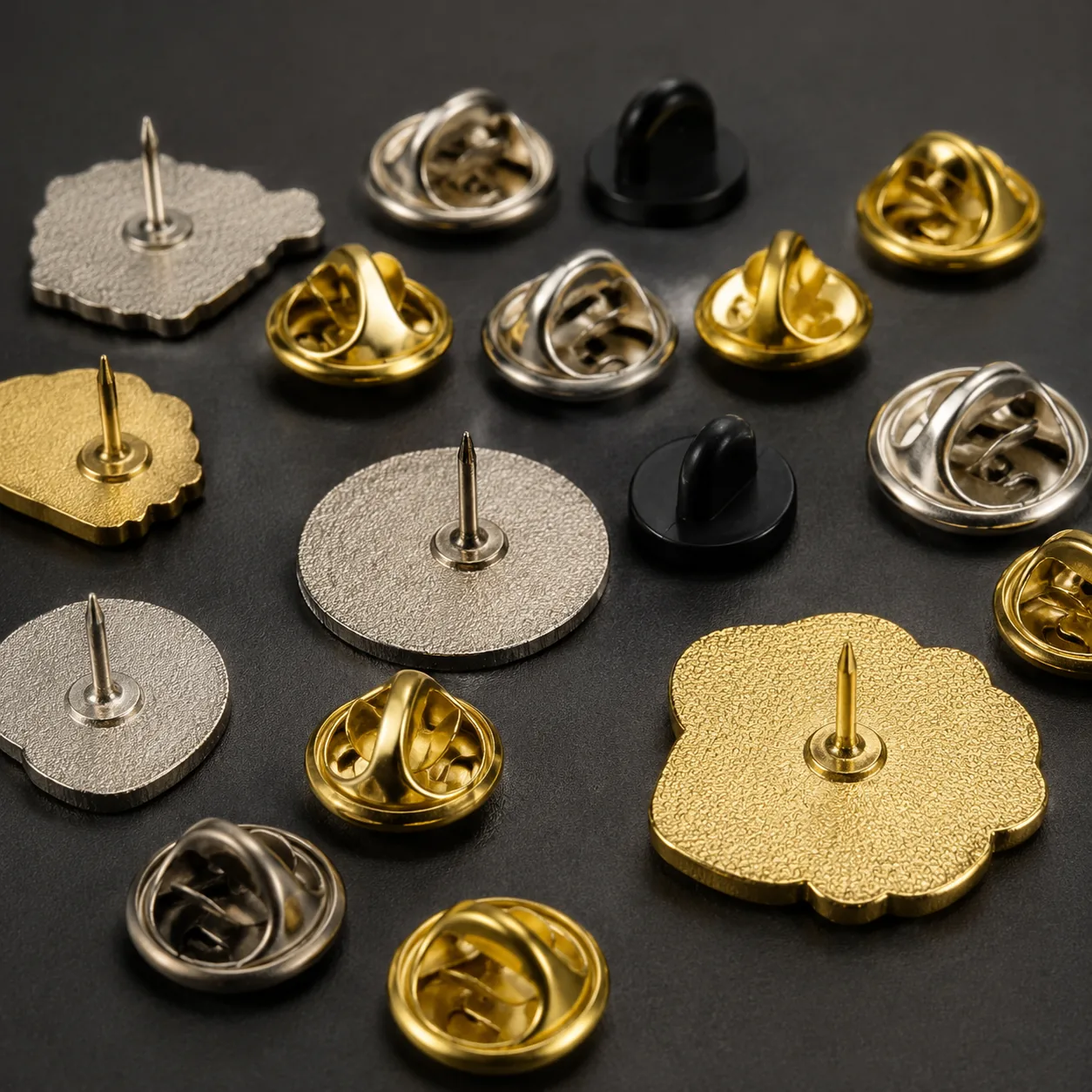
Rear hardware is where many pin programs fail
A lapel pin can pass front-side inspection for enamel fill, plating color, logo detail and retail packaging, then fail in use because the back side was left to factory default. The common returns are consistent: pins rotate on fabric, clutches release in transit, posts bend during carding, welds crack, rear hardware rusts before the face tarnishes, or a post exits thin fabric at an uncomfortable angle. These are usually not artwork problems. They are missing engineering requirements on the RFQ, purchase order, golden sample and pre-production approval.
The risk is higher in 2026 because the same pin format is used across museum stores, staff uniform programs, DTC drops, subscription boxes, event kits and retail card displays. One lost clutch can trigger a refund or replacement shipment that costs USD 4-10, often more than the finished pin. A lot can pass front-side cosmetic inspection at AQL 2.5 while still carrying a high functional defect rate if post diameter, post spacing, weld area, clutch type and card fit were never measured.
Treat posts and clutches as functional components, not accessories. Lock the rear-side drawing before tooling and sample approval. Moving posts after die release may require new tooling, a soldering fixture, hand rework or a revised card dieline, all of which add variation. The practical target is simple: the customer should receive a pin that sits level, locks securely, resists normal handling and does not damage the garment.
1) Size post count, diameter and length to the load
Do not choose post count by habit. Start with finished weight, longest dimension, center of gravity, intended fabric and wear duration. A workable baseline is one post for pins up to 25-30 mm and under 8 g; two posts for 31-55 mm or 8-20 g; and three posts for items over 55 mm, above 20 g, long horizontal badges, backpack pins, knitwear applications or soft uniform fabrics. For irregular artwork, two well-spaced posts usually control rotation better than making the whole pin thicker.
For standard stamped lapel pins, specify a post diameter of 0.8-0.9 mm for lightweight iron or brass items and 0.9-1.0 mm for heavier die-struck or die-cast badges. Posts below 0.7 mm are prone to bending during bagging, carding and parcel shipment. Posts above 1.2 mm increase insertion force and fabric damage complaints, especially on dress shirts, thin knits and children’s apparel. Require a deburred, tapered tip; a square-cut post end is a snag and finger-cut risk.
Define usable post length after the pin passes through the card, foam pad or garment board, not just raw post length. Typical finished post lengths are 8-9 mm for standard butterfly clutches, 9-10 mm for deluxe metal clutches and 6-7 mm for thin-uniform or tie-tack applications. If retail carding or foam is part of the finished unit, require at least 2.5-3.0 mm of post engagement inside the clutch after assembly. Less engagement can allow the clutch to grip only the tip and release during vibration.
| Spec line | 2026 RFQ target | Increase when | Failure if vague |
|---|---|---|---|
| Post count | 1 pc up to 30 mm / <8 g; 2 pcs at 31-55 mm or 8-20 g | 3 pcs for 55 mm+, >20 g, horizontal badges, bags or soft fabric | Rotation, sagging, poor display angle |
| Post diameter | 0.8-1.0 mm typical; tolerance +/-0.05 mm where measured | 1.0-1.2 mm for heavy cast badges or locking clutches | Bent posts, high insertion force or fabric damage |
| Usable post length | 8-10 mm after card or garment stack | 10-12 mm if card + foam stack exceeds 2.0 mm | Clutch catches only the tip |
| Post tip finish | Deburred tapered point, no sharp cut edge | Mandatory for apparel retail, children’s items and uniforms | Snags, finger cuts, fabric pulls |
| Rear pad for post | Flat pad at least 2.5 mm larger than post base diameter | Cast backs, textured backs, antique finishes | Weak weld, heat mark, uneven seating |
Typical 2026 FOB China pricing for 300-1,000 pcs of 25-35 mm soft enamel pins in iron or brass with one butterfly clutch is about USD 0.35-0.90 per pc, depending on metal, thickness, plating, color count and mold amortization. A 45-60 mm heavier badge with two posts commonly lands around USD 0.85-1.80 FOB. Hardware upgrades should be quoted as separate adders: a USD 0.08-0.20 locking clutch can be cheaper than one lost-pin replacement shipment.
2) Dimension post position and spacing, not just “centered”
“Centered on back” is not a usable manufacturing instruction. Post location should be dimensioned from reference edges, the product centerline or a tooling datum. For most stamped pins, use a position tolerance of +/-0.5 mm. For small pins under 20 mm, tight retail card alignment or paired pin sets, use +/-0.3 mm. For large die-cast badges, +/-0.7 mm may be acceptable if the post lands on a flat structural pad and the finished item is not mounted on a precision card.
Two-post spacing is a low-cost anti-rotation control. On a 40 mm wide pin, 18-26 mm center-to-center spacing usually performs better than placing both posts near the center. On a 50 mm wide pin, 24-34 mm is a practical target. If two posts sit within 10-12 mm of each other on a wide badge, the pin can still pivot on smooth woven uniforms or bag fabric. For nameplate-style or horizontal designs, put posts near load points, not only at the visual midpoint.
Avoid placing posts behind openwork, thin lettering, hinges, sliders, glitter cavities, translucent enamel wells, deep recesses or low wall-thickness areas. Weld heat can telegraph to the face on thin stamped brass, and solder can pool unevenly on textured or antique backs. On cast badges, specify whether the post lands on the highest rear plane or on a machined flat boss. Approve a rear hardware drawing with the tooling file for irregular outlines, multi-post layouts and any retail-carded program.
If card mounting is part of the sale unit, review the pin drawing and card dieline together. Hole mismatch above about 0.5 mm forces operators to angle or bend posts during assembly. That stress may not break the weld immediately, but it can appear after carton vibration, parcel handling or repeated clutch removal by the customer. For two-post pins, card hole spacing should match post spacing within +/-0.3 mm where a clean retail presentation is required.
3) Control weld area and verify pull strength
A neat-looking rear surface can hide a weak post. For stamped brass or iron pins, posts are commonly soldered, resistance welded or brazed before plating, depending on factory process and base metal. Any method can work if the mating surface is flat, oil-free and large enough. Where the back has texture or relief, require a flat hardware pad at least 2.5 mm larger than the post base diameter. Example: a 1.0 mm post with a 2.8 mm base should sit on a flat pad of approximately 5.3 mm or larger.
Visual inspection is not enough. Add a measurable pull-force requirement. For standard retail pins up to 20 g, specify minimum 3.0 kgf direct axial pull for 5 seconds per post, with no detachment, crack or visible base separation. For badges above 20 g or larger than 50 mm, use 4.0-5.0 kgf. For uniform badges, transit badges, backpack pins or premium limited editions, 5.0 kgf per post is a reasonable baseline. State pull direction, dwell time, fixture method and whether post bending during the test is allowed.
Use sample sizes that reflect the risk. For routine reorders, test at least 13 pcs per lot or shipment. For first production, rush orders, new tooling, new hardware stock or any program with previous failures, test 20 pcs. Record actual peak force where a force gauge is available, not only pass/fail. This creates a trend line across reorders and catches process drift. If destructive testing is not acceptable on finished goods, test retained production samples from the same weld setup, plating batch and packing lot.
Lead time affects weld reliability. Standard pin samples are typically 7-10 calendar days after artwork approval; mass production for 300-3,000 pcs is often 12-18 days after sample sign-off. Complex die-cast badges, locking backs, custom carding, nickel-free hardware or salt-spray requirements can extend production to 18-25 days. When the schedule is compressed, rear-side operations are usually where shortcuts appear: rushed soldering, incomplete cleaning, warm parts packed too soon, or operators forcing misaligned posts through cards.
4) Match clutch type to retention, comfort and loss risk
Butterfly clutches remain common because they are inexpensive, compact and fast to assemble. They are suitable for event giveaways and short-duration wear, but not for every use. Select the clutch based on wear environment, removal frequency, user age, garment value and replacement cost. A pin worn on a backpack for six months needs a different back than a conference pin worn for one afternoon.
Standard butterfly clutches are acceptable for low-value promotional programs. Rubber clutches improve comfort for children’s products, delicate garments and lanyard use, but retention is usually lower. Deluxe metal clutches provide firmer grip and a more premium feel for retail pins. Locking clutches are the stronger choice for uniforms, clubs, transit programs, high-value limited editions and pins likely to be worn on jackets, bags or outdoor apparel.
| Clutch type | Typical MOQ | FOB add-on per pc | Lead-time impact | Best use | Main trade-off |
|---|---|---|---|---|---|
| Butterfly clutch | 100 pcs+ | USD 0.00-0.03 | 0 to +1 day | Promo, events, short wear | Can loosen after repeated use |
| Rubber clutch | 100 pcs+ | USD 0.01-0.04 | 0 to +1 day | Children’s items, delicate fabric, comfort | Lower retention, easier to pull off |
| Deluxe metal clutch | 300 pcs+ | USD 0.04-0.10 | +1 to 3 days | Retail pins, club merchandise | Higher cost, bulkier back |
| Locking clutch | 300 pcs+ | USD 0.08-0.20 | +2 to 5 days | Uniforms, anti-loss, high-value pins | Slower assembly, user learning curve |
| Magnetic back | 300-500 pcs+ | USD 0.15-0.45 | +3 to 7 days | No-pierce office or hospitality use | Lower security; requires warning review for pacemaker-sensitive users |
Ask the supplier to identify clutch material, finish and retention grade, not just “standard back.” For orders above 1,000 pcs, adding 2-3% spare clutches in bulk is usually inexpensive and reduces after-sales friction. For high-value programs, test clutch retention after 20 attachment-removal cycles. A fresh low-grade spring back may pass incoming inspection but lose grip quickly in real use.
5) Specify rear plating, corrosion and compliance coverage
Buyers often approve face plating and overlook the post and clutch supply lot. That is how a bright gold pin ships with dull yellow backs, or black nickel hardware discolors before the front during humid storage. If the back is visible on a retail card, specify that rear hardware must match the approved plating standard within the same visual tolerance as the body, or state clearly that standard matching hardware is acceptable.
For decorative pins, thin flash plating is common. A bright gold-tone or nickel-tone decorative layer may be around 0.03-0.05 micron over a suitable base layer. Premium retail programs may request 0.05-0.10 micron for more consistent color and improved handling resistance. These are still decorative thicknesses, not jewelry-grade plating. If the pin is intended for long-term apparel use, consider brass base metal, a controlled underplate where legally acceptable and a clear anti-tarnish topcoat.
Corrosion requirements should match the market and price level. For humid climates, outdoor events, backpack use or long retail storage, specify no red rust or severe discoloration after 24 hours neutral salt spray on iron-based posts and clutches. Premium or uniform programs may require 48 hours, but quote it upfront because it can change hardware sourcing and plating sequence. Brass bodies resist base-metal corrosion better than iron, but many clutches are steel-based and need separate control.
Regulatory requirements also affect finish selection. If pins are for children, EU markets or skin-contact retail, confirm applicable nickel release, lead and cadmium limits with the importer’s compliance team. Do not assume a plating color meets EN 71-3, CPSIA or REACH expectations. Hardware stock can differ from the pin body, so declarations and test reports should cover posts, clutches, magnetic backs and any spare hardware supplied in the pack.
6) Add rear-side AQL, defect classes and functional tests
Rear hardware needs its own defect criteria, separate from front-side cosmetics. Detached posts, cracked welds, missing clutches, non-engaging clutches, sharp burrs, severe post mislocation and exposed points should be major defects at minimum. For children’s products or safety-sensitive uniform use, detached small parts or sharp metal points may need critical classification depending on destination market and product standard. Rear-side shade variance may be minor only if the back is not consumer-facing.
For many pin orders, ANSI/ASQ Z1.4 General Inspection Level II with AQL 2.5 major / 4.0 minor is a workable starting point. For premium retail, visible card packs, uniform programs or orders with prior failures, tighten hardware-related major defects to AQL 1.0. Inspection should include clutch engagement, post straightness, pull strength and final card fit, not loose-part appearance only.
A practical bend check avoids disputes. Example: post shall show no permanent deformation greater than 10 degrees after one controlled clutch installation/removal cycle plus lateral deflection to 15 degrees using an approved fixture or trained operator method. If a force gauge is used, state whether testing is performed on a bare pin, card-mounted pin or final packed unit. The condition matters because thick card stock or foam reduces effective clutch engagement.
- Classify detached post, cracked weld, unusable clutch, missing back, sharp burr and exposed point as major defects at minimum
- Use AQL 2.5 major / 4.0 minor for standard orders; tighten hardware majors to AQL 1.0 for premium retail, uniforms or prior failures
- Specify pull test: 3.0 kgf for 5 seconds on pins up to 20 g; 4.0-5.0 kgf for heavier badges, bags or uniforms
- Dimension post position with tolerance: usually +/-0.5 mm, or +/-0.3 mm for small card-mounted pins
- Require functional clutch engagement on sampled units after final carding or pack-out, not only on loose pins
- Define rear plating match, salt-spray target and whether compliance declarations cover posts and clutches
- Request 2-3% spare clutches for orders above 1,000 pcs when field replacement matters
7) Prevent damage during carding, bagging and cartons
Many bent-post complaints are created after production, not during stamping or casting. Loose pins in large PE bags can interlock, lever against each other and scratch rear hardware. For heavy faces, long posts, antique finishes, black nickel plating or mirror finishes, specify a pack-out that prevents metal-to-metal pressure: individual polybags, 10-25 pcs per inner bag, foam sheet separators, card mounting, blister trays or compartment trays. “Bulk pack” is not enough for hardware-sensitive pins.
Retail card packs should be validated as a system. Card hole diameter, hole spacing and board thickness must match the approved hardware drawing. If the board is too thick or the holes are off location, operators force the posts through and may weaken the weld before shipment. Approve one pre-production sample mounted on the final card with the actual clutch and any foam pad. For two-post items, confirm that the pin sits square without twisting and both clutches fully engage.
Carton compression also matters. If stacked units push clutches against adjacent metal edges, posts can arrive angled even when line inspection passed. Keep export cartons under about 12 kg for manual handling unless palletized and validated. For parcel networks, define a simple transit expectation on the final inner carton or retail pack: no bent posts, detached clutches, released backs or face scratches after a reasonable drop and vibration simulation.
The fastest hardware quality improvement is a measurable rear-side spec sheet: post count, diameter, usable length, exact position, pull-force minimum, clutch type, plating requirement, defect class and pack-out method. For new programs, require three approvals before mass production: a rear hardware layout drawing, one pre-production sample mounted on final packaging and a QC record showing pull or engagement results. For reorders, compare production against the golden sample with calipers and a force check. Rear-side drift is common unless someone measures it.
Have a project? Send your artwork and target quantity and we’ll reply with a detailed quotation within 12 working hours.
Ready to get this made?
Send your sketch, target quantity and ship-date. Detailed quotation in 12 hours.



