Pin-on-Card Sets: 2026 Spec Sheet for Zero-Rework Production
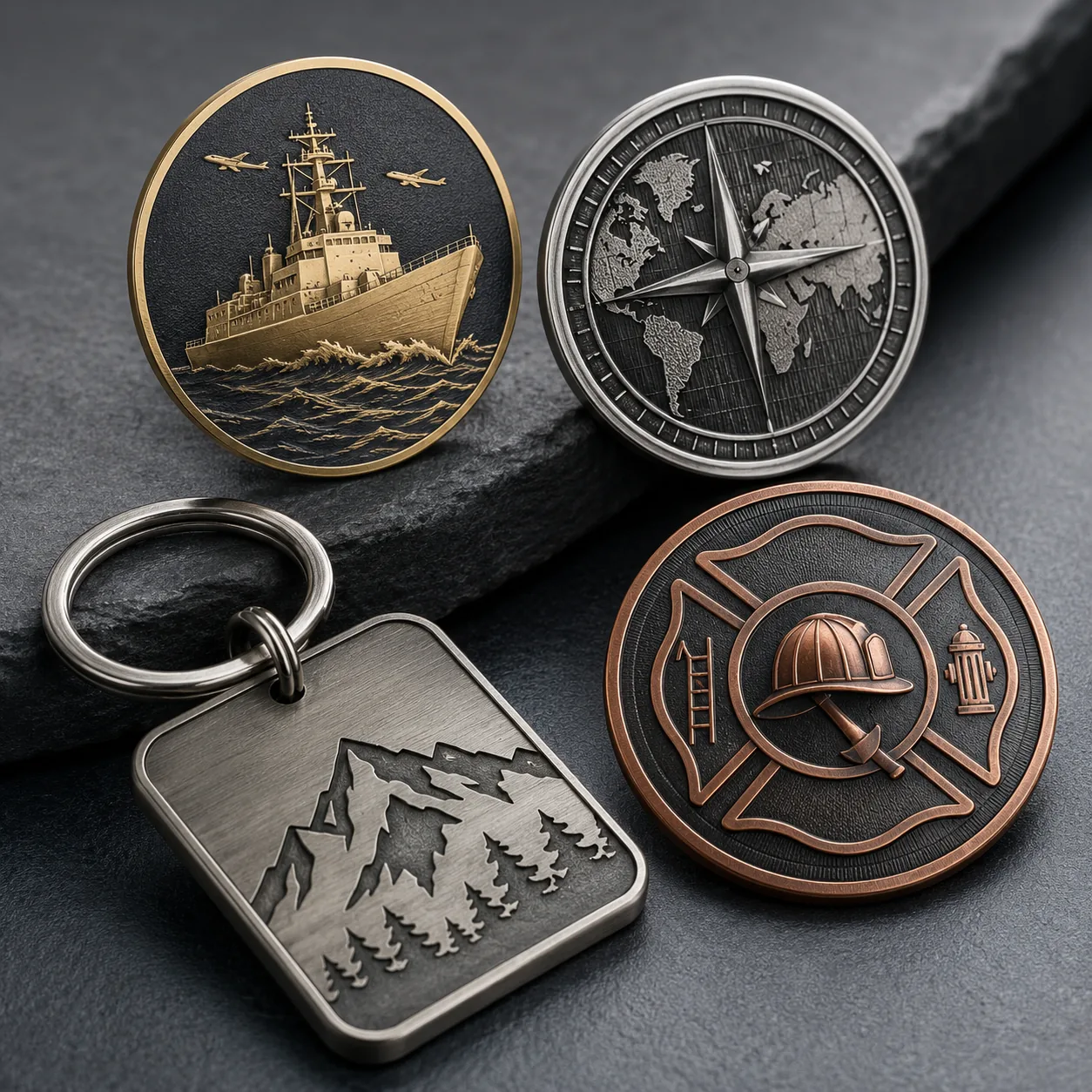
The failure point is the finished assembled SKU, not the loose pin
Most preventable rework in enamel pin programs starts after the metal pin and backing card have already been approved as separate components. The pin sample passes. The card proof passes. Then assembly exposes the real defects: post spacing misses the punched holes by 0.4-0.8 mm, butterfly clutches bruise the print face, the bag fits the flat card but not the mounted thickness, or the export carton was quoted from loose-piece weight instead of packed-set cube. In 2026, when replenishment windows are commonly 21-35 days door-to-door and many projects must work for both retail display and e-commerce fulfillment, assembled-set failures usually create larger delays than minor plating or fill touchups.
Treat the mounted set as its own product with its own dimensions, tolerances, inspection plan, and shipping data. For B2B buyers sourcing enamel pins, badges, brooches, event merchandise, museum-store items, or subscription-box inserts, the critical controls are not only plating, color fill, and logo accuracy. They are card caliper, hole geometry, post length after plating, clutch profile, packed thickness, barcode clearance, assembly yield, and carton compression. If those variables are fixed before tooling and printing, the supplier can quote to a measurable standard instead of improvising during assembly.
1) Write one finished-SKU specification, not a loose "assemble on card" note
Your PO, artwork pack, and approval record should define one completed SKU. A usable line item is: 1 pc 32 mm soft enamel iron pin, 1.5 mm body thickness, black nickel plating, 2 posts at 20.0 mm center-to-center, post length 8.5 mm after plating, mounted on 350 gsm C2S art card, actual caliper 0.42 mm ±0.03 mm, matte lamination 27 micron each side, 1 set per 35 micron self-seal OPP bag, 50 sets per inner, 500 sets per export carton, gross carton target 9.5-11.0 kg. That wording makes assembly and pack-out part of the product rather than an informal service.
Always state finished-set dimensions as width x height x packed thickness. Card size alone is not enough. A 90 x 55 mm card with butterfly clutches may pack at 7.5-8.8 mm total thickness, while the same card with rubber clutches often reaches 9.0-11.0 mm and with locking clutches 10.5-13.5 mm. If the set must fit shelf trays, peg hooks, automated pick bins, or direct-mail cartons, specify the maximum packed thickness. For many e-commerce mailers, buyers now cap assembled thickness at 10.0 mm to stay inside lower postage or dimensional-weight breaks.
- State one finished SKU covering pin, card, assembly, unit pack, inner pack, and carton quantity
- Define portrait or landscape orientation and identify the top edge datum
- Specify maximum packed thickness; ±1.0 mm is workable for standard sets, ±0.5 mm for premium retail or mail-pack projects
- Confirm whether supplier assembles 100% of units or ships pins and cards loose for local kitting
- If multiple designs share one display format, lock one card spec, one hole datum system, and one packing method across all SKUs
2) Match card stock, caliper, and hole construction to the pin hardware
For most pin-on-card sets, 300-400 gsm coated art card is the practical range. A 350 gsm C1S or C2S card is the common baseline because it is stiff enough to resist buckling during clutch insertion while still punching clean holes. Cards below 250 gsm are high risk for dual-post pins or mounted unit weights above 12 g; they bow, tear, and show stress whitening around the post entry. Premium presentation cards can use 500-700 gsm laminated board or greyboard-mounted cards, but those require longer posts, larger hole allowance, and compression testing because thick board does not recover evenly under clutch pressure.
Call out actual card thickness in millimeters, not only gsm. In production, 300 gsm coated stock is often 0.32-0.38 mm thick, 350 gsm typically 0.40-0.46 mm, and 400 gsm around 0.47-0.55 mm depending on paper mill, coating, and moisture content. That caliper directly affects insertion force and clutch engagement. Matte lamination at 25-32 micron per side improves scuff resistance and reduces fingerprints. Gloss lamination gives stronger saturation but shows scratch lines faster if raised metal rubs during transit. Soft-touch lamination looks premium but marks easily and usually needs either a larger bag allowance or a tissue interleaf.
Hole style should be specified by function. Round punched holes of 1.6-2.0 mm suit posts around 0.9-1.2 mm diameter after plating. If the actual post diameter is 1.3-1.5 mm, or the post is tapered or slightly burred near the root, 2.2-2.4 mm holes are safer. Slit holes speed assembly but allow rotation, so they are better for low-cost single-post promo pins than for alignment-critical retail pieces. For dual-post pins, center-to-center hole tolerance should normally stay within ±0.25 mm to ±0.30 mm against approved artwork. Beyond that, operators begin force-fitting the posts, which causes burst fibers, foil cracking, lamination stress marks, and reject rates that can exceed 3-5% on otherwise simple jobs.
| Card spec item | Typical 2026 workable range | Practical caution |
|---|---|---|
| Card stock | 300-400 gsm coated card | Avoid under 250 gsm for dual-post pins or mounted weight above 12 g |
| Card thickness | 0.32-0.55 mm typical for 300-400 gsm | Approve actual caliper from mill or production sample; gsm alone is not enough |
| Premium board | 500-700 gsm laminated board | Usually requires post length 10-12 mm and clutch compression test |
| Hole diameter | 1.6-2.4 mm round punch | Too tight causes whitening and force-fit rejects; too loose increases play and rotation |
| Lamination | 25-32 micron matte or gloss each side | Soft-touch needs abrasion protection and often larger bag allowance |
| Common card sizes | 50 x 50 mm, 55 x 85 mm, 70 x 90 mm, 90 x 55 mm | Larger cards increase freight cube and carton crush exposure |
3) Control post length, spacing, and clutch profile before tooling release
Post length should be approved after plating, measured from the back surface of the pin body to the post tip. For 300-350 gsm cards, 8.0-9.0 mm is a normal workable length with standard butterfly clutches. For thicker cards, rubber clutches, or locking clutches, 9.0-11.0 mm is usually safer. If the post is too short, effective clutch engagement can fall below 2.0-2.5 mm and the set may loosen during vibration, bagging, or consumer handling. If the post is too long, the tip can puncture a 30-35 micron OPP bag, scratch adjacent cards, or create a user-safety complaint.
Dual-post spacing is one of the most common hidden reject drivers. A realistic tolerance stack is post-spacing on the pin at ±0.15-0.20 mm, card hole placement at ±0.25 mm, print registration at ±0.20 mm, and mounted rotation held to not more than 2-3 degrees. On a 35-40 mm wide asymmetric pin, that stack can create more than 1.0 mm visible drift even when each component is technically within tolerance. For wide logos, character shapes, or designs that must sit level to printed text, dual posts are usually worth the added control. For pins under 20 mm, a single post plus anti-rotation nub often gives better yield than forcing tight dual spacing into a very small footprint.
Clutch choice affects appearance, packed thickness, and freight cost. Butterfly clutches are the lowest-profile option and usually add 2.5-3.5 mm back height. Rubber clutches are easier for end users and reduce card scratching, but compressed height is often 3.5-5.0 mm. Deluxe locking clutches can reach 5.0-7.0 mm and suit premium collector sets, but they are poor for thin mail packs and can push the packed set beyond carton assumptions. The hardware delta may only be USD 0.02-0.08 per set FOB, but the added cube can increase airfreight or parcel cost by far more than the hardware savings or premium.
4) Lock placement with X-Y coordinates, rotation limits, and a mounted golden sample
If the pin must align with printed text, foil frames, character names, or a planogrammed retail presentation, define placement with measurable coordinates. Use the top-left card corner as datum 0,0 and list each hole center plus allowed mounted rotation. Example: left post center 22.0 mm from left edge and 31.5 mm from top edge; right post center 42.0 mm from left edge and 31.5 mm from top edge; mounted rotation tolerance ±2 degrees; visible pin outline deviation from approved sample not more than ±1.0 mm on standard retail or ±0.5 mm on premium shelf sets.
This matters because print, die-cut, hole punch, and metal tooling tolerances stack. Offset registration commonly runs ±0.20-0.30 mm. Die-cut and hole position often run ±0.20-0.30 mm. Pin post spacing can vary ±0.15-0.20 mm. A project can therefore pass each process check and still look inconsistent when mounted. On small cards, a 0.8-1.2 mm visible shift is enough to make a collection look poorly controlled at shelf level.
A low-cost safeguard is a white-card assembly mock-up or 1:1 printed overlay before mass card printing. This usually takes 1-3 days and catches issues such as metal covering 6 pt copy, raised edges crossing a foil border, clutch pressure distorting a dark flood area, or the mounted pin sitting too low for a euro hole display. Keep one signed golden sample with measured coordinates and use it for first article approval, inline checks, and final random inspection.
5) Size bags, inners, and export cartons from mounted thickness and abrasion risk
Unit packing must be calculated from the assembled set, not from card dimensions alone. For a 55 x 85 mm card with packed thickness of 8.5-10.0 mm, an OPP bag around 70 x 100 mm with a 30 mm flap is commonly workable. For a 70 x 90 mm card at 10.5-12.0 mm packed thickness, 80 x 110 mm or 85 x 115 mm is more realistic to avoid corner crush and seam stress. If the bag is undersized, operators crease card corners during insertion, side seams split during vibration testing, and bag reject rates can rise above 2%.
Specify bag film thickness in microns. Standard OPP for light sets is usually 30-35 micron. Mounted units above 20 g, or pins with sharp outlines, long post tips, or locking clutches, are safer at 40-50 micron. If the finish is polished gold, shiny nickel, or black nickel mirror, and the card uses gloss or soft-touch lamination, consider a micro-tissue interleaf of 17-22 gsm or a slightly larger bag to reduce metal-to-print abrasion. If the set hangs in retail, also define whether the euro hole sits on the card or the bag header and whether hole center must match fixture standards such as 32 mm or 38 mm from the top edge.
Outer cartons should be controlled by both gross weight and compression performance. For manual handling and lower edge-crush risk, 8-12 kg gross per export carton is a practical target. For foil-stamped, UV-coated, or heavily laminated cards, inner bundles of 25 or 50 sets reduce face pressure, edge curl, and humidity distortion during 25-35 day sea transit. Carton loading orientation should also be specified: flat stacked, upright, or alternating head-to-foot. That prevents clutches from nesting unpredictably and creating pressure ridges through the card face.
| Packed set type | Typical MOQ | FOB unit range USD | Lead time after final approval |
|---|---|---|---|
| Standard 25-32 mm pin on 350 gsm laminated card, OPP bag | 200-500 sets | 0.38-0.85 | 10-16 days |
| Dual-post 30-40 mm pin on laminated card, OPP bag | 300-500 sets | 0.48-1.10 | 12-18 days |
| Premium thick-board card with die-cut window or sleeve | 500-1000 sets | 0.85-1.80 | 16-25 days |
| Two- or three-pin set with barcode, insert, and retail assembly | 500-1000 sets | 1.20-3.50 | 18-28 days |
6) Reserve barcode, compliance, and copy zones before final artwork
A common late-stage failure is adding UPC, EAN-13, QR, age grading, country-of-origin text, or campaign copy after pin placement is already fixed. The result is a barcode under a clutch pressure point, glare across the scan area, or small text blocked by the mounted silhouette. Reserve a no-metal, no-hole, no-pressure zone from the start. For retail barcodes, keep the quiet zone fully clear and do not place the symbol where a bag flap seam, self-seal strip, or euro-slot reinforcement may distort scanning.
As a practical rule, keep at least 8-10 mm clearance from the pin outline to small text and at least 5 mm from any die-cut edge to barcode edges, depending on symbol size. For EAN-13 or UPC-A at common retail magnifications, verify that the final printed x-dimension and quiet zones remain compliant after lamination. If the code prints on coated stock with lamination, confirm that reflectance still scans through the final bagged set under handheld and countertop scanners. For mixed-market programs, decide early whether compliance text is preprinted, over-labeled, or carried on the outer bag. Stickers add flexibility but also add labor, can drift out of position, and often fail in humid transit if adhesive quality is poor.
If the set is event-driven rather than retail, the same logic still applies. Sponsor marks, attendee names, redemption QR codes, or subscription branding must remain readable after assembly. Final scan checks should always be performed on the packed unit, not only on the flat artwork file or the unbagged card.
7) Inspect the assembled set with its own AQL, measured tolerances, and transit checks
QC should treat the mounted, packed set as the shipment unit. Inspecting loose pins and flat cards separately will not catch what the customer actually receives: skewed placement, burst fibers around holes, scratched plating from clutch contact, punctured bags, unreadable barcodes, mixed card-to-pin matching, or wrong orientation. For most promotional and standard retail programs, AQL 2.5 major and 4.0 minor is a practical starting point under ISO 2859-1, General Inspection Level II. Premium collector retail often tightens to AQL 1.5 major and 2.5 minor.
Define measurable checks. Card size tolerance can often run ±0.5 mm. Mounted placement can run ±1.0 mm from approved coordinates on standard programs, or ±0.5 mm on premium sets. Packed thickness is commonly ±1.0 mm, tightened to ±0.5 mm where mail-pack compatibility matters. Orientation should normally stay within 3 degrees, or within 2 degrees if the pin aligns to typography or a border frame. Cosmetic inspection is typically done at 30-40 cm under 800-1000 lux neutral light. Minor loose fibers around a punched hole may be acceptable if not visible at inspection distance, but plating scratches, off-center mounting, corner crush, edge curl, and obvious bag distortion should be classified explicitly in the defect list.
- Check first-off assemblies against approved X-Y coordinates and the signed golden sample
- Measure 10-20 assembled units per lot for post alignment, rotation, packed thickness, and clutch retention
- Run a shake or vibration test on bagged samples to confirm no scuffing, no loose hardware, and no bag puncture
- Scan barcode or QR through the final bagged set, not from the flat card only
- Verify inner-pack count, carton orientation, gross weight, and carton dimensions before sealing
- Record actual packed thickness and carton cube for repeat-order forecasting and freight planning
What to send suppliers before quoting
Before requesting pricing, issue a one-page assembled-set specification sheet. It should lock the finished SKU description, pin size and material, plating, post count, post spacing, post length after plating, card stock and caliper, hole type and coordinates, lamination, placement tolerance, clutch type, bag size and film thickness, barcode and compliance zones, inner-pack quantity, export carton quantity, target gross carton weight, and AQL for the finished set. This single document reduces quote variation, speeds sampling, and removes the grey areas that usually cause assembly delays.
If timing is tight, request one white-card assembly mock-up before full card printing and one printed pre-production assembled sample after artwork approval. The white-card mock-up usually confirms fit in 1-2 days: post spacing, card stiffness, clutch compression, packed thickness, and bag size. The printed pre-production sample confirms visual placement, readability, and final pack-out in another 2-4 days. On dual-post pins, thick premium cards, and mixed-SKU retail collections, that sequence is usually the cheapest insurance against mass rework. If the customer receives one assembled set, the supplier should receive one complete assembled-set specification.
Have a project? Send your artwork and target quantity and we’ll reply with a detailed quotation within 12 working hours.
Ready to get this made?
Send your sketch, target quantity and ship-date. Detailed quotation in 12 hours.



