Payment Terms for Custom Promo Orders: Buyer Questions Answered
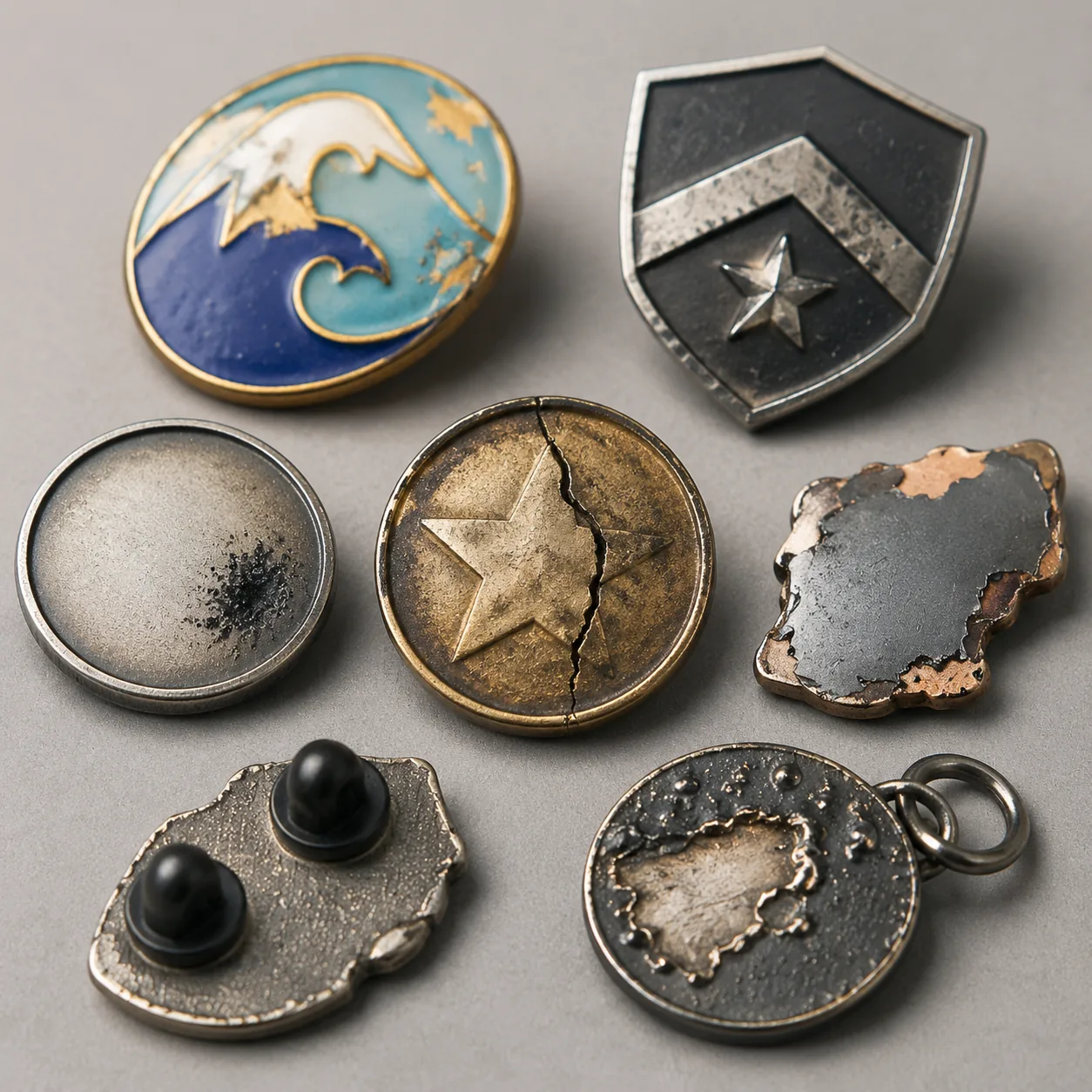
Why factories require deposits before production
Custom promotional products are not shelf inventory. For enamel pins, challenge coins, zinc alloy keychains, embroidered patches, woven labels, magnets and lanyards, the factory spends money before it has anything resellable: artwork engineering, mold cutting, yarn or enamel color matching, plating chemistry, attachments, backing cards, inner packing and production line allocation. Once a logo die is cut or a Pantone-specific thread program is set, the item usually has no secondary market.
That is why the most common first-order term is 30% deposit and 70% balance before shipment. For small orders below USD 800 to 1,000, factories often request 100% upfront because wire fees, proofing time, sample labor and export packing can consume the margin. Repeat buyers with clean payment history may negotiate 20/80, 50/50 or limited monthly settlement after 3 to 5 successful shipments, but credit terms are earned through performance, not granted on a first purchase order.
The deposit should fund a defined production stage: tooling, raw material booking and factory scheduling. Typical tooling runs USD 35 to 150 per design for 25 to 40 mm enamel pins and simple metal keychains, USD 90 to 280 for 3D or double-sided challenge coins, and USD 25 to 90 for embroidered or woven patch setup. If the buyer cancels after mold approval or sample production, tooling and sample costs are normally non-refundable because the factory has already incurred them.
Payment terms by order size and risk
A 200-piece club pin order and a 50,000-piece distributor program should not use the same risk model. Terms should reflect order value, customization depth, raw material exposure, reorder history, inspection requirements and shipping term. A buyer asking for credit should expect the supplier to request trade references, annual forecasts, signed specifications or a framework agreement.
| Order situation | Common payment term | Typical values | Buyer risk point | Factory risk point |
|---|---|---|---|---|
| Digital proof or physical sample only | 100% before sample | USD 45 to 120 sample fee; 5 to 12 sample days after vector proof approval | Paying before seeing actual workmanship | Technician time, mold setup and color matching may not convert to production |
| Small custom order | 100% or 50/50 | 100 to 300 pcs; USD 250 to 900 order value | Limited leverage if defects are found after packing | Bank fees, packing labor and artwork work reduce margin |
| Standard production order | 30/70 | 500 to 5,000 pcs; USD 0.55 to 3.80 FOB per metal item | Balance is due before goods leave origin | Factory carries material, labor and warehouse exposure |
| Large repeat order | 30/70 or 20/80 | 10,000 pcs plus; stable specs and reorder history | Late balance can miss vessel, courier or event cutoff | Finished inventory ties up cash and storage space |
| Distributor or program account | Negotiated monthly settlement | Multiple SKUs; rolling POs; agreed reorder calendar | Requires strict PO control and client payment discipline | Credit risk if end clients cancel, reject or delay payment |
For cost context, 25 to 35 mm soft enamel pins often quote at USD 0.55 to 1.40 FOB at 1,000 pcs, depending on plating, color count and attachment. Hard enamel pins commonly run USD 0.75 to 1.90 FOB because they require repeated filling, baking and polishing. Zinc alloy keychains are often USD 0.90 to 2.80 FOB at 1,000 pcs. A 45 mm challenge coin usually falls around USD 2.20 to 4.80 FOB at 500 pcs before capsules, velvet boxes, sequential numbering or edge text.
When to release the balance payment
The balance should not be released only because a supplier says production is complete. A practical release trigger is: finished goods inspection passed, packing photos checked, carton count confirmed, gross weight verified, shipment method agreed and final invoice matched to the PO. For promotional metal items, inspection should cover logo accuracy, Pantone match, plating coverage, enamel fill, edge burrs, attachment strength, dimensions, packing count and barcode or carton mark accuracy.
A common inspection standard for B2B promotional goods is AQL 2.5 for major defects, AQL 4.0 for minor defects and zero acceptance for critical defects. Critical or major defects include wrong logo, wrong plating, rust before shipment, exposed sharp burrs, missing safety clutch on child-use items, detached pin posts, unreadable mandatory markings and incorrect customer branding. Minor defects may include small surface specks, light plating shade variation or slight enamel unevenness not visible at normal viewing distance.
Define tolerances before production. Practical targets are ±0.3 mm for pin width under 40 mm, ±0.5 mm for zinc alloy keychains, ±0.15 mm for 1.2 mm pin thickness, ±0.2 mm for coin thickness and ±1.0 mm for embroidered patch outer shape. Decorative electroplating is commonly 3 to 5 microns. Buyers needing higher wear resistance should specify plating thickness, salt spray or rub test requirements instead of relying on phrases such as premium finish or export quality.
The PO should state the remedy if inspection fails: rework, remake, sort, discount, hold balance or ship accepted cartons only. Buyers can request pre-balance inspection photos, random carton opening videos and measurement reports, but these must be arranged before final sealing so QC samples real cartons rather than staged pieces from a bench.
FOB, EXW, CIF and DDP cost traps
Many quote disputes are Incoterms disputes. EXW Yiwu, EXW Dongguan or EXW Kunshan means the buyer or forwarder collects from the factory. Inland pickup, export declaration, local handling and China port charges are not included. FOB Ningbo, Shanghai or Shenzhen usually includes export carton packing, inland delivery to the port warehouse, export customs declaration and loading handover, but not ocean freight, destination charges, duties, taxes or final delivery.
CIF includes ocean freight and insurance to the destination port, but the buyer still handles import clearance, duty, VAT or sales tax, terminal handling and local delivery. DDP includes door delivery and import handling, which is convenient for urgent event shipments, but it can hide duty assumptions, courier dimensional weight and tax treatment. For air courier, dimensional weight is usually carton length x width x height divided by 5,000 or 6,000, so bulky gift boxes can cost more to ship than the item itself.
Compare quotes using the same Incoterm and destination. A USD 1.05 EXW pin can cost more than a USD 1.12 FOB pin after pickup, export declaration and forwarder fees. Specify carton construction as well: 5-ply export corrugated, 10 to 15 kg target gross weight for courier shipments, clear carton marks, inner polybag counts and dividers for plated metal goods. Cartons above 18 to 20 kg are more likely to split, crush backing cards or crack acrylic coin capsules.
Extra charges to show before deposit
Most payment friction comes from extras that were not separated early. Before the deposit, the quote should show unit price, mold or setup fee, sample fee, artwork fee if any, plating upgrade, attachment upgrade, packaging, inner bagging, carton marking, inspection, freight and bank charges. A bundled quote may be fast, but it is weak evidence if the final invoice changes.
- Confirm MOQ by item: enamel pins often start at 100 pcs, zinc alloy keychains at 100 to 300 pcs, embroidered patches at 300 to 500 pcs, woven patches at 500 pcs and challenge coins at 100 pcs depending on diameter, thickness and finish.
- Clarify whether mold fees are one-time, refundable after a volume threshold or charged again if size, thickness, relief, logo layout or artwork changes beyond the approved tool.
- List hardware upgrades: rubber clutch, butterfly clutch, deluxe clutch, magnetic back, safety pin, split ring, lobster clasp, swivel hook, Velcro backing, heat-seal backing or adhesive backing.
- Lock finish details: 3 to 5 micron decorative plating, antique plating, dual plating, black nickel, epoxy coating, anti-tarnish coating and edge numbering should be priced separately.
- Specify packaging: individual OPP bag, backing card, barcode label, velvet pouch, acrylic capsule, kraft box, retail carton and master carton should show per-piece and per-carton costs.
- State bank fee responsibility: international wire deductions are commonly USD 15 to 40 per transfer, so define whether charges are paid by buyer, shared or absorbed by supplier.
Not every add-on improves the order. A 5,000-piece trade show giveaway may need scratch-resistant bagging more than velvet boxes. A donor coin may justify acrylic capsules and numbered edge engraving, but those capsules require carton dividers and moderate carton weights. For patches, a merrowed border works for simple shapes, while laser-cut woven patches are better for fine edges, small text and irregular outlines.
Sample fees, tooling and ownership rights
Sample fees should buy clarity, not just a photo. A good sample agreement states the sample price, sample lead time, mold fee, revision policy, exclusivity and cancellation treatment. Pre-production samples for metal pins and coins typically take 7 to 12 days after vector artwork and Pantone colors are approved. Patches usually take 5 to 9 days. Sublimated lanyards often take 5 to 8 days, while woven lanyards may need 7 to 10 days because yarn color and loom setup take longer.
Tooling ownership is often misunderstood. Paying a mold fee does not always mean the buyer receives a portable steel die that can be moved to another factory. In practice, factories store molds for reorder use, commonly for 2 to 3 years after the last order, and charge new tooling if the design, size, thickness or relief changes beyond the original tolerance. If physical mold transfer matters, it must be agreed in writing before payment, including transfer cost and timing.
If confidentiality matters, state that molds, artwork, photos and samples are for the buyer's orders only and cannot be sold, displayed or photographed without written approval. For repeat programs, molds should be labeled by buyer code, SKU, size and version date. Even when a mold is reused, reconfirm enamel type, plating, attachment, backstamp, packaging and carton mark because mold reuse controls shape, not the full commercial specification.
Payment safeguards that prevent disputes
The strongest safeguard is a precise PO that matches the approved artwork and inspection plan. Include SKU name, size, thickness, base metal, enamel or thread type, plating finish, attachment, backstamp, packaging, carton mark, AQL level, lead time, Incoterm and balance release condition. A pin PO might read: 30 mm ±0.3 mm, iron soft enamel, 1.2 mm thickness ±0.15 mm, gold plating 3 to 5 microns, black rubber clutch, individual OPP bag, AQL 2.5 major and 4.0 minor, FOB Shanghai.
Use staged approvals for higher-value orders: digital proof, physical sample, mass production start, in-process photos, final inspection and balance release. Build the calendar honestly. Allow 1 to 3 days for artwork cleanup, 7 to 12 days for sample making, 12 to 25 days for bulk production, 1 to 2 days for final QC and packing, 3 to 7 days for air courier, or 25 to 40 days for ocean freight depending on port, season and customs clearance.
- Pay deposits only against a proforma invoice showing supplier legal name, bank account, item specs, quantity, unit price, payment term, Incoterm and shipment address.
- Do not approve production from a low-resolution JPG if the product needs clean metal lines under 0.3 mm or readable text under 1.2 mm high.
- Keep one approved golden sample or signed photo set with front, back, side, thickness, attachment and packaging views for production comparison.
- Require carton photos showing outer marks, inner pack count, master carton count, gross weight, net weight and carton dimensions before shipment.
- For urgent event orders, simplify the product instead of relying only on rush fees: fewer colors, standard plating, no moving parts and standard packaging reduce delay risk.
Escrow or platform payment can help on first orders, but it may add fees and slow document handling. Traditional T/T remains common for factory-direct B2B orders because it is fast and simple. Verify bank details against the proforma invoice, supplier email domain and prior communication. Treat any last-minute bank change near the balance stage as a red flag until confirmed by phone or another trusted channel.
What to confirm before paying the deposit
Before releasing funds, convert the quote into a payment-ready specification sheet. Replace vague words such as standard quality, normal packing and best plating with measurable terms: material, size tolerance, plating thickness, Pantone colors, attachment type, packaging format, AQL level, carton weight and Incoterm. If a line cannot be inspected, it is too vague for a deposit milestone.
A realistic custom metal order timeline is 1 to 2 days for quote confirmation, 1 to 3 days for artwork proofing, 7 to 12 days for sample approval, 12 to 25 days for bulk production, 1 to 2 days for final QC and packing, then transport. If the event is within 20 days, avoid combining a new mold, hard enamel, custom backing card, barcode labeling, retail cartons and ocean freight. The schedule leaves no room for rework.
Send one final pre-deposit checklist: approved artwork file, Pantone numbers, size and thickness tolerance, plating finish, attachment, packaging, AQL level, Incoterm, payment split, sample requirement, lead time and balance release condition. This format works across pins, brooches, keychains, magnets, coins, patches and lanyards. The goal is not to complicate payment; it is to tie every payment milestone to a visible production milestone.
Have a project? Send your artwork and target quantity and we’ll reply with a detailed quotation within 12 working hours.
Ready to get this made?
Send your sketch, target quantity and ship-date. Detailed quotation in 12 hours.



