Patch Backings: Sew-On, Iron-On, Hook-and-Loop or Adhesive?
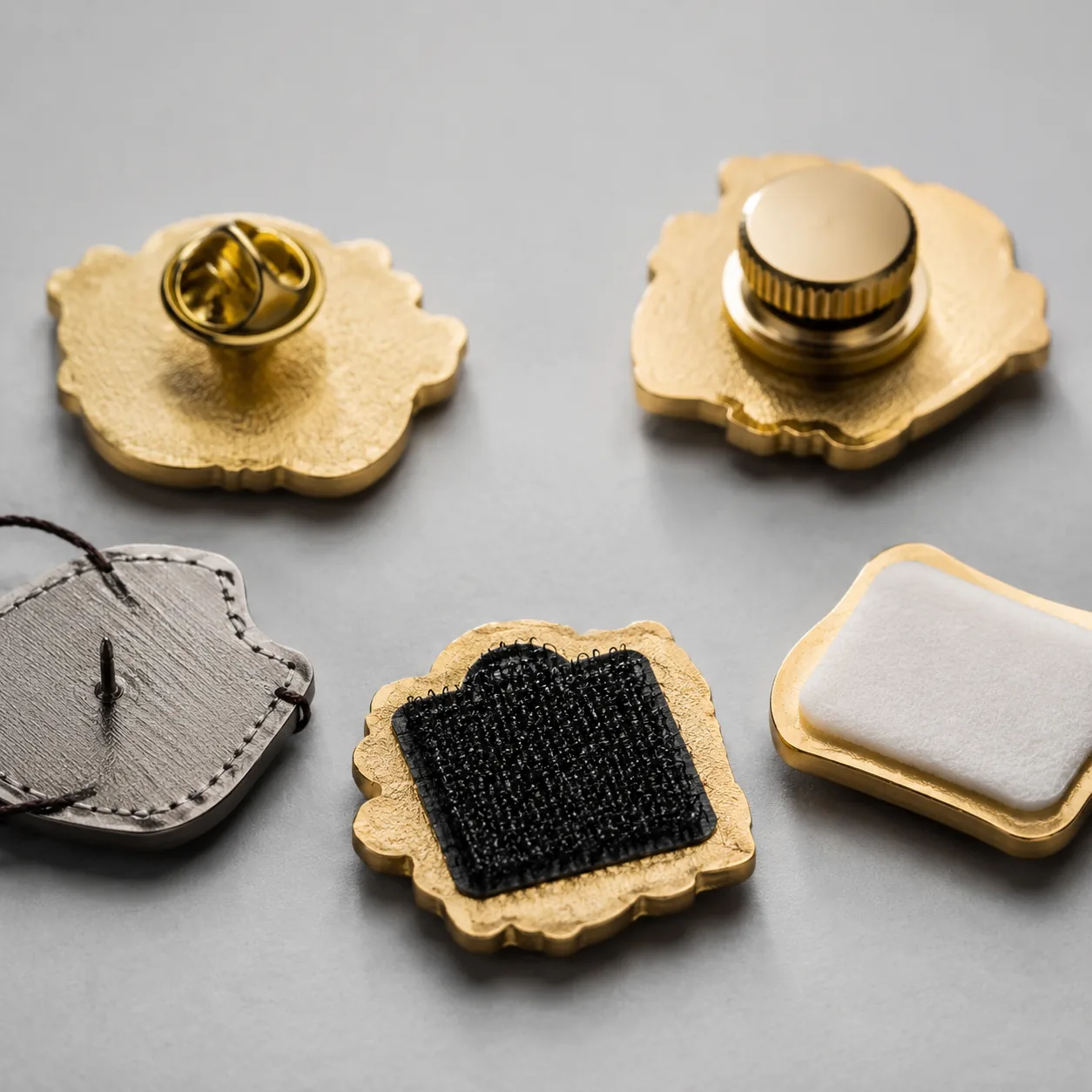
Q: Why do patch backing choices cause field failures?
A patch can match the approved artwork and still fail because the backing was chosen for convenience rather than fabric, washing, heat tolerance, and attachment frequency. Most returns are not caused by embroidery detail. They come from heat-seal film peeling after laundering, hook-and-loop corners lifting, adhesive residue on packaging, pin backs bending, or sew-on patches curling because the border and backing are too stiff for the garment.
Treat backing as a functional specification. A supplier quoting “embroidered patch with backing” may select anything from a thin nonwoven stabilizer to 150 micron heat-seal film or a full hook-and-loop set. Those choices change thickness, application method, packing, inspection, and price. For factory RFQs, confirm garment type, wash temperature, whether the patch is attached once or removed repeatedly, and whether the buyer or supplier is responsible for final attachment.
For embroidered or woven patches, finished thickness after backing is typically 1.5 to 2.8 mm for sew-on, 1.8 to 3.2 mm for heat-seal, and 3.0 to 5.0 mm when hook-and-loop is supplied on both sides. Size tolerance should be ±1.0 mm for patches under 80 mm and ±1.5 mm for larger or irregular shapes. Border alignment tolerance should be held within ±0.8 mm for uniforms, retail apparel, and any patch placed near a pocket, sleeve seam, or printed guide mark.
Q: Which backing fits each use case?
Sew-on is the safest permanent option for uniforms, caps, canvas bags, jackets, and workwear. It has low material risk, tolerates industrial laundering, and works on fabrics that cannot accept heat. The trade-off is sewing labor and appearance control. Small shapes, tight curves, and thick merrowed borders need a steady stitch line so the patch does not pucker or rotate on the garment.
Heat-seal, often called iron-on, is suitable for retail patches, souvenir patches, scout-style badges, and light apparel when the surface accepts heat and pressure. It is risky on waterproof coatings, silicone-treated textiles, fleece, down jackets, rib knit, textured bags, and nylon shells unless the exact material is tested. A home-iron trial is not enough; mass production should be validated with the intended press temperature, pressure, and dwell time.
Hook-and-loop backing is best for tactical patches, name tapes, role badges, event staff patches, and children’s activity patches that are removed or swapped. Adhesive backing is mainly for temporary placement, sample boards, packaging, trade-show giveaways, and stitch-positioning before sewing. It should not be presented as washable garment attachment unless the patch is also sewn or heat-sealed after placement.
| Backing type | Best application | Typical add-on cost | Normal MOQ | Lead-time impact |
|---|---|---|---|---|
| Sew-on | Permanent uniforms, caps, bags, jackets | $0.00 to $0.03 per patch | 100 to 300 pcs | 0 to 1 day |
| Heat-seal film | Retail patches, light cotton or poly apparel | $0.03 to $0.10 per patch | 100 to 300 pcs | 1 to 2 days |
| Hook-and-loop, hook only | Uniforms with existing loop panels | $0.08 to $0.22 per patch | 100 to 300 pcs | 2 to 4 days |
| Hook-and-loop, both sides | Event kits, tactical sets, removable badges | $0.14 to $0.40 per patch | 100 to 300 pcs | 3 to 5 days |
| Pressure-sensitive adhesive | Display cards, sample boards, temporary use | $0.04 to $0.12 per patch | 300 to 500 pcs | 1 to 3 days |
| Safety pin or brooch back | No-sew event badges and giveaways | $0.05 to $0.18 per patch | 300 to 500 pcs | 2 to 4 days |
Q: What specifications prevent iron-on peeling?
Heat-seal backing is not one universal material. Low-cost films may activate around 120 to 130°C and work only for light promotional use. Better garment-grade films are usually applied at 150 to 165°C under 3 to 5 bar pressure for 12 to 18 seconds. If the purchase order only says “iron-on,” the factory may use a film that looks flat but has poor wash resistance or weak flow into dense embroidery.
For cotton and cotton-polyester garments, specify 80 to 120 micron film for most patches. For dense embroidered patches over 80 mm or patches with heavy twill bases, 120 to 150 micron film may improve adhesive contact. Thicker film is not automatically better. Excess glue can bleed beyond the border, create a glossy halo, stiffen the patch, or bond unevenly if the garment surface is textured.
Define a test, not just a material. A practical retail standard is 5 domestic wash cycles at 40°C with air drying and no edge lift over 2 mm. For workwear or higher-risk programs, use 10 cycles at 60°C, but only after testing the actual garment fabric. Heat-seal should also be checked 24 hours after pressing because some films appear bonded immediately but lose strength after cooling and flexing.
- State garment fabric: cotton, polyester, nylon, canvas, twill, fleece, coated fabric, or blended knit.
- Specify press settings: 150 to 165°C, 12 to 18 seconds, 3 to 5 bar pressure unless testing approves another range.
- Define failure clearly: no more than 2 mm edge lift after wash testing and no adhesive bleed visible from 50 cm.
- Avoid heat-seal on PVC-coated, silicone-treated, waterproof, high-stretch, or heat-sensitive fabrics without garment testing.
- Request one loose patch and one pressed garment sample before mass production for orders above 1,000 pcs.
- Pack heat-seal patches flat; curled patches reduce contact area and cause uneven bonding during application.
Q: When is hook-and-loop worth the added cost?
Hook-and-loop is worth the cost when the patch must be removed before washing, changed by job role, or transferred across garments. The most common failure is not the hook tape itself. It is weak perimeter stitching, loop fabric that does not match the hook, or square backing corners extending beyond a curved patch edge and starting to peel.
Buyers should specify whether they need hook side only, loop side only, or both sides supplied as a matched set. Hook-only works when the garment already has loop panels, such as military-style uniforms or tactical bags. Event kits and promotional apparel usually require both sides, or the end user has no attachment surface.
Standard hook-and-loop thickness is 1.6 to 2.2 mm per side. A patch with both sides can add 3.2 to 4.4 mm before embroidery thickness, which may feel bulky on shirts or children’s garments. For patches under 50 mm, hook-and-loop can overpower the fabric and make the patch sag. In those cases, sew-on or heat-seal usually gives a cleaner profile.
| Hook-and-loop spec | Recommended buyer requirement | Inspection point |
|---|---|---|
| Hook material | Nylon or polyester hook, 1.6 to 2.2 mm thick | Consistent grip without excessive stiffness |
| Loop material | Matched loop supplied if garment has none | No mismatch between hook and loop sides |
| Stitching | Lock stitch around perimeter, 2.5 to 3.5 mm stitch length | No skipped stitches or loose corners |
| Setback | Hook or loop set back 0.5 to 1.0 mm from patch edge | Backing not visible beyond border |
| Cycle test | 20 attach-remove cycles minimum | No corner lift, fraying, or delamination |
| Peel resistance | No manual peel failure under normal removal angle | Backing stays attached to patch, not garment |
Q: Is adhesive backing a reliable procurement option?
Adhesive backing is reliable only when the use is temporary or the surface is controlled. It is useful for display cards, sample boards, retail packaging, trade-show handouts, and positioning patches before sewing. It helps distributors present loose patches neatly without thread, pins, or heat pressing.
It is not a permanent garment solution. Pressure-sensitive adhesive loses strength with moisture, lint, fabric texture, skin oils, and low surface energy materials. It may hold on smooth polyester for a few hours but fail quickly on brushed cotton, fleece, rib knit, or dusty canvas. Patch weight also matters: a thick PVC or large embroidered patch can shear off even when the adhesive is strong.
If adhesive is required, specify removable or permanent adhesive. Removable adhesive should release from paper card or smooth plastic within 24 to 72 hours without heavy residue. Permanent adhesive needs surface testing because stronger glue can stain fabric, tear printed cards, or leave a visible ring around the patch. For retail packs, white paper liner is standard; clear PET liner costs more but improves presentation.
- Use adhesive backing for display cards, sample kits, packaging, temporary positioning, and short event use.
- Do not claim washable performance unless the patch is sewn or heat-sealed after adhesive placement.
- Specify adhesive setback of 0.5 to 1.0 mm from the edge to reduce glue squeeze-out.
- Define residue limits on the actual surface, not on generic white paper.
- Store adhesive patches flat below 30°C and avoid long exposure in hot containers or direct sun.
- For PVC patches over 20 g, test vertical shear because weight can overcome the adhesive.
Q: What quality checks belong in the PO?
Visual inspection alone is weak for backing. A patch can look flat in a polybag and still fail when bent, washed, pressed, or repeatedly removed. The purchase order should define backing material, sample size, test method, acceptance criteria, and who performs the test. This prevents disputes about whether failure was caused by the supplier’s backing or the buyer’s garment.
For promotional and uniform orders, AQL 2.5 for major defects and AQL 4.0 for minor defects is a practical baseline. Major defects include wrong backing type, missing backing, backing detachment, exposed adhesive, sharp or loose pin hardware, incorrect size beyond tolerance, adhesive bleed, severe stain, and heat-seal film that does not activate. Minor defects include small thread tails, light liner wrinkles, backing offset within 1.5 mm, and cosmetic marks not visible from 50 cm.
Measure the finished patch after backing, not just the embroidered top. For shapes under 100 mm, specify ±1.0 mm size tolerance and ±0.8 mm border alignment. For larger patches, ±1.5 mm is more realistic, especially on dense embroidery, woven labels, or die-cut shapes. Backing offset should normally be within 1.0 mm and must not protrude beyond the visible border.
- Confirm backing type against the approved physical sample for every carton.
- Check finished size, border width, backing offset, and thickness on the AQL sample or at least 20 pcs for small orders.
- For heat-seal, press samples on buyer-approved fabric and check edge lift after cooling and wash testing.
- For hook-and-loop, run 20 attach-remove cycles and inspect stitching, corners, and matched loop quality.
- For adhesive, check liner release, residue, glue squeeze-out, and holding strength on the specified surface.
- For pin or brooch backs, check pin sharpness, clasp closure, alignment, and pull resistance above 2 kgf.
Q: How do backing choices affect price, MOQ, and lead time?
Backing can change unit price more than buyers expect, especially on small patches where handling labor is a large share of cost. As a factory reference, a 75 mm embroidered patch with merrowed border and sew-on backing may quote around $0.45 to $0.95 FOB at 500 pcs, depending on stitch density, thread count, border type, and color changes. The same patch with both hook and loop sides may rise to about $0.70 to $1.35 FOB because the backing must be cut, aligned, and sewn.
Patch construction also affects backing behavior. Woven patches are thinner and often accept 80 to 120 micron heat-seal film neatly, but detailed woven labels can curl if the backing is too stiff. PVC patches are molded at roughly 2.0 to 4.0 mm thickness and often use sewn or bonded hook-and-loop after molding. Adhesive on PVC is possible for packaging or display, but the patch weight makes long-term fabric use unreliable.
Typical timing is 7 to 12 days for sampling and 12 to 20 days for mass production after sample approval for 300 to 5,000 pcs. Hook-and-loop sets, pin hardware, complex die-cut backings, individual retail cards, and wash testing can add 2 to 5 days. Rush orders are realistic only when backing material is in stock and the buyer accepts a reduced test window.
| Order size | Sew-on FOB range | Heat-seal FOB range | Hook-and-loop FOB range | Typical mass lead time |
|---|---|---|---|---|
| 300 pcs | $0.60 to $1.30 | $0.65 to $1.40 | $0.85 to $1.75 | 12 to 18 days |
| 500 pcs | $0.45 to $0.95 | $0.50 to $1.08 | $0.70 to $1.35 | 12 to 18 days |
| 1,000 pcs | $0.32 to $0.75 | $0.36 to $0.85 | $0.55 to $1.10 | 14 to 20 days |
| 5,000 pcs | $0.20 to $0.55 | $0.23 to $0.62 | $0.38 to $0.85 | 16 to 24 days |
Q: What should the RFQ include before sampling?
Send artwork, finished size, patch construction, border type, backing choice, garment or surface material, wash requirement, packing method, and inspection standard in one RFQ. If the patch will be applied to a garment, provide fabric details or a garment sample before approving mass production. This saves time because peeling, sagging, and residue problems are easier to prevent before the backing is selected.
For multi-product programs, align patch backing specs with related items such as enamel pins, lanyards, keychains, and badges so retail packing and inspection standards are consistent. The goal is not to choose the most expensive backing. It is to match attachment method, risk level, user behavior, and garment limitations before the order enters production.
- For permanent uniforms, choose sew-on unless the garment factory validates heat-press settings.
- For retail souvenir patches, choose heat-seal with a defined wash test and edge-lift limit.
- For removable role badges, choose hook-and-loop and specify hook only or a matched two-side set.
- For displays and sample cards, choose adhesive backing and define liner type, residue limit, and storage conditions.
- For no-sew event wear, consider safety pin or brooch backing, but test sagging, pull resistance, and fabric damage.
- Approve one physical sample with exact backing, border, thickness, packing, and test result before mass production.
Have a project? Send your artwork and target quantity and we’ll reply with a detailed quotation within 12 working hours.
Ready to get this made?
Send your sketch, target quantity and ship-date. Detailed quotation in 12 hours.



