Patch Backing Specs That Prevent Peeling and Claims
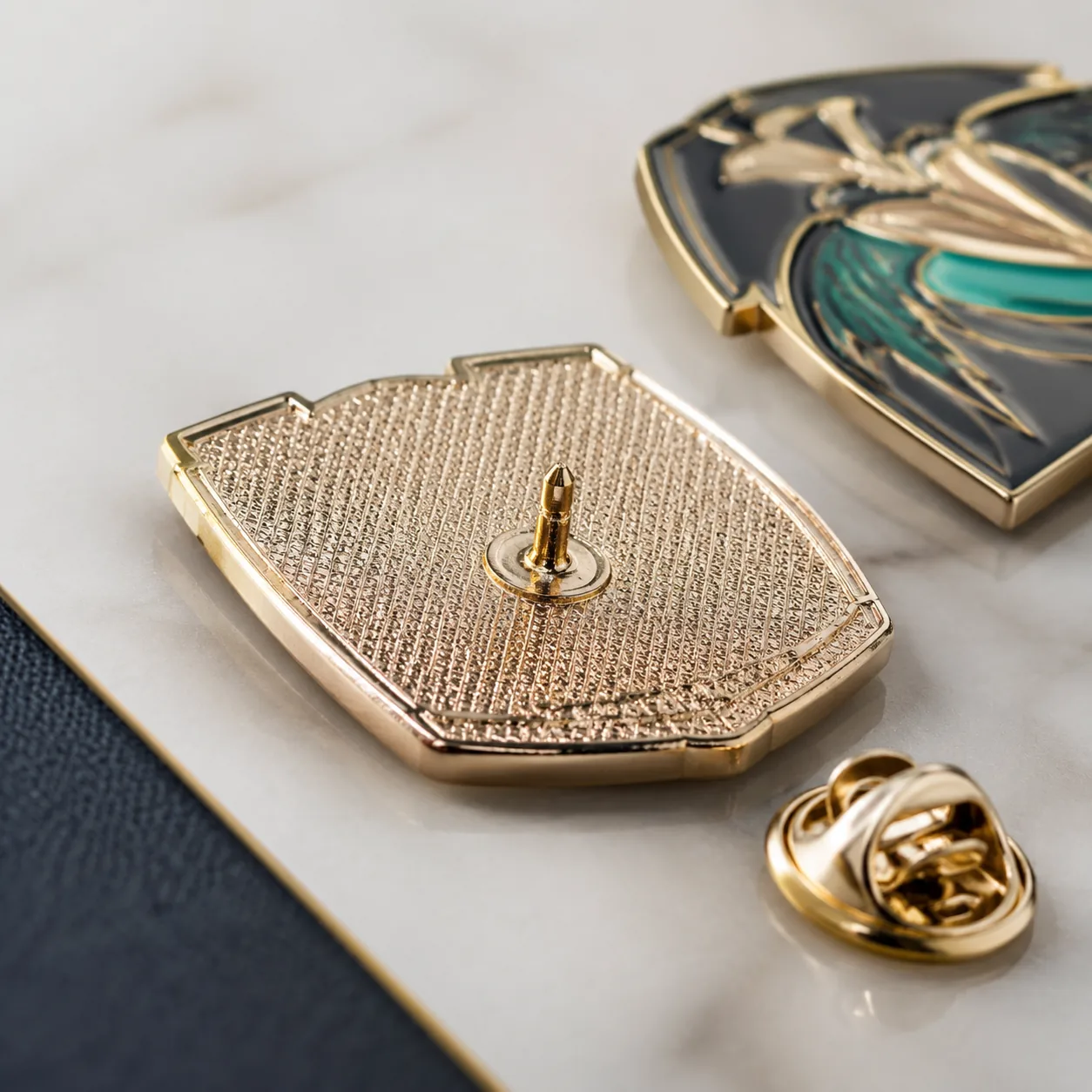
Backing Failures Usually Start in the RFQ
The most expensive patch complaint is often not the embroidery or woven face. It is the backing. A patch can pass artwork approval, thread-color review and carton inspection, then peel after the first wash, curl on a cap panel, scratch a uniform shirt, or fail to stick at an event desk. At that stage the buyer is paying for replacement freight, rework labor and damaged customer trust, not only a defective patch.
Backing should be specified as a functional component, with the same discipline used for size, thread color and border type. A purchase order that says only “iron-on backing” or “Velcro backing” leaves too much room for variation in film thickness, hook grade, adhesive chemistry and sewing method. The patch may technically match the wording while failing in the real application.
For B2B production, ZheCraft treats backing as a controlled specification: backing type, material thickness, alignment tolerance, test method and inspection level are confirmed before bulk cutting. Normal finished-size tolerance is ±1.0 mm for patches under 100 mm and ±1.5 mm for larger patches. Backing alignment is normally held within 1.5 mm from the stitched or laser-cut border, unless the shape has sharp internal corners or very narrow extensions.
Match Backing to Fabric, Washing and Removal
The correct backing depends more on the final use than on whether the patch is embroidered, woven, chenille or PVC. A 75 mm embroidered badge on cotton twill can work with heat-seal film. A 90 mm tactical identifier on a nylon vest usually needs hook backing and a separate loop panel. A badge for a one-day conference can use pressure-sensitive adhesive, but that same construction should not be sold as washable apparel attachment.
Ask for the target fabric before quotation. Cotton, polyester, nylon, canvas, fleece and coated softshell behave differently under heat and pressure. Nylon and waterproof-coated fabrics are high-risk because the press temperature required to activate the adhesive can glaze, shrink or distort the garment before the bond is fully formed. Curved cap panels also create uneven pressure, so thick backing can produce edge lift or a visible ridge.
A practical RFQ should state finished patch size, edge type, backing type, target fabric, wash requirement, attachment method and whether the patch must be removable. If the buyer does not control the heat press, sew-on or hook-and-loop is usually safer than relying on consumer ironing.
| Use case | Recommended backing | Avoid | Concrete reason |
|---|---|---|---|
| Weekly-washed uniforms | Heat-seal plus stitched edge, or sew-on | Sticker adhesive | Laundry heat and detergent soften temporary adhesives |
| Tactical vests and gear bags | Hook backing with loop counterpart | Heat-seal only | User needs removable ID and position changes |
| Retail caps | Sew-on or tested low-temperature film | Thick hook backing | Bulk distorts curved panels and raises the patch edge |
| One-day events | Pressure-sensitive adhesive | Sew-on only | Fast application matters more than wash durability |
| Premium jackets | Sew-on or loop panel sewn to garment | High-temperature heat-seal | Press marks, coating damage and adhesive bleed-through risk |
| Kidswear and school patches | Sew-on or low-profile heat-seal | Exposed hook corners | Skin contact and snagging complaints are common |
Heat-Seal Film: Specify the Press Window
Heat-seal backing is a thermoplastic film laminated to the patch back. It becomes durable only when the adhesive melts into the garment fibers under controlled heat, pressure and dwell time. For cotton and polyester, a common production window is 150–165 °C, 2.5–4.0 bar pressure and 12–18 seconds dwell, followed by 10–15 seconds cooling under light pressure. Low-temperature films for sensitive fabrics may run at 125–140 °C, but they usually cost more and should be wash-tested before approval.
Film thickness should be written in microns. Lightweight woven patches and small embroidered patches often use 80–120 µm film. Dense embroidery above 80 mm, chenille bases or patches with heavy merrow borders often need 120–180 µm. Thinner film improves flexibility but leaves less adhesive reserve over uneven thread backs. Thicker film improves bond coverage but can make a woven patch feel board-like and may create a visible edge ridge under thin fabric.
Do not approve heat-seal based only on a loose patch sample. Test the patch on the actual garment or a fabric swatch from the same mill lot. Condition the pressed sample for 24 hours before peel testing, because some hot-melt films continue to crystallize after cooling. For standard apparel programs, a practical requirement is no continuous edge lift over 2 mm after 5 wash cycles at 40 °C with mild detergent. Uniform programs with industrial laundering should test 10–20 cycles before bulk release.
- Specify film thickness in microns, not just “iron-on.”
- State press temperature, pressure, dwell time and cooling method on the approval sheet.
- Test on the target fabric after 24 hours of conditioning, not immediately after pressing.
- Require edge lift under 2 mm after the agreed wash test.
- Reject adhesive gaps larger than 3 mm within 5 mm of the patch edge.
- Avoid high-temperature film on nylon, coated softshell and curved cap panels unless tested first.
Hook-and-Loop: Control Thickness, Inset and Stitching
Hook-and-loop backing is standard for military-style, security, event-staff and equipment patches. The patch normally carries hook material, while the garment, vest or bag carries a matching loop panel. The hook may be sewn directly to the patch back or laminated first and then perimeter-stitched. For PVC patches, the hook is often heat-welded or sewn depending on compound hardness and patch thickness.
For most uniform patches, specify hook thickness at 1.8–2.3 mm and loop thickness at 1.5–2.0 mm. Heavy-duty hook improves grip but can scratch adjacent fabric and make the patch stand too high. Low-profile hook looks cleaner on apparel but has weaker shear resistance on wide patches, especially above 90 mm. For large rectangular patches, request a shear check as well as a simple peel check; a patch that peels acceptably may still slide under load.
The hook should sit 1.0–2.0 mm inside the finished patch edge so it does not show from the front or catch skin. For irregular shapes, simplify the hook outline rather than cutting every small notch. Hook strips narrower than 3 mm often curl, tear or miss stitches during sewing. Stitching should sit 2.5–4.0 mm from the hook edge; sewing too close to the edge creates skipped stitches and weak corners.
| Spec item | Recommended range | Inspection note |
|---|---|---|
| Hook inset from patch edge | 1.0–2.0 mm | Check four sides plus narrow points |
| Hook material thickness | 1.8–2.3 mm | Measure compressed thickness with calipers |
| Loop panel oversize | Patch size plus 2–3 mm | Improves user alignment and coverage |
| Sewing margin | 2.5–4.0 mm from edge | Too close causes skipped stitches |
| Peel strength target | Minimum 0.8 N/cm | Use the same supplier method for comparison |
| Corner radius on hook | Minimum 2 mm preferred | Sharp hook corners scratch and lift first |
Sew-On Backing: Lowest Claim Risk, More Assembly Labor
Sew-on patches remain the safest choice when the buyer cannot risk adhesive failure. They suit uniforms, jackets, denim, canvas bags and curved cap panels. The patch back may be plain fabric, thin nonwoven stabilizer or a light plastic support layer, but the total stack must remain sewable for the garment factory.
As a working limit, keep total edge thickness under 2.5 mm for woven patches and under 3.5 mm for embroidered patches with merrowed borders. Chenille patches are thicker, commonly 4.0–6.0 mm at the edge, so buyers should confirm the sewing equipment can handle the stack. Dense embroidery, plastic backing and heavy borders together can cause needle deflection, skipped stitches or puckering on lightweight garments.
The trade-off is labor cost and process control. Sew-on attachment is slower than heat pressing, and promotional distributors may not have sewing capacity. However, for long-term uniform programs with repeated washing, sew-on backing usually creates fewer claims than heat-seal alone. For premium garments, it also avoids heat-press shine, adhesive bleed-through and the risk of damaging waterproof coatings.
If a patch will be sewn by a garment factory, specify whether it ships loose, tacked to a placement card, or pre-positioned on a panel. Placement tolerance should be agreed separately from patch tolerance; many garment programs use ±2.0 mm for patch location on pockets, sleeves and chest panels.
Pressure-Sensitive Adhesive: Temporary Means Temporary
Pressure-sensitive adhesive, often called sticker backing, is a peel-off liner applied to the patch back. It is useful for temporary event badges, sales samples, packaging decoration and short-term promotional kits. It is not a dependable permanent attachment for washable clothing, high-pile fleece, textured canvas, silicone-coated fabric, oily surfaces or dusty storage environments.
For temporary use, specify adhesive chemistry and liner quality. General-purpose acrylic adhesive at 80–120 µm is common for woven and embroidered patches. Rubber-based adhesive often feels tackier at first touch, but it ages worse under heat and may leave residue. Acrylic performs better for export storage, especially when cartons pass through hot warehouses or sit in containers during summer.
Set a realistic shelf-life requirement. A practical target is 6–12 months stored at 18–28 °C and 45–65% relative humidity. Adhesive-backed patches should be packed flat, not compressed in tight bundles, because pressure can deform the edge and make liners difficult to remove. For chenille, raised embroidery or flocked faces, individual polybags help prevent dust transfer and pile contamination.
MOQ, Lead Time and FOB Cost Impact
Backing choice changes material cost and production flow. Heat-seal film is low-cost and fast because it is laminated in sheets or after embroidery finishing. Hook-and-loop requires cutting, alignment, sewing and sometimes a matching loop panel. Pressure-sensitive adhesive is inexpensive on simple shapes but becomes inefficient on patches with narrow tails, internal cutouts or many small points.
Practical MOQ is usually 100 pieces for standard embroidered or woven patches, 300 pieces for chenille or PVC, and 500 pieces when the order includes custom loop panels, printed carrier cards, special liners or retail packing. Lower trial quantities can be quoted, but unit price rises because digitizing, thread setup, cutting programs, sampling and machine time do not scale down cleanly.
Typical production lead time after artwork approval is 7–10 days for 100–500 simple embroidered patches, 10–14 days for woven patches with laser-cut edges, 12–18 days for hook-and-loop sets, and 15–22 days for complex chenille or PVC. Add 3–5 days for pre-production samples and extra buffer during promotional peaks before trade shows, school terms and year-end uniform replenishment. FOB ranges below are realistic for common B2B orders of 500–3,000 pieces, excluding express freight and import duty.
| Backing type | Typical add-on FOB cost | Best MOQ tier | Lead-time impact |
|---|---|---|---|
| Plain sew-on back | USD 0.00–0.03 per patch | 100+ pieces | No extra day |
| Heat-seal film | USD 0.02–0.06 per patch | 100+ pieces | Usually no extra day |
| Low-temperature heat-seal | USD 0.04–0.09 per patch | 300+ pieces | Add 0–1 day |
| Hook backing only | USD 0.08–0.20 per patch | 300+ pieces | Add 1–3 days |
| Hook plus loop panel | USD 0.14–0.35 per set | 500+ pieces | Add 2–4 days |
| Pressure-sensitive adhesive | USD 0.03–0.10 per patch | 300+ pieces | Add 0–2 days |
| Individual polybag or card packing | USD 0.03–0.12 per set | 500+ pieces | Add 1–3 days |
Inspection Standards That Catch Backing Defects
Backing inspection should start before final random inspection. For heat-seal orders, test first production pieces on the target fabric or a close substitute, then condition for 24 hours before peel testing. For hook-and-loop, inspect early pieces for hook inset, stitch security and corner sharpness before the full run is sewn. For adhesive backing, check liner release, contamination and edge coverage before packing.
For shipment inspection, AQL 2.5 for major defects and AQL 4.0 for minor defects is a practical baseline unless the buyer requires a stricter level. Major defects include missing backing, wrong backing type, backing visible from the front, severe edge lift, hook detached from the patch, contaminated adhesive liner or adhesive coverage missing near the edge. Minor defects include slight backing misalignment within tolerance, small liner wrinkles that do not affect use, or trimmed threads on the back.
Define wash testing before mass production. A common apparel test is 5 cycles at 40 °C with mild detergent, followed by tumble dry or air dry according to the garment care label. Record edge lift, delamination, shrinkage, color bleed and patch curling. For workwear and uniform programs, test 10–20 cycles before order release, not after a customer complaint.
- Keep one approved golden sample at the factory and one with the buyer for reorder control.
- Measure patch size, backing inset and total thickness with calipers during in-process QC.
- Test 5–10 pieces from early production before continuing the full run.
- Reject heat-seal patches with adhesive voids larger than 3 mm near the edge.
- Reject hook backing with loose stitching, skipped stitches or exposed sharp corners.
- Confirm AQL 2.5 major and AQL 4.0 minor unless the buyer’s standard is stricter.
- Record press settings, fabric type and wash-test result on the approval file.
Before placing the order, send the artwork with finished size, border type, target fabric, expected wash or removal requirement, packing method and attachment equipment. For heat-seal, request film thickness, press window and wash-test method. For hook-and-loop, specify hook inset, loop size, material thickness and whether the loop panel ships loose or sewn to another product. For adhesive backing, state the intended use as temporary unless the supplier has tested the exact surface and storage conditions.
Have a project? Send your artwork and target quantity and we’ll reply with a detailed quotation within 12 working hours.
Ready to get this made?
Send your sketch, target quantity and ship-date. Detailed quotation in 12 hours.



