Patch Backing Specs: Sew-On, Iron-On, Velcro or Adhesive
Why Patch Backings Fail After Approval
A patch can match the approved artwork and still fail in the field if the backing is treated as an afterthought. The usual failure is not thread color or logo shape; it is an iron-on patch lifting after the first wash, a Velcro panel peeling from a duty uniform, adhesive residue on retail cards, or a sew-on patch that is too rigid for a curved cap panel. These problems normally begin at RFQ stage when the buyer writes only “iron-on backing” or “with Velcro” without fabric type, heat limits, backing thickness, edge construction, or inspection criteria.
For B2B sourcing, the backing should be specified like a functional component. A 75 mm embroidered patch for denim jackets, a 50 mm woven badge for event staff shirts, and a 90 mm morale patch for tactical bags may use the same logo but require different backing systems. The correct choice depends on the application surface, expected service life, wash cycle, removability, garment curvature, and whether the buyer or end user will apply the patch.
As a practical factory benchmark, custom patch MOQ is usually 100 pieces per design for standard sew-on or iron-on patches, 300 pieces for hook-and-loop patches, and 500 pieces for special pressure adhesive, custom die-cut liners, or non-standard backing colors. Sampling normally takes 3 to 5 working days after artwork confirmation. Bulk production is commonly 10 to 14 days for simple embroidered or woven sew-on patches, 12 to 18 days for iron-on or Velcro-backed patches, and 15 to 22 days when adhesive lamination, retail cards, barcodes, or set packing are included. Rush production is possible, but backing-related claims rise sharply when physical sample testing is skipped.
Backing Options by Application
The strongest backing is not always the best commercial choice. Sew-on is the most durable for long-term garments, caps, bags, and workwear, but it transfers attachment labor to the buyer or garment factory. Iron-on is convenient for retail packs and uniform programs, but it is sensitive to fabric coatings, press temperature, pressure, dwell time, and post-wash behavior.
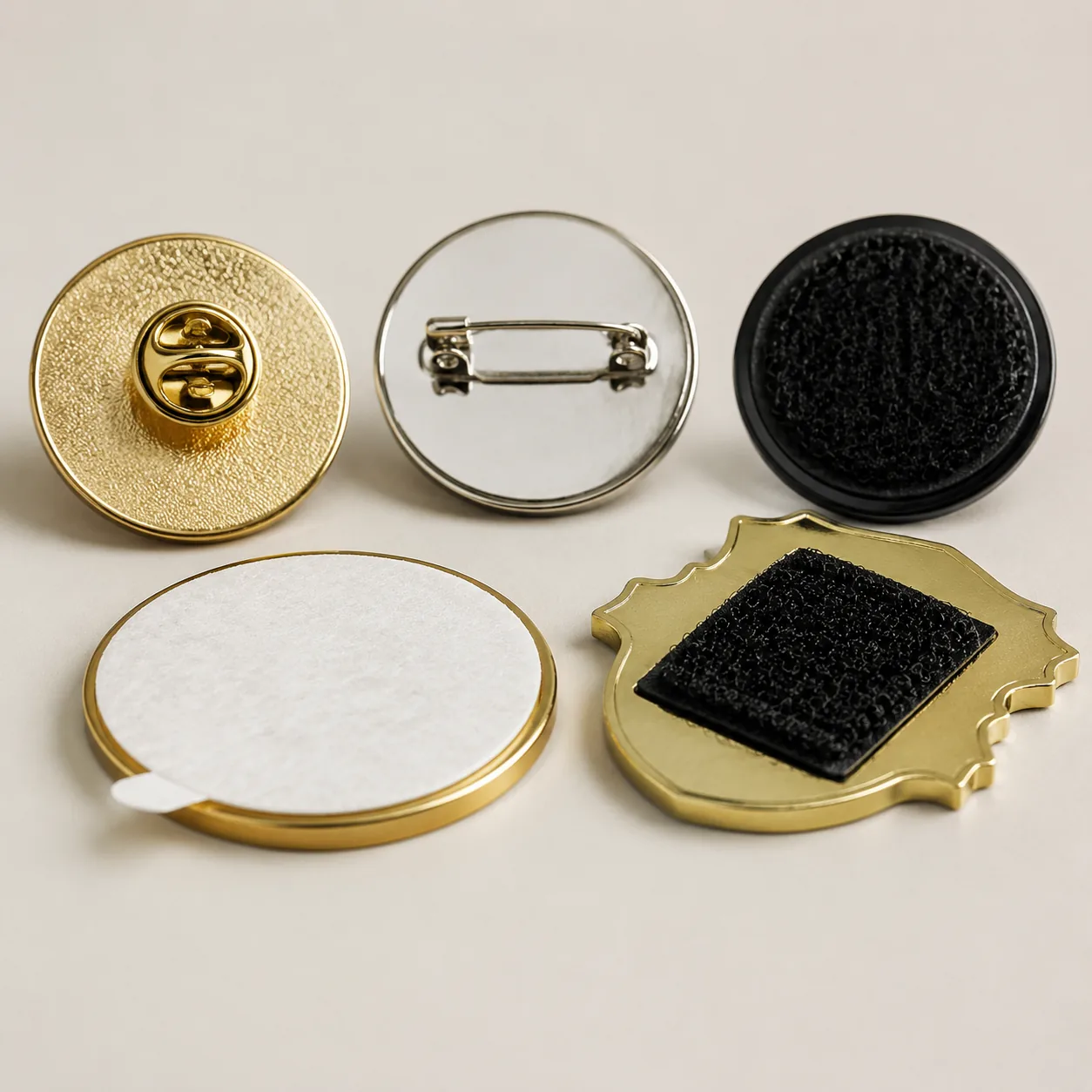
Hook-and-loop backing is preferred when patches must be removed, replaced, or repositioned, such as tactical gear, staff roles, event access levels, seasonal branding, and morale patches. Pressure-sensitive adhesive is useful for short-term display, packaging, sample boards, and kitting, but it should not be sold as a permanent garment attachment unless the exact textile and service time are tightly controlled.
| Backing Type | Best Use | Typical MOQ | Added FOB Cost | Added Thickness | Main QC Risk |
|---|---|---|---|---|---|
| Sew-on only | Caps, denim, uniforms, backpacks | 100 pcs/design | USD 0.00 to 0.03/pc | 0.0 to 0.2 mm | Insufficient sew margin or excess stiffness |
| Iron-on hot-melt film | Retail apparel, uniforms, craft packs | 100 pcs/design | USD 0.03 to 0.09/pc | 0.10 to 0.18 mm | Edge lift after wash or poor bond on coated fabric |
| Hook-and-loop set | Tactical, staff, removable badges | 300 pcs/design | USD 0.12 to 0.38/pc | 1.5 to 2.8 mm | Skipped Velcro stitching, bulk, carton compression |
| Pressure adhesive liner | Packaging, displays, samples, backing cards | 500 pcs/design | USD 0.04 to 0.14/pc | 0.08 to 0.16 mm | Residue, liner curl, weak hold on textile surfaces |
Unit price varies by size, stitch coverage, border, backing, and packing. At 500 pieces, a 75 mm embroidered patch with 50 to 70 percent stitch coverage is commonly USD 0.45 to 1.35 FOB China. A woven patch of similar size is often USD 0.35 to 1.10 FOB. PVC patches with Velcro are higher because of mold, material weight, and secondary stitching, often USD 0.80 to 2.30 FOB depending on size, color count, and relief depth.
Sew-On Backing Specs
Sew-on patches are the most tolerant because final attachment strength comes from stitching rather than adhesive. Embroidered patches typically use twill base fabric with stabilizer backing and either a merrowed border or laser-cut edge. Standard finished thickness is about 1.2 to 2.0 mm for embroidered patches and 0.6 to 1.0 mm for woven patches. For shapes under 100 mm, a realistic dimensional tolerance is ±1.0 mm; for larger or irregular shapes, ±1.5 mm is more practical.
The RFQ should define the sew margin. For merrowed borders, allow 2.0 to 3.0 mm from the outside edge to the visible artwork. For laser-cut woven patches, allow at least 1.5 mm. Fine text, outlines, or registration marks placed within 1.0 mm of the edge may be partly covered during sewing, especially on caps, padded jackets, or curved bag panels. If the patch will be applied to caps, test on the actual crown panel because a flat, dense embroidered patch can wrinkle when bent across a six-panel seam.
Sew-on only looks economical on the quotation, but the total landed cost must include application labor. A patch priced at USD 0.60 FOB can become more expensive than an iron-on version if local sewing costs are USD 0.25 to 0.80 per placement. For distributor programs, specify whether patches ship loose, pre-sewn onto garments, supplied with sewing instructions, or packed as a kit with thread and needle. For industrial uniforms, a perimeter lock stitch after placement is still the safest option where washing exceeds 20 cycles or garments are exposed to abrasion.
Iron-On Heat-Press Requirements
Iron-on backing works only when the patch, hot-melt film, and garment fabric are validated together. Common hot-melt film thickness is 100 to 180 microns. Starting application settings are usually 150 to 170 degrees Celsius, 2.5 to 4.0 bar pressure, and 12 to 20 seconds dwell time. Heavier embroidered patches or thick borders may need the upper end of that range, while thin polyester garments may scorch, shine, or distort if the press is too hot.
Cotton, poly-cotton blends, canvas, and denim usually bond better than nylon, waterproof-coated polyester, stretch performance knits, fleece with loose pile, or silicone-treated surfaces. A fabric with DWR coating can pass a quick pull test and still lift at the edges after laundering. For children’s garments, sportswear, and high-liability uniform programs, many buyers specify heat application plus a safety stitch at four corners or around the full perimeter.
QC should check bond strength after cooling, not immediately after pressing. A practical approval method is to press the patch onto the nominated fabric, let it cool for 30 minutes, then perform a 180-degree edge peel by hand or with a simple force gauge. For washable apparel, require at least 3 wash cycles at 40 degrees Celsius with air dry before bulk approval; for stronger programs, use 5 cycles at 40 degrees Celsius and reject visible edge lift above 2 mm. If tumble drying is expected, test it separately because dryer heat can soften low-grade adhesive and accelerate curling.
Hook-and-Loop Velcro Details
Velcro-backed patches are often quoted incorrectly because the RFQ does not define which side is needed. For uniforms and tactical gear, the patch normally carries the hook side and the garment carries the loop field. For retail, giveaways, sample kits, or event packs, buyers often need a complete hook-and-loop set so the user receives both mating surfaces. The quote should state hook only, loop only, or full set, plus color, thickness, and whether the mating panel is loose or attached to a backing card.
The added bulk is significant. A 75 mm embroidered patch with hook backing may reach 3.0 to 4.5 mm total thickness depending on embroidery density and hook grade. A full hook-and-loop set can increase carton volume by 20 to 40 percent versus sew-on patches because the panels trap air and resist compression. That matters for air freight, Amazon FBA carton limits, and mixed promotional kits.
Edge security is the main manufacturing control. Request continuous perimeter stitching on the hook or loop panel with 3.0 to 4.0 mm stitch spacing, no skipped corners, and no loose threads longer than 3 mm. Backing alignment should stay within ±1.0 mm of the patch edge unless a recessed panel is specified. Very small patches under 35 mm are poor candidates for Velcro because the usable hook area is limited and corners lift easily. Hook backing is also unsuitable for fine fashion fabrics that can snag during handling.
Pressure Adhesive and Liner Control
Pressure-sensitive adhesive is useful, but usually temporary. It is best for packaging cards, sample boards, stationery, plastic boxes, metal displays, acrylic panels, and short-term product presentation. It performs poorly on textured fabric, dusty cartons, water-resistant coatings, curved surfaces, and any area exposed to body heat, sweat, or repeated flexing. If the buyer intends to place the patch on a garment, adhesive should be described as a positioning aid before sewing, not the final attachment method.
Typical adhesive thickness is 80 to 160 microns. For kitting, the release liner should extend 1.0 to 2.0 mm beyond the patch edge so warehouse staff can peel it quickly. A flush liner looks cleaner but slows assembly and increases fingernail damage to patch edges. For retail cards, confirm whether the patch must be removable without fiber tear or whether stronger tack is acceptable even if it marks the card.
Storage conditions should be part of the approval. Some liners curl or become difficult to peel after 7 to 14 days in humid warehouses. For large orders, test adhesion and peel after conditioning samples for 24 hours at 40 degrees Celsius and 75 percent relative humidity, then again after normal room storage for one week. If the adhesive will be sewn through, test needle gumming on the same sewing machine and thread; low-grade adhesive can build up on the needle and cause skipped stitches.
RFQ Checklist and Tolerances
A useful RFQ describes the patch body and backing as one assembly. Include finished size, shape, border type, base material, stitch coverage, backing type, application surface, wash exposure, outdoor exposure, packaging, and inspection level. If the patch is for a nominated garment, send fabric composition and one physical swatch or garment panel before approving the production sample.
Use tolerances that a factory can actually inspect. For most patches under 100 mm, specify finished size tolerance of ±1.0 mm and backing alignment within ±1.0 mm of the edge. For larger irregular shapes, use ±1.5 mm on finished size. For laser-cut woven edges, visible heat discoloration should not exceed 0.5 mm from the edge. For adhesive or hot-melt film, reject exposed glue strings, contamination on the face side, and backing wrinkles longer than 5 mm.
- State the final use: garment, cap, bag, packaging card, display board, or removable uniform badge.
- Specify backing exactly: sew-on only, iron-on film, hook side only, loop side only, full hook-and-loop set, pressure adhesive, or adhesive plus sew margin.
- Provide application data: fabric composition, heat limit, wash cycles, outdoor exposure, expected service life, and whether tumble drying is expected.
- Confirm construction limits: finished size, edge type, backing recess or flush edge, maximum thickness, sew margin, and tolerance requirement.
- Define packing: loose bulk, individual polybag, retail backing card, barcode label, carton assortment, or set packing with other promotional items.
- Set QC tests: peel test, wash test, Velcro pull check, liner peel check, dimensional inspection, and AQL level before shipment.
Inspection, Lead Time and Cost Control
Backing inspection should go beyond appearance. For bulk patch orders, AQL 2.5 for major defects and AQL 4.0 for minor defects is a workable default unless the retailer requires stricter limits. Major defects include wrong backing, missing hook or loop panel, exposed adhesive, backing misalignment beyond tolerance, burnt hot-melt film, delamination, failed peel test, wrong packing, or patches that cannot be applied using the approved settings. Minor defects include small thread tails under 3 mm, slight liner offset that does not affect peeling, or minor backing scuffing not visible from the face side.
Lead time is affected by backing more than many buyers expect. A simple sew-on embroidered patch can usually be sampled in 3 to 5 working days and produced in 10 to 14 working days after approval. Iron-on versions commonly add 1 to 2 days for film lamination and cooling checks. Hook-and-loop versions often add 2 to 4 days for cutting, alignment, perimeter stitching, and bulk inspection. Adhesive-backed retail packs can add 3 to 6 days if release liners, cards, barcodes, or set packing must be sourced and assembled.
Cost control starts with quoting the same specification to every supplier. Compare by finished size, stitch coverage, backing type, border type, packing method, MOQ tier, and test requirement. A realistic tier request might be 300, 500, 1,000, and 3,000 pieces per design, with separate lines for sew-on, iron-on, and Velcro. If a quote is 20 to 30 percent below the market range, check whether the supplier excluded the mating Velcro panel, used thinner adhesive film, removed individual packing, or quoted a smaller stitched area than the artwork requires.
Before approving production, decide whether the patch must be permanent, removable, retail-ready, washable, or decorative only. That decision usually eliminates at least two backing options. For orders above 1,000 pieces, approve one physical pre-production sample made with the exact backing, packing, and application method. ZheCraft can review patch construction alongside related promotional items such as pins, keychains, lanyards, backing cards, and event kits so the full shipment uses consistent tolerances, lead times, and inspection standards.
Have a project? Send your artwork and target quantity and we’ll reply with a detailed quotation within 12 working hours.
Ready to get this made?
Send your sketch, target quantity and ship-date. Detailed quotation in 12 hours.



