Patch Backing Specs: Sew-On, Iron-On, Hook-and-Loop
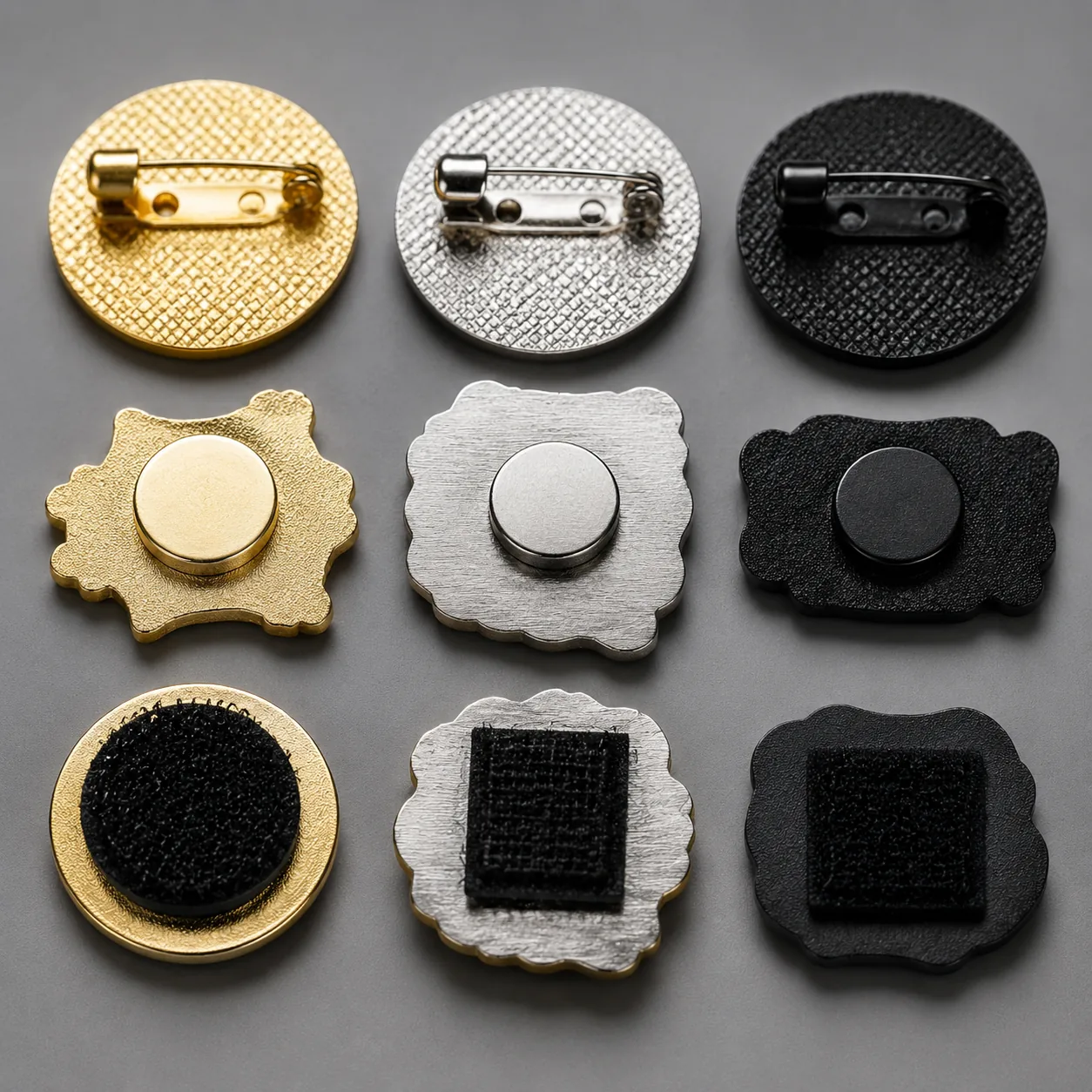
1. Match Backing to the Application Surface
Start the backing specification with the substrate, not the logo. A 75 mm embroidered emblem can work as sew-on on a 180 gsm cotton work shirt, fail as iron-on on PU-coated nylon, and curl on a cap if full hook tape makes it too rigid. When the substrate is missing, factories usually quote a safe standard backing, but the buyer carries the risk: heat gloss on coated bags, corner lift after washing, hook tape too stiff for sleeves, or adhesive that releases during packaging transit.
Define the surface and use conditions in measurable terms: 600D polyester backpack with PU coating, no laundering; 180 gsm cotton jersey, 30 domestic wash cycles at 40 C; 280 gsm polyester softshell, low-temperature pressing only; 12 oz cotton canvas tote, spot clean only. Also state whether the item is a uniform, tactical accessory, retail patch, event giveaway, children’s garment, or industrial workwear. That one line affects adhesive chemistry, backing thickness, edge construction, sew-channel width, inspection level, and packaging.
| Application surface | Preferred backing | Backing to avoid | Technical reason |
|---|---|---|---|
| Cotton or poly-cotton uniforms | Sew-on, or iron-on plus perimeter stitch | Sticker adhesive | Pressure-sensitive adhesive is not permanent after repeated laundering |
| PU-coated nylon bags | Sew-on or hook-and-loop | 150 C+ iron-on film | Heat can gloss, shrink, or delaminate the coating |
| Curved cap panels | Sew-on with flexible edge | Thick full-back hook on small patches | Rigid backing fights the curve and lifts at corners |
| Tactical gear with loop panels | Hook backing, stitched perimeter | Iron-on only | Users expect removable morale patch function |
| Event apparel under 10 wears | Iron-on or economical sew-on | Heavy PVC with full hook | Added cost and stiffness rarely improve the use case |
| Fleece or pile fabric | Sew-on or tested low-temp TPU film | Standard EVA iron-on | Raised fibers reduce adhesive contact area |
2. Specify Patch Face and Backing Separately
The patch face and the backing are separate purchase-order lines. Embroidered, woven, chenille, sublimated, leatherette, and soft PVC patches can take different backings, but not every combination is reliable. A 70 mm embroidered badge can usually be sew-on, iron-on, sticker-backed, or hook-backed. A 25 mm woven label is often better as sew-on because the bond area is too small for dependable heat adhesion. A 120 mm chenille letter should normally be sewn because pile height and patch weight make heat-only attachment risky.
Use direct language: embroidered patch, 75 mm wide, 100 percent thread coverage, black merrow border, PES iron-on film, 120 micron nominal thickness; or woven patch, 50 mm, laser-cut edge, no heat film, sew-on only. For removable patches, specify hook side, loop side, or hook backing with loose loop mate. Most apparel and tactical programs need hook on the patch and loop on the garment, but some uniform buyers already have loop panels sewn in.
- State face construction and backing construction as separate PO lines.
- Use hook, loop, or hook plus loose loop mate; do not write only Velcro-style backing.
- Confirm wash, dry-cleaning, outdoor UV, salt-spray, or temporary display requirements.
- For caps and sleeves, state if the patch must bend around a radius under 80 mm.
- For children’s products, review detachable patch size, pull force, and small-parts risk.
- Assign separate SKU codes when the same artwork ships in sew-on, iron-on, and hook-backed versions.
3. Define Adhesive Film, Heat Cycle and Peel Strength
Iron-on backing is not one material. Common hot-melt films for patches include EVA, PES, and TPU grades, usually 80 to 180 microns thick. For cotton and polyester garments, a normal production window is 150 to 165 C for 12 to 18 seconds at 2.5 to 4.0 bar. Low-temperature TPU can bond at 130 to 145 C, but it costs more and still requires garment testing. Lower heat reduces fabric damage risk; it does not automatically improve wash durability.
Do not approve heat backing for waterproof PU coatings, waxed canvas, leather, heat-sensitive nylon, laminated softshell, or high-pile fleece without testing the actual material. A patch may bond well to flat cotton but peel from softshell because the face coating blocks adhesive penetration. For washable apparel, test at least 5 pre-production pieces through 5 wash cycles at 40 C before bulk approval. For retail uniforms or workwear, 10 to 20 wash cycles plus tumble drying gives a better signal.
| Adhesive option | Typical film thickness | Press setting range | Best use | Risk to control |
|---|---|---|---|---|
| EVA hot melt | 90-130 microns | 150-165 C, 12-15 sec | Cotton event apparel | Moderate wash resistance; edge lift after drying |
| PES hot melt | 100-160 microns | 155-170 C, 15-20 sec | Poly-cotton workwear | Higher heat may mark sensitive fabrics |
| TPU low-temp film | 80-120 microns | 130-145 C, 12-18 sec | Heat-sensitive polyester blends | Higher cost; verify cooled peel strength |
| Pressure-sensitive sticker | 60-100 microns | No heat; roller pressure preferred | Packaging, giveaways, temporary placement | Not a permanent garment backing |
| No adhesive | 0 microns | Not applicable | Caps, bags, coated fabrics | Requires sewing or mechanical attachment |
For iron-on approval, specify a cooled peel test because hot adhesive can feel strong before crystallization. A practical acceptance limit is no edge lift over 2 mm after the agreed wash test, with no adhesive bleed visible from 30 cm. If the garment factory applies the patches, include press temperature, dwell time, pressure, platen type, cooling time, and whether a Teflon sheet or silicone release paper is allowed.
4. Build the Sew Channel Into the Artwork
Sew-on backing is durable only if the sewing path is designed into the patch. For embroidered patches, keep a 2.0 to 3.0 mm clear border outside critical artwork so the decorator can stitch without covering text or logos. For woven patches with laser-cut edges, a 1.5 to 2.0 mm clean edge is usually enough, but small lettering should sit at least 2.0 mm inside the stitch line. A merrow border is normally 2.5 to 4.0 mm wide and adds a rounded durable edge, but it is less precise on sharp corners and narrow points.
Patch thickness affects sewing speed, needle selection, and cost. Typical embroidered patches are 1.2 to 2.0 mm thick; woven patches are 0.4 to 0.8 mm; chenille patches are 3.0 to 6.0 mm; soft PVC patches are often 2.0 to 4.0 mm. A thick chenille or PVC patch may require a larger needle, slower handling, and an experienced operator. If a decorator must sew 5,000 garments in one shift, confirm patch thickness and stitch access before bulk purchase.
Set dimensional tolerance by size range. For embroidered and woven patches under 100 mm, plus or minus 1.0 mm on width and height is a realistic commercial target when the shape is not overly complex. For patches over 100 mm, plus or minus 1.5 mm is more practical. Molded PVC can often hold plus or minus 0.5 mm on clean outlines, but soft material shrinkage, trimming, and color-fill variation still need separate inspection limits.
5. Engineer Hook-and-Loop Coverage, Not Just Material
Hook-and-loop backing is correct when patches must be removable, swapped, or positioned on tactical gear. The critical variable is coverage. Full-back hook tape gives the strongest hold, but it increases stiffness, weight, thickness, and curling risk on curved sleeves. Partial hook strips reduce cost and improve flexibility, but a tall patch can rotate or lift if the strips are too narrow, too close together, or stitched only at the ends.
For patches up to 80 mm wide, full hook coverage is usually preferred when removability is the main function. For patches over 100 mm, consider two or three horizontal hook strips, each 20 to 25 mm wide, stitched around the strip perimeter. If a loose loop mate is supplied, specify its shape and size: same shape as the patch, a rectangle behind the design, or an oversize panel with 2 mm allowance. Black and white hook-and-loop are easiest to source; custom dyed tape can add 5 to 10 days and move MOQ to 500 or 1,000 pieces.
| Patch size | Hook coverage recommendation | Typical added FOB cost | Notes |
|---|---|---|---|
| 40-60 mm | Full-back hook | $0.08-$0.18 per piece | Strong hold with limited stiffness |
| 70-100 mm | Full-back hook or two strips | $0.12-$0.28 per piece | Use strips for curved sleeves |
| 100-150 mm | Two or three 20-25 mm strips | $0.20-$0.45 per piece | Reduces curling and weight |
| Over 150 mm | Project-specific strip layout | $0.35-$0.80 per piece | Wear-test on final garment or bag |
| Loose loop mate | Same size or simple rectangle | $0.06-$0.35 per piece | Required if the customer garment has no loop panel |
Stitching quality matters as much as tape selection. Require hook tape stitched within 1.0 mm of the approved sample line, no skipped stitches, no front puckering, and no hook tape overhang beyond the patch edge. For repeated-use programs, a manual 20-cycle attach-and-remove check is a practical shipment baseline; tactical or rental programs should test 50 cycles on the final loop panel.
6. Control Offset, Back Appearance and Packing
Backing should usually sit 0.5 to 1.5 mm inside the visible front edge so it does not show from the face. Exposed iron-on film can contaminate heat-press plates and create shiny marks on garments. Hook tape overhang catches lint, scratches adjacent products, and looks careless in retail packaging. Sticker liners should release cleanly without pulling embroidery threads, stretching a thin woven label, or leaving adhesive on the face.
Put measurable limits into the inspection sheet: backing offset from front edge 0.5 to 1.5 mm; no adhesive overflow visible from 30 cm under normal light; no loose thread longer than 3 mm; hook tape stitch deviation under 1.0 mm from approved sample; die-cut or laser-cut edge follows artwork within plus or minus 1.0 mm unless the shape is classified as complex. For complex shapes, approve a golden sample and inspect against that sample plus agreed critical dimensions.
The back appearance matters if the consumer sees it before purchase. White nonwoven backing on a black patch may be acceptable for internal uniforms, but it can look unfinished in retail polybags or header-card packaging. Black nonwoven, black hook tape, tonal felt, printed backing, or paper liner branding can improve presentation, but each affects cost and sourcing. State back color, liner color, packing direction, barcode placement, and whether patches are bulk packed, individually bagged, or carded.
7. Use Real MOQ, FOB and Lead-Time Benchmarks
Backing choice changes MOQ, unit price, and schedule. For standard embroidered or woven patches, 100 pieces per design is a common small-order floor, but pricing stabilizes at 300, 500, and 1,000 pieces. Soft PVC usually starts higher because mold, color setup, and curing time are involved; 300 pieces is common for simple PVC, while 500 pieces is healthier for multi-color molded designs. Custom dyed hook tape, specialty films, shaped loop mates, printed liners, and individual retail packing can all raise MOQ.
As a FOB China benchmark, a simple 70 mm embroidered sew-on patch at 500 pieces often quotes around $0.35 to $0.90 per piece, depending on stitch coverage, border, backing, and packing. Iron-on film may add $0.03 to $0.10. Pressure-sensitive sticker backing may add $0.04 to $0.12. Hook backing typically adds $0.12 to $0.35 for common sizes, and hook plus loose loop mate can add $0.18 to $0.60. Woven patches for flat artwork may run $0.25 to $0.75 at 500 pieces. Chenille and PVC often sit higher because of pile, material volume, molds, and curing time.
| Backing type | Practical MOQ tiers | Sample lead time | Mass lead time | Typical use |
|---|---|---|---|---|
| Sew-on | 100, 300, 500 pieces | 5-8 days | 10-16 days | Caps, bags, uniforms |
| Iron-on | 100, 300, 500 pieces | 5-8 days plus fabric test | 10-18 days | Cotton and polyester apparel |
| Sticker | 300, 500, 1,000 pieces | 5-8 days | 10-16 days | Temporary giveaways, packaging |
| Hook only | 100, 300, 500 pieces | 6-9 days | 12-20 days | Removable morale patches |
| Hook plus loose loop | 300, 500, 1,000 pieces | 6-10 days | 13-22 days | Retail kits and uniforms without loop panels |
| Soft PVC with backing | 300, 500, 1,000 pieces | 7-12 days | 15-25 days | Outdoor, tactical and novelty patches |
Lead times start after artwork, size, color, backing, packing, and sample details are approved. Rush production may be possible for simple sew-on or iron-on patches, but backing validation is the wrong step to skip. A failed peel test, reversed hook orientation, or visible backing overhang can turn a low-cost item into a rework claim that costs more than the patches.
8. Lock QC Criteria Before Production
Patch backing inspection should be agreed before production, not negotiated after defects appear. For normal promotional orders, AQL 2.5 for major defects and AQL 4.0 for minor defects is a workable baseline. Stricter retail or uniform programs may use AQL 1.5 for major defects. Major defects include wrong backing type, weak heat bond after the approved cycle, hook tape detachment, adhesive bleed visible from the front, wrong loop mate size, incorrect hook orientation, or dimensions outside tolerance. Minor defects include loose threads within the agreed limit, slight backing offset inside tolerance, or back shade variation not visible from the front.
Inspection should include both the loose patch and the applied result. For iron-on patches, test after at least 24 hours of cooling, then after the agreed wash cycle. For hook-and-loop, check manual attachment cycles and confirm the face does not pucker. For sew-on patches, verify the stitch channel remains clear and the border does not crack or fray when flexed. For sticker-backed patches, confirm liner release, initial tack, and no adhesive transfer to the front surface.
- Send the final fabric, garment panel, coated material, or loop panel, not only the artwork file.
- Choose backing by use condition: sew-on for durability, iron-on for speed, hook-and-loop for removability, sticker for temporary use.
- Add film type, micron thickness, press temperature, dwell time, pressure, and cooling time when heat application is required.
- Put backing offset, outline tolerance, loose thread limit, hook orientation, loop mate size, and AQL level into the PO.
- Approve one physical sample on the actual application surface before authorizing bulk production.
- Label mixed orders by backing code so sew-on, iron-on, hook, and hook-plus-loop versions are not packed together.
Before asking factories to quote, convert the artwork list into a backing decision table. Include design name, size, face construction, substrate, wash requirement, backing type, tolerance, packing method, MOQ tier, and target FOB range. ZheCraft can review that sheet, flag risky backing choices, and sample embroidered, woven, PVC, hook-and-loop, and heat-backed patches from the same Yiwu production workflow. That is faster and safer than approving a strong front design that cannot survive the surface it is meant to decorate.
Have a project? Send your artwork and target quantity and we’ll reply with a detailed quotation within 12 working hours.
Ready to get this made?
Send your sketch, target quantity and ship-date. Detailed quotation in 12 hours.



