Patch Backing Specs: Sew-On, Iron-On, Hook-and-Loop, or Adhesive
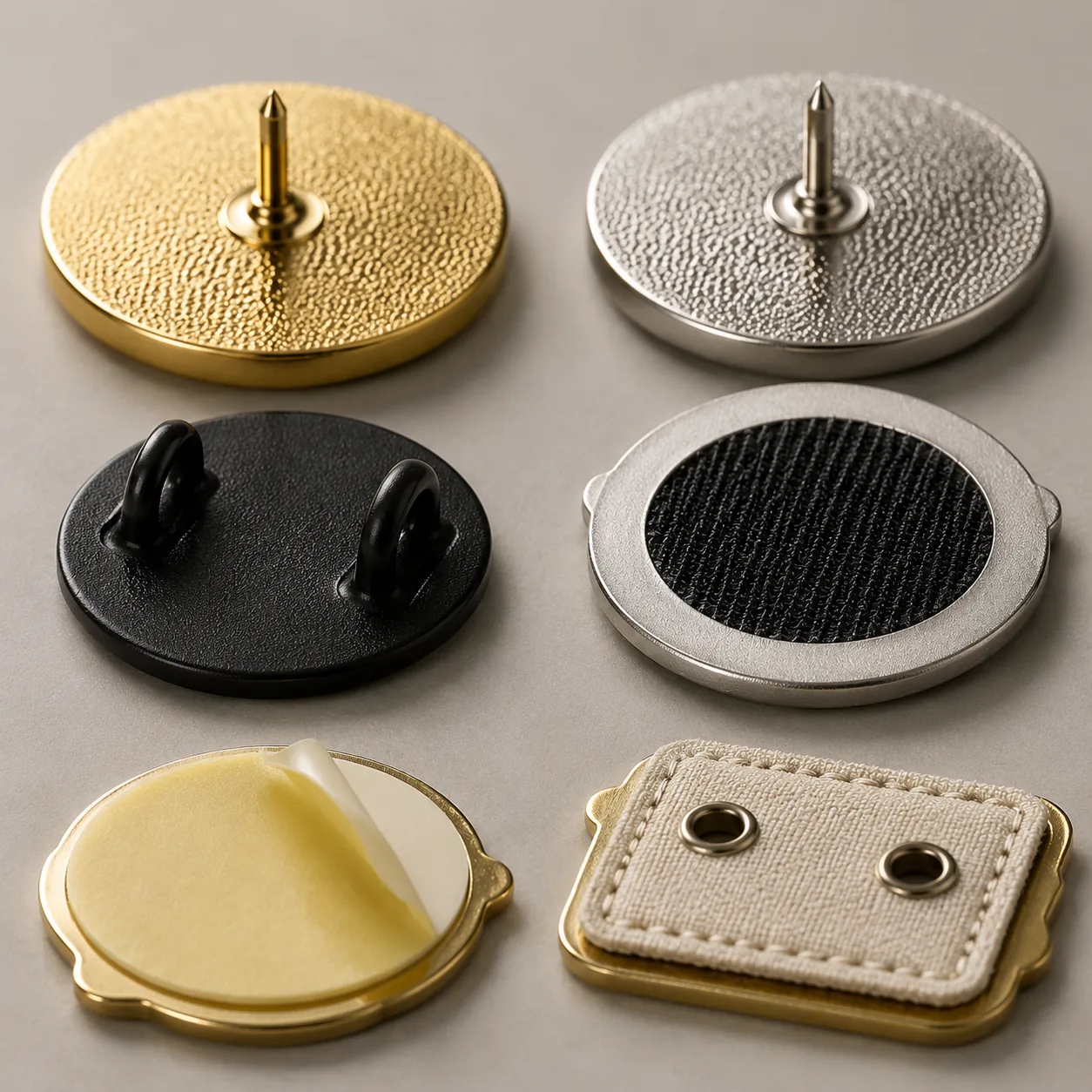
Start with the attachment system, not the artwork
Patch failures usually appear after the artwork sample is approved. The embroidery may look correct, but the iron-on film peels from a coated jacket, the hook-and-loop layer curls on a tactical badge, or a pressure-sensitive adhesive leaves residue on retail packaging. Backing is not a cosmetic option. It determines how the patch is applied, how it ships, how it ages, and whether the end user can attach it correctly.
For B2B programs, choose backing from the use case: substrate, wash cycles, heat tolerance, replacement frequency, user skill, and safety requirements. A 75 mm morale patch for a nylon tactical bag has different mechanical stress than a 45 mm woven brand label on a cotton shirt, even when the front artwork is similar. If the RFQ only says “patch with backing,” the factory may quote the cheapest workable construction, not the one that survives field use.
Use measurable baseline tolerances in the RFQ. For finished size, specify ±1.0 mm for patches under 100 mm, ±1.5 mm for 100 to 180 mm, and ±2.0 mm for larger or irregular shapes. Merrowed borders should normally be 2.5 to 3.5 mm wide; laser-cut woven borders should not be thinner than 1.5 mm unless the logo has been simplified. Backing alignment should stay within ±1.0 mm on regular shapes and ±1.5 mm on complex die-cut outlines, with no visible overhang from the front.
Backing comparison for procurement specs
Sew-on, iron-on, hook-and-loop, and pressure-sensitive adhesive are different attachment systems, not interchangeable upgrades. The table below shows practical FOB ranges for 70 to 90 mm embroidered or woven patches with moderate coverage, standard packaging, and normal export QC. Actual cost changes with stitch density, thread type, border method, backing area, color count, and quantity.
| Backing type | Best use | Typical added FOB cost | MOQ guidance | Main risk |
|---|---|---|---|---|
| Sew-on | Uniforms, workwear, caps, jackets, school and club apparel | USD 0.00 to 0.03 per piece over base patch | 100 pcs standard; 300 pcs for stricter color matching | Final quality depends on sewing skill and garment fabric |
| Iron-on heat seal | Promotional apparel, denim, canvas bags, retail DIY patches | USD 0.03 to 0.08 per piece | 100 pcs standard; 500 pcs if peel reporting is required | Peeling on coated, stretchy, or heat-sensitive materials |
| Hook-and-loop | Morale patches, tactical gear, staff badges, removable ID panels | USD 0.12 to 0.35 per piece; paired hook and loop can add more | 100 pcs standard; 300 pcs for custom-cut hook-and-loop shapes | Wrong side specified, edge curl, added bulk |
| Pressure-sensitive adhesive | Temporary event use, packaging decoration, sampling before sewing | USD 0.04 to 0.12 per piece | 300 pcs standard; 500 pcs for printed release liners | Weak fabric bond, residue, liner curl, poor heat aging |
Do not select backing only by the unit price. Sew-on may be the lowest factory cost but unsuitable if the customer expects self-application. Hook-and-loop may be excessive for a one-day giveaway. Iron-on may look convenient but is risky on waterproof rainwear, silicone-treated softshell, elastic sportswear, leather, velvet, down jackets, or thin nylon that can deform under heat.
Sew-on backing: durable, low-cost, and installer-dependent
Sew-on is the safest default for uniforms, workwear, school blazers, club jackets, caps, and any patch expected to survive repeated laundering. The back is usually plain twill, felt, or nonwoven stabilizer, with no adhesive layer. For embroidered patches, common twill is 180 to 240 gsm polyester-cotton or polyester. For woven patches, a thinner 80 to 120 gsm backing fabric keeps the label flexible and reduces edge stiffness.
Edge construction matters more than many buyers expect. Merrowed borders are best for circles, ovals, rectangles, shields, and simple patches; they add a raised edge around 1.5 to 2.5 mm thick. Laser-cut borders are cleaner for complex logos and small woven labels, but the buyer should accept a flatter heat-sealed edge. For lightweight shirts, keep total patch thickness around 1.2 to 2.0 mm. Heavy embroidered patches above 2.5 mm can pucker thin fabric unless the garment factory uses proper stabilizer.
For QC, define loose thread trimming within 1.0 mm, no exposed backing on the front face, no frayed corners after light manual abrasion, and no missing stitches in the border. AQL 2.5 for major defects and AQL 4.0 for minor appearance defects is practical for standard promotional and uniform orders. Police, airline, and premium retail programs may use AQL 1.5 major, but tighter inspection should be agreed before pricing because it increases sorting time and reject allowance.
Iron-on backing: specify film, heat, pressure, and peel standard
Iron-on backing uses a heat-activated adhesive film, web, or powder coating laminated to the patch back. Typical film thickness is 80 to 150 microns for lightweight woven or low-profile patches, and 150 to 250 microns for heavier embroidered patches. Thicker film can improve contact on textured cotton or canvas, but it also increases stiffness and can create visible glue flash if cut too close to the border. Set the adhesive 0.5 to 1.0 mm inside the patch edge where possible.
A realistic heat-press window is 150 to 170°C for 12 to 18 seconds at 2 to 4 bar pressure, followed by flat cooling for at least 20 seconds before handling. Low-temperature films may bond at 130 to 145°C, but wash durability is usually lower. Household irons do not provide consistent pressure or temperature, so retail instructions should be conservative and should not promise the same performance as a calibrated heat press.
For cotton, polycotton, denim, and canvas, iron-on can work well when tested on the real fabric. A practical factory check is to bond the patch, condition it for 24 hours, then run a 180-degree peel check by hand. For contract programs, specify a lab target such as 8 to 12 N per 25 mm peel strength after one wash cycle, or 5 to 8 N per 25 mm after five wash cycles at 40°C. If the garment has DWR, PU, PVC, silicone, fluorocarbon, or heavy stretch content, request a trial before approving bulk production.
Hook-and-loop backing: define side, setback, and stitching
Hook-and-loop backing is used for morale patches, tactical gear, security badges, staff roles, medical ID patches, and event credentials that change between shifts. The most common procurement error is failing to state the required side. In most apparel and bag systems, the garment already has loop fabric, so the patch needs hook backing. For retail sets or interchangeable kits, buyers often request hook on the patch plus a matching loop piece supplied as a pair.
Standard hook-and-loop adds bulk. Combined patch thickness commonly reaches 2.0 to 3.5 mm depending on embroidery height, hook grade, and whether both sides are supplied. Nylon hook tape usually has stronger grip and better flex. Polyester hook-and-loop offers better UV and moisture resistance, making it preferable for outdoor, marine, or high-humidity use. For custom-cut backs, hold the hook-and-loop within ±1.0 mm of the patch outline and keep it 0.5 to 1.0 mm inside the edge to prevent visible overhang.
For patches wider than 90 mm, edge curl becomes more likely, especially on shields, rectangles, and long name tapes. A stitched perimeter through the hook-and-loop layer is more reliable than glue-only lamination and typically adds USD 0.03 to 0.08 per piece depending on size. Specify 8 to 10 stitches per inch for perimeter stitching where appearance allows. QC should include grip consistency, stitch security, edge lift after repeated removal, and confirmation that hook and loop sides match the buyer’s system.
Pressure-sensitive adhesive: temporary placement, not washable apparel
Pressure-sensitive adhesive backing is useful when the patch needs to stick quickly without heat: event badges, packaging decoration, sample placement before sewing, scrapbook-style merchandise, product launch kits, or short-term retail displays. It is not a reliable washable apparel attachment, even when the first bond feels strong. Fabric fibers, moisture, body heat, detergents, and flexing all reduce adhesive performance.
Acrylic adhesive is usually the safer general choice because it ages better than rubber adhesive and has lower odor. Common adhesive thickness is 80 to 120 microns, laminated with a 90 to 120 gsm release paper or film liner. Rubber adhesive may give higher initial tack on some rough paperboard, but it can yellow, smell stronger, and transfer residue under heat. For export, ask the factory to avoid long storage above 40°C and to pack adhesive-backed patches flat to reduce liner curl.
Always test the real substrate. Adhesive behavior changes sharply on kraft paper, coated paper, polypropylene bags, painted metal, varnished boxes, textured fabric, and recycled cartons with high dust content. For packaging programs, define whether residue is acceptable after removal. For retail use, inspect liner release, edge glue, odor, tack after 24 hours, and adhesive set-back of 0.5 to 1.0 mm from the patch edge.
RFQ checklist and approval sample controls
A strong RFQ prevents the supplier from guessing. Instead of writing “Velcro patch” or “iron-on patch,” describe the patch construction, backing side, end surface, application method, expected wash or removal frequency, packaging, and inspection level. A clear line item is: “80 mm embroidered patch, merrowed edge, hook backing only, hook set back 0.8 mm, perimeter stitched, used on loop panel of polyester tactical bag.”
Approval samples should be checked as attachment systems, not just as artwork. On a 70 mm patch, a 2 mm backing shift can expose hook tape, reduce iron-on contact area, or cause adhesive squeeze-out. Request front photo, back photo, side-profile photo for thickness, and at least one physical sample applied to the intended material for higher-risk orders.
- Confirm patch type, finished size, border method, and backing in one RFQ line item.
- State backing side clearly: hook only, loop only, or hook-and-loop pair.
- Define the application surface: cotton, polycotton, nylon, canvas, coated fabric, paperboard, plastic, or metal.
- Set thickness targets: 1.2 to 2.5 mm for most apparel patches; 2.0 to 3.5 mm for tactical hook patches.
- Specify backing alignment: within ±1.0 mm for regular shapes and ±1.5 mm for complex shapes.
- Use AQL 2.5 major and AQL 4.0 minor for standard orders, or AQL 1.5 major for premium programs.
- Approve one physical golden sample showing the back side before mass production.
- Keep one buyer-held sample and one factory-held sample for reorder comparison.
Cost, MOQ, lead time, and QC expectations
For standard embroidered or woven patches, 100 pieces per design is a common minimum, but 300 pieces is usually more efficient for custom backing, stricter color control, or SKU packing. At 100 pieces, a 70 to 90 mm patch often falls around USD 0.75 to 1.80 FOB depending on coverage and backing. At 500 pieces, the same specification commonly drops to USD 0.38 to 0.95. At 1,000 pieces, typical FOB pricing is USD 0.28 to 0.75. Metallic thread, glow thread, very dense embroidery, oversized shapes, and paired hook-and-loop push prices higher.
Normal sample lead time is 5 to 8 days after artwork confirmation. Bulk production is usually 10 to 18 days for 300 to 3,000 pieces, and 18 to 28 days for larger multi-design programs. Add 2 to 4 days for heat-bond testing, custom release liners, retail cards, barcode labels, or mixed packing by SKU. Rush production can be arranged, but skipping a physical backing sample increases the risk of returns.
Factory QC should cover finished size, thread or woven color, stitch density or woven clarity, border integrity, backing alignment, thickness, and attachment performance. For iron-on patches, run a heat-press trial on buyer-approved fabric before bulk release. For hook-and-loop patches, test grip and perimeter stitching after repeated removal. For adhesive patches, check liner release, edge glue, odor, tack after 24 hours, and heat-aging risk. Record the backing material, film thickness, hook grade, application setting, and test result in the production file so reorders do not restart from assumptions.
Decision rule before placing the order
Choose backing according to service conditions, not the cheapest quote. If the patch must survive laundering and long wear, sew-on is the most reliable default. If the buyer needs consumer application on cotton, denim, or canvas, iron-on can work when temperature, pressure, and peel expectations are documented. If the patch must be removable, specify hook-and-loop side, edge set-back, and perimeter stitching. If the patch is for packaging or short-term display, pressure-sensitive adhesive is efficient, but it should not be sold as washable garment backing.
Before ordering, send the supplier the artwork, target size, end material, backing choice, expected wash or removal frequency, packaging requirement, and AQL level. Ask for front and back sample photos, then approve a physical sample for orders above 300 pieces, fixed event dates, or any coated fabric application. For repeat programs, lock the backing material, edge method, adhesive film or hook grade, heat-press setting, and attachment test result in a reorder spec sheet.
If the use case is uncertain, request two backing samples on the same design, such as sew-on versus iron-on or hook only versus hook-and-loop pair. The extra sampling cost is usually much lower than replacing failed patches after distribution. ZheCraft can quote these variants side by side with separate MOQ, lead time, and FOB ranges so procurement teams can choose from tested performance rather than assumptions.
Have a project? Send your artwork and target quantity and we’ll reply with a detailed quotation within 12 working hours.
Ready to get this made?
Send your sketch, target quantity and ship-date. Detailed quotation in 12 hours.



