Patch Backing Specs: Sew-On, Iron-On, Hook-and-Loop or Adhesive
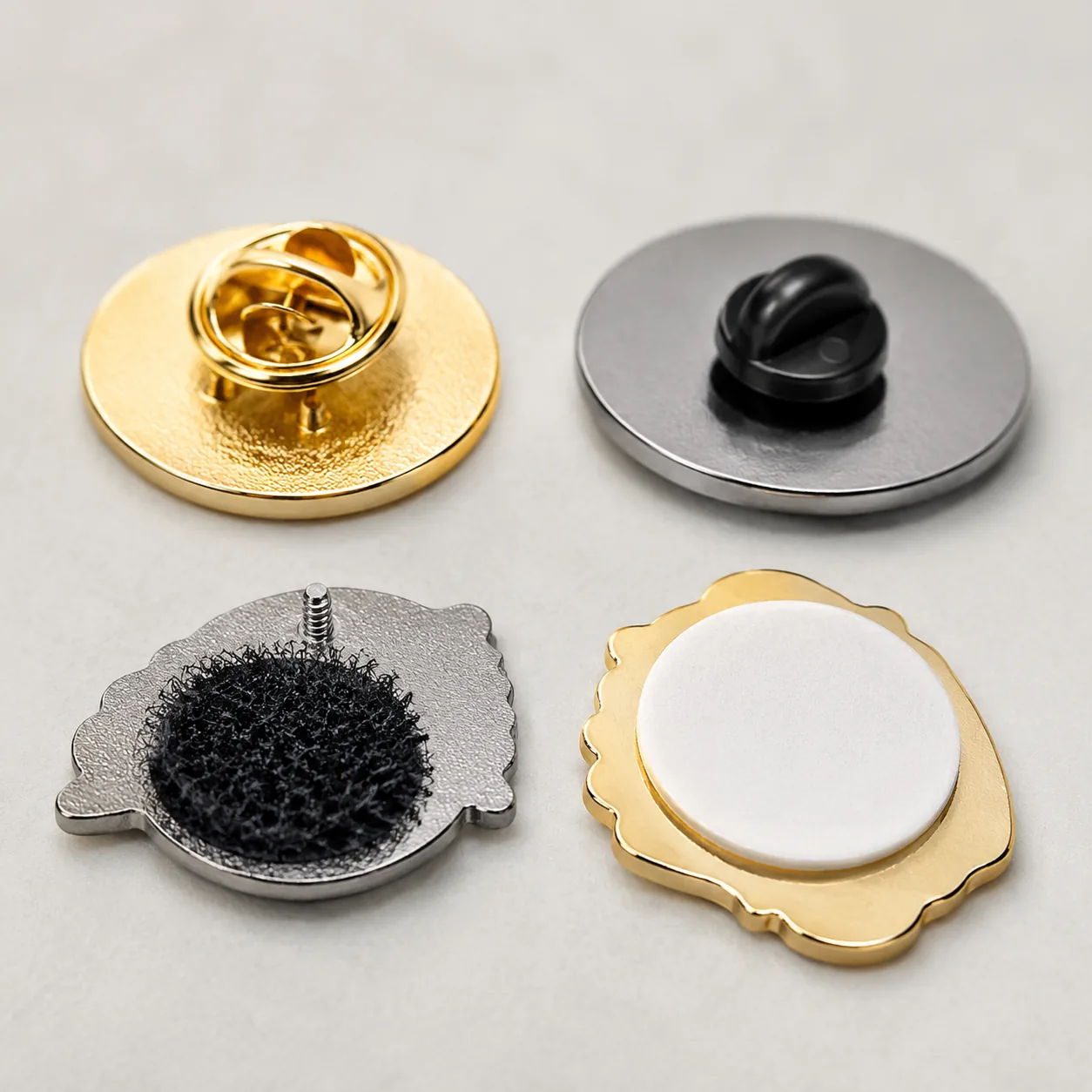
Why patch backing fails after the front looks approved
Most patch complaints are not caused by embroidery density, woven detail or border neatness. They appear after delivery: an iron-on badge lifts after one wash, a hook-backed morale patch curls on a sleeve, or an adhesive patch falls from a cotton T-shirt before the event ends. The front artwork may match the approved sample, but the backing is the part that decides whether the patch survives real use.
Backing should be specified at RFQ stage, not left as a factory default. On a 70 mm embroidered patch, backing can change unit cost by USD 0.03 to 0.38, add 0.15 to 2.5 mm of thickness, and change packing because hook tape, pins and release liners can catch or deform in bulk bags. ZheCraft normally asks buyers to confirm final use, fabric type, wash requirement, application method and packing format before quoting.
For normal custom patches below 80 mm, practical MOQ is 100 to 300 pieces per design for simple sew-on or iron-on versions. Hook-and-loop, pin backs, retail cards and mixed backing programs are cleaner at 300 to 500 pieces per design because setup and material cutting losses are higher. Typical sample lead time is 5 to 8 days after artwork confirmation. Mass production is usually 10 to 18 days after sample approval, plus 2 to 5 days for individual OPP bags, barcode labels, backing cards or kitting with other promotional items.
Backing options by use case, cost and risk
There is no universal best backing. Sew-on remains the most durable choice for uniforms, workwear, denim and bags, but it requires sewing labor at destination. Iron-on is convenient for schools, clubs and consumer merchandise, but it depends on fabric heat tolerance and press control. Hook-and-loop is excellent for staff roles, tactical gear and removable ID, but it adds bulk and cost. Peel-and-stick adhesive is a temporary display solution, not a permanent garment attachment.
A good comparison should include added thickness, lead-time impact and failure mode, not just unit price. The table below uses common FOB add-on ranges for China production at 500 to 3,000 pieces, assuming the same patch front and normal materials. Very small patches below 40 mm, oversized patches above 120 mm, metallic thread, 3D embroidery and irregular laser-cut shapes can move the range.
| Backing type | Best use | Typical added thickness | FOB add-on cost | Lead-time impact | Main rejection risk |
|---|---|---|---|---|---|
| Plain back for sew-on | Uniforms, denim, canvas bags, workwear | 0.0 to 0.2 mm | USD 0.00 to 0.03 | None | Buyer expected self-application but did not plan sewing labor |
| Iron-on hot-melt film | Cotton, denim, cotton-poly apparel, school patches | 0.15 to 0.35 mm | USD 0.03 to 0.09 | 0 to 2 days | Poor bond on coated nylon, PU, softshell or low-temperature fabrics |
| Full hook with loose loop | Tactical patches, staff roles, equipment bags | 1.2 to 2.2 mm | USD 0.14 to 0.38 | 1 to 4 days | Visible hook edge, excess stiffness or weak stitching after repeated removal |
| Peel-and-stick adhesive | Short events, name badges, photo shoots, packaging display | 0.12 to 0.30 mm | USD 0.04 to 0.13 | 1 to 3 days | Adhesive failure on linty, textured, humid or dusty surfaces |
| Pin brooch back | Souvenirs, fashion badges, retail patches | 3.0 to 6.0 mm at hardware | USD 0.08 to 0.24 | 1 to 3 days | Rotation, snagging, puncture holes or unsafe use on children's items |
Sew-on backing: the benchmark for durable uniforms
For long-term uniforms, sew-on construction is still the safest specification. A plain twill, felt or nonwoven back keeps the patch flexible and avoids adhesive aging. Normal total thickness is 1.5 to 2.8 mm for embroidered patches, 0.8 to 1.5 mm for woven patches and 1.8 to 3.2 mm for chenille or heavy 3D embroidery. Dimensional tolerance should be set at +/-1.0 mm for regular shapes under 100 mm and +/-1.5 mm for irregular borders or large patches above 100 mm.
The key trade-off is installation labor. If 2,000 patches ship to field staff in several locations, sewing quality becomes uncontrolled unless a garment supplier applies them before distribution. For repeat uniform programs, specify a 3 to 4 mm clear sew margin inside the border and avoid raised embroidery directly on the stitch path. Dense stitching under the machine needle can cause skipped stitches, broken needles or puckering on lightweight garments.
For a standard 75 mm embroidered patch with about 70 percent embroidery coverage and merrowed border, Yiwu FOB pricing is commonly USD 0.35 to 0.95 at 500 pieces, USD 0.30 to 0.82 at 1,000 pieces and USD 0.24 to 0.68 at 3,000 pieces. Woven patches in the same size often run USD 0.28 to 0.75 at 500 pieces because the construction is flatter, but they do not deliver the raised textile look of embroidery. Bulk packing is usually 50 or 100 pieces per OPP bag; retail cards or individual bags normally add USD 0.03 to 0.12 per unit and 2 to 5 days.
Iron-on backing: specify heat, pressure and fabric limits
Iron-on backing uses hot-melt film that softens under heat and bonds into the fabric surface. A common commercial heat-press window is 150 to 170 degrees Celsius for 12 to 18 seconds at medium pressure, roughly 2.5 to 4.0 bar. Some low-melt films can run around 130 to 145 degrees Celsius, but they may have lower wash resistance. Domestic irons vary widely, so consumer-applied patches should include an instruction card and should not be sold as industrial-grade attachment.
Fabric choice matters more than the word iron-on. Cotton canvas, denim and cotton-poly blends usually perform well when the film is matched correctly. Nylon, coated polyester, rainwear, PU leather, softshell and water-repellent fabrics are higher risk because they can shrink, glaze, melt, resist bonding or release after flexing. For sportswear and waterproof jackets, heat-tacking plus sewing is usually safer than relying on adhesive alone.
Useful RFQ language is specific: “iron-on film, press at 160 degrees Celsius for 15 seconds, medium pressure, target fabric 65/35 poly-cotton twill, 5 washes at 30 degrees Celsius.” A realistic QC plan includes a peel check after 24 hours of dwell time and a wash check if washing is part of the claim. If the buyer supplies fabric swatches, the factory can test on the real substrate; otherwise, testing on standard cotton and polyester panels does not guarantee performance on coated or stretch garments.
Hook-and-loop backing: control grade, stitching and bulk
Hook-and-loop backing is used when patches must be removable: security teams, event staff, airsoft clubs, tactical uniforms, bags and morale patches. The most common requirement is full hook backing on the patch with a loose loop piece supplied for sewing to the garment. Standard colors include black, white, khaki, olive, navy and gray; exact Pantone matching is not realistic for hook tape, so color approval should use physical samples.
The main risk is bulk. A 90 mm embroidered patch with full hook backing can reach 3.5 to 4.8 mm at raised areas, which may feel stiff on sleeves, caps or curved bags. For patches below 45 mm, hook tape can overpower the patch and cause edge curl unless the shape is simple and the border is firm. For large patches above 100 mm or patches pulled repeatedly, ask for perimeter stitching plus one or two center tack lines; for small retail patches, perimeter stitching is cleaner.
Specify hook tape grade and alignment. Common hook tape is 100 percent nylon or polyester, 16 to 25 mm roll width for strips or sheet-cut for full backs. Edge alignment tolerance should be +/-1.0 mm relative to the patch outline, with no hook visible from the front at normal viewing distance. For inspection, major defects include wrong side supplied, loose hook tape, missing loop piece, exposed adhesive if a self-adhesive loop is used, and hook material extending past the border.
Adhesive and pin backs: narrow but useful applications
Peel-and-stick adhesive works when the patch is treated as a temporary badge or display item, not a washable garment component. It performs best on smooth paperboard, clean plastic, flat metal and some tightly woven cotton during short indoor events. It struggles on linty fleece, ribbed fabric, oily surfaces, dusty cartons, humid outdoor conditions and curved substrates. The RFQ should define holding time and surface, for example: “8 hours on cotton T-shirt indoors at 20 to 25 degrees Celsius,” not “permanent adhesive.”
For adhesive patches, a practical inspection method is a 180-degree peel test after 30 minutes dwell time and again after 24 hours. Production lots should be rejected for wrinkled adhesive sheets, liner separation, edge contamination, adhesive bleeding beyond the cut line, or more than 2 percent obvious adhesive exposure under AQL 2.5 major and AQL 4.0 minor inspection. Storage should stay below 30 degrees Celsius and away from high humidity; hot cartons can cause adhesive flow, blocking or loss of tack.
Pin backs convert a patch into a removable textile badge. A 25 to 35 mm steel safety pin bar is suitable for many 60 to 100 mm patches; larger or tall narrow patches may need two pins or a pin-and-clip assembly to reduce rotation. Avoid pin backs for children's promotions, sports events, thin silk, waterproof shells and any garment where puncture holes or snagging will create complaints. Hardware should be checked for burrs, rust, weak crimping and sharp points before packing.
RFQ checklist: backing, testing and inspection details
Most backing disputes come from incomplete RFQs. “Embroidered patch with backing” is not a specification. A factory needs size, construction, border, backing, target surface, application method, durability expectation, inspection level and packing format. If end users apply the patch themselves, instruction cards and warning language should be part of the order scope.
- State final use: uniform, retail merchandise, event badge, tactical gear, club patch, cap, bag or temporary giveaway.
- Give exact size in millimeters and tolerance, normally +/-1.0 mm under 100 mm and +/-1.5 mm for large or irregular shapes.
- Specify backing clearly: plain sew-on, iron-on film, full hook with loose loop, peel-and-stick adhesive, pin back or mixed construction.
- Name the target fabric or surface, including coatings such as nylon, softshell, PU leather, denim, cotton canvas or polyester jersey.
- Define durability: no wash, 5 gentle washes at 30 degrees Celsius, weekend outdoor use, repeated removal or permanent uniform wear.
- Set QC levels: AQL 2.5 for major defects such as wrong backing, poor adhesion or loose hardware; AQL 4.0 for minor trimming or cosmetic issues.
- Confirm packing: bulk 50 per bag, individual OPP, backing card, barcode label, carton quantity or kit packing with lanyards, medals, coins or pins.
For specification-sensitive orders, approve one pre-production sample made with the final backing, not only a front embroidery strike-off. A front-only sample cannot verify stiffness, heat bonding, hook alignment, adhesive liner quality or pin placement. If the buyer supplies garment fabric, even a small swatch is enough for basic heat, peel and appearance testing before mass production.
Ordering sequence, MOQ tiers and final buying advice
Start by separating patches by use case instead of forcing one backing across the whole program. A staff uniform patch may need sew-on or hook-and-loop, while a fan giveaway from the same campaign may be better as iron-on or adhesive. One additional SKU can reduce complaints when the end uses are genuinely different.
A safe buying sequence is artwork approval, construction confirmation, pre-production sample with final backing, surface test, then mass production. Budget 5 to 8 days for sampling, 1 to 3 days for buyer review and 10 to 18 days for production after approval. Add 2 to 5 days for retail packing or kitting. If an event date is fixed, avoid late changes from sew-on to hook-and-loop or pin back because material availability, packing thickness and carton volume all change.
For quoting, ask for 300, 500, 1,000 and 3,000 piece tiers in one RFQ. At 300 pieces, backing and setup costs have a visible effect; at 1,000 pieces and above, the price gap between sew-on and iron-on may be small, while hook-and-loop still remains a meaningful add-on. The best backing is the one that survives the buyer's actual use, cleaning method and application process, not the one that looks cheapest on the first quote sheet.
Have a project? Send your artwork and target quantity and we’ll reply with a detailed quotation within 12 working hours.
Ready to get this made?
Send your sketch, target quantity and ship-date. Detailed quotation in 12 hours.



