Patch Backing Specs: Sew-On, Iron-On, Hook-and-Loop or Adhesive
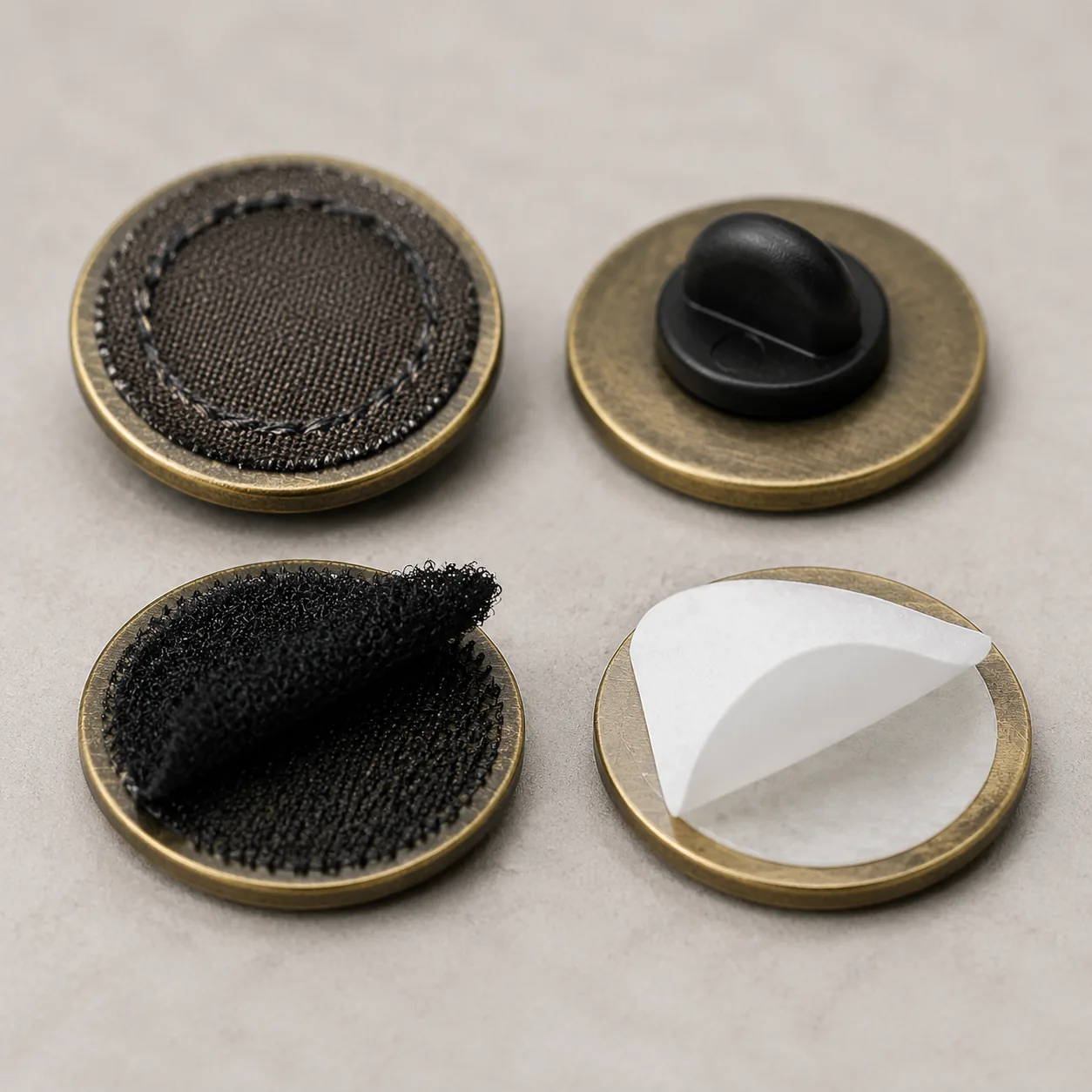
Why Patch Backings Fail After Approval
Most patch failures are not caused by the embroidered, woven or PVC face. They start at the backing: heat-seal film lifting after one wash, hook-and-loop corners peeling, pressure-sensitive adhesive leaving residue, or sew-on borders fraying because the stitch path was too narrow. A patch can pass artwork approval and carton inspection, then still fail when the end user applies it to the wrong fabric or washes it under conditions the backing was never specified to handle.
For B2B orders, the backing decision should be made before sampling. A 75 mm embroidered school uniform patch, a 50 mm woven retail patch and a 90 mm PVC tactical patch may carry the same logo but require different attachment systems. The RFQ should define the receiving material, expected service life, wash cycles, application method and whether the patch must be permanent, removable or temporary.
A useful baseline specification is: 80 mm embroidered patch, polyester-cotton twill uniform, permanent attachment, 30 domestic wash cycles at 40 °C, no dry cleaning, AQL 2.5 major and 4.0 minor. That single line gives the factory a practical engineering target instead of leaving it to quote a generic backing.
Match Backing to Fabric and Service Life
The receiving surface drives the backing choice. Cotton twill, polyester sportswear, fleece, nylon bags, leather and coated workwear respond differently to heat, pressure, needle penetration and adhesive chemistry. If the buyer only writes “iron-on backing” without naming the fabric, the supplier will usually quote a standard heat-seal film designed for cotton or cotton-poly blends, not for coated nylon or elastic performance fabric.
Permanent uniform use normally favors sew-on backing or heat seal plus perimeter stitching. Removable morale, tactical and identification patches are better suited to hook-and-loop. Sticker-style adhesive backings work for packaging, notebooks, sample cards and short event use, but they should not be sold as washable garment attachment.
The common mistake is choosing by backing name instead of use case. A heat-seal patch may be convenient for retail, but it is not automatically suitable for waterproof jackets. A sew-on patch is highly durable, but it adds labor at the destination. Hook-and-loop gives removability, but it adds thickness and can distort narrow outlines. Adhesive is fast, but the bond is usually temporary unless the target surface is clean, smooth and non-porous.
| Use Case | Recommended Backing | Typical Size | Main Specification | Main Risk |
|---|---|---|---|---|
| Police, school or staff uniform | Sew-on or heat seal plus stitching | 60-100 mm | Border 2.5-3.5 mm; wash target 30-50 cycles at 40 °C | Peeling if heat seal is used alone |
| Retail fashion patch | Iron-on heat seal | 40-90 mm | 150-170 °C, 12-20 sec, 3-5 bar | End user applies with low pressure or uneven heat |
| Morale or tactical patch | Hook side on patch; loop supplied if required | 50-100 mm | Full perimeter stitch 2.0-3.0 mm from edge | Sharp corners catch and lift |
| Promotional sticker patch | Pressure-sensitive adhesive | 30-80 mm | 80-150 micron adhesive; clean dry surface | Weak bond on fabric or dusty canvas |
| PVC bag or luggage patch | Sew-on channel or hook-and-loop | 50-120 mm | 2.0-3.0 mm stitch groove; 0.4-0.8 mm groove depth | Needle cracking or thick edge bulk |
Sew-On Backing: Durable, Slow and Border-Dependent
Sew-on backing is the lowest-risk option when the end user or garment factory can stitch the patch to the product. For embroidered and woven patches, the back is normally the base textile without added adhesive film. For PVC patches, the design should include a stitch channel so the needle passes through a controlled border area rather than raised artwork.
Border width is the critical specification. A merrowed embroidered edge normally needs at least 2.5 mm of clear border on simple circles, shields and rectangles. Irregular outlines, tight curves and badges above 100 mm should use 3.0-3.5 mm where possible. Laser-cut woven patches can use a flatter 1.5-2.0 mm stitched border, but they are less forgiving on workwear, backpacks and other products exposed to pulling.
For PVC, specify the stitch groove rather than assuming the factory will add one. A practical groove is 2.0-3.0 mm wide and 0.4-0.8 mm deep, with artwork kept clear of the needle path. Very soft PVC under roughly Shore A 50 can distort under stitching; very hard PVC above Shore A 75 may crack if the stitch path is too close to the edge.
- Use 2.5 mm minimum border for simple merrowed embroidered patches; use 3.0-3.5 mm for irregular shapes.
- Hold finished size tolerance to ±1.0 mm under 100 mm and ±1.5 mm above 100 mm unless the shape is highly complex.
- For PVC, specify a 2.0-3.0 mm stitch groove and keep raised artwork out of the needle path.
- Ask for backing offset within 1.0 mm and no exposed base fabric beyond the border.
- Avoid sew-on only when the final customer expects tool-free application.
Iron-On Heat Seal: Specify Film, Press and Wash Target
Iron-on backing uses a thermoplastic film, powder adhesive or hot-melt layer laminated to the patch back. Typical heat-press settings are 150-170 °C for 12-20 seconds at 3-5 bar. A common starting point for cotton twill is 160 °C for 15 seconds, followed by cooling under light pressure. Household irons are less controlled, so retail patches need conservative instructions and fabric warnings.
Film thickness should match patch construction. Smooth woven patches often work with 80-100 micron film. Standard embroidered patches usually need 100-120 microns. Heavy embroidery, chenille or uneven backs may need 120-150 microns to bridge thread height, but thicker film can increase edge squeeze-out and stiffness. For light fabrics, the supplier should check adhesive bleed-through and surface gloss after pressing.
Heat seal should not be treated as universal. Nylon shells, PU-coated polyester, waterproof laminates, leather, elastic sportswear and heat-transfer printed garments may glaze, shrink, delaminate or reject the adhesive. For industrial laundry, dry cleaning or more than 30 domestic wash cycles, use heat seal only as positioning support and add perimeter stitching.
| Heat-Seal Item | Normal Range | Tighter Spec for Uniform Use | Avoid or Test First |
|---|---|---|---|
| Film thickness | 80-120 microns | 120-150 microns for heavy embroidered backs | Thin fabrics where bleed-through is visible |
| Press temperature | 150-170 °C | 160 °C starting point for cotton twill | Nylon, PU coating, leather, heat-sensitive synthetics |
| Press time | 12-20 sec | 18-20 sec for thick backs | Printed or laminated garments |
| Pressure | 3-5 bar | Consistent platen pressure across full patch | Foam, ribbed knit or high-pile fleece |
| Wash target | 10-30 cycles at 40 °C | Add sewing for 30-50 cycles | Industrial laundry or dry cleaning without validation |
Hook-and-Loop Backing: Define Sides, Stitching and Bulk
Hook-and-loop is often called Velcro in emails, but the supplier still needs a precise specification. For morale and tactical patches, the hook side is normally sewn to the patch. The loop side may be supplied loose, attached as a matched pair, or not supplied because the garment already has loop panels. Each option changes cost, thickness, packing and inspection.
A hook-and-loop layer usually adds 1.5-2.5 mm to total patch thickness, depending on grade and pile height. On small retail cards this can double pack volume. On PVC or heavily embroidered patches, it can also make the patch stiff. For patches above 80 mm, a full perimeter stitch is usually not enough; an inner stitch path or cross stitch reduces bubbling and keeps the backing flat during repeated removal.
Shape control matters. Sharp points, narrow strokes and acute corners catch on sleeves, bags and body armor. Rounded corners of at least R3 mm are more durable. Thin elements under 5 mm wide should be simplified or connected to a wider body because hook-and-loop backing makes them rigid and more likely to lift.
- Specify hook side on patch unless the product requires loop side on patch.
- State whether matching loop pieces are included loose, attached, die-cut to shape, or omitted.
- Use full perimeter stitching 2.0-3.0 mm from the edge with no skipped stitches at corners.
- For patches over 80 mm, add an inner reinforcement stitch where the artwork allows it.
- Use R3 mm or larger corner radii and avoid strokes under 5 mm wide.
- Inspect for backing offset within 1.0 mm and no hook tape exposed beyond the face edge.
Pressure-Sensitive Adhesive: Temporary, Not Garment Grade
Pressure-sensitive adhesive is a peel-and-stick backing with release paper. It is useful for promotional kits, notebooks, folders, sample boards, event badges, mailers and packaging decoration. It is not a substitute for heat seal or sewing on washable clothing, even when the initial tack feels strong during sampling.
The adhesive layer is typically 80-150 microns. Smooth woven patches take adhesive evenly. Embroidered patches are harder because thread height creates channels and reduces contact area. PVC patches need a flat or recessed back if adhesive is expected to hold consistently. On rough canvas, fleece, dusty bags or water-repellent coatings, the bond can fail within hours.
For adhesive patch orders, specify the target surface, storage condition and bond expectation. Paperboard at 20 °C and 50 percent relative humidity is very different from a cold nylon bag or an oily plastic case. A practical promotional test is 24-hour dwell on the target surface, then a corner peel check. For residue-sensitive products, test removal after 7 days rather than approving only initial tack.
| Backing Type | Typical MOQ | FOB Add-On Range | Sample Lead Time | Mass Lead Time |
|---|---|---|---|---|
| Plain sew-on back | 100 pcs | USD 0.00-0.03/pc | 5-7 days | 10-18 days |
| Iron-on heat seal | 100 pcs | USD 0.03-0.08/pc | 6-8 days | 12-20 days |
| Hook side only | 100 pcs | USD 0.12-0.35/pc | 7-10 days | 14-24 days |
| Hook and loop pair | 100 pcs | USD 0.20-0.55/pc | 7-10 days | 15-26 days |
| Pressure-sensitive adhesive | 300 pcs | USD 0.04-0.12/pc | 6-8 days | 12-20 days |
Inspection Specs That Catch Backing Defects
Backing inspection should match the promised use. For sew-on patches, check stitch density, border coverage, fraying, size tolerance and needle damage. For heat seal, inspect film coverage, offset, edge squeeze-out and peel after pressing. For hook-and-loop, check side orientation, perimeter stitching, backing offset and repeated open-close performance. For adhesive, check release liner adhesion, edge bleed and contamination.
For normal promotional and uniform orders, AQL 2.5 for major defects and AQL 4.0 for minor defects is a practical starting point. Critical defects should be zero-tolerance when they affect safety, brand identity or product function. Major defects include wrong backing, missing loop pieces, heat-seal film delamination, backing offset over 2.0 mm, adhesive contamination, severe fraying or any backing that prevents application. Minor defects include trimmed thread tails, slight release paper wrinkles or backing offset under 1.0 mm when not visible from the front.
Heat-seal claims should be validated on the target fabric, not only on factory scrap. For standard promotional use, test at least three wash cycles at 40 °C before production approval. For uniforms, ten cycles before bulk approval is a better minimum, with a production target of 30-50 domestic wash cycles if heat seal is supported by stitching.
- Heat-seal peel: no corner lift over 2.0 mm after 24 hours cooling and dwell.
- Wash check: no full-edge lift after 3 cycles at 40 °C for promotional claims.
- Uniform check: run 10 pre-production wash cycles when the order promises 30 or more cycles.
- Hook-and-loop check: no perimeter stitch break after 50 open-close cycles.
- Adhesive check: no liner separation in packing and no adhesive bleed beyond 0.5 mm.
- Dimensional check: finished size within ±1.0 mm under 100 mm and backing offset within 1.0 mm.
RFQ Details, Packing and Final Approval
Backing choice affects packing as well as production. Iron-on and adhesive patches should not be bulk packed loosely without interleaving because heat, pressure and humidity can mark the face, shift release paper or make patches stick together. Hook-and-loop patches catch on each other, so they should be paired face-to-back, individually bagged, or stacked with separators. Thick PVC and hook-backed patches should be packed in smaller inner quantities to avoid compression marks.
For bulk B2B shipments, specify inner bags by SKU. Common packing is 50 or 100 pcs per polybag for small embroidered and woven patches, and 25 or 50 pcs for thick PVC or hook-and-loop patches. Keep export cartons below 15 kg gross weight where possible. If patches ship with metal items such as pins, coins or keychains, separate them from adhesive and textile items to prevent imprinting and liner damage.
Retail iron-on patches need an instruction card. Include temperature, time, pressure, cooling time and fabric exclusions. A clear instruction might read: heat press at 160 °C for 15 seconds with firm pressure; allow to cool; reverse press for 8-10 seconds only if the fabric allows it; not recommended for nylon, waterproof coatings, leather, dry cleaning or industrial laundry.
Before sending an RFQ, define the patch type, finished size, border style, backing, target fabric, wash cycles, application method, quantity tiers, packing and inspection level. A complete example is: 75 mm embroidered patch, merrowed edge, iron-on heat seal, cotton twill jacket, 10 washes at 40 °C, individual polybag with instruction card, quote 300/500/1,000 pcs FOB, AQL 2.5 major and 4.0 minor. If the use case is uncertain, sample two backings side by side. Comparing sew-on versus heat seal, or hook-only versus hook-and-loop pair, is cheaper than remaking a production run after the attachment method fails.
Have a project? Send your artwork and target quantity and we’ll reply with a detailed quotation within 12 working hours.
Ready to get this made?
Send your sketch, target quantity and ship-date. Detailed quotation in 12 hours.



