Patch Backing Specs: Sew-On, Iron-On, Hook-and-Loop and Adhesive
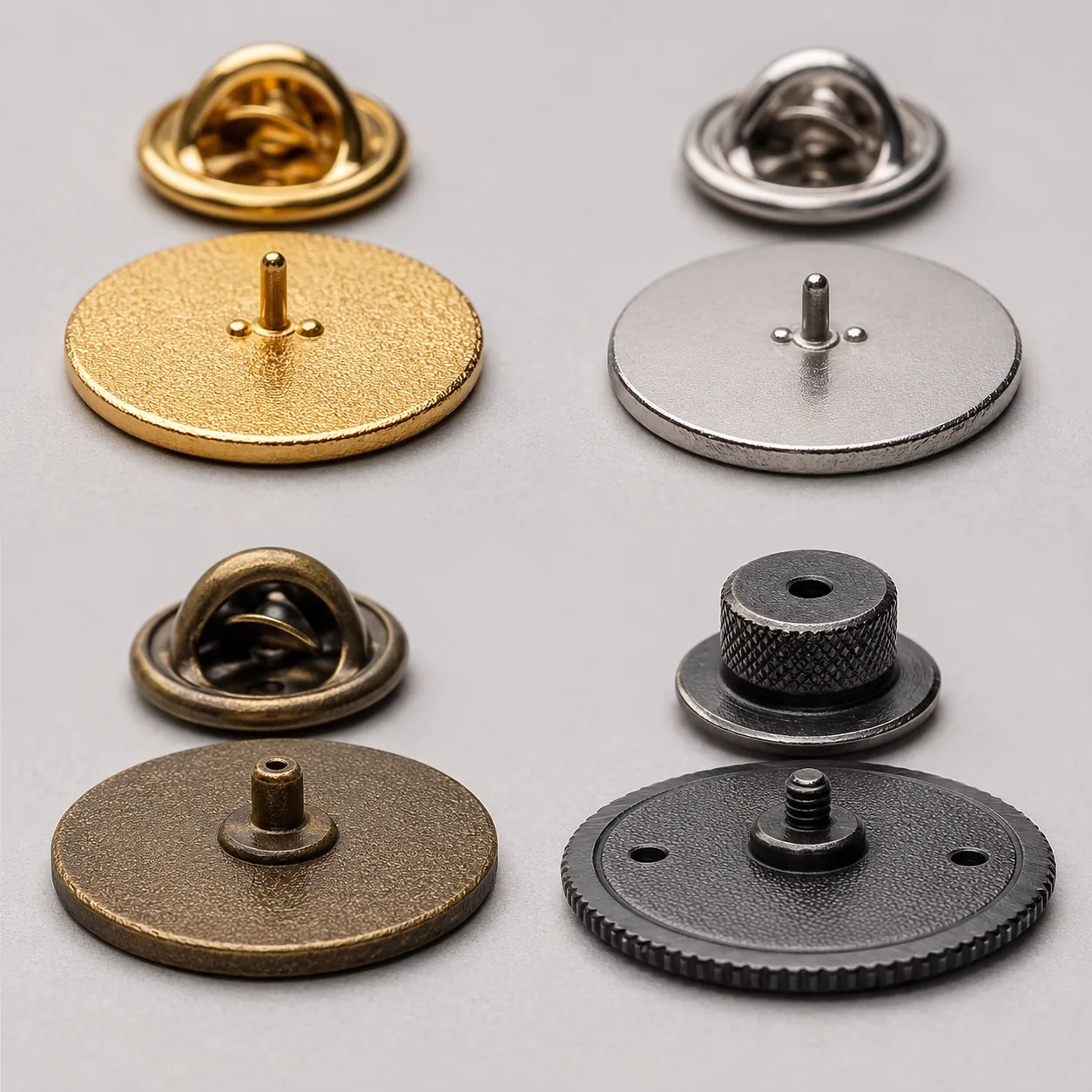
Backing Is a Functional Specification
A patch can pass artwork approval and still fail in use if the backing is left vague. The usual failures are predictable: iron-on film releases after the first wash, hook-and-loop corners curl on tactical bags, adhesive patches drop from retail cards, or PVC patches split because the stitch line was placed through raised detail instead of a flat sewing channel. These are not design surprises; they are specification gaps.
For B2B orders, backing should be locked before sample approval because it changes patch thickness, border width, stiffness, packing, inspection method and sometimes the artwork file itself. A 70 mm embroidered logo with a merrowed edge may work with sew-on, iron-on or hook backing, but each version needs a different back-side build. If the buyer approves only a front rendering, the supplier may choose the cheapest default backing and create avoidable rework.
Typical custom patch MOQs are 100 to 300 pieces for embroidered or woven patches, 300 to 500 pieces for PVC patches, and 500 pieces or more when the same design is split across multiple backing types. Normal sample lead time is 5 to 8 working days for embroidered or woven patches and 7 to 12 working days for PVC patches with a new mold. Backing adders usually range from USD 0.03 to USD 0.45 per piece FOB China, but magnetic sets and large hook-and-loop panels can exceed that on oversized patches.
Sew-On Backing for Permanent Use
Sew-on is the most durable backing for uniforms, denim, canvas bags, workwear, caps and garments that will be washed repeatedly. The patch back is normally plain twill, felt, nonwoven fabric, woven substrate or a PVC base with no adhesive layer. The important design requirement is a clean sewing path: allow at least 2.0 mm from patch edge to stitch line for small woven patches, 2.5 to 3.0 mm for embroidered patches, and 3.0 to 4.0 mm for thick PVC or chenille styles.
For embroidered patches, common finished thickness is 1.5 to 2.5 mm including base fabric, embroidery thread and merrowed or satin edge. Woven patches are thinner, usually 0.6 to 1.2 mm, which makes them suitable for caps, shirt sleeves and light promotional apparel. Chenille patches often reach 3.0 to 6.0 mm depending on yarn pile and felt base, so they need wider borders and stronger garment support. PVC patches are commonly 2.0 to 4.0 mm thick; if they must be sewn, the mold should include a flat recessed sewing channel instead of forcing the needle through raised artwork.
The trade-off is application labor. A trained operator may need 30 to 90 seconds to sew one patch, depending on patch size, stitch path and garment handling. That matters on 5,000-piece uniform rollouts, but it is still cheaper than replacing peeling patches after distribution. For programs requiring 30 or more wash cycles, sew-on should be the default unless the target fabric has already passed an iron-on wash test.
Iron-On Backing Requires Heat-Press Data
Iron-on backing uses a hot-melt film laminated to the patch back. Common materials include EVA, PES and TPU film. For standard embroidered and woven patches, 100 to 120 micron PES or TPU is a practical default; 80 micron film may be enough for light woven labels, while 150 to 180 micron film may be needed for thicker embroidery or rough cotton twill. Heavier film is not automatically better because excess glue can squeeze beyond the border and stain the garment.
The purchase order should state press conditions, not just “iron-on.” A workable starting point is 150 to 165°C for 12 to 18 seconds at 2.5 to 4.0 bar, then cooling flat for at least 20 seconds before handling. Some TPU films need lower temperature and longer dwell, such as 140 to 150°C for 18 to 25 seconds. Household irons are inconsistent, so retail instructions should be conservative and verified on the actual consumer fabric.
Iron-on is fabric-dependent. It normally performs well on cotton twill, cotton tees, school uniforms and many canvas bags. It performs poorly on silicone finishes, water-repellent PU coatings, fleece pile, rib knits, oily leather, high-stretch sportswear and heat-sensitive nylon. For rain jackets, softshell bags and performance apparel, request a compatibility test on the real fabric. A basic pass standard is no corner lift above 2.0 mm after one 40°C wash; stricter uniform programs should test 5 wash cycles before bulk approval.
| Backing Type | Typical MOQ | Added FOB Cost | Lead-Time Impact | Critical Spec |
|---|---|---|---|---|
| Sew-on | 100–300 pcs embroidered/woven; 300+ PVC | USD 0.00–0.05/pc | 0–1 production day | 2.0–4.0 mm clear stitch path; no exposed backing from front |
| Iron-on | 100–300 pcs | USD 0.04–0.12/pc | 0–1 production day | 100–120 micron PES/TPU film; press-tested on target fabric |
| Hook side only | 200–300 pcs | USD 0.12–0.28/pc | 1–2 production days | Hook cut 1.0–2.0 mm smaller than patch outline |
| Hook-and-loop set | 300–500 pcs | USD 0.18–0.45/pc | 2–4 production days | Matched hook and loop; loop supplied loose, sewn or adhesive-backed |
| Pressure adhesive | 300–500 pcs | USD 0.03–0.10/pc | 0–1 production day | Acrylic adhesive with release liner; not for washable garments |
| Magnetic set | 300–500 pcs | USD 0.25–0.70/pc | 2–4 production days | Dual magnet set; slip-tested on target garment thickness |
Hook-and-Loop Must Define Both Sides
Hook-and-loop backing is often called Velcro, but a purchase order should avoid brand language unless branded material is actually required and quoted. Specify hook only, loop only, or a complete hook-and-loop set. Morale patches usually need hook on the patch because tactical bags, caps and panels already carry loop fabric. Corporate kits and retail packs often need the loop side supplied separately so the user can sew or stick it to the target item.
The hook or loop layer should be cut 1.0 to 2.0 mm smaller than the patch outline so it is not visible from the front. For embroidered patches, the hook tape is normally lockstitched around the edge. For PVC patches, the safest construction is a flat back or molded stitch channel; bonding alone may be acceptable for light promotional use but should be pull-tested if the patch will be removed often. Use a minimum 2.5 mm stitch margin and avoid sharp corners. A 3.0 mm or larger corner radius reduces peeling at the first lift point.
Material grade affects service life. Low-cost hook tape may be acceptable for one-time event patches, but outdoor, police, military-style and sports applications need stronger engagement after repeated opening. For higher-use orders, test at least 50 open-close cycles, then check that hook fibers are not shedding and corners have not lifted more than 2.0 mm. If loop pieces are supplied with pressure adhesive, test the adhesive on the end surface separately; strong hook engagement does not mean the loop tape will stay attached to a coated bag.
Adhesive and Magnetic Backings Are Niche Options
Pressure-sensitive adhesive backing is useful for patches mounted to backing cards, notebooks, gift boxes, laptops, helmets, retail displays or temporary event signage. It is not a washable garment attachment. Acrylic transfer tapes similar to 3M 9448A are common, with adhesive thickness around 0.10 to 0.15 mm. If a branded tape is required, the PO should require supplier confirmation and incoming material traceability; otherwise, use “3M 9448A equivalent acrylic adhesive” as the performance description.
Adhesive performance depends on surface energy, texture and cleanliness. Coated paper, kraft card, ABS plastic, painted metal, glass, cotton fabric and leather all behave differently. Acrylic adhesive usually reaches stronger bond after 24 hours at 20 to 25°C, so immediate peel can look weak even when final bond is acceptable. For retail patches, specify a release liner with 2.0 to 4.0 mm overhang so the user can peel it without touching the adhesive. For fabric use, treat adhesive as temporary unless testing proves otherwise.
Magnetic backing is suitable for name badges, event staff patches and no-hole apparel where pins are undesirable. It works best on shirts, suit jackets and light uniforms. It performs poorly on thick fleece, padded jackets and unstable stretch fabrics because the added weight lets the patch slide. Avoid magnetic backing on embroidered patches above 80 mm unless the magnet set has passed a walking slip test on the target garment. For children’s items, magnets and small metal parts require special safety review and should not be treated as standard promotional hardware.
Purchase Order Details That Prevent Rework
A clear PO should define backing material, coverage, offset, thickness, application method, target surface, packing and inspection standard. “Iron-on backing” or “Velcro back” is not enough. The supplier needs to know whether the patch is permanent, removable or temporary, whether the customer will wash it, and whether the end surface is cotton, polyester, nylon, softshell, leather, coated paper or plastic.
Use dimensional tolerances that match patch type and size. For embroidered and woven patches under 100 mm, a finished size tolerance of ±1.0 mm is realistic; for larger patches, use ±1.5 mm. For PVC patches, ±0.5 mm to ±1.0 mm is usually achievable depending on mold design and shrinkage. Backing alignment should be within ±1.0 mm from the approved position. Exposed backing visible from the front should be a major defect. For iron-on film, glue overhang beyond the patch edge should be less than 0.5 mm to reduce press staining.
- Identify patch construction: embroidered, woven, chenille, PVC, leather or hybrid.
- Specify backing type: sew-on, iron-on, hook only, loop only, hook-and-loop set, adhesive or magnetic.
- Define backing coverage: full back, recessed by 1.0–2.0 mm, or cut to a supplied vector path.
- State target surface: cotton twill, polyester bag, coated nylon, denim, softshell, paper card, ABS plastic or leather.
- Set performance target: 5, 10 or 30 wash cycles; 50 hook-and-loop cycles; 24-hour adhesive hold; or temporary display only.
- Require pre-production photos from front, back and side, plus one physical sample with final backing.
- Confirm packing: bulk, individual polybag, attached to loop card, liner overhang, barcode bag or separate loop pieces.
Inspection Tests Before Shipment
Patch backing inspection should combine visual checks with simple functional tests. For most promotional and uniform orders, use ANSI/ASQ Z1.4 or equivalent single sampling at general inspection level II, with AQL critical 0, major 2.5 and minor 4.0. Critical defects include wrong backing type, exposed sharp magnet, unsafe pin or magnet hardware on a child item, adhesive contamination that prevents use, or backing that is detached before application.
Visual inspection should confirm backing type, alignment, edge offset, liner condition, stitch continuity and cleanliness. Major defects include hook tape visible from the front, missing loop pieces, iron-on film folded onto itself, adhesive liner that will not release, or stitching that cuts into artwork. Minor defects include small thread tails, slight liner scuffs or non-functional cosmetic marks within the approved sample range.
Functional testing should match the backing. For iron-on patches, press at least 5 bulk pieces on approved fabric or a documented substitute, then check edge peel after cooling and after one 40°C wash. For sew-on patches, verify needle path clearance and confirm the border does not crack or unravel when flexed. For hook-and-loop, complete at least 10 quick open-close cycles during inspection and 50 cycles for performance orders, then reject if corners lift more than 2.0 mm. For adhesive patches, apply to the target surface for 24 hours at 20 to 25°C and check liner release, edge curl and residue.
Cost, MOQ and Lead-Time Planning
Backing choice rarely dominates unit cost, but it can change production flow. Sew-on and iron-on are the simplest for embroidered and woven patches and usually add 0 to 1 production day after the patch front is finished. Hook-and-loop adds cutting, stitching or bonding, matching and packing; it typically adds 1 to 3 days for hook only and 2 to 4 days for matched hook-and-loop sets. Magnetic backing adds component sourcing and packing control, so allow 2 to 4 additional days unless the supplier stocks the exact magnet set.
As a practical pricing example, a 70 mm embroidered patch at 500 pieces may quote around USD 0.45 to 0.95 FOB with sew-on backing, depending on stitch coverage, thread count and border type. Iron-on film may add USD 0.04 to 0.12 per piece. Hook only may add USD 0.12 to 0.28, while a full hook-and-loop set can add USD 0.18 to 0.45. A 60 to 80 mm 2D PVC patch at 500 pieces often falls around USD 0.80 to 1.80 FOB before special packing, with mold cost sometimes quoted separately at USD 40 to 120 for standard designs.
Lead time should include sampling, backing verification and mass production. Embroidered and woven patch samples usually need 5 to 8 working days, with mass production around 8 to 15 working days after approval. PVC samples usually need 7 to 12 working days, with mass production around 12 to 20 working days depending on mold complexity, color count and curing capacity. Rush schedules are possible, but wash tests and 24-hour adhesive checks are often the first steps skipped. For uniform, outdoor and retail programs, schedule testing instead of relying on assumptions.
Approval Sequence for Bulk Orders
Start by deciding whether the patch must be permanent, removable or temporary. If it must survive repeated washing, choose sew-on first and approve iron-on only after fabric testing. If it must be removable, define hook, loop or matched set and confirm whether the finished product already has loop fabric. If it is for packaging or display, adhesive may be suitable, but the target surface must be named.
Send the supplier the artwork, final patch size, target material, expected use condition, packing method and quantity tier. Ask for a backing recommendation that includes material type, micron thickness or tape grade, edge offset, added FOB cost, sample lead time and any test limitations. A useful RFQ line is: “70 mm embroidered patch, hook backing recessed 1.5 mm, loop pieces supplied loose, black merrowed edge, 500/1,000/3,000 pcs FOB, sample with final backing required.”
Before bulk production, approve one physical sample that includes the final backing, not only the front design. Keep that sample as the inspection reference for alignment, stiffness, edge finish, peel behavior and packing. This small control step is usually cheaper than replacing patches after a uniform rollout, retail launch or event campaign is already in market.
Have a project? Send your artwork and target quantity and we’ll reply with a detailed quotation within 12 working hours.
Ready to get this made?
Send your sketch, target quantity and ship-date. Detailed quotation in 12 hours.



