Patch Backing Specs: Sew-On, Iron-On, Hook-and-Loop and Adhesive
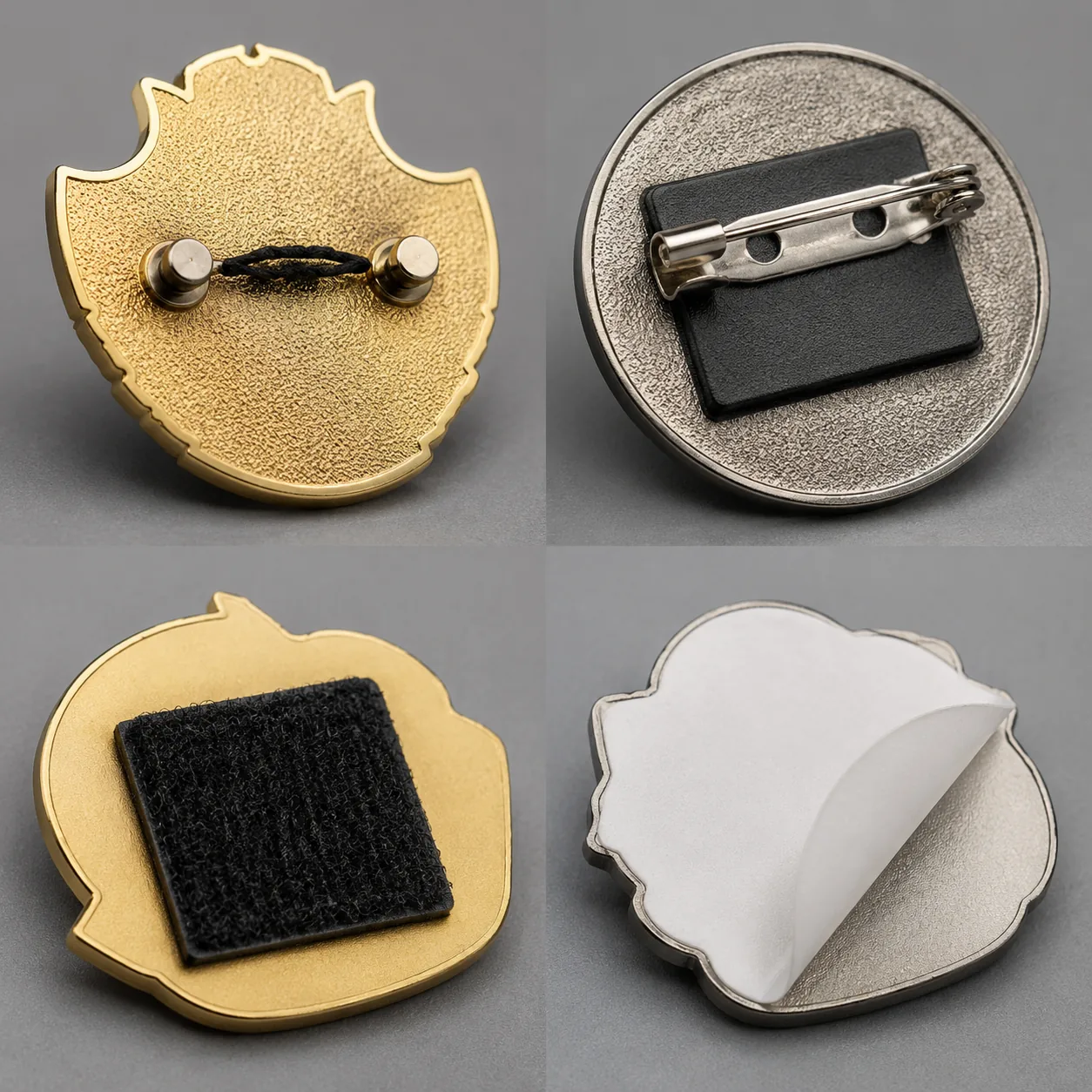
Start With the Failure Mode, Not the Backing Name
Most patch complaints are not caused by the embroidered, woven or PVC face. They start on the back: heat-seal film lifting after laundering, hook tape peeling at the corners, pressure-sensitive adhesive leaving residue, or a thick merrowed edge refusing to sit flat on a cap panel. If an RFQ only says “Velcro backing” or “iron-on backing,” the factory can choose a low-cost material that looks acceptable on a desk but fails in use.
Specify the backing against the application. A morale patch for tactical bags needs repeated peel strength. A uniform patch needs wash resistance, stitchability and predictable shrinkage. A retail sticker patch needs clean peel from a liner and short-term adhesion to paperboard or plastic. A cap patch needs low bulk, controlled stiffness and edge flatness within 1.0 mm on a 75 mm patch after 24 hours of conditioning.
Before quoting, confirm four details: the surface material, the expected wash or outdoor exposure, whether the patch is permanent or removable, and who applies it. Those answers change the backing more than the artwork does.
| Backing type | Best use | Added thickness | Typical FOB range at 1000 pcs, 75 mm patch | Avoid when |
|---|---|---|---|---|
| Sew-on only | Uniforms, workwear, hats, bags | 0.0 to 0.2 mm | 0.38 to 0.85 USD | End users need DIY application without sewing |
| Heat-seal iron-on | Promotional apparel, school patches, craft retail | 0.08 to 0.15 mm | 0.43 to 0.95 USD | Fabric is nylon, DWR-coated, high-stretch or heat-sensitive |
| Hook-and-loop | Morale patches, tactical bags, interchangeable branding | 1.5 to 2.6 mm for both sides | 0.65 to 1.45 USD | Garment must stay slim or budget is giveaway-level |
| Pressure-sensitive adhesive | Packaging, notebooks, short events, displays | 0.05 to 0.12 mm | 0.42 to 0.90 USD | Patch must survive laundering or textured fabric use |
| Magnetic backing | Metal lockers, fridge use, removable display | 0.8 to 1.5 mm | 0.70 to 1.60 USD | Use is apparel, curved surfaces or child-risk programs |
Sew-On Backing for Uniform Reliability
Sew-on backing is the safest default when the patch must survive industrial laundering, long wear or unknown garment materials. The back is usually polyester twill, felt, non-woven stabilizer or PVC sheet, depending on the patch type. For embroidered patches, 100 percent polyester twill at 180 to 220 gsm is a stable baseline. For woven patches, a thinner woven base keeps the hand softer and avoids a stiff label effect.
The critical specification is the sew zone. Leave at least 2.0 mm clear allowance inside a merrowed, heat-cut or laser-cut edge so the apparel contractor can sew without catching loose threads or distorting the border. For patches under 50 mm, reduce edge embroidery density because dense fill plus border stitching can cause needle deflection, puckering and broken needles. Dimensional tolerance should normally be plus or minus 1.0 mm up to 100 mm and plus or minus 1.5 mm above 100 mm.
Sew-on is not always cheaper after application labor. The factory patch price may be low, but sewing cost in the destination market can exceed the patch itself. If patches are distributed loose to consumers, sew-on-only programs create avoidable complaints because many users lack the right thread, needle and skill.
- Specify base fabric: polyester twill 180 to 220 gsm for standard embroidered patches or woven base for thin logo patches.
- Keep a 2.0 mm minimum sew zone inside the border unless the patch is decorative only.
- Use polyester embroidery thread, commonly 75D or 120D; avoid cotton thread for washable uniforms.
- Set edge flatness: no more than 1.0 mm lift on patches under 100 mm after 24 hours flat conditioning.
- Use AQL 2.5 for major defects such as wrong size, loose border or fraying, and AQL 4.0 for minor thread tails.
Heat-Seal Iron-On Requires Fabric Testing
Heat-seal backing uses a thermoplastic adhesive film, commonly EVA, TPU or polyamide hot melt. It is popular because a buyer can apply the patch with a heat press instead of sewing. A realistic starting window is 150 to 165 degrees Celsius, 12 to 18 seconds, medium pressure at 2.5 to 4.0 bar, then cooling flat for at least 30 seconds before handling. Final settings should be confirmed on the buyer’s actual fabric, not only on factory cotton test cloth.
Cotton and cotton-poly blends usually bond well. Nylon, waterproof coatings, silicone finishes, down jackets, high-stretch sportswear and heat-sensitive synthetics are higher risk. A patch that bonds to a cotton sample can peel from a DWR-coated jacket because the coating prevents the adhesive from wetting the fibers.
Do not use iron-on backing as a substitute for sewing on high-liability uniforms. It can work for promotional apparel, school emblems and retail craft patches, but repeated laundering weakens the bond. For better durability, many buyers use heat seal only to position the patch, then add perimeter stitching.
| Spec item | Recommended range | Reason |
|---|---|---|
| Film type | TPU or polyamide for wash resistance; EVA for low-cost craft use | TPU and polyamide usually handle flex and washing better than basic EVA |
| Film thickness | 80 to 150 microns | Too thin gives weak coverage; too thick can seep through embroidery gaps |
| Press temperature | 150 to 165 degrees Celsius for many cotton/poly fabrics | Higher heat may scorch fabric or deform PVC or synthetic patches |
| Press time | 12 to 18 seconds | Short time causes poor melt; long time can flatten embroidery texture |
| Peel strength target | Minimum 8 N per 25 mm after 24 hours conditioning | Creates a measurable acceptance point instead of a hand-pull judgment |
| Wash test | 5 cycles at 40 degrees Celsius for promo use; 10 cycles for uniform trials | Confirms suitability before bulk distribution |
Hook-and-Loop Is More Than Velcro
Many RFQs say “Velcro backing,” but Velcro is a brand name and the required construction still must be stated. Confirm whether the patch needs hook only, loop only, or hook plus a separate loop panel. Morale patches usually carry the hook side because the bag or uniform already has loop fabric. Corporate kits and retail sets often require both sides, and the loose loop panel may need a peel-off adhesive, sew allowance or stitched edge.
The trade-off is thickness. A patch with hook tape plus loop tape adds 1.5 to 2.6 mm before the embroidered face is counted. A 75 mm round embroidered patch can reach 3.0 to 4.5 mm total thickness when merrow border, embroidery and full hook-and-loop are combined. That bulk may be acceptable on a tactical bag but too heavy for caps, thin jackets or children’s garments.
Specify the tape material, density and coverage. Common nylon or polyester hook-and-loop tapes are about 280 to 400 gsm per side. Polyester often performs better in UV and moisture exposure, while nylon can feel stronger during repeated peel cycles. For shaped patches, full-coverage die-cut hook backing is safer than narrow strips because unsupported corners curl first.
- State whether the patch needs hook only, loop only, or hook plus a separate loop panel.
- Use full-area hook backing for shapes with points, thin corners or long rectangular edges.
- Specify loose loop panel edges: laser cut, heat cut or stitched border.
- Set registration tolerance between patch and hook layer at plus or minus 1.0 mm under 100 mm.
- Request 500 peel cycles for reusable morale patches that will be removed frequently.
- Avoid hook backing near delicate knits, scarves and linings because hooks can snag fibers.
Pressure-Sensitive Adhesive Is for Short-Term Use
Pressure-sensitive adhesive turns a patch into a sticker-like item. It is useful for event badges on folders, retail packaging, notebooks, phone cases, gift boxes and temporary displays. It is not a durable apparel attachment unless the use is very short term and the buyer accepts edge lift, lint pickup and residue risk.
A practical PSA spec includes liner type, adhesive chemistry, adhesive thickness and target surface. White paper liner is low cost; PET liner releases more smoothly and looks cleaner for retail. Acrylic adhesive is common for general paper and plastic surfaces. Rubber-based adhesive gives stronger initial tack but can age poorly, yellow or leave more residue.
For coated paperboard or plastic packaging, a 50 to 120 micron adhesive layer is usually sufficient. On fabric, adhesive contacts only the top fibers, so peel strength varies by weave, dye, softener, dust and humidity. If adhesive fabric patches are unavoidable, sample on the actual fabric and check at 5 degrees Celsius, 23 degrees Celsius and 40 degrees Celsius because tack changes with temperature.
| Use case | Adhesive choice | Acceptance test | Main risk |
|---|---|---|---|
| Gift box or paper card | Acrylic PSA with paper liner | No edge lift after 24 hours on coated card | May tear paper if removed |
| Plastic notebook cover | High-tack acrylic PSA with PET liner | Clean peel after 10 minutes; no residue after 24 hours if removable grade is specified | Low-surface-energy plastics may reject adhesion |
| Event shirt for one day | Rubber-based PSA, buyer-approved only | 4 to 6 hour wear test with movement | Lint pickup, falling edges, residue |
| Retail removable patch | Removable acrylic PSA | 180-degree peel without visible residue on approved surface | Lower holding power over time |
Face Construction Changes the Backing
The backing decision cannot be separated from the front construction. Embroidered patches are thicker and flexible, so sew-on, heat-seal and hook-and-loop all work well. Woven patches are thinner and show sharper detail, but adhesive films may telegraph through loose weaves or light backgrounds. PVC patches are heavier, so iron-on claims should be treated cautiously; sewing channels, molded hook backing or adhesive for hard goods are more realistic.
Border type also changes performance. Merrowed borders are durable and suit circles, shields, squares and ovals, but they add bulk. Laser-cut borders handle complex shapes and small lettering, but the edge needs heat sealing or dense stitching to prevent fray. A laser-cut woven patch with heat-seal backing can finish under 1.0 mm thick, which is useful for shirts but may feel too light for tactical merchandise.
For PVC patches, 2.0 to 3.0 mm thickness is common, with 2.5 mm a practical default for medium patches. If the patch is over 80 mm wide or has heavy 3D relief, full hook backing or sewing channels are safer than adhesive because the weight pulls at the corners during use.
- Embroidered patches: best all-rounder for sew-on, heat-seal and hook-and-loop programs.
- Woven patches: best for thin, detailed logos and low-profile apparel use.
- PVC patches: best for outdoor and tactical use; avoid iron-on claims unless tested on final material.
- Chenille patches: usually need sew-on or heat-press plus sewing because pile and felt bases are bulky.
- Leather or faux leather patches: normally use sewing holes, rivets or tested heat-press application on caps.
MOQ, Lead Time and FOB Price Drivers
Backing type changes both material and labor cost. Sew-on embroidered patches are the baseline. Heat-seal adds film and lamination. Hook-and-loop adds tape, die cutting, alignment labor and sometimes a second loose loop piece. Adhesive backing is not expensive by itself, but clean liner application, retail cards and individual bags add handling time.
A practical MOQ structure is 100 pieces for sampling-style custom orders, 300 pieces for economical small batches, and 1000 pieces or more for efficient unit pricing. Pre-production samples usually take 5 to 8 days after artwork approval. Mass production commonly runs 10 to 18 days for embroidered or woven patches, 14 to 22 days for PVC patches, and 18 to 28 days when the order includes mixed backings, barcoded bags, retail cards or multiple approval rounds.
For a 75 mm embroidered patch at 1000 pieces, realistic FOB ranges are 0.38 to 0.85 USD for sew-on, 0.43 to 0.95 USD for heat-seal, 0.65 to 1.45 USD for full hook-and-loop, and 0.42 to 0.90 USD for adhesive backing. Very small patches often have a higher price per square centimeter because setup, trimming, inspection and packing time do not shrink with the artwork.
| Order tier | Practical use | Sample lead time | Mass lead time | Price behavior |
|---|---|---|---|---|
| 100 to 299 pcs | Pilot run, club order, internal approval | 5 to 8 days | 10 to 16 days | Higher unit price due to setup and manual handling |
| 300 to 999 pcs | Event order, distributor small batch | 5 to 8 days | 12 to 18 days | Balanced cost if backing and packaging are simple |
| 1000 to 4999 pcs | Corporate, school or retail replenishment | 5 to 8 days | 14 to 22 days | Best tier for custom die-cut backing efficiency |
| 5000 pcs and above | Uniform program or national campaign | 7 to 10 days if approvals are staged | 18 to 30 days | Material purchasing, carton packing and QC sampling dominate cost |
Inspection Specs That Catch Backing Failures
Backing defects are often invisible in a front-side photo. The patch may look correct until it is pressed, washed, peeled or worn. Inspection must include rear-side alignment, edge lift, adhesive contamination, lamination bubbles, liner release and backing-to-patch registration.
Use AQL 2.5 for major defects and AQL 4.0 for minor defects on most B2B patch orders. Major defects include wrong backing, missing hook or loop side, heat-seal film missing from required areas, adhesive dead zones over 5 mm, stains, broken border stitching and size outside tolerance. Minor defects include thread tails under 3 mm, slight liner wrinkles, rear-side marks that do not affect use and backing offset within tolerance.
Testing should match the claim. For heat-seal patches, press 10 random bulk pieces on buyer-approved fabric and check peel after 24 hours. For hook-and-loop patches, run at least 20 open-close cycles during inspection and check corner lift. For adhesive patches, apply samples to the approved substrate for 24 hours, then check edge lift, residue and liner release.
- Confirm finished size tolerance: plus or minus 1.0 mm up to 100 mm, plus or minus 1.5 mm above 100 mm.
- Check backing alignment tolerance: plus or minus 1.0 mm for shaped patches and plus or minus 1.5 mm for large simple shapes.
- Reject heat-seal film bubbles larger than 3 mm or exposed glue on the front edge.
- Reject hook backing smaller than the patch by more than 1.5 mm unless intentionally inset.
- Test 10 to 20 pieces from bulk production, not only the pre-production sample.
- Keep one signed golden sample showing front, back, thickness and packaging before mass production.
Lock the Spec Before Sampling
Before requesting a quote, decide whether the patch is permanent, removable or temporary. Then identify the exact surface: cotton uniform, polyester cap, nylon bag, coated jacket, paper card, plastic notebook or metal display. Without that surface information, the supplier can only quote a generic backing, and generic backings are where most failures begin.
Send final-size artwork, target backing, application method, wash or use requirement, and packaging requirements. For apparel orders, provide fabric composition and ideally a swatch or finished garment for testing. If the buyer will apply patches in-house, put press temperature, time, pressure and cooling instructions on the packing slip or application card.
For low-risk sourcing, use sew-on for uniforms, heat-seal only after fabric testing, full hook backing for removable morale patches, and pressure-sensitive adhesive only for packaging or short-term display. Approve one pre-production sample with the final backing and run the same handling test the end user will perform before authorizing mass production.
Have a project? Send your artwork and target quantity and we’ll reply with a detailed quotation within 12 working hours.
Ready to get this made?
Send your sketch, target quantity and ship-date. Detailed quotation in 12 hours.



