Patch Backing Specs: Sew-On, Iron-On, Hook-and-Loop, Adhesive
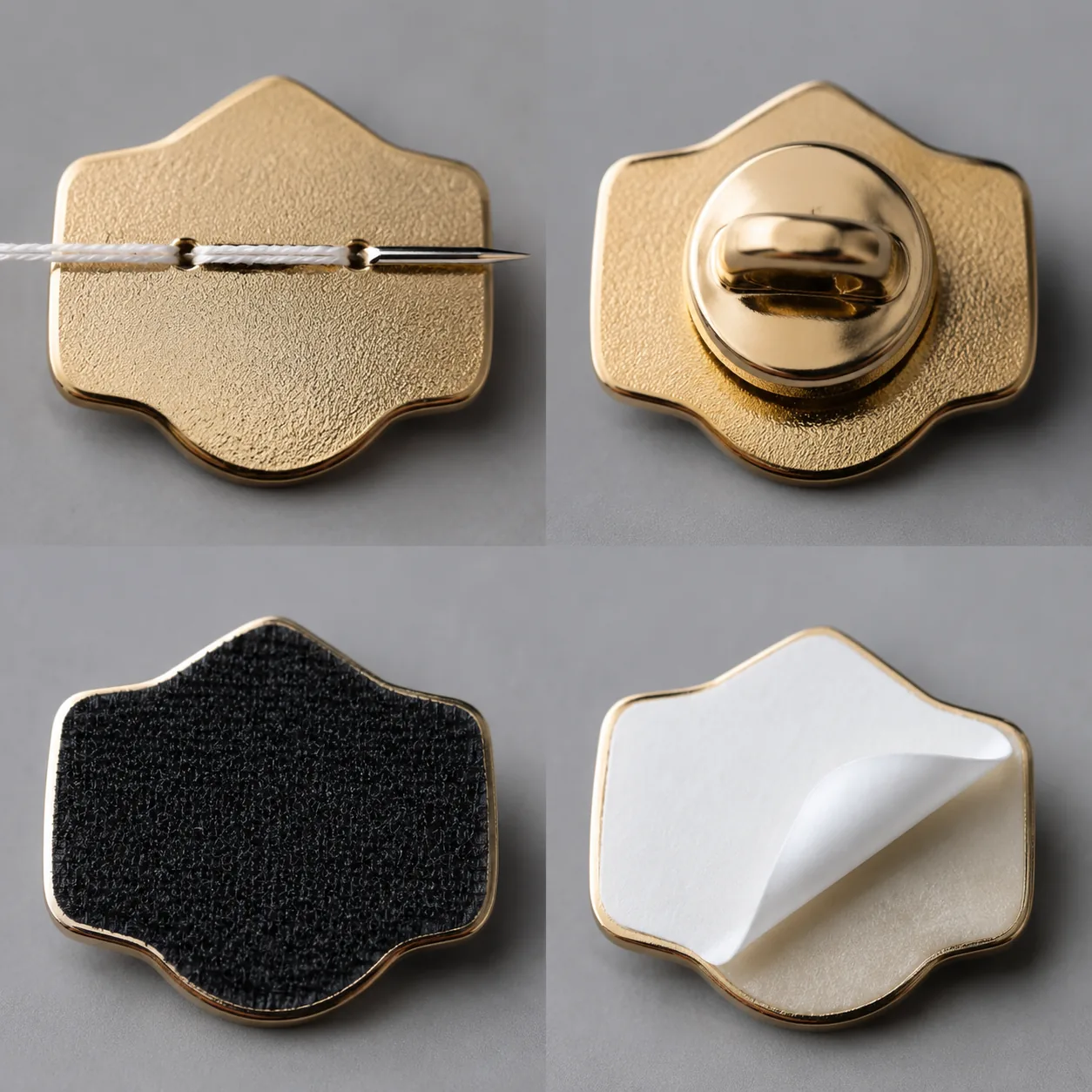
1. Start with the garment, bag, or surface—not the backing
The most expensive patch-backing error is selecting an attachment method before defining the application surface. A 75 mm embroidered badge for a 320 gsm cotton hoodie, a molded PVC morale patch for a 500D nylon pouch, and a woven event badge for a polyester cap should not share the same backing spec. If an RFQ only says “with backing,” the factory may quote the lowest-cost default, then the buyer finds that corners lift, fabric shines after pressing, or the patch is too stiff for the garment.
Open the specification with the base material and use condition. For apparel, list fiber content, fabric weight in gsm if available, stretch level, and wash frequency. For bags and uniforms, state whether the patch must be removable, whether the base fabric can be sewn through, and whether safety rules restrict loose hook surfaces, metal accessories, or high-temperature pressing. A backing that performs well on cotton twill may fail on DWR-coated nylon or spandex-blend sportswear.
- Cotton hoodie, 280-360 gsm: sew-on is safest; heat-seal can work if applied by heat press at controlled pressure.
- Polyester sports jersey, under 180 gsm: sew-on or woven label construction is safer; heat-seal may scorch, shine, or distort the fabric.
- Nylon backpack, 420D-1000D: hook backing works well if a loop panel exists; adhesive and iron-on are risky on coated nylon.
- Temporary event badge, 1-3 days: pressure-sensitive adhesive is acceptable on smooth apparel bags or packaging, but not for laundering.
- Workwear or school uniform washed weekly: specify sew-on or industrial hook-and-loop; consumer iron-on alone is not durable enough.
2. Define backing construction, total thickness, and hand feel
Backing changes total thickness, flexibility, drape, and edge behavior. A 75 mm embroidered patch with a merrowed border is commonly 2.0-2.8 mm thick without hook-and-loop. Add hook backing and the finished part may reach 3.2-4.0 mm. Add a separate loop mate and the stacked set can exceed 4.5 mm. A molded PVC patch is already typically 2.5-4.0 mm thick, so hook backing can make it unsuitable for caps, thin sleeves, or pockets that must lie flat.
Specify finished total thickness, not only thread, fabric, or PVC thickness. For embroidered and woven patches, a practical finished-thickness tolerance is ±0.3 mm; for stable molded PVC tooling, ±0.2 mm is usually achievable. If the patch must fit a recessed panel, packaging tray, wallet pocket, helmet cover, or uniform guideline, define a maximum total thickness including adhesive, heat-seal film, hook fabric, and loop mate.
| Backing type | Typical added thickness | Best use | Avoid when | Typical FOB add-on |
|---|---|---|---|---|
| No backing / sew-on | 0.0-0.2 mm | Permanent garment attachment, soft hand feel | End users cannot sew or no factory sew-on service is planned | $0.00-$0.03 per patch |
| Heat-seal iron-on film | 0.10-0.25 mm | Retail patches, cotton jackets, hoodies, denim | Heat-sensitive nylon, coated fabrics, thin polyester, high-stretch apparel | $0.03-$0.08 per patch |
| Hook backing only | 0.8-1.2 mm | Morale and tactical patches used on existing loop panels | Plain garments without loop, infant products, very thin caps | $0.08-$0.18 per patch |
| Hook plus separate loop mate | 1.6-2.4 mm combined | Uniform kits, bags, removable branding panels | Lightweight shirts, tight pockets, low-profile cap fronts | $0.16-$0.35 per set |
| Pressure-sensitive adhesive | 0.08-0.18 mm | Temporary badges, packaging, display samples | Washing, rough fabric, outdoor exposure, repeated flexing | $0.04-$0.10 per patch |
3. Sew-on specs: edge type, stitch allowance, and border tolerance
For sew-on patches, “no backing” is not a complete spec. The edge construction determines whether the patch sews cleanly and survives handling. Merrowed borders are common for round, oval, shield, and simple rectangular embroidered patches. The border is normally 3.0-4.0 mm wide, with a visible raised edge. Laser-cut or hot-cut edges are better for irregular shapes, small text, tight corners, woven patches, and sublimated patches, but the fabric edge must be dense enough to prevent fraying.
Protect artwork by leaving a real stitch allowance. On embroidered patches, keep important artwork at least 2.0 mm inside a laser-cut edge and 3.5 mm inside a merrowed edge. On woven patches, 1.5-2.0 mm can work because the surface is flatter, but borders under 1.0 mm often cut unevenly or visually disappear after trimming. For PVC patches that will be sewn, add a molded sew channel or recessed stitch groove instead of asking operators to sew through thick decorative relief.
Define where the sewing needle should pass: through the merrowed edge, just inside the border, or through a separate stitch channel. For hand-sewn retail patches, request a softer perimeter and avoid overly dense satin stitching. For industrial sewing, the edge should tolerate lockstitch or zigzag without cracking, fraying, or excessive needle deflection. Inspection should include skipped stitches, loose thread, edge fray, border width, and backing exposure. A common receiving plan is AQL 2.5 for major defects and AQL 4.0 for minor thread or appearance defects, with critical defects such as wrong backing or wrong size rejected at 0 tolerance.
4. Iron-on heat-seal film: temperature, dwell time, pressure, and wash risk
Iron-on backing is convenient, but it is not a universal permanent attachment. A typical heat-seal film for embroidered or woven patches activates at 150-165°C, with 12-18 seconds dwell time under medium pressure, commonly 2.5-4.0 bar on a flat heat press. Household irons produce uneven temperature and pressure, so retail end-user performance varies more than factory-applied heat press results. If the patch is sold as retail iron-on, include clear consumer instructions and still recommend perimeter sewing for heavy-use garments.
Heat-seal can perform well on cotton, denim, cotton-poly twill, and flat sweatshirt fabric. It is much less predictable on nylon, waterproof coatings, silicone finishes, fleece pile, down jackets, elastic sportswear, and garments with DWR or PU coating. Heat may also create shine marks on dark polyester. For these materials, use sew-on, hook-and-loop, or factory testing on the exact garment before approving mass production.
For washable garments, define a test rather than relying on “strong glue” wording. A practical minimum is 5 wash cycles at 40°C followed by air drying, with no lifted edge over 2 mm and no film bleed visible from the front. For workwear or uniforms, request 10 wash cycles at 40°C or 60°C depending on the garment care label. Large patches above 100 mm, dense embroidered patches, and patches placed over flex zones should use heat-seal only as positioning support unless the buyer accepts sewing after pressing.
| Iron-on spec item | Recommended value | Factory control note |
|---|---|---|
| Film thickness | 0.10-0.25 mm | Thicker film improves grip but increases stiffness on small patches |
| Activation temperature | 150-165°C | Lower heat may not melt fully; higher heat can damage polyester or nylon |
| Press time | 12-18 seconds | Validate with a heat press, not only a household iron |
| Pressure | 2.5-4.0 bar typical | Uneven pressure causes corner lift and weak center bonding |
| Wash test | 5 cycles at 40°C minimum | Use 10 cycles for school uniforms, workwear, and repeat-use apparel |
| Edge-lift limit | No lifted edge over 2 mm | Check after cooling, after 24 hours, and after wash test |
5. Hook-and-loop: grade, coverage, color, and peel performance
For tactical, morale, police, club, and equipment patches, hook-and-loop is often the best backing because the patch can be removed before washing or changed by role. The spec should not say only “Velcro backing.” Velcro is a brand name; many factories will quote generic hook-and-loop unless branded material is required. Generic hook-and-loop can be acceptable, but the buyer should define coverage, color, cycle performance, and whether a separate loop mate is included.
Full hook coverage gives the flattest attachment and strongest grip on loop panels. For very flexible garments, 80-90% hook coverage can reduce stiffness, but uncovered edge areas may curl. Hook backing is usually black, white, or a close neutral match; exact Pantone matching is not realistic for standard hook fabric. For military or police programs, specify hook color and whether the loop mate must be the same shape as the patch, a rectangle, or supplied in bulk sheets for sewing onto garments.
Set objective tests. A practical requirement is no delamination between patch and hook backing after 20 manual peel cycles from the edge, and no hook fabric separation under normal hand removal. For higher-duty programs, request 50 cycles on the actual loop material. Alignment tolerance for hook backing is typically ±1.0 mm on regular embroidered or woven shapes and ±1.5 mm on complex outlines. The hook should not protrude outside the patch edge because exposed hook scratches skin, pulls knit fabric, and makes packaging messy.
6. Pressure-sensitive adhesive: tack level, liner design, and test surface
Pressure-sensitive adhesive is useful for temporary identification, check-in badges, packaging decoration, showroom samples, and short promotional use. It is not a substitute for sewing, heat pressing, or hook-and-loop when the patch will be washed, flexed repeatedly, or used outdoors for weeks. Adhesive sticks best to smooth paper, coated board, rigid plastic, glass, and clean painted metal. It performs poorly on fuzzy fabric, dusty canvas, silicone-coated fabric, textured nylon, and garments with lint or softener residue.
Define the use duration: same-day, 1-7 days, or longer display. Standard adhesive backing adds about 0.08-0.18 mm and is supplied with a peel-off release liner. For small patches under 50 mm or event orders where staff apply hundreds quickly, specify a split liner, finger-lift edge, or extended liner tab. Without that detail, the patch may be technically correct but slow and frustrating to apply.
Quality control needs a named test surface. For example: apply to clean coated paper or smooth ABS plastic, wait 30 minutes at 23°C and 50% RH, then rub the edge lightly by finger; no corner lift over 2 mm is allowed. For stronger validation, request a 180-degree peel check after 24 hours using a defined substrate. Avoid promising “residue-free removal” unless the exact surface is tested, because adhesive residue changes on painted metal, glass, coated paper, leather, PVC, and garment fabric.
7. Size tolerance, MOQ tiers, lead time, and FOB impact
Backing must stay inside the patch outline unless an exposed tab or liner is intentionally specified. For embroidered and woven patches, normal finished-size tolerance is ±1.0 mm up to 100 mm and ±1.5 mm above 100 mm. PVC patches can often hold ±0.5-1.0 mm depending on mold size and shrinkage. Backing alignment tolerance is usually ±1.0 mm for regular shapes and ±1.5 mm for complex outlines. For small patches below 40 mm, even a 1 mm misalignment is visually obvious, so the acceptable offset should be confirmed at sample stage.
MOQ depends on patch type, backing, and cutting method. For ZheCraft-style custom patch projects, 100 pieces is practical for embroidered or woven patches with sew-on, heat-seal, or adhesive backing. Hook-and-loop is usually more economical from 200 pieces because die cutting and manual alignment affect unit cost. PVC patches with custom molds are more economical from 300 pieces, although lower quantities can be made with a higher mold and setup burden. Reorders using existing mold or digitized artwork are faster and cheaper than first production.
Lead times should be stated in calendar days after artwork approval and deposit, not from first inquiry. A basic embroidered patch sample usually takes 5-7 days, with mass production at 10-15 days for 500-3,000 pieces. Woven patches are similar: 6-8 days for sample and 12-16 days for mass production. PVC patches require mold work, typically 7-10 days for sample and 14-20 days for production. Adding hook plus die-cut loop mates may add 1-3 days; retail carding, barcode labeling, or individual polybags may add another 2-5 days.
| Patch and backing | Practical MOQ tier | Sample lead time | Mass lead time | Typical FOB range, 75 mm |
|---|---|---|---|---|
| Embroidered, sew-on | 100-299 pcs | 5-7 days | 10-15 days | $0.45-$0.95 |
| Embroidered, heat-seal | 100-299 pcs | 5-7 days | 10-15 days | $0.50-$1.05 |
| Embroidered, hook plus loop | 200-499 pcs | 6-8 days | 12-17 days | $0.65-$1.35 |
| Woven, adhesive liner | 100-299 pcs | 6-8 days | 12-16 days | $0.40-$0.90 |
| Molded PVC, hook backing | 300-499 pcs | 7-10 days | 14-20 days | $0.95-$1.90 |
| Molded PVC, sew channel | 300-499 pcs | 7-10 days | 14-20 days | $0.85-$1.75 |
8. Approval sample checklist and RFQ wording
Approve a physical sample with the actual backing before mass production. A front-side photo is not enough because most backing failures are felt or found during use: stiffness, curl, hook misalignment, adhesive liner problems, heat-seal bleed, and excessive thickness. Bend the sample, apply it to the real garment or surface, pull from the edge, and confirm that the patch still looks correct after handling. Keep the signed sample as the production reference for size, color, backing, edge finish, and total thickness.
- State the surface first: 320 gsm cotton hoodie, 600D nylon bag, polyester cap, loop panel, coated paper packaging, or ABS display part.
- Specify backing: sew-on, heat-seal film, hook only, hook plus loop mate, pressure-sensitive adhesive, or no backing.
- Define finished size tolerance, backing alignment tolerance, and maximum total thickness including backing.
- Call out edge construction: merrowed border, laser-cut fabric edge, hot-cut woven edge, molded PVC edge, or sew channel.
- For heat-seal, list activation temperature, press time, pressure, and wash-test requirement.
- For hook-and-loop, confirm full or partial coverage, hook color, loop mate shape, and peel-cycle test.
- For adhesive, define the exact application surface, required tack duration, liner type, and edge-lift limit.
- Set inspection level: AQL 2.5 major, AQL 4.0 minor, and zero tolerance for wrong backing, wrong artwork, or unsafe sharp edges.
- Approve and retain a physical sample before authorizing bulk production.
A clean RFQ can be short but specific: “75 mm embroidered patch, merrowed border, sew-on plus heat-seal positioning film, for 320 gsm cotton hoodie, max total thickness 3.0 mm, size tolerance ±1.0 mm, no edge lift over 2 mm after 5 washes at 40°C, 500 pcs, FOB China.” With that level of detail, the supplier can quote the backing cost line by line, recommend risk adjustments before sampling, and avoid post-shipment problems such as lifting corners, bulky patches, garment damage, or unusable loop mates.
Have a project? Send your artwork and target quantity and we’ll reply with a detailed quotation within 12 working hours.
Ready to get this made?
Send your sketch, target quantity and ship-date. Detailed quotation in 12 hours.



