Patch Backing Specs: Sew-On, Heat-Seal, Hook-and-Loop or Adhesive
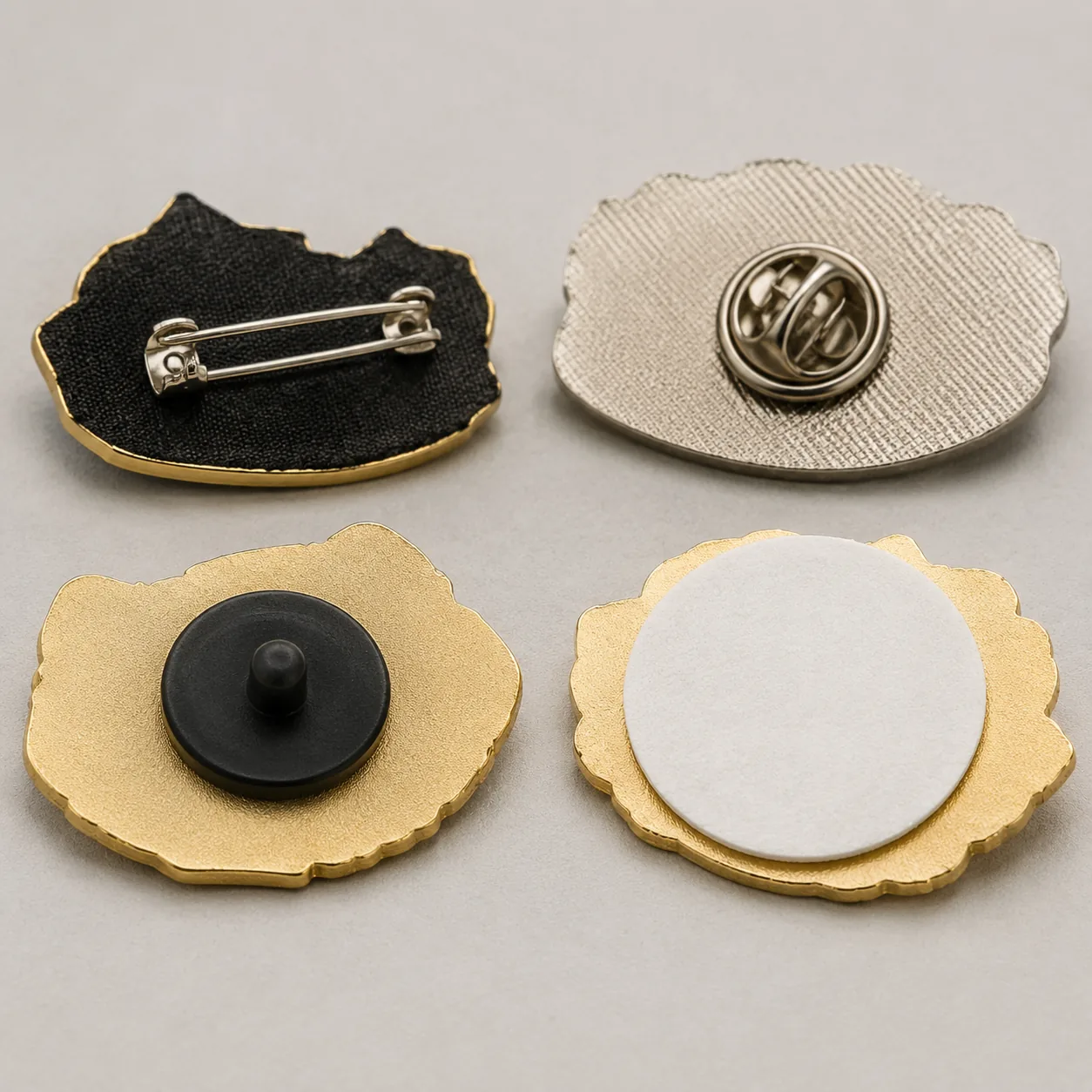
Start With the Failure Mode, Not the Backing Name
Most patch complaints are not caused by the embroidery, woven face or PVC molding. They happen because the backing does not match the garment, application method or end-user behavior. A patch can match the approved artwork and still peel from a polyester jacket, curl on a cap, damage a lightweight T-shirt, or detach from a tactical bag after a few weeks of use.
For B2B buyers, backing affects more than attachment. It changes unit cost, carton volume, packing thickness, application labor, inspection criteria and return risk. Before quoting, ZheCraft normally confirms four points: the target surface, whether the patch must be permanent or removable, who applies it, and whether the item will be washed, bent, exposed outdoors or handled by children.
The first decision is permanence. Uniform shoulder patches that must survive laundering usually need sew-on construction or heat-seal plus perimeter stitching. Morale patches that users swap between bags need hook-and-loop. Conference patches for notebooks can use pressure-sensitive adhesive, but that same adhesive should not be specified for fleece, nylon webbing or dusty canvas.
The second decision is substrate. Cotton twill, denim and canvas tolerate needle penetration and heat better than coated polyester, softshell, thin nylon or PU-coated bags. A common heat-seal window is 150 to 165 degrees C for 12 to 18 seconds at 2.5 to 4.0 bar, but some coated fabrics gloss, shrink or delaminate before the adhesive reaches full bond strength.
| Use case | Recommended backing | Avoid when | Typical FOB adder |
|---|---|---|---|
| Permanent uniform or workwear | Sew-on, or heat-seal plus perimeter stitch | Buyer cannot control sewing or press settings | USD 0.00 to 0.08 per patch |
| Retail iron-on patch | Heat-seal film | Coated nylon, leather, fleece, PU fabric or heat-sensitive polyester | USD 0.03 to 0.12 per patch |
| Tactical or morale patch | Hook-and-loop backing | Thin fashion garments or low-profile packaging are required | USD 0.10 to 0.35 per patch |
| Notebook, mailer or event giveaway | Pressure-sensitive adhesive | Washable apparel, rough fabric or dusty surfaces | USD 0.04 to 0.15 per patch |
| Locker, cabinet or fridge display | Magnetic sheet or embedded magnets | Fabric attachment or children’s safety-sensitive items | USD 0.08 to 0.30 per patch |
Sew-On Backing for Permanent Garments
Sew-on backing has no functional adhesive layer. The back may be plain twill, woven thread, felt, nonwoven stabilizer or PVC depending on the patch type. It is the lowest-risk option for uniforms, denim jackets, caps, bags and workwear because attachment strength comes from stitching rather than adhesive chemistry.
A good specification starts with the border. For embroidered patches, keep a minimum 2.5 mm border outside critical artwork so the needle does not cut into letters, QR codes or fine logos. Woven patches can sometimes run with a 1.5 to 2.0 mm border, but small text should still stay at least 2.0 mm away from the stitch line. For merrowed edges, allow enough border width for the overlock thread to sit cleanly without covering the design.
Dimensional tolerance should be stated before sampling. For patches under 80 mm, use plus or minus 1.0 mm on finished size. For 80 to 150 mm patches, plus or minus 1.5 mm is realistic. Larger back patches may need plus or minus 2.0 mm, especially with thick embroidery or irregular laser-cut shapes. Uncontrolled variation makes placement look uneven when multiple garments are displayed together.
The trade-off is labor. If patches ship loose, the garment factory or local decorator must sew them consistently. For mass application, specify stitch density of 8 to 10 stitches per 25 mm, thread color, start and stop position, and whether the bobbin thread may show on the inside of the garment. Caps need separate testing because a stiff patch can bridge over the curved crown and wrinkle at the edges.
- Specify finished size, edge type, backing material and tolerance on the purchase order.
- Keep at least 2.0 mm clear space from small text, QR codes and fine logos to the sewing path.
- Confirm whether patches ship loose, sewn to garments, or packed with individual retail cards.
- For caps and curved bags, test on the actual panel before approving bulk production.
- Use AQL 2.5 for major defects such as wrong placement or loose stitching and AQL 4.0 for minor cosmetic issues.
Heat-Seal Backing for Fast Application
Heat-seal backing uses a thermoplastic film, web or powder coating laminated to the patch. It is popular because application is faster and more repeatable than sewing when the receiving fabric is suitable. On cotton twill or polyester-cotton garments, a flat heat press can attach many patches in 12 to 18 seconds, reducing labor on medium and large programs.
Film thickness is usually 80 to 180 microns. Thin film keeps the patch flexible and works well on smooth fabric. Thicker film fills gaps on textured backs but increases stiffness and can leave a visible glue ridge on thin garments. For embroidered patches with uneven thread backs, 120 to 160 microns is often safer than very thin film. For woven patches, 80 to 120 microns may be enough if the target surface is flat.
Peel strength should be tested on the buyer’s actual fabric, not only on cotton test cloth. A practical target after 24 hours of curing is 8 to 12 N per 25 mm on cotton twill and 5 to 8 N per 25 mm on polyester fabric using a 180-degree peel test. For washable programs, run at least 5 wash cycles at 40 degrees C, then treat edge lift over 2 mm, bubbling or partial detachment as a major defect.
Heat-seal is not a universal shortcut. It performs poorly on silicone finishes, waterproof PU coatings, leather substitutes, fleece pile, heavy texture and some softshell fabrics. If the buyer cannot provide the target fabric, the sample should be marked as backing reference only, not approved for final application strength.
| Heat-seal item | Typical specification | Buyer control point |
|---|---|---|
| Application temperature | 150 to 165 degrees C | Lower settings may be needed for shiny or heat-sensitive polyester |
| Press time | 12 to 18 seconds | Large or thick patches may need 18 to 22 seconds after testing |
| Pressure | 2.5 to 4.0 bar | Low pressure causes edge lift, bubbles and weak center bonding |
| Film thickness | 80 to 180 microns | Thicker film bonds rough backs but increases stiffness |
| Peel strength target | 5 to 12 N per 25 mm | Set target by fabric type and curing time |
| Wash result | Edge lift under 2 mm after 5 cycles at 40 degrees C | Classify greater lift, bubbles or delamination as major defects |
Hook-and-Loop Backing for Removable Patches
Hook-and-loop backing is often called Velcro, although buyers should state whether they require branded Velcro material or generic hook-and-loop tape. A typical construction uses hook sewn or bonded to the patch. The matching loop can be supplied loose, packed with each patch, sewn to a display card, or omitted if the receiving product already has a loop panel.
Coverage is the main engineering decision. Full-back hook gives the strongest hold and best edge stability, but it adds about 1.2 to 2.0 mm of thickness and makes small patches more rigid. For patches under 50 mm, full hook is usually acceptable. For 90 to 120 mm morale or name patches, partial hook strips can improve flexibility but reduce peel resistance and may let corners lift.
Specify hook color and alignment. Common colors are black, white, khaki, olive drab and navy. Color mismatch becomes visible on die-cut shapes because hook material may show at the edge. For standard shapes, keep hook alignment within plus or minus 1.0 mm of the patch border. For irregular shapes over 100 mm, plus or minus 1.5 mm may be more realistic, but exposed hook beyond the edge should still be rejected because it feels rough and looks unfinished.
Hook-and-loop is not ideal for baby products, thin knits, premium fashion packaging or products where bulk matters. It can snag fabric, collect lint and increase packing height. For FOB costing, adders usually run USD 0.10 to 0.35 per patch depending on size, die-cut complexity, stitch method and whether loop pieces are included.
Pressure-Sensitive Adhesive for Short-Term Promotion
Pressure-sensitive adhesive is a peel-and-stick layer protected by release paper. It is useful for packaging, notebooks, folders, mailers, plastic cards and short-term event giveaways. It is not the same as heat-seal adhesive and should not be sold as washable garment backing.
For embroidered or woven patches, the adhesive layer is commonly 100 to 200 microns thick. Acrylic adhesive is normally better for paper, PET, coated board and longer shelf life. Rubber-based adhesive gives higher initial tack but ages worse under heat and may leave residue. If patches may sit in inventory, specify storage at 10 to 30 degrees C, below 60 percent relative humidity, and a suggested use window of 6 to 12 months.
The most common defect is edge curl. It appears when the patch is thick, the adhesive is too thin, the liner is poorly die cut, or the application surface has dust, oil or texture. For patches over 80 mm wide or thicker than 2.5 mm, adhesive backing should be limited to temporary display unless testing proves otherwise.
- Use pressure-sensitive adhesive for paper, plastic, coated board and short-term event surfaces.
- Do not use it for washable garments, fleece, rough canvas, nylon webbing or oily surfaces.
- Specify a 1.0 to 2.0 mm liner overhang if end users need easy peeling.
- Run a 24-hour adhesion test on the actual surface and inspect edge lift, sliding and residue.
- Pack adhesive patches flat; tight polybags can bend corners and start edge curl before shipment.
Magnetic Backing for No-Damage Display
Magnetic backing is a niche option for patch-style items used on lockers, refrigerators, metal cabinets, retail fixtures and trade-show booths. Construction can use a flexible magnetic sheet laminated to the patch or discrete magnets embedded or glued to the back. Sheet magnet is flatter and easier to pack. Discrete magnets create stronger holding force but can leave pressure points and raise safety concerns.
Flexible magnetic sheet is usually 0.5 to 0.8 mm thick for patch-style fridge magnets. Holding force depends on magnet thickness, painted surface quality, patch weight and contact area, so practical testing is more reliable than theoretical pull-force claims. As a working target, a 70 mm embroidered magnet patch should not slide on a vertical painted steel panel under its own weight after 24 hours at room temperature.
Magnetic backing is not suitable for garment attachment because fabric creates too much gap between the magnet and metal receiver. It also requires strict controls for children’s items. Small detached magnets are a serious ingestion hazard, so exposed magnets, weak bonding or loose magnet parts should be classified as critical defects, not minor workmanship issues.
MOQ, Lead Time and FOB Price Impact
Backing choice changes quote structure because it adds material rolls, die cutting, sewing, laminating, application testing and packing controls. MOQ is driven less by the backing name and more by material availability, color setup, cutting waste and whether the backing requires a custom shape or custom color.
For ZheCraft patch orders, practical MOQs are often 100 pieces for standard embroidered or woven sew-on or heat-seal patches, 300 pieces for PVC patches, and 500 pieces when custom-dyed hook-and-loop, specialty adhesive film or nonstandard magnetic sheet is required. For branded Velcro, unusual hook colors or low-volume magnetic sheet, MOQ can rise because suppliers sell by roll or sheet, not by patch.
Sampling usually takes 5 to 8 days after artwork approval for embroidered and woven patches, and 7 to 10 days for PVC patches with molded details or bonded backing. Bulk production commonly takes 10 to 18 days for 100 to 1,000 pieces. Orders with complex shapes, multiple backing types, custom loop cards or retail packing usually need 18 to 28 days. For 5,000 pieces and above, allow 22 to 35 days if material procurement and inline QC are required.
Backing adders are more predictable than total patch price. Sew-on adds little or no cost. Heat-seal film usually adds USD 0.03 to 0.12 per piece. Pressure-sensitive adhesive adds USD 0.04 to 0.15. Hook-and-loop adds USD 0.10 to 0.35, or more if loop is included and individually packed. Magnetic backing adds USD 0.08 to 0.30 depending on magnet area and thickness. For small patches, the backing can represent a large share of the unit price; for large patches, decoration time and material area dominate.
| Order size | Typical sample time | Typical bulk time | Backing-related watch point |
|---|---|---|---|
| 100 to 299 pcs | 5 to 10 days | 10 to 15 days | Manual cutting, sewing and backing alignment variation are more visible |
| 300 to 999 pcs | 5 to 10 days | 12 to 20 days | Hook color, adhesive film batch and liner quality should be locked |
| 1,000 to 4,999 pcs | 6 to 12 days | 18 to 25 days | Application testing and packing method should be approved before bulk |
| 5,000 pcs and up | 7 to 14 days | 22 to 35 days | Roll procurement, inline inspection and carton compression tests become critical |
Purchase Order Specs and QC Checks
Backing QC should be defined before production. The purchase order should list backing type, color, thickness where relevant, whether loop pieces or liners are included, and the approved golden sample reference. For dimensional checks, inspect finished size, backing alignment, edge cleanliness, thickness and flatness. A reasonable backing alignment tolerance is plus or minus 1.0 mm for regular shapes and plus or minus 1.5 mm for irregular die-cut shapes over 100 mm.
For heat-seal patches, press samples to the buyer’s fabric using the approved temperature, time and pressure. Check peel strength after 24 hours, then run wash testing if the item is sold as washable. For pressure-sensitive adhesive patches, apply to the target surface for 24 hours and inspect edge lift, sliding, adhesive transfer and liner release. For hook-and-loop, attach and remove the patch 20 times, then verify the hook remains bonded and the edge does not fray.
Inspection severity should match the failure risk. Wrong backing, loose magnets, missing loop pieces, severe edge lift, adhesive contamination and poor heat-seal bonding should be major or critical defects. Slight thread tails, minor liner scuffs or small nonfunctional marks may be minor defects. For bulk inspection, AQL 2.5 for major defects and AQL 4.0 for minor defects is a practical default unless the buyer’s quality manual requires stricter levels.
- State backing type, backing color, thickness range, liner style and loop-piece requirement in the PO.
- Approve heat-seal settings on the actual fabric, not on a generic test cloth.
- Set finished size and backing alignment tolerances before signing the sample.
- Classify wrong backing, exposed magnets, loose magnets and severe edge lift as major or critical defects.
- Keep one signed golden sample at the factory and one with the buyer for reorder control.
A strong RFQ should include finished size, patch type, backing type, edge style, quantity tiers, packing method, target application surface and any wash, peel or cycling test requirement. If the use case is uncertain, quote two constructions instead of guessing: sew-on versus heat-seal for uniforms, hook-only versus hook-plus-loop for morale patches, or adhesive versus magnetic backing for promotional display items.
Have a project? Send your artwork and target quantity and we’ll reply with a detailed quotation within 12 working hours.
Ready to get this made?
Send your sketch, target quantity and ship-date. Detailed quotation in 12 hours.



