Patch Backing Specs: Sew-On, Heat-Seal, Hook-and-Loop or Adhesive
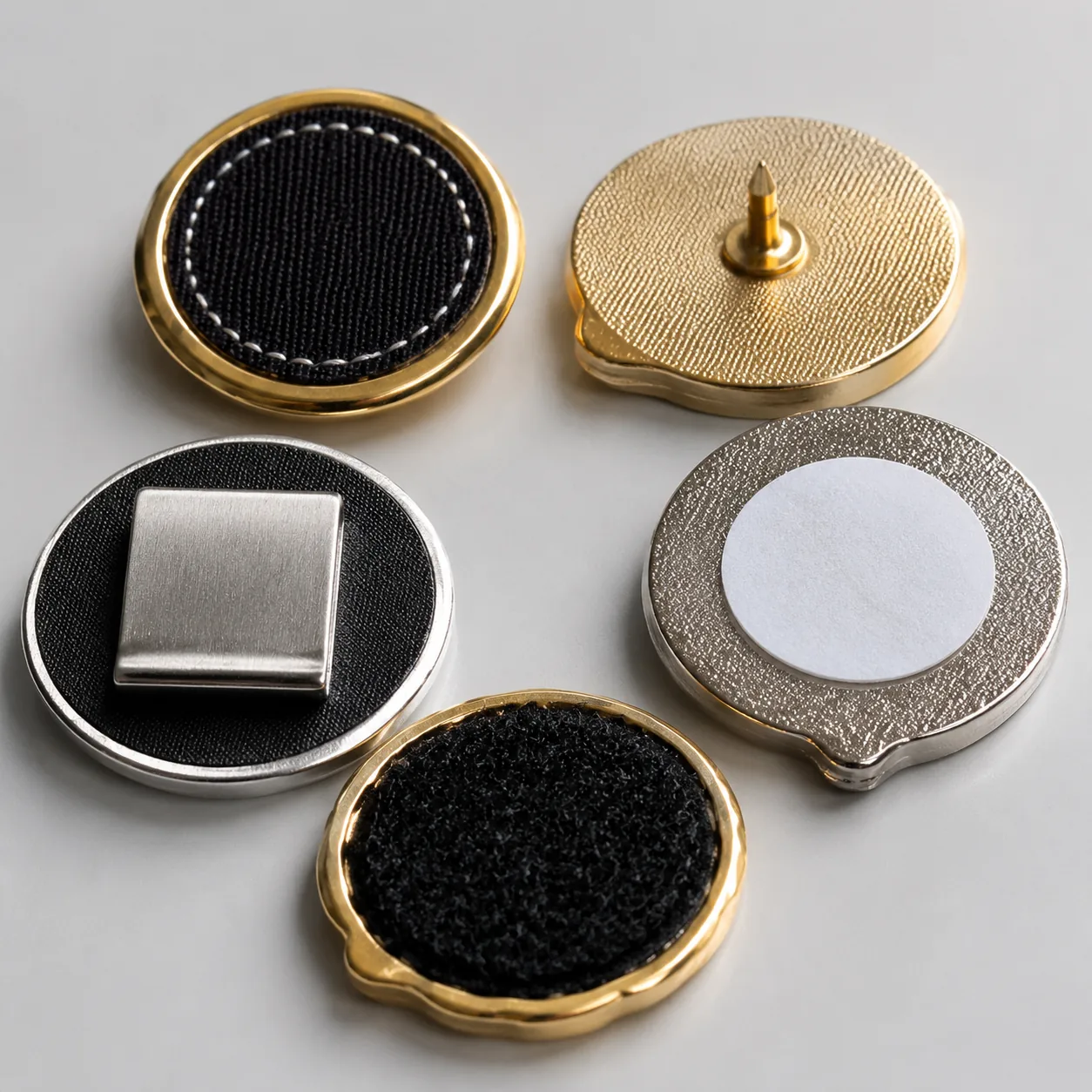
Backing is a performance specification, not an accessory
A patch can pass visual approval and still fail in the field if the backing is chosen by habit instead of use case. Common failures include heat-seal patches lifting after one wash, hook-and-loop patches curling at the corners, adhesive-backed patches leaving residue on retail cards, and sew-on patches arriving too stiff for curved caps. These are not usually front-face embroidery or weaving problems. They come from mismatched backing, heat, pressure, fabric coating, curvature or inspection criteria.
For B2B orders, treat the backing as a functional component. The same 75 mm woven logo may require sew-on construction for workwear, heat-seal film for cotton tote bags, hook backing for tactical loop panels, or removable adhesive for packaging inserts. At ZheCraft, we ask for the target substrate, wash requirement, application method and packing format before confirming a quote because the backing affects routing, sampling, inspection and cost.
Most custom fabric patches run 50 to 120 mm wide and 1.2 to 3.5 mm thick, depending on embroidery coverage, woven yarn density, chenille pile or PVC relief. Practical MOQs are usually 100 pieces per design for embroidered and woven patches, 300 pieces for PVC patches, and 500 pieces when the order needs custom heat-seal film, nonstandard hook-and-loop color, die-cut adhesive liners or retail card packing. Typical sample lead time is 5 to 8 days for embroidered or woven patches and 7 to 12 days for PVC. Mass production commonly takes 10 to 18 days after sample approval, plus 3 to 7 days if fabric-specific adhesion or wash testing is required.
Start with fabric, temperature and curvature
The first decision is not whether sew-on or iron-on is cheaper. It is what surface the patch must attach to, how long it must stay attached, and who will apply it. Cotton twill, polyester softshell, nylon webbing, leather, neoprene, felt, caps and backpacks react differently to heat, needle tension and pressure-sensitive adhesive. A backing that works on flat cotton canvas may fail on coated nylon or distort a stretch polyester sleeve.
For heat-seal backing, specify fabric composition and maximum safe press temperature. Cotton canvas and twill often tolerate 150 to 165°C for 12 to 18 seconds. Polyester sportswear can gloss, shrink or deform above 135 to 145°C, especially with high pressure. Nylon, PU-coated fabrics, silicone finishes and DWR water-repellent treatments are high-risk because surface coatings block adhesive flow. In those cases, sew-on attachment or hook-and-loop is usually safer than relying on hot-melt film alone.
For sew-on patches, edge shape and garment curvature matter. A 90 mm round merrowed patch sits well on flat jackets but may wrinkle on a six-panel cap unless the backing is flexible and the diameter is reduced to about 55 to 70 mm. For curved placements, request a softer reverse, avoid heavy plastic stiffeners, and confirm that the border can be sewn without buckling. For shipment inspection, use AQL 2.5 for major defects such as wrong backing, edge delamination, failed adhesion, wrong hook direction or size out of tolerance, and AQL 4.0 for minor cosmetic issues such as short thread tails on the reverse.
Backing options compared
The following ranges are realistic factory-level references for a 70 mm embroidered or woven patch at 500 to 1,000 pieces, bulk packed, quoted FOB China. Final price depends on size, stitch coverage, yarn count, border type, PVC mold complexity, backing color, packing labor and whether the buyer needs pre-production testing. For 30 mm patches, handling cost dominates. For 120 mm patches, material area and stitch time dominate.
| Backing type | Best use | Typical added FOB cost | Key specification | Avoid when |
|---|---|---|---|---|
| No backing / sew-on only | Uniforms, caps, bags, workwear | USD 0.00 to 0.03 per piece | Clean reverse or 0.15 to 0.25 mm nonwoven stabilizer; sewing allowance clear of artwork | End users cannot sew or need removable patches |
| Heat-seal / iron-on | Cotton apparel, tote bags, school patches | USD 0.03 to 0.10 per piece | Hot-melt film 80 to 120 microns; 145 to 165°C, 12 to 18 seconds, 0.3 to 0.5 MPa | Coated nylon, leather, waterproof fabric or heat-sensitive polyester |
| Hook-and-loop set | Tactical gear, morale patches, removable badges | USD 0.12 to 0.38 per set | Hook or loop layer 0.8 to 1.5 mm; stitch line 2 to 3 mm from border | Thin fashion garments where bulk and stiffness are unacceptable |
| Peel-off adhesive | Temporary events, sample boards, retail display | USD 0.04 to 0.14 per piece | Pressure-sensitive adhesive 80 to 150 microns with paper or PET release liner | Washable garments, rough textiles, dusty surfaces or outdoor use |
| PET or paper stiffener | Retail patches, collectible badges, flat card display | USD 0.02 to 0.06 per piece | PET or paperboard insert 0.2 to 0.5 mm; flatness tolerance checked after packing | Caps, sleeves or any placement requiring flex |
The lowest backing price is not always the lowest landed cost. Saving USD 0.05 per patch on basic heat-seal film can become expensive if store staff apply patches with domestic irons and create returns. The RFQ should state the application environment, not just the backing name: factory heat press, local embroidery shop, end-user sewing, retail peel-and-stick, or attachment to an existing loop panel.
Sew-on backing for maximum durability
Sew-on backing is the safest option when the patch must survive repeated washing, abrasion and flexing. It is common for workwear, police and security uniforms, scouts, clubs, caps and bags. The factory can supply no backing, a thin nonwoven stabilizer, or a soft twill reverse depending on hand feel and sewing needs. For heavy embroidered patches above 85 percent stitch coverage, ask whether extra reverse stiffening is necessary; too much stiffness can cause lifting on curved garments.
Specify edge type and sewing allowance. A merrowed border is usually 2.5 to 4.0 mm wide and works best on circles, shields, rectangles and ovals. Complex shapes are better with laser-cut or heat-cut borders. Normal finished-size tolerance is ±0.5 mm for woven and embroidered patches, ±1.0 mm for large chenille patches, and ±0.3 mm for molded PVC when the mold is stable. Border color should be defined separately from the main thread color because factories may otherwise match it approximately.
The trade-off is application labor. Sewing a patch to a uniform may take 2 to 5 minutes per garment, and poor sewing can distort even a well-made patch. For rollout programs, decide early whether the patch factory supplies loose patches only or whether a garment factory or local decorator will attach them. If another factory will sew them on, provide needle size, thread color, seam allowance and placement tolerance, such as ±2 mm from the pocket edge or sleeve seam.
Heat-seal backing needs controlled pressing
Heat-seal backing is convenient because a decorator can attach patches quickly with a heat press. Standard hot-melt film is commonly 80 to 120 microns for embroidered or woven patches. Thick embroidery, chenille or uneven reverse surfaces may need 120 to 160 microns to achieve adhesive flow. The process must be validated on the actual fabric because press results on a cotton lab swatch do not predict performance on coated polyester or nylon.
A practical starting setting is 150°C for 15 seconds at medium pressure, around 0.3 to 0.5 MPa, followed by cold peel after the adhesive cools. For polyester, start at 135 to 145°C and increase dwell time to 18 to 22 seconds only if the fabric tolerates it. Domestic irons are inconsistent because pressure and temperature vary across the soleplate, so they should not be the standard for commercial uniform or retail programs.
Do not describe heat-seal as permanently washable unless testing supports the claim. For promotional apparel, a basic acceptance test is 3 wash cycles at 40°C with no edge lift above 2 mm. For uniforms, specify 5 to 10 wash cycles at 40°C or 60°C depending on laundering requirements. For higher durability, use heat-seal only as a positioning aid and add sewing after pressing. This combined method keeps placement efficient while making the seam, not the adhesive, responsible for long-term strength.
Hook-and-loop requires full system details
Many RFQs ask for Velcro backing, but that wording is incomplete. Velcro is a brand name; production needs the actual system: hook side, loop side or both sides as a set. The buyer must also specify color, whether the matching panel is included, edge stitch style, and whether the patch must mate with an existing garment panel. Tactical garments usually carry loop panels, so the patch normally needs hook backing. Retail morale patches may need both hook and loop pieces packed together.
For a 70 mm patch, hook-and-loop backing usually adds 0.8 to 1.5 mm thickness and noticeable stiffness. Edge stitching should sit 2 to 3 mm inside the border and use about 7 to 10 stitches per inch on fabric-backed patches. On PVC patches, the hook layer may be stitched, bonded or heat-laminated depending on the compound and shape. Stitched backing is usually more durable, while bonding gives a cleaner reverse but needs peel testing.
Corner lift is the main failure mode. For square and rectangular patches above 90 mm, use rounded corners with at least a 5 mm radius to reduce snagging. For outdoor gear, bags or military-style uniforms, request peel testing after 500 open-close cycles and reject pieces where hook or loop backing separates more than 3 mm from the patch edge. If color matters, approve physical hook-and-loop swatches because black, coyote, ranger green and navy vary by supplier.
Adhesive and stiffeners are for display, not laundering
Peel-off adhesive backing is useful for temporary event badges, sample cards, packaging inserts, retail display boards and light indoor decoration. It is not a substitute for heat-seal backing and should not be promised for washable garments, rough fabric, dusty surfaces or long-term outdoor use. Adhesive can help with positioning before sewing, but it should not be treated as a structural attachment on apparel.
Pressure-sensitive adhesive layers are usually 80 to 150 microns thick with a paper or PET release liner. On patches below 50 mm, adhesive can hold well on smooth card, plastic and coated paper. On larger embroidered patches above 90 mm, stiffness pulls against the adhesive at the corners, so curved or flexible surfaces are risky. If the patch is packed on a retail card, define liner shape, tab position and whether the adhesive may contact printed ink.
Residue expectations must be written into the order. A stronger adhesive may hold better but leave glue on packaging or fabric; a removable adhesive is cleaner but weaker. For retail programs, specify a simple removal test, such as peel after 24 hours on the buyer-approved card with no visible fiber tear and no adhesive transfer larger than 2 mm. For flat collectible patches, a PET or paper stiffener may be a better solution than adhesive because it improves presentation without implying garment attachment.
RFQ checklist and inspection points
A strong patch RFQ prevents the factory from selecting a default backing that is technically acceptable but wrong for the application. Include patch type, size, border, backing, target fabric, application method, wash or cycle requirement, packing method and inspection level. If the patch must attach to an existing garment, send a fabric swatch or full garment specification. Photos alone cannot confirm coating, stretch, thickness or heat tolerance.
For budget planning, a 70 mm embroidered patch at 500 pieces often quotes around USD 0.35 to 0.95 FOB depending on stitch density, border and backing. Woven patches of similar size are often USD 0.28 to 0.78. PVC patches commonly range from USD 0.60 to 1.70 because mold, color count and material thickness drive cost. Useful quantity tiers are 100, 300, 500, 1,000 and 3,000 pieces because they show where setup, backing material and labor costs change.
- Specify finished patch size in millimeters and tolerance, such as ±0.5 mm for fabric patches or ±0.3 mm for PVC patches.
- State the backing exactly: sew-on, heat-seal, hook only, loop only, hook-and-loop set, adhesive, PET stiffener or paper stiffener.
- Define target material, application method, press temperature, dwell time and pressure if heat-seal is required.
- Set performance tests, such as 3 washes at 40°C, 10 uniform wash cycles, 500 hook-and-loop cycles or a 24-hour residue test.
- Confirm reverse color, backing thickness, stiffness limit and whether added bulk is acceptable on the final garment.
- Use AQL 2.5 for major defects including wrong backing, failed adhesion, delamination, incorrect hook direction or major size error.
- Approve a physical pre-production sample on the actual fabric or retail card when backing performance affects acceptance.
Before requesting a quote, classify the project as permanent garment attachment, removable functional badge or temporary promotional placement. Permanent attachment usually points to sew-on, heat-seal with testing, or heat-seal plus sewing. Removable use points to hook-and-loop. Temporary display points to adhesive or a stiffener. If the risk is unclear, ask the factory to quote two backing options, such as heat-seal versus sew-on for cotton uniforms or hook-only versus full hook-and-loop sets for morale patches. The best outcome comes from a clear use case, a tested sample and inspection criteria written into the purchase order before mass production starts.
Have a project? Send your artwork and target quantity and we’ll reply with a detailed quotation within 12 working hours.
Ready to get this made?
Send your sketch, target quantity and ship-date. Detailed quotation in 12 hours.



