Patch Backing Specifications That Stop Peeling, Curling and Adhesive Failure
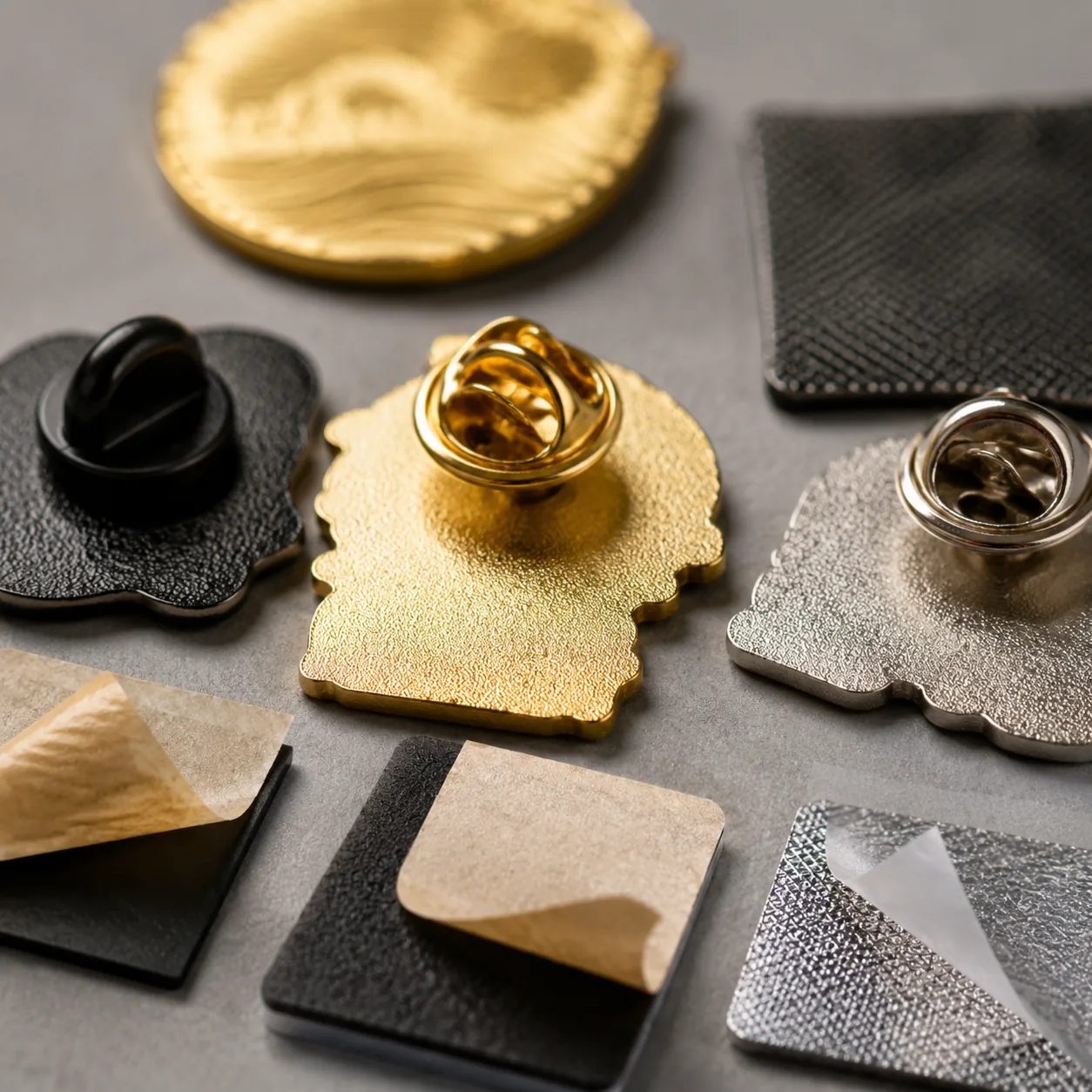
Why backing fails after the patch looks approved
A patch can pass artwork, color and stitch approval yet still fail in use because the backing was specified too loosely. Common field complaints include heat-seal patches lifting after two washes, hook backing curling in cartons, sticker-backed patches leaving residue, and iron-on patches scorching polyester uniforms. These are not embroidery defects in the narrow sense. They usually come from a mismatch between backing material, garment fabric, heat-press settings, storage conditions and inspection criteria.
For B2B orders, backing is a functional specification, not a decoration option. It can add USD 0.03 to USD 0.45 per patch FOB, extend production by 1 to 5 days, change carton packing, and determine whether the patch is suitable for uniforms, retail packs, events or temporary promotions. At ZheCraft, backing is confirmed before sample tooling because the border profile, patch stiffness, thread compression and finished thickness all change once the backing stack is added.
This guide focuses on woven, embroidered and PVC patches in the 50 mm to 100 mm range, where most uniform, club, promotional and retail accessory orders sit. Larger jacket-back patches need wider dimensional tolerances, more rigid packing and stronger edge-lift controls. Very small patches under 30 mm have less adhesive land area, so the same film or sticker grade may fail earlier even when the material is technically correct.
Select backing by service life and substrate
The safest backing is the one that matches how the end user attaches, removes and washes the patch. Sew-on remains the most reliable option for workwear, tactical uniforms, caps and heavy bags because performance depends mainly on stitching, not adhesive chemistry. Heat-seal backing is convenient for schoolwear, club apparel and staff uniforms, but only when the garment fabric can tolerate the required temperature, pressure and dwell time.
Hook-and-loop backing works best when patches must be swapped often, such as name tapes, event roles, morale patches or security identifiers. Pressure-sensitive adhesive is suitable for short-term giveaways, packaging, notebooks and display boards; it should not be sold as a washable garment solution. Magnetic backing can work for badge-style desk or display patches, but it is bulky, not washable, and unsuitable for children’s clothing or thin fabrics.
| Backing type | Best use | Typical thickness added | Practical durability | FOB add-on range |
|---|---|---|---|---|
| No backing, sew-on | Uniforms, bags, caps, workwear | 0.0 to 0.2 mm | High when stitched with suitable thread | USD 0.00 to 0.03 |
| Heat-seal film | Schoolwear, staff apparel, club patches | 0.15 to 0.35 mm | Medium to high with validated press settings | USD 0.04 to 0.12 |
| Hook-and-loop | Tactical, morale, removable ID patches | 1.2 to 2.0 mm | High for swapping; garment depends on loop base | USD 0.12 to 0.35 |
| Pressure-sensitive adhesive | Promotions, packaging, retail display cards | 0.10 to 0.25 mm | Low on fabric; medium on clean rigid surfaces | USD 0.03 to 0.10 |
| Plastic backing | Shape stability for embroidered sew-on patches | 0.20 to 0.50 mm | Medium; normally still sewn on | USD 0.03 to 0.08 |
| Magnetic sheet or insert | Desk badges, metal boards, non-wash display use | 1.0 to 2.5 mm | Not washable; avoid children’s wear | USD 0.18 to 0.45 |
For quote comparison, define the target substrate in plain terms: cotton twill uniform, 180 gsm polyester polo, nylon oxford bag, coated cardboard, ABS plastic case or painted metal display board. A backing that performs well on cotton may fail on water-repellent nylon, silicone-finished fabric or low-energy plastic. If the final substrate is unknown, approve two sample routes rather than forcing one backing to cover every use case.
Heat-seal backing: specify film, press window and fabric limits
A useful heat-seal specification must include film type, application temperature, dwell time, pressure, fabric limits and wash expectation. A common polyester hot-melt film for embroidered patches is pressed at 150 to 165 degrees Celsius for 12 to 18 seconds at 0.25 to 0.35 MPa. Nylon-compatible films often use a lower window, typically 135 to 150 degrees Celsius for 15 to 20 seconds, but bond strength can be weaker on rough, coated or water-repellent fabrics.
Do not approve heat-seal backing only from a factory sample board. Ask the supplier to press test patches on fabric close to the real garment: cotton twill, polyester jersey, nylon oxford, blended fleece or coated softshell. Water-repellent finishes, silicone softeners, fabric dust and heavy stretch can reduce peel strength even when the same patch bonds well to plain cotton. For polyester uniforms, check for heat shine, dye migration and fabric distortion after pressing.
Film placement is a frequent source of edge lift. For embroidered and woven patches, specify heat-seal film inset 0.8 to 1.5 mm from the finished edge, with placement tolerance within plus or minus 1.0 mm. Film that reaches beyond the border can squeeze out and create a glossy halo; film set too far inside the border leaves weak corners. For merrowed borders, ZheCraft normally keeps film inside the stitched edge unless the buyer requests full-edge coverage for flat woven patches.
For washable apparel, set a practical acceptance target before production. A low-risk promotional patch may only need 3 domestic wash cycles at 30 to 40 degrees Celsius. A school or workwear patch should be tested for 5 to 10 cycles, with no corner lift over 2 mm and no full-edge separation. Higher-risk uniform programs should define peel force with the garment supplier or lab, because hand-pull checks are useful for screening but not enough for a contractual performance standard.
Hook-and-loop backing: control curl, grip and stitch quality
Hook-and-loop patches fail when the hook grade is too stiff, the loop side is weak, the edge stitching is loose, or the backing curls after storage. For a standard 75 mm morale patch, hook backing usually adds 1.2 to 1.8 mm thickness and 3 to 8 grams of weight. That stiffness can distort thin woven patches, so very fine lettering below 0.5 mm stroke width may appear less flat after lamination and perimeter stitching.
Specify whether the order requires hook only, loop only, or hook with matching loop panels. If loop panels are included, define their shape and size separately. A 75 mm patch may need a 75 mm loop mate for exact alignment, while uniform buyers often prefer a 78 mm loop panel so attachment is easier in the field. For complex shapes, confirm whether the hook follows the outline or uses a simplified cut; a simplified hook cut is cheaper and less likely to curl on sharp points.
Edge stitching should normally sit 1.5 to 2.5 mm from the patch border. Skipped stitches should not exceed 1 per 100 mm of seam under normal inspection, and any open seam over 3 mm should be treated as a major defect. For thick embroidered borders, ask the factory to check needle penetration through the hook layer; weak penetration creates a clean-looking seam that opens during repeated removal.
Grip should match the garment. Medium hook is usually safer for promotional and uniform patches than heavy industrial hook, which may pull fibers from soft loop fields or knit garments. For quality checks, cycle a sample patch through 100 to 300 attach-and-remove cycles depending on product value, then inspect for hook contamination, loose thread, corner curl and backing separation. Carton storage also matters: hook-backed patches should be packed flat, not tightly curved in small bags.
Adhesive and magnetic backings: use clear limits
Pressure-sensitive adhesive backing is attractive because it is easy for the end user: peel, place and press. Its limitation is service life. Most patch adhesives bond acceptably to coated paper, cardboard, smooth plastic, acrylic display boards and clean metal. They perform poorly on textured fabric, dusty cartons, oily surfaces, low-energy plastics such as untreated PP or PE, and curved objects that keep pulling the patch edge upward.
Buyer specs should define the adhesive as removable, semi-permanent or permanent, and state the target surface. A removable adhesive for event giveaways should release cleanly from coated paper after 24 hours at 20 to 25 degrees Celsius. A stronger acrylic adhesive may hold better on plastic packaging but can leave residue. Typical release liner thickness is 80 to 120 microns, and liner overhang should be 1.0 to 2.0 mm when easy peeling is required.
Do not choose pressure-sensitive adhesive for laundry, outdoor jackets, hats that will be flexed, or products stored in hot containers for long periods. For summer sea freight or warehouse storage, request a 50 degrees Celsius hold test for 24 to 48 hours. Adhesive ooze at the edge is a packing defect because it collects dust, stains adjacent patches and can transfer to retail cards.
Magnetic backing should be treated as a display or badge solution, not a garment solution. Confirm magnet thickness, pull strength and whether the magnet is a sheet, embedded insert or separate back plate. Thin magnetic sheets may slide on curved or painted metal surfaces, while stronger magnets increase cost, weight and safety concerns. For children’s products, avoid magnetic inserts unless the product is designed and tested under the relevant safety standard.
Tolerances, inspection levels and defect definitions
Backing tolerance is as important as patch tolerance. A patch ordered at 80 mm width with plus or minus 1.5 mm finished-size tolerance should not receive backing cut at the same nominal size without an inset rule. If backing extends beyond the embroidered edge by even 0.5 mm, it can show as a shiny lip, catch lint, curl during handling or begin peeling before the patch is attached.
For embroidered and woven patches, a practical backing inset is 0.8 to 1.5 mm from the finished edge. For PVC patches, placement can be tighter because the molded edge is cleaner; plus or minus 0.3 to 0.5 mm is realistic for simple die-cut adhesive or hook shapes. For irregular patches with narrow arms, sharp points or cutout windows, keep at least 3.0 mm of backing land area wherever adhesive or stitching must hold.
| Spec item | Recommended tolerance | Inspection note |
|---|---|---|
| Finished patch size under 100 mm | Plus or minus 1.0 to 1.5 mm | Allows for textile shrinkage and border variation |
| Backing inset from edge | 0.8 to 1.5 mm | Prevents visible film, adhesive lips and edge catch |
| Hook backing cut size | Plus or minus 0.5 to 1.0 mm | Controls alignment, curl and edge exposure |
| Heat-seal film placement | Plus or minus 1.0 mm | Avoids squeeze-out and weak corners |
| PVC backing placement | Plus or minus 0.3 to 0.5 mm | Molded edges support tighter registration |
| Backing thickness variation | Plus or minus 0.10 to 0.20 mm | Keeps retail sets and paired patches consistent |
| Release liner overhang | 1.0 to 2.0 mm | Improves peel usability without visible oversize backing |
Use AQL levels that match the order risk. For most promotional patch orders, General Inspection Level II with AQL 2.5 for major defects and AQL 4.0 for minor defects is a practical baseline. Critical defects such as wrong backing type, exposed sharp components, full-carton adhesive contamination or incorrect heat-seal film should be rejected directly, not treated as normal cosmetic variation.
- Confirm backing type, target fabric or surface, wash expectation and service life before sample approval.
- Press heat-seal samples on real garment fabric, not only on factory test cloth.
- Measure backing inset on at least 10 random pre-production samples before bulk cutting.
- Store 20 samples at 45 to 50 degrees Celsius for 24 hours when shipping in hot season.
- Run 3 to 5 wash cycles for promotional apparel and 5 to 10 cycles for uniform programs.
- Cycle hook-and-loop samples 100 to 300 times, then inspect curl, stitch failure and grip loss.
- Open inner bags during inspection to check adhesive ooze, liner shift, blocking and hook curl.
MOQ, FOB pricing and lead-time planning
Backing choice changes the commercial side of the order. For standard embroidered or woven patches, practical MOQ is usually 100 pieces per design for sew-on, plastic or heat-seal backing. Custom hook-and-loop shapes or matching loop panels often start at 200 to 300 pieces because cutting, stitching and material setup take longer. PVC patches often start at 100 to 300 pieces, with mold cost influencing the order more than backing choice.
At 500 pieces, a 75 mm embroidered patch with up to 75 percent thread coverage commonly falls around USD 0.45 to USD 1.20 FOB Yiwu, depending on stitch count, border type, shape complexity and backing. Heat-seal backing typically adds USD 0.04 to USD 0.12 per piece. Hook backing adds USD 0.12 to USD 0.35, and matching loop panels add another USD 0.08 to USD 0.25 depending on size and shape. Individual polybags add about USD 0.02 to USD 0.06, while retail cards, barcode labels or sorted size packs cost more.
Sampling usually takes 7 to 12 days after artwork confirmation. Mass production commonly takes 10 to 20 days after sample approval for normal embroidered or woven patches, and 15 to 25 days for PVC patches when a new mold is required. Add 1 to 3 days for heat-seal lamination and wash screening, 2 to 5 days for hook-and-loop cutting and perimeter stitching on complex shapes, and 1 to 2 days for special packing or carton sorting.
FOB ranges are planning figures, not fixed quotes. A dense metallic-thread patch, oversized merrowed edge, irregular hook outline or strict retail packing requirement can move price more than the backing itself. To keep quotes comparable, send all suppliers the same file: finished size, patch type, thread coverage estimate, border type, backing, packing method, quantity tiers and target inspection standard.
Approval process for a stable reorder
Before requesting quotes, send a backing brief with the same discipline used for logo size and thread colors. Include patch type, finished size, backing type, target fabric or surface, heat-press limits, wash expectation, packing method and inspection level. If a garment factory, distributor or event team will attach the patches, ask what equipment and settings they can actually control; a specification that requires unavailable pressure or temperature will fail in production.
For uncertain applications, approve two sample variations: one conservative sew-on or plastic-backed version, and one convenience version such as heat-seal or hook backing. The extra sample cost is usually much cheaper than replacing a bulk order that peels after distribution. ZheCraft can build backing tests into the pre-production sample stage, including inset checks, basic wash checks, heat-storage checks and carton packing review, when buyers provide real use conditions early.
Do not approve bulk production from a front-side photo only. Require front, back, edge and flex photos, then physically test the backing on the intended substrate. Once the order passes, record the backing material, film inset, press window, hook grade, liner type, packing style and approved sample date in the reorder file. That record prevents a future batch from quietly switching to a cheaper film, thinner hook or tighter packing method that creates peeling and curl.
Have a project? Send your artwork and target quantity and we’ll reply with a detailed quotation within 12 working hours.
Ready to get this made?
Send your sketch, target quantity and ship-date. Detailed quotation in 12 hours.



